Five series of samples of the substance containing total flavonoids were obtained from the aerial part of Scutellaria comosa Juz. The characteristics of an adaptogenic preparation being developed were determined by physicochemical studies: yellow crystalline powder, practically insoluble in water and CHCl3, poorly and slowly soluble in MeOH and EtOH (96%), mass loss on drying <= 5%, sulfate ash content <= 0.5%, heavy metal content <= 0.001%. Quantitative spectrophotometric determination of total flavonoids as norwogonin (5,7,8-trihydroxyflavone) revealed that the preparation contained at least 57.18% total flavonoids. Total flavonoids from S. comosa were shown to be a reliable effective tool for increasing the adaptive capabilities of the body, relieving physical fatigue and activating the recovery process.
The component composition of the essential oil (EO) from the air-dry and fresh aerial parts of the plant Melilotus officinalis (L.) Pall growing on the territory of the Namangan region of the Republic of Uzbekistan during the flowering period has been studied. The GC-MS method identified 49 compounds in the EO from an air-dry plant, while 22 substances were found in the EO from a fresh plant, which is 98.0% and 99.2% of the total amount of EO, respectively. The main components of EO, both air-dry and fresh aboveground parts, is coumarin, the content of which is 83.2% and 87.9%, respectively. EOs also contained alcohols, carboxylic acids, aldehydes and ketones, a small amount of monoterpenes and oxidized monoterpenes, etc. The antimicrobial activity of essential oil against Escherichia coli, Staphylococcus aureus, Bacillus subtilis, Pseudomonas aeruginosa, Candida albicans, Pseudomonas aeruginosa, Candida albicans was studied.
Из надземной части шлемника хохлатого (Scutellaria comosa Juz.) получены 5 серий образцов субстанции, содержащих сумму флавоноидов. На основе физико-химических исследований установлены следующие характеристики для разрабатываемого адаптогенного препарата: кристаллический порошок желтого цвета, практически не растворим в воде и хлороформе, очень мало и медленно растворим в метиловом спирте и 96 % этиловым спирте; потеря в массе при высушивании не более 5 %; содержание сульфатной золы не более 0,5 %; содержание тяжелых металлов не более 0,001 %. Количественное определение суммы флавоноидов проводили спектрофотометрическим методом в пересчете на норвогонин (5,7,8-тригидроксифлавон) и установили, что в препарате содержится не менее 57,18 % суммы флавоноидов. Выявлено, что сумма флавоноидов Scutellaria comosa является достоверно эффективным средством для повышения адаптационных возможностей организма и купирования физического утомления и активации процесса восстановления.
Five samples of the dry extract from the aerial part of Scutellaria adenostegia L. were obtained under various extraction conditions. Their antihypoxic activity was studied. Adry extract containing 46.0% polysaccharides and 5.8% flavonoids at a dose of 100 mg/kg showed high antihypoxic activity. A flow chart for obtaining the dry extract with antihypoxic activity from the aerial part of S. adenostegia in a final product yield of 17.0% of the raw-material mass was developed. Total flavonoids recalculated as norwogonin were quantitatively determined using a spectrophotometric method. Double aqueous extraction with forced circulation of the extractant was recommended based on studies of the influence of the extraction method on the yield and chemical composition of the dry extract from the aerial part of S. adenostegia.
Получено 5 образцов сухого экстракта из надземной части Scutellaria adenostegia L. в различных условиях экстракции и изучено их антигипоксическое действие. В результате высокую антигипоксическую активность показал сухой экстракт, содержащий 46,0 % полисахаридов и 5,8 % флавоноидов в дозе 100 мг/кг. Разработана технологическая схема получения сухого экстракта, обладающего антигипоксическим действием, из надземной части S. adenostegia с выходом конечного продукта 17,0 % от массы сырья. Количественное определение суммы флавоноидов проводили спектрофотометрическим методом в пересчете на норвогонин. На основании изучения влияния способа экстракции на выход и химический состав сухого экстракта из надземной части S. adenostegia рекомендована двукратная водная экстракция с принудительной циркуляцией экстрагента.
The chemical composition of essential oils obtained by hydrodistillation method from two plants of the genus Scutellaria, grown in Uzbekistan and used in folk medicine were comparatively investigated by GC/MS and FID. Overall individually thirty three constituents were identified in both of aerial parts of S. adenostegia and S. comosa essential oils, representing 94.4 and 97.0% of the total, respectively. The main components were determined as acetophenone (24.2%), eugenol (12.3%), caryophyllene oxide (8.9%), and β-caryophyllene (7.0%) in the oil of S. adenostegia. β-Caryophyllene (12.5%), phytol (11.4%), linalool (11.1%), acetophenone (10.4%), caryophyllene oxide (6.6%),1-hexanol (5.3%), and (E)-2-hexenal (5.1%) were found as major components in the S. comosa oil. The composition of the oils of S. adenostegia and S. comosa was being reported for the first time. The essential oils of S. adenostegia and S. comosa showed significant antimicrobial properties against Bacillus subtilis, moderate effect against Salmonella enterica and Escherichia coli.
The title compound (systematic name: 5-hydroxy-3,6,7,8-tetramethoxy-2-phenyl-4H-chromen-4-one), C19H18O7, is a flavone that was isolated from a butanol extract of the herb Scutellaria nepetoides M. Pop. The flavone molecule is almost planar, with a dihedral angle between the planes of the benzopyran-4-one group and the attached phenyl ring of 6.4 (4)°. The 5-hydroxy group forms a strong intramolecular hydrogen bond with the carbonyl group, resulting in a six-membered hydrogen-bonded ring. The crystal structure has triclinic (P\overline{1}) symmetry. In the crystal, the molecules are linked by C—H...O hydrogen bonds into a two dimensional network parallel to the ab plane. The Hirshfeld surface analysis indicates that the most important contributions to the crystal packing are from H...H (53.9%) and H...O/O...H (20.9%) interactions.
The aerial part of the plant Scutellaria intermedia Popov yielded five glucuronides, three of which were identified as chrysin 7-O- β -D-glucuronide, wogonin 7-O- β -D-glucuronide, and baicalein 7-O-β-Dglucuronide (baicalin). IR, UV, PMR, and 13 C NMR spectral data and acid hydrolysis of the two new glucuronides established their structures as 5,7,2′-trihydroxyflavone 2′-O- β -D-glucuronopyranoside ( 4 ) and scutevulin 2′-O-β-D-glucuronopyranoside ( 5 ).
The review presents the results of scientometric analysis of data on the level of study and chemical diversity of flavonoids of the Scutellaria L. genus species of the world's flora. Flavonoid composition in 63 species of skullcap is reported, together with the data on distribution in plants, structure, and sources of 301 flavonoids belonging to the groups of flavones, flavanones, flavanonols, flavonols, chalcones, isoflavones, flavolignans, and bioflavonoids. The greatest number of flavonoids was shown to be isolated from plants of S. indica, S. baicalensis, S. barbata, S. amoena, S. prostrata, S. galericulata, S. discolor, S. ramosissima, and S. supina. Scientometric studies indicate the constantly growing interest in the study of species of the Scutellaria L. genus by scientists of various branches of science, including phytochemists, biologists, and pharmacologists. Information provided in the review can be used to address issues of chemosystematics of plants of the Scutellaria L. genus.
 Erkin Botirov合作论文数14
 Kh. M. Bobakulov合作论文数6
 Sobirdjan Sasmakov合作论文数4
 Равшанжон Муратджанович Халилов合作论文数4Sh. S. Azimova合作论文数3Эркин Хожиакбарович Ботиров合作论文数3
 Oydinkhon K Askarova合作论文数3
 Наргиза К Усманова合作论文数2A. R. Khurramov合作论文数2Sh. A. Ergasheva合作论文数2Yu. V. Ostroushko合作论文数2
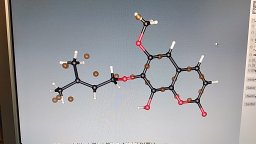 Azimjon Mamadrahimov合作论文数Institute of Bioorganic Chemistry, Academy of Sciences of Uzbekistan2
 Bobakulov Khayrulla合作论文数Xinjiang Technical Institute of Physics and Chemistry, Chinese Academy of Sciences;Institute of the Chemistry of Plant Substances, Academy of Sciences of Uzbekistan;Xinjiang Technical Institute of Physics and Chemistry, Chinese Academy of Sciences2M. P. Yuldashev合作论文数2
 Égamova F R合作论文数2
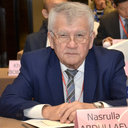 Nasrulla Abdullaev合作论文数Institute of the Chemistry of Plant Substances, Academy of Sciences of the Republic of Uzbekistan2
 Мунирахон Ахматхон қизи Маматханова合作论文数2A. M. Krasil'nikov合作论文数1A. G. Tozhiboev合作论文数1
 Akhmatkhon Mamatkhanov合作论文数1Ахматхон Умарханович Маматханов合作论文数1Мунирахон Умарханович Маматханова合作论文数1Шохида Абдукодир кизи Эргашева合作论文数1Малик (Malik) Патахович (Patahovich) Юлдашев (Yuldashev)合作论文数1Мунирахон Ахматхон кизи Маматханова合作论文数1Lukmonjon Mutalliev合作论文数1
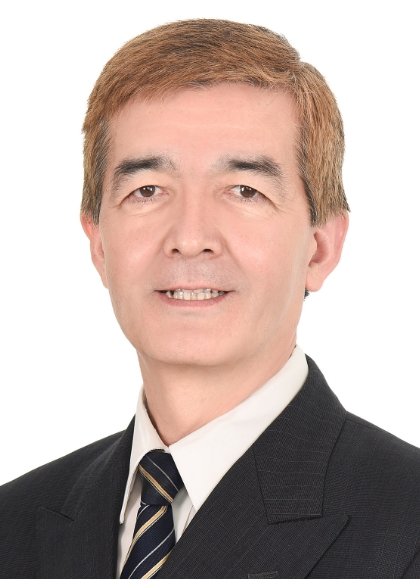 Haji Akber Aisa (阿吉艾克拜尔·艾萨)合作论文数Xinjiang Technical Institute of Physics and Chemistry, Chinese Academy of Sciences;University of Chinese Academy of Sciences1Lidiya Izotova合作论文数1
 Alex Drenin合作论文数1O. M. Aivazyan合作论文数1
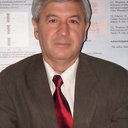 Bakhtiyar T Ibragimov合作论文数Institute of Bioorganic Chemistry1R. G. Aisin合作论文数1Turgunov Kambarali K.合作论文数S. Yu. Yunusov Institute of the Chemistry of Plant Substances, Academy of Sciences of the Republic of Uzbekistan1Yu. K. Kharchev合作论文数1O. K. Kuvandikov合作论文数1V. M. Klabukov合作论文数1




