Currently, deep learning models have become the mainstream approach for medical image segmentation tasks due to their efficient feature extraction capabilities. However, most deep learning-based segmentation models tend to focus on local regions while neglecting global anatomical priors, which leads to distorted anatomical structures in segmentation results. Therefore, this paper proposes the Masked Graph Convolutional Neural Network (MGCN), a hybrid segmentation framework incorporating anatomical priors for medical image segmentation. To learn high-order appearance priors between different classes, the Masked Graph Convolutional Module (MGCM) is proposed, where each class center is treated as a node in the graph neural network, and global information is integrated through message passing between different nodes. To leverage relative position prior information, the centroidbased loss function is also designed to guide the network to focus on the spatial distribution of different classes. The features that integrate anatomical priors are fused to create more robust representations, ultimately yielding more accurate segmentation results. Extensive experiments demonstrate that anatomical prior information can increase the anatomical plausibility in medical image segmentation results, and our model achieves excellent performance across various tasks. The code is publicly available at https://github.com/Li-Yuzhen/MGCN.
Monocular 3D object detection has attracted attention due to its cost-effectiveness and ease of deployment. To improve detection performance, current methods commonly adopt data augmentation strategies to increase sample diversity. However, these approaches often rely on additional data or external models, and may introduce noise interference. Meanwhile, most methods neglect the widespread occlusion problem in real world scenarios, which significantly restricts further progress in detection performance. To address these challenges, we propose MonoDAPE, a monocular 3D object detection framework that integrates a Data Augmentation strategy named Cut-Clone3D and an occlusion Perception Enhancement (OPE) module. Specifically, Cut-Clone3D enriches sample and object distributions by seamlessly transplanting annotated objects into novel 3D scenes while strictly adhering to geometric projection constraints. The OPE module simulates realistic occlusion by generating random masks according to occlusion priors and substituting features of non-occluded objects with those from occluding objects, ensuring the continuity and asymmetry of occlusion. Moreover, we introduce a depth consistency loss that adjusts the distance relationship between mutually occluded objects, further improving prediction robustness. We conducted extensive experiments on the KITTI dataset to validate the effectiveness of our approach. On the KITTI test set, MonoDAPE achieved AP3D (IoU = 0.7, Car) of 27.24%, 20.41%, and 17.52% at the easy, moderate, and hard levels, respectively, demonstrating state of-the-art performance.
Bit-serial computation shows promise for accelerating deep neural networks (DNNs) by exploiting inherent bit sparsity. However, the original unstructured bit sparsity poses two major challenges for existing bit-serial accelerators (BSA): (1) workload imbalance from irregular bit distribution, and (2) inefficient memory access due to unpredictable non-zero bit locations. To address these issues, this paper proposes BitPattern, an algorithm/hardware co-design to efficiently accelerate bit-serial computation through bit-pattern pruning. At the algorithm level, we employ bit-pattern pruning to identify optimal combinations of predefined patterns and apply compression encoding to minimize weight storage. We further devise a pattern-similarity-based merging method to balance the bit-serial workload. At the hardware level, we co-design a bit-serial accelerator with a dedicated bit-pattern decoder and PE to leverage the potential of structured bit-pattern sparsity. The evaluation on several deep learning benchmarks shows that BitPattern can achieve 1.72x memory reduction with negligible accuracy loss, and up to 2.11x speedup and 1.86x energy saving compared to state-of-the-art bit-serial accelerators.
Incremental Objection Detection (IOD) facilitates the expansion of the usage scope of object detectors without forgetting previously acquired knowledge. Current approaches mostly adopt response-level knowledge distillation to overcome forgetting issues, by conducting implicit memory replay from the teacher model on new training data. However, this indirect learning paradigm does not fully leverage the knowledge generated by the teacher model. In this paper, we dive deeper into the mechanism of pseudo-labeling in incremental object detection by investigating three critical problems: (a) the upper bound quality of the pseudo labels is greatly limited by the previous model, (b) fixed score thresholds for label filtering, without considering the distribution across categories, and (c) the confidence score generated by the model does not well reflect the quality of the localization. Based on these observations, we propose a simple yet effective pseudo-labeling continual object detection framework, namely PseDet. Specifically, we introduce the spatio-temporal enhancement module to alleviate the negative effects when learning noisy data from the previous model. Considering the score distribution divergence across different classes, we propose the Categorical Adaptive Label Selector with a simple mathematical prior and fast K-Means pre-computation to dynamically determine the class-wise filtering threshold. In order to align the label score with the localization quality of the pseudo labels, we project the score through non-linear mapping to calibrate the distribution and integrate it into the new-step supervision. Extensive experiments on the competitive COCO benchmarks demonstrate the effectiveness and generalization of PseDet. Notably, it achieves 43.5+/41.2+ mAP under the 1/4-step incremental settings, achieving new state-of-the-art performance.
Large Language Models (LLMs) have demonstrated remarkable instruction-following capabilities across various applications. However, their performance in multilingual settings lacks systematic investigation, with existing evaluations lacking fine-grained constraint analysis across diverse linguistic contexts. We introduce XIFBench, a comprehensive constraint-based benchmark for evaluating multilingual instruction-following abilities of LLMs, comprising 558 instructions with 0-5 additional constraints across five categories (Content, Style, Situation, Format, and Numerical) in six languages spanning different resource levels. To support reliable and consistent cross-lingual evaluation, we implement three methodological innovations: cultural accessibility annotation, constraint-level translation validation, and requirement-based evaluation using English requirements as semantic anchors across languages. Extensive experiments with various LLMs not only quantify performance disparities across resource levels but also provide detailed insights into how language resources, constraint categories, instruction complexity, and cultural specificity influence multilingual instruction-following. Our code and data are available at https://github.com/zhenyuli801/XIFBench.
Vision-centric 3D perception has become a key mechanism in autonomous driving. It achieves exceptional perceptual performance mainly by introducing a novel attention, multi-view cross-attention (MVCA), for learnable feature extraction and fusion from surround-view cameras. Despite its superiority, MVCA encounters severe inefficiencies in sample, processing elements (PE), and pipelined processing, owing to the redundant and non-uniform sampling-aggregation and rigorous inter-operator dependencies. To address these issues, this article proposes a dedicated MVCA accelerator, MVAtor, with algorithm-architecture co-optimization for vision-centric 3D perception based on multi-view inputs flexibly. For sample inefficiency, a 3-tier hybrid static-dynamic sample and a sensitivity-aware feature pruning approach are proposed to eliminate the 86.03% sample overhead and 24.48% memory requirement, only incuring <1% accuracy loss with no need of fine-tuning. For PE inefficiency, a spatial pruner and sequential sampler collaboration strategy is proposed to improve the sampler utilization without compromising pruner's throughput, which outperforms the previous design by 53.7 similar to 96.1% energy-delay product reduction. For pipeline inefficiency, a fine-grained-tiling assisted highly-pipelined architecture is constructed in MVAtor by exploiting the decoupling opportunities on inter-view sparsity, thereby saving 61.03% external memory access while boosting the overall throughputs by 1.83x. Extensively evaluated on representative benchmarks, MVAtor attains 1.38 similar to 7.67x and 1.67 similar to 11.15x improvement on energy and area efficiency respectively, compared to the state-of-the-art related accelerators.
With the widespread deployment of long-context large language models (LLMs), efficient and high-quality generation is becoming increasingly important. Modern LLMs employ batching and key-value (KV) cache to improve generation throughput and quality. However, as the context length and batch size rise drastically, the KV cache incurs extreme external memory access (EMA) issues. Recent LLM accelerators face substantial processing element (PE) under-utilization due to the low arithmetic intensity of attention with KV cache, while existing KV cache compression algorithms struggle with hardware inefficiency or significant accuracy degradation. To address these issues, an algorithm-architecture co-optimization, KVO-LLM, is proposed for long-context batched LLM generation. At the algorithm level, we propose a KV cache quantization-aware pruning method that first adopts salient-token-aware quantization and then prunes KV channels and tokens by attention guided pruning based on salient tokens identified during quantization. Achieving substantial savings on hardware overhead, our algorithm reduces the EMA of KV cache over 91% with significant accuracy advantages compared to previous KV cache compression algorithms. At the architecture level, we propose a multi-core jointly optimized accelerator that adopts operator fusion and cross-batch interleaving strategy, maximizing PE and DRAM bandwidth utilization. Compared to the state-of-the-art LLM accelerators, KVO-LLM improves generation throughput by up to 7.32x, and attains 5.52 similar to 8.38x better energy efficiency.
Multi-View 3D object detection (MV3D) has made tremendous progress by leveraging multiple perspective features through surrounding cameras. Despite demonstrating promising prospects in various applications, accurately detecting objects through camera view in the 3D space is extremely difficult due to the ill-posed issue in monocular depth estimation. Recently, Graph-DETR3D presents a novel graph-based 3D-2D query paradigm in aggregating multi-view images for 3D object detection and achieves competitive performance. Although it enriches the query representations with 2D image features through a learnable 3D graph, it still suffers from limited depth and velocity estimation abilities due to the adoption of a single-frame input setting. To solve this problem, we introduce a unified spatial-temporal graph modeling framework to fully leverage the multi-view imagery cues under the multi-frame inputs setting. Thanks to the flexibility and sparsity of the dynamic graph architecture, we lift the original 3D graph into the 4D space with an effective attention mechanism to automatically perceive imagery information at both spatial and temporal levels. Moreover, considering the main latency bottleneck lies in the image backbone, we propose a novel dense-sparse distillation framework for multi-view 3D object detection, to reduce the computational budget while sacrificing no detection accuracy, making it more suitable for real-world deployment. To this end, we propose Graph-DETR4D, a faster and stronger multi-view 3D object detection framework, built on top of Graph-DETR3D. Extensive experiments on nuScenes and Waymo benchmarks demonstrate the effectiveness and efficiency of Graph-DETR4D. Notably, our best model achieves 62.0% NDS on nuScenes test leaderboard. Code is available at https://github.com/zehuichen123/Graph-DETR4D.
Previous works have shown that reducing parameter overhead and computations for transformer-based single image super-resolution (SISR) models (e.g., SwinIR) usually leads to a reduction of performance. In this paper, we present GRFormer, an efficient and lightweight method, which not only reduces the parameter overhead and computations, but also greatly improves performance. The core of GRFormer is Grouped Residual Self-Attention (GRSA), which is specifically oriented towards two fundamental components. Firstly, it introduces a novel grouped residual layer (GRL) to replace the Query, Key, Value (QKV) linear layer in self-attention, aimed at efficiently reducing parameter overhead, computations, and performance loss at the same time. Secondly, it integrates a compact Exponential-Space Relative Position Bias (ES-RPB) as a substitute for the original relative position bias to improve the ability to represent position information while further minimizing the parameter count. Extensive experimental results demonstrate that GRFormer outperforms state-of-the-art transformer-based methods for x2, x3 and x4 SISR tasks, notably outperforming SOTA by a maximum PSNR of 0.23dB when trained on the DIV2K dataset, while reducing the number of parameter and MACs by about 60% and 49% in only self-attention module respectively. We hope that our simple and effective method that can easily applied to SR models based on window-division self-attention can serve as a useful tool for further research in image super-resolution. The code is available at https://github.com/sisrformer/GRFormer.
Single image depth estimation is a foundational task in computer vision and generative modeling. However, prevailing depth estimation models grapple with accommodating the increasing resolutions commonplace in today's consumer cameras and devices. Existing high-resolution strategies show promise, but they often face limitations, ranging from error propagation to the loss of high-frequency details. We present PatchFusion, a novel tile-based framework with three key components to improve the current state of the art: (1) A patch-wise fusion network that fuses a globally-consistent coarse prediction with finer, inconsistent tiled predictions via high-level feature guidance, (2) A Global-to-Local (G2L) module that adds vital context to the fusion network, discarding the need for patch selection heuristics, and (3) A Consistency-Aware Training (CAT) and Inference (CAI) approach, emphasizing patch overlap consistency and thereby eradicating the necessity for post-processing. Experiments on UnrealStereo4K, MVS-Synth, and Middleburry 2014 demonstrate that our framework can generate high-resolution depth maps with intricate details. PatchFusion is independent of the base model for depth estimation. Notably, our framework built on top of SOTA ZoeDepth brings improvements for a total of 17.3% and 29.4% in terms of the root mean squared error (RMSE) on UnrealStereo4K and MVS-Synth, respectively.
Monocular depth estimation (MDE) is a fundamental task in computer vision and has drawn increasing attention. Recently, some methods reformulate it as a classification-regression task to boost the model performance, where continuous depth is estimated via a linear combination of predicted probability distributions and discrete bins. In this paper, we present a novel framework called BinsFormer, tailored for the classification-regression-based depth estimation. It mainly focuses on two crucial components in the specific task: 1) proper generation of adaptive bins and 2) sufficient interaction between probability distribution and bins predictions. To specify, we employ a Transformer decoder to generate bins, novelly viewing it as a direct set-to-set prediction problem. We further integrate a multi-scale decoder structure to achieve a comprehensive understanding of spatial geometry information and estimate depth maps in a coarse-to-fine manner. Moreover, an extra scene understanding query is proposed to improve the estimation accuracy, which turns out that models can implicitly learn useful information from the auxiliary environment classification task. Extensive experiments on the KITTI, NYU, and SUN RGB-D datasets demonstrate that BinsFormer surpasses state-of-the-art MDE methods with prominent margins. Code and pretrained models are made publicly available at https://github.com/zhyever/Monocular-Depth-Estimation-Toolbox/tree/ main/configs/binsformer.
This paper introduces PatchRefiner, an advanced framework for metric single image depth estimation aimed at high-resolution real-domain inputs. While depth estimation is crucial for applications such as autonomous driving, 3D generative modeling, and 3D reconstruction, achieving accurate high-resolution depth in real-world scenarios is challenging due to the constraints of existing architectures and the scarcity of detailed real-world depth data. PatchRefiner adopts a tile-based methodology, reconceptualizing high-resolution depth estimation as a refinement process, which results in notable performance enhancements. Utilizing a pseudo-labeling strategy that leverages synthetic data, PatchRefiner incorporates a Detail and Scale Disentangling (DSD) loss to enhance detail capture while maintaining scale accuracy, thus facilitating the effective transfer of knowledge from synthetic to real-world data. Our extensive evaluations demonstrate PatchRefiner's superior performance, significantly outperforming existing benchmarks on the Unreal4KStereo dataset by 18.1% in terms of the root mean squared error (RMSE) and showing marked improvements in detail accuracy and consistent scale estimation on diverse real-world datasets like CityScape, ScanNet++, and ETH3D.
Monocular depth estimation is an essential task in the computer vision community. While tremendous successful methods have obtained excellent results, most of them are computationally expensive and not applicable for real-time on-device inference. In this paper, we aim to address more practical applications of monocular depth estimation, where the solution should consider not only the precision but also the inference time on mobile devices. To this end, we first develop an end-to-end learning-based model with a tiny weight size (1.4MB) and a short inference time (27FPS on Raspberry Pi 4). Then, we propose a simple yet effective data augmentation strategy, called R ^2 crop, to boost the model performance. Moreover, we observe that the simple lightweight model trained with only one single loss term will suffer from performance bottleneck. To alleviate this issue, we adopt multiple loss terms to provide sufficient constraints during the training stage. Furthermore, with a simple dynamic re-weight strategy, we can avoid the time-consuming hyper-parameter choice of loss terms. Finally, we adopt the structure-aware distillation to further improve the model performance. Notably, our solution named LiteDepth ranks 2 ^nd in the MAI AIM2022 Monocular Depth Estimation Challenge, with a si-RMSE of 0.311, an RMSE of 3.79, and the inference time is 37ms tested on the Raspberry Pi 4. Notably, we provide the fastest solution to the challenge. Codes and models will be released at https://github.com/zhyever/LiteDepth .
Nowadays, the commercial potential of live e-commerce is being continuously explored, and machine vision algorithms are gradually attracting the attention of marketers and researchers. During live streaming, the visuals can be effectively captured by algorithms, thereby providing additional data support. This paper aims to consider the diversity of live streaming devices and proposes an extremely lightweight and high-precision model to meet different requirements in live streaming scenarios. Building upon yolov5s, we incorporate the MobileNetV3 module and the CA attention mechanism to optimize the model. Furthermore, we construct a multi-object dataset specific to live streaming scenarios, including anchor facial expressions and commodities. A series of experiments have demonstrated that our model realized a 0.4% improvement in accuracy compared to the original model, while reducing its weight to 10.52%.
3D object detection from multiple image views is a fundamental and challenging task for visual scene understanding. Owing to its low cost and high efficiency, multi-view 3D object detection has demonstrated promising application prospects. However, accurately detecting objects through perspective views is extremely difficult due to the lack of depth information. Current approaches tend to adopt heavy backbones for image encoders, making them inapplicable for real-world deployment. Different from the images, LiDAR points are superior in providing spatial cues, resulting in highly precise localization. In this paper, we explore the incorporation of LiDAR-based detectors for multi-view 3D object detection. Instead of directly training a depth prediction network, we unify the image and LiDAR features in the Bird-Eye-View (BEV) space and adaptively transfer knowledge across non-homogenous representations in a teacher-student paradigm. To this end, we propose \textbf{BEVDistill}, a cross-modal BEV knowledge distillation (KD) framework for multi-view 3D object detection. Extensive experiments demonstrate that the proposed method outperforms current KD approaches on a highly-competitive baseline, BEVFormer, without introducing any extra cost in the inference phase. Notably, our best model achieves 59.4 NDS on the nuScenes test leaderboard, achieving new state-of-the-art in comparison with various image-based detectors. Code will be available at https://github.com/zehuichen123/BEVDistill.
Various depth estimation models are now widely used on many mobile and IoT devices for image segmentation, bokeh effect rendering, object tracking and many other mobile tasks. Thus, it is very crucial to have efficient and accurate depth estimation models that can run fast on low-power mobile chipsets. In this Mobile AI challenge, the target was to develop deep learning-based single image depth estimation solutions that can show a real-time performance on IoT platforms and smartphones. For this, the participants used a large-scale RGB-to-depth dataset that was collected with the ZED stereo camera capable to generated depth maps for objects located at up to 50 m. The runtime of all models was evaluated on the Raspberry Pi 4 platform, where the developed solutions were able to generate VGA resolution depth maps at up to 27 FPS while achieving high fidelity results. All models developed in the challenge are also compatible with any Android or Linux-based mobile devices, their detailed description is provided in this paper.
视频超分辨率技术在卫星遥感侦测、视频监控和医疗影像等方面发挥着关键作用,在各领域具有广阔的应用前景,受到广泛关注,但传统的视频超分辨率算法具有一定局限性.随着深度学习技术的愈发成熟,基于深度神经网络的超分辨率算法在性能上取得了长足进步.充分融合视频时空信息可以快速高效地恢复真实且自然的纹理,视频超分辨率算法因其独特的优势成为一个研究热点.本文系统地对基于深度学习的视频超分辨率的研究进展进行详细综述,对基于深度学习的视频超分辨率技术的数据集和评价指标进行全面归纳,将现有视频超分辨率方法按研究思路分成两大类,即基于图像配准的视频超分辨率方法和非图像配准的视频超分辨率方法,并进一步立足于深度卷积神经网络的模型结构、模型优化历程和运动估计补偿的方法将视频超分辨率网络细分为10个子类,同时利用充足的实验数据对每种方法的核心思想以及网络结构的优缺点进行了对比分析.尽管视频超分辨率网络的重建效果在不断优化,模型参数量在逐渐降低,训练和推理速度在不断加快,然而已有的网络模型在性能上仍然存在提升的潜能.本文对基于深度学习的视频超分辨率技术存在的挑战和未来的发展前景进行了讨论.
Accurate depth estimation under out-of-distribution (OoD) scenarios, such as adverse weather conditions, sensor failure, and noise contamination, is desirable for safety-critical applications. Existing depth estimation systems, however, suffer inevitably from real-world corruptions and perturbations and are struggled to provide reliable depth predictions under such cases. In this paper, we summarize the winning solutions from the RoboDepth Challenge -- an academic competition designed to facilitate and advance robust OoD depth estimation. This challenge was developed based on the newly established KITTI-C and NYUDepth2-C benchmarks. We hosted two stand-alone tracks, with an emphasis on robust self-supervised and robust fully-supervised depth estimation, respectively. Out of more than two hundred participants, nine unique and top-performing solutions have appeared, with novel designs ranging from the following aspects: spatial- and frequency-domain augmentations, masked image modeling, image restoration and super-resolution, adversarial training, diffusion-based noise suppression, vision-language pre-training, learned model ensembling, and hierarchical feature enhancement. Extensive experimental analyses along with insightful observations are drawn to better understand the rationale behind each design. We hope this challenge could lay a solid foundation for future research on robust and reliable depth estimation and beyond. The datasets, competition toolkit, workshop recordings, and source code from the winning teams are publicly available on the challenge website.
In this paper, we improve the challenging monocular 3D object detection problem with a general semi-supervised framework. Specifically, having observed that the bottleneck of this task lies in lacking reliable and informative samples to train the detector, we introduce a novel, simple, yet effective `Augment and Criticize' framework that explores abundant informative samples from unlabeled data for learning more robust detection models. In the `Augment' stage, we present the Augmentation-based Prediction aGgregation (APG), which aggregates detections from various automatically learned augmented views to improve the robustness of pseudo label generation. Since not all pseudo labels from APG are beneficially informative, the subsequent `Criticize' phase is presented. In particular, we introduce the Critical Retraining Strategy (CRS) that, unlike simply filtering pseudo labels using a fixed threshold (e.g., classification score) as in 2D semi-supervised tasks, leverages a learnable network to evaluate the contribution of unlabeled images at different training timestamps. This way, the noisy samples prohibitive to model evolution could be effectively suppressed. To validate our framework, we apply it to MonoDLE and MonoFlex. The two new detectors, dubbed 3DSeMo_DLE and 3DSeMo_FLEX, achieve state-of-the-art results with remarkable improvements for over 3.5% AP_3D/BEV (Easy) on KITTI, showing its effectiveness and generality. Code and models will be released.
 Zehui Chen (陈泽徽)合作论文数Brain-Inspired Vision Laboratory, School of Automation, University of Science and Technology of China;ByteDance14
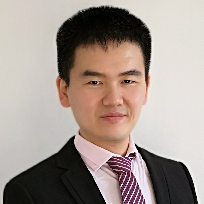 Junjun Jiang (江俊君)合作论文数School of Computer Science and Technology, Harbin Institute of Technology12
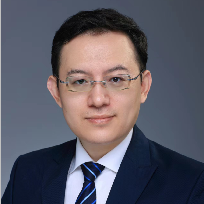 Xianming Liu (刘贤明)合作论文数School of Computer Science and Technology, Faculty of Computer, Harbin Institute of Technology10
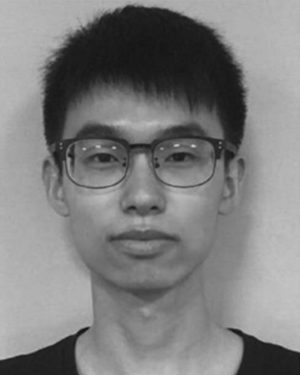 Liangji Fang合作论文数Sensetime Research9
 Qinhong Jiang合作论文数SenseTime9
 Feng Zhao (赵峰)合作论文数Department of Automation, School of Information Science and Technology, University of Science and Technology of China8
 Yanbo Ding合作论文数6
 Lili Yang (杨丽丽)合作论文数哈尔滨工业大学6
 Quanshi Zhang (张拳石)合作论文数School of Computer Science, Shanghai Jiao Tong University;John Hopcroft Center for Computer Science, Department of Computer Science & Engineering, School of Electronic Information and Electrical Engineering, Shanghai Jiao Tong University6
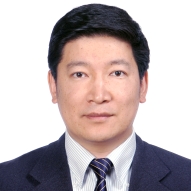 Yao Li (李垚)合作论文数School of Astronautics, Harbin Institute of Technology5
 Jiupeng Zhao (赵九蓬)合作论文数School of Chemistry and Chemical Engineering, Harbin Institute of Technology5Ang Li合作论文数4葛邓腾合作论文数东华大学材料科学与工程学院4
 Zongwei Li合作论文数3
 Wenjie Li合作论文数3
 Gang Wang合作论文数3Jialei Xu合作论文数3
 Guanghui He (贺光辉)合作论文数School of Integrated Circuits, Shanghai Jiao Tong University3
 Lei Pan (潘磊)合作论文数School of Chemistry and Chemical Engineering, Harbin Institute of Technology3Wuhong Xin合作论文数3
 Yiran Wang (王一然)合作论文数MOE Key Laboratory of Image Processing and Intelligent Control, School of Artificial Intelligence and Automation, Huazhong University of Science and Technology;Tencent AI Lab2
 Yicheng Wang合作论文数2Grigory Malivenko合作论文数2
 Kai Qiao合作论文数Natl Digital Switching Syst Engn & Technol Res Ct, Zhengzhou, Henan, Peoples R China2
 Shariq Farooq Bhat合作论文数Adobe2Bin Fu合作论文数2
 Guozhong Luo合作论文数2
 Andrey Ignatov合作论文数Eidgenössische Technische Hochschule Zürich2
 Hang Zhao (赵行)合作论文数MARS Lab, Institute for Interdisciplinary Information Sciences, Tsinghua University2
 Radu Timofte合作论文数Computer Vision Laboratory, Institute of Computer Science, Faculty of Mathematics and Computer Science, Julius Maximilians University of Würzburg;ETH Zurich2
 Yanhui Zhang (张艳辉)合作论文数School of Business, East China University of Science and Technology2
 Yanan Sun (孙亚男)合作论文数School of Integrated Circuits, Shanghai Jiao Tong University2
 Xian-Ming Liu合作论文数XPENG2
 Peter Wonka合作论文数Computer, Electrical and Mathematical Science and Engineering Division, King Abdullah University of Science and Technology2
 Gang Yu (俞刚)合作论文数StepFun2
 Zilong Huang (黄子龙)合作论文数Tencent2
 Zhiguo Cao (曹治国)合作论文数School of Artificial Intelligence and Automation, Huazhong University of Science and Technology2
 Ziyu Zhang合作论文数Medical College of Wisconsin2
 Bolei Zhou (周博磊)合作论文数Computer Science Department, Samueli School of Engineering, University of California, Los Angeles;Coco2Jianfei Jiang合作论文数1Liyan Chen合作论文数1Yuzhou Chen合作论文数1Dongxu Lyu合作论文数1Siqi Cai合作论文数1Lihua Liu合作论文数1Yuxin Cao合作论文数1Joonhee Lee合作论文数1Bo Li合作论文数1




