Tumour cell phagocytosis by antigen presenting cells (APCs) is critical to the generation of antitumour immunity. However, cancer cells can evade phagocytosis by upregulating anti-phagocytosis molecule CD47. Here, we show that CD47 blockade alone is inefficient in stimulating glioma cell phagocytosis. However, combining CD47 blockade with temozolomide results in a significant pro-phagocytosis effect due to the latter's ability to induce endoplasmic reticulum stress response. Increased tumour cell phagocytosis subsequently enhances antigen cross-presentation and activation of cyclic GMP-AMP synthase-stimulator of interferon genes (cGAS-STING) in APCs, resulting in more efficient T cell priming. This bridging of innate and adaptive responses inhibits glioma growth, but also activates immune checkpoint. Sequential administration of an anti-PD1 antibody overcomes this potential adaptive resistance. Together, these findings reveal a dynamic relationship between innate and adaptive immune regulation in tumours and support further investigation of phagocytosis modulation as a strategy to enhance cancer immunotherapy responses.
A major challenge in the development of cancer nanomedicine is the inability for nanomaterials to efficiently penetrate and deliver therapeutic agents into solid tumors. Previous studies have shown that tumor vasculature and extracellular matrix regulate the transvascular and interstitial transport of nanoparticles, both critical for successfully delivering nanomedicine into solid tumors. Within the malignant tumor microenvironment, blood vessels are morphologically abnormal and functionally exhibit substantial permeability. Furthermore, the tumor extracellular matrix (ECM), unlike that of the normal tissue parenchyma, is densely packed with collagen. These pathophysiological properties greatly impede intratumoral delivery of nanomaterials. By using an antivascular endothelial growth factor receptor antibody, DC101, and an antitransforming growth factor β1 (TGF‐β1) antibody, normalization of the tumor vasculature and ECM is achieved, respectively, in a syngeneic murine glioma model. This normalization effect results in a more organized vascular network, improves tissue perfusion, and reduces collagen density, all of which contribute to enhanced nanoparticle delivery and distribution within tumors. These findings suggest that combined vascular and ECM normalization strategies can be used to remodel the tumor microenvironment and improve nanomedicine delivery into solid tumors, which has significant implications for developing more effective combinational therapeutic strategies using cancer nanomedicine.
TROY is a component of the Nogo receptor complex and plays the key role in neuronal survival, migration, and differentiation. Here, we show the up-regulation of TROY in human glioma tissues and cells. Inhibition of TROY expression slowed glioma development in vivo and in vitro. Raf kinase inhibitor (RKIP) was found to interact with TROY. The physical interaction of TROY/RKIP was confirmed via co-immunoprecipitation (co-IP) assays. Furthermore, we found that the TROY/RKIP interaction was enhanced by fetal bovine serum (FBS) exposure, and TROY knockdown also led to down-regulation of NF-κB. Finally, disruption of the TROY/RKIP interaction using the TAT-TROY (234–371 aa) protein reduced the glioma development in xenografted mice. This suggests the TROY/RKIP interaction is a potential target for therapy of gliomas.
As the most common primary brain tumor in adults, Glioblastoma (GBM) remains a major unmet medical need. With current treatment strategies, the median survival remains approximately 15 months, and recurrence occurs in nearly all cases. In this study we examine a novel role for the DNA-methylating agent temozolomide (TMZ) as an activator of innate immunogenicity in GBM. TMZ-mediated DNA damage promotes calreticulin (CRT) translocation to the plasma membrane of cancer cells where it functions as a driver of phagocytosis. Ancillary blockade of anti-phagocytic signaling through Cluster of Differentiation 47 (CD47) further enhances tumor cell uptake by bone-marrow derived macrophages (BMDM). Together these agents promote maturation of BMDM into antigen presenting cells (APCs), capable of initiating effector T cell responses in vitro. We recapitulate these findings in immune-competent preclinical models of GBM, where combination therapy significantly prolongs survival in a cytotoxic CD8+ T cell dependent manner. The results of this study indicate that phagocytic axis modulation is a novel strategy to reprogram the innate immune microenvironment, shifting the dynamic towards an ‘inflamed’ tumor phenotype. This novel approach to immunotherapy in GBM is highly translational and warrants further investigation in the clinical setting.
multivalent bi-specific nanoconjugate can promote immune cells to recognize and eradicate cancer cells in a receptor targeted manner, leading to the generation of potent and durable anti-tumour immunity.
Abstract Glioblastoma is the most common primary tumor of the CNS in adults, representing approximately 50% of all gliomas and 15% of primary brain tumors. The current standard of care for GBM is safe maximal surgical resection followed by radiotherapy and concurrent Temozolomide (TMZ), but median survival continues to be 15–16 months. Temozolomide is a second-generation DNA alkylating agent that induces thymine mispairing during DNA replication resulting in tumor cell G2/M phase arrest and autophagy, a standard care of therapy against GBM. While the success of TMZ in clinical trials showed great promise for its overall efficacy, emerging TMZ resistance make us to think more for the combination therapy. CD47, a tumor cell surface marker, plays as “don't eat me signal” through binding its receptor SIRPα on macrophages and the antibody against CD47, which blocks interactions of CD47 with SIRPα, has been shown to lead to tumor destruction. Furthermore, CD47 is a prognostic marker as its expression predisposes cancer patients to a poorer survival outcome. This has significant clinical implications since approximately more than 80% of patients with the most GBMs, overexpress CD47. Overexpression of CD47 is also associated with a decreased probability of survival in clinical cohorts of GBM. Our work and that of others demonstrate that CD47 blockade enables tumor cell phagocytosis by antigen presenting cells (APC), establishing this molecule as a viable therapeutic target in GBM. We additionally investigated the combinatorial effect of CD47 blockade with temozolomide. DNA alkylating agents induce sporadic tumor cell necrosis associated with the extracellular release of damage associated molecular patterns (DAMPs) such as calreticulin, a pro-phagocytic protein whose interaction with low density lipoprotein receptor-related protein 1 (LRP1) facilitates recognition by professional antigen-presenting cells (APCs) and acts as a critical molecular component in promoting immunogenic cell. Our results showed that tumor cell treatment with temozolomide induces plasma membrane expression of calreticulin. Combination therapy resulted in amplified tumor cell phagocytosis and antigen presentation by APC. In addition, preclinical assessment of combination therapy in a syngeneic murine model of GBM resulted in significantly improved survival, characterized by increased intra-tumor penetration of APC cells. These results suggest that the combination of CD47 blockade with temozolomide may enhance tumor immunogenicity, and can improve clinical outcomes demonstrated by mono-therapeutic approaches with conventional chemotherapy. Citation Format: Yaqing Qie, Christina Von Roemeling, Yuanxin Chen, Kevin Shih, Xiujie Liu, Wen Jiang, Joshua Knight, Charles Chan, Irving Weissman, Betty Kim. CD47 blockade with temozolomide can enhance the therapy in glioblastoma [abstract]. In: Proceedings of the American Association for Cancer Research Annual Meeting 2017; 2017 Apr 1-5; Washington, DC. Philadelphia (PA): AACR; Cancer Res 2017;77(13 Suppl):Abstract nr LB-208. doi:10.1158/1538-7445.AM2017-LB-208
Abstract Metabolic reprogramming plays a critical role in carcinogenesis, in part due its ability to promote immune suppressive properties within tumors. Agents that specifically target crucial metabolic enzymes utilized by cancer are been actively investigated. However, it is unclear whether inhibition of fatty acid metabolism in tumors affects their immunogenicity. Here, we show for the first time that inhibition of stearoyl-CoA desaturase 1 (SCD1), a key enzyme involved in fatty-acid synthesis and a potential prognostic marker for human cancers, increases the immunogenicity of poorly immunogenic tumors. The enhanced immune activation is accompanied by upregulated endoplasmic reticulum (ER) stress and is dependent on the translocation of ER protein calreticulin to the tumor cell surface. Inhibition of SCD1 increased both recruitment and activation of immune cells in vivo, which when combined with PD-1 blockade resulted in potent and durable anti-tumor T cell responses. Together, our results indicate that inhibition of tumorigenic de novo lipogenesis represents a novel approach to enhance T cell based cancer immunotherapy. Citation Format: Christina Anna Elizabeth Von Roemeling, Thomas Caulfield, Yaqing Qie, Derek C. Radisky, Xiujie Liu, Yuanxin Chen, Joshua Knight, John Copland, Betty Kim. Blockade of stearoyl CoA desaturase 1 promotes immunogenic clearance of tumors [abstract]. In: Proceedings of the American Association for Cancer Research Annual Meeting 2017; 2017 Apr 1-5; Washington, DC. Philadelphia (PA): AACR; Cancer Res 2017;77(13 Suppl):Abstract nr LB-189. doi:10.1158/1538-7445.AM2017-LB-189
Two major obstacles facing cancer nanomedicine are the tendency of nanoparticles to be taken up by normal tissues and organs and the nanoparticles' inability to efficiently penetrate solid tumours. Although substantial efforts have been made to improve the intratumoural delivery of nanotherapeutics, many strategies have failed to produce meaningful clinical benefits. Recent advances in the field of immuno-oncology have led to drugs that boost the host's own immune system to fight cancer. In contrast to conventional therapies, which often target cancer cells, immunotherapies stimulate immune cells in ways that promote their recognition and the eradication of tumours. In this Perspective, we posit that this approach represents a new framework for cancer nanomedicine, and that immune-targeted nanomedicines could generate tumouricidal effects without the need to overcome the pathophysiological barriers that are intrinsic to the tumour microenvironment and that hinder nanoparticle delivery. The rational design of new immuno-oncology nanomedicines provides opportunities for developing the next generation of nanotherapeutics for cancer patients.
Glioblastoma is the most common primary tumor of the CNS in adults, representing approximately 50% of all gliomas and 15% of primary brain tumors. The current standard of care for GBM is safe maximal surgical resection followed by radiotherapy and concurrent Temozolomide (TMZ), but median survival continues to be 15–16 months. Temozolomide is a second-generation DNA alkylating agent that induces thymine mispairing during DNA replication resulting in tumor cell G2/M phase arrest and autophagy, a standard care of therapy against GBM. While the success of TMZ in clinical trials showed great promise for its overall efficacy, emerging TMZ resistance make us to think more for the combination therapy. CD47, a tumor cell surface marker, plays as “don9t eat me signal” through binding its receptor SIRPα on macrophages and the antibody against CD47, which blocks interactions of CD47 with SIRPα, has been shown to lead to tumor destruction. Furthermore, CD47 is a prognostic marker as its expression predisposes cancer patients to a poorer survival outcome. This has significant clinical implications since approximately more than 80% of patients with the most GBMs, overexpress CD47. Overexpression of CD47 is also associated with a decreased probability of survival in clinical cohorts of GBM. Our work and that of others demonstrate that CD47 blockade enables tumor cell phagocytosis by antigen presenting cells (APC), establishing this molecule as a viable therapeutic target in GBM. We additionally investigated the combinatorial effect of CD47 blockade with temozolomide. DNA alkylating agents induce sporadic tumor cell necrosis associated with the extracellular release of damage associated molecular patterns (DAMPs) such as calreticulin, a pro-phagocytic protein whose interaction with low density lipoprotein receptor-related protein 1 (LRP1) facilitates recognition by professional antigen-presenting cells (APCs) and acts as a critical molecular component in promoting immunogenic cell. Our results showed that tumor cell treatment with temozolomide induces plasma membrane expression of calreticulin. Combination therapy resulted in amplified tumor cell phagocytosis and antigen presentation by APC. In addition, preclinical assessment of combination therapy in a syngeneic murine model of GBM resulted in significantly improved survival, characterized by increased intra-tumor penetration of APC cells. These results suggest that the combination of CD47 blockade with temozolomide may enhance tumor immunogenicity, and can improve clinical outcomes demonstrated by mono-therapeutic approaches with conventional chemotherapy. Citation Format: Yaqing Qie, Christina Von Roemeling, Yuanxin Chen, Kevin Shih, Xiujie Liu, Wen Jiang, Joshua Knight, Charles Chan, Irving Weissman, Betty Kim. CD47 blockade with temozolomide can enhance the therapy in glioblastoma [abstract]. In: Proceedings of the American Association for Cancer Research Annual Meeting 2017; 2017 Apr 1-5; Washington, DC. Philadelphia (PA): AACR; Cancer Res 2017;77(13 Suppl):Abstract nr LB-208. doi:10.1158/1538-7445.AM2017-LB-208
Coronary revascularization in patients with coronary artery disease may be guided by coronary angiography (CA) or alternatively by ischemia on stress myocardial perfusion imaging (MPI). Which strategy leads to optimal cardiac outcomes is uncertain.
Nanomedicine is a burgeoning industry but an understanding of the interaction of nanomaterials with the immune system is critical for clinical translation. Macrophages play a fundamental role in the immune system by engulfing foreign particulates such as nanoparticles. When activated, macrophages form distinct phenotypic populations with unique immune functions, however the mechanism by which these polarized macrophages react to nanoparticles is unclear. Furthermore, strategies to selectively evade activated macrophage subpopulations are lacking. Here we demonstrate that stimulated macrophages possess higher phagocytic activities and that classically activated (M1) macrophages exhibit greater phagocytic capacity than alternatively activated (M2) macrophages. We show that modification of nanoparticles with polyethylene-glycol results in decreased clearance by all macrophage phenotypes, but importantly, coating nanoparticles with CD47 preferentially lowers phagocytic activity by the M1 phenotype. These results suggest that bio-inspired nanoparticle surface design may enable evasion of specific components of the immune system and provide a rational approach for developing immune tolerant nanomedicines.
INTRODUCTION: A major challenge in cancer nanotechnology is the efficient delivery of nanomedicines into solid tumors. Nanomedicine relies on a functional vascular network and minimal tissue resistance to achieve homogeneous transport and distribution in solid tumor via convection- and diffusion-based mechanisms. This is especially true for brain tumors, where the presence of specialized blood-brain barrier further impedes transport of nanomedicine from the systemic circulation into the central nervous system. Unlike blood vessels within healthy tissues, tumor vessels are often morphologically pathological and functionally impaired, due to an imbalance of pro- and antiangiogenic growth factor production within the tumor microenvironment. Furthermore, within the tumor stroma, excessive and heterogeneous productions of collagen and other matrix proteins further restrict nanomedicine distribution. METHODS: We characterized in real-time, perfusion and diffusion parameters of luminescent nanoparticles using syngeneic GL261 and the spontaneous RCAS-hPDGFb-HA/nestin Tv-a; Ink4a/Arf−/− brain tumor model with multiphoton imaging in vivo. RESULTS: We demonstrate that tumor vasculature exhibits increased permeability and decreased perfusion capacity compared with normal vessels. As a result, transport of nanomedicine across the vessel wall into the tumor stroma is strongly dependent on particle size and surface polarity. Intratumoral mapping of nanomedicine distribution reveals that once gaining entry into tumors, nanoparticles often experience perivascular clumping and are unable to reach tumor tissue beyond 20 µm from the nearest vessels. Finally, with therapeutic modulation of the tumor microenvironment using anti-VEGFr or anti-TGFβ1 antibody treatments to remodel the tumor vasculature and collagen matrix, respectively, we show that tumors begin to exhibit improved tissue perfusion with improved delivery and distribution with nanomedicine into the tumor interstitium. CONCLUSION: The successful implementation of this combined therapeutic approach can have significant implications in developing effective targeted nanomedicines for brain tumors. These findings suggest that optimized delivery of nanomedicine for brain tumors may be possible through the modulation of both the tumor vasculature and extracellular matrix.
Pirt is a transmembrane protein predominantly expressed in peripheral neurons. However, the physiological and pathological roles of Pirt in hollow viscus are largely unknown. Here we show that Pirt deficiency in mice causes bladder overactivity. The density of α,β-meATP-induced currents is significantly reinforced in Pirt-deficient dorsal root ganglion (DRG) neurons. Pirt and P2X3 receptor co-localize in bladder nerve fibres and heterologous Pirt expression significantly reduces P2X3-mediated currents. Pirt interacts with P2X3 through the N-terminal 14 amino-acid residues. TAT-conjugated Pirt(N14) peptide (Pirt(N14)) is sufficient to inhibit P2X3 activation in bladder DRG neurons and to alleviate bladder overactivity in Pirt(-/-) mice. Pirt expression is decreased in the bladder of cyclophosphamide (CYP)-treated mice, a commonly used model of bladder overactivity. Importantly, Pirt(N14) administration reduces the frequency of bladder voiding and restores the voided volume of CYP-treated mice. Therefore, our results demonstrate that Pirt is an endogenous regulator of P2X3 in bladder function.
Objective: To comparatively study the prognostic value of left ventricular (LV) remodeling parameters measured by different imaging technologies in patients with LV aneurysm for their cardiac death. <br> Methods: A total of 93 patients with cardiac MR (CMR) conifrmed LV aneurysm were studied. The patients received 99mTc-MIBI GSPECT, 18F-FDG GPET, CMR and echocardiography examination within 2 weeks. GSPECT and GPET were conducted with QGS software to measure LV ejection fraction (LVEF), LV end-diastolic volume (LVELV) and LVESV. The patients were followed-up for the average of (827 ± 294) days and the endpoint event was deifned by cardiac death. <br> Results: The cardiac death occurrence in 12 patients. Univariate Cox hazard regression analysis presented that echocardiography measured parameters had no predictive value for cardiac death;GSPECT, GPET and CMR measured parameters of LVEDV, LVESV and GPET measured LVEF were the independent risk factors for predicting the cardiac death. Multivariate Cox hazard analysis showed that GPET measured LVESV was the only independent predictor for cardiac death (HR=1.013, 95%CI 1.003-1.022, P=0.007). Taking GPET measured LVESV at 140 ml or LVEDV at 180 ml as the cut-off value, the patients with LVESV<140 ml had much lower mortality than those with LVESV≥140 ml (7.8% vs 24.1%, χ2= 5.16, P=0.023), and the patients with LVEDV<180 ml had much lower mortality than those with LVEDV≥180 ml (7.1%vs 21.6%,χ2=4.26, P=0.039). <br> Conclusion: GPET measured LVESV had the higher prognostic value than the other imaging technologies in aneurysm patients. The patients with severe LV remodeling (ESV≥140 ml) had poor prognosis. It is important to keep alert for aneurysm in clinical practice.
One of the key challenges in cancer nanotechnology is to efficiently deliver nanomedicine into solid tumors. Nanomedicine relies on a functional vascular network and minimal tissue resistance to achieve homogeneous transport and distribution in solid tumor via convection- and diffusion-based mechanisms. This is especially true for brain tumors, where the presence of specialized blood brain barrier further impedes transport of nanomedicine from the systemic circulation into the central nervous system. Unlike blood vessels within healthy tissues, tumor vessels are often morphologically pathologic and functionally impaired, due to an imbalance of pro- and anti-angiogenic growth factor production within the tumor microenvironment. Furthermore, within the tumor stroma, excessive and heterogeneous productions of collagen and other matrix proteins further restrict nanomedicine distribution. We characterized the perfusion and diffusion parameters of luminescent nanoparticles within syngeneic GL261 brain tumor models using multi-photon imaging, in vivo. We demonstrated that brain tumor vasculatures exhibit increased permeability and decreased perfusion capacity compared to normal vessels. As a result, transport of nanomedicine across the vessel wall into the tumor stroma is strongly dependent on particle size and surface polarity. Furthermore, intratumoral mapping of nanomedicine distributions revealed that once gaining entry into tumors, nanoparticles often experience perivascular clumping and are unable to reach tumor tissue beyond 20 µm from the nearest vessels. Finally, with therapeutic modulation of the tumor microenvironment using anti-VEGFR or anti-TGF-β1 antibody treatments to remodel the tumor vasculature and collagen matrix, respectively, we showed that tumors begin to exhibit improved tissue perfusion with improved delivery and distribution with nanomedicine into the tumor interstitium. These findings suggest that optimized delivery of nanomedicine for brain tumors may be possible through the modulation of both the tumor vasculature and extracellular matrix. The successful implementation of this combined therapeutic approach can have significant implications in developing more effective targeted nanomedicines for brain tumors.
Objective: To assess the impact of viable myocardium in left ventricular aneurysm (LVA) and ventricular arrhythmia on prognosis of LVA patients. <br> Methods: A total of one hundred and sixty LVA patients who received99Tcm-MIBI SPECT and18F-FDG PET were enrolled, including 139 male and 21 female with the mean age of (58 ± 10) years.There were 42 (26.3%) patients combining ventricular arrhythmia. LVEDV, LVESV and LVEF were detected. Semi-quantitative analysis of myocardium perfusion imaging was conducted, viable myocardium in aneurysm was deifned as the perfusion-metabolism mismatch score (MMS) ≥ 2.0. According to myocardium viability, the patients were divided into 2 groups: No viability group,n=97 and With viability group,n=63;based on ventricular arrhythmia, the patients were divided into another 4 groups: Group①, viability-, ventricular arrhythmia-, n=68, Group②, viability-, ventricular arrhythmias+,n=29, Group③, viability+, ventricular arrhythmias-,n=50 and Group④, viability+,ventricular arrhythmias+,n=13. The average follow-up time was (50 ± 7) months, the end point was cardiac death. The survival curve was obtained by Kaplan-Meier method and survival rates were compared by Log-rank analysis. <br> Results: The mean LVEF in 160 patients was (34 ± 11) %, cardiac death occurred in 19 (11.9%) patients. Long-term survival rates in Groups①,② and③ were 94.1%, 89.7% and 86.0%, respectively,P>0.05; while in Group④, the survival rate was 61.5%, which was lower than the other 3 groups,P=0.004. Multivariate Cox regression analysis showed that female (HR=5.101, 95% CI 1.853-14.044, P=0.002), GPET-ESV (HR=1.009, 95% CI 1.002-1.015,P=0.013), interaction between MMS and ventricular arrhythmia (HR=1.368, 95%CI 1.113-1.681,P=0.003) were independent risk factors for cardiac death;while surgical treatment (HR=0.199, 95% CI 0.054-0.742,P=0.016) could decrease the risk of cardiac death. <br> Conclusion: Patients with viable aneurysm and ventricular arrhythmia had poor long-term prognosis; while early and active treatment is needed for them (surgery with anti-arrhythmic therapy).
In this review, we focus mainly on the clinical applications of myocardial perfusion imaging (MPI) with single-photon emission CT (SPECT) and metabolic imaging in clinical practice. Important advances have been made in the clinical applications of MPI, including its role in stratifying risk and guiding management decisions. The impact of incomplete and complete myocardial ischemia correction on long-term outcomes was analyzed and compared with complete and incomplete diseased vessel intervention. Importantly, a new pharmacologic stress testing agent—higenamine—was developed and has completed phase III clinical trials. Ventricular synchrony was assessed by phase analysis of gated MPI in healthy Chinese subjects and in patients with or without left ventricular (LV) dysfunction. Finally, the clinical value of technetium (99mTc) sestamibi SPECT and fludeoxyglucose (18F-FDG) positron emission tomography (PET) in patients with LV aneurysms was deeply investigated. Viability of LV aneurysm in patients with ischemic cardiomyopathy was a negative independent predictor of survival. The diagnostic accuracy of LV parameters analyzed by both gated SPECT and gated PET was investigated in patients with LV aneurysm, who revealed severe perfusion defects and LV remodeling. Additionally, end-systolic volume measured by gated PET was the only independent predictor of cardiac death among all the LV functional parameters evaluated by gated SPECT, gated PET, cardiac magnetic resonance imaging, and echocardiography.
The olfactory system is an unusual tissue in which olfactory receptor neurons (ORNs) are continuously replaced throughout the life of mammals. Clearance of the apoptotic ORNs corpses is a fundamental process serving important functions in the regulation of olfactory nerve turnover and regeneration. However, little is known about the underlying mechanisms. Olfactory ensheathing cells (OECs) are a unique type of glial cells that wrap olfactory axons and support their continual regeneration from the olfactory epithelium to the bulb. In the present study, OECs were identified to exist in two different states, resting and reactive, in which resting OECs could be activated by LPS stimulation and functioned as phagocytes for cleaning apoptotic ORNs corpses. Confocal analysis revealed that dead ORNs debris were engulfed by OECs and co‐localized with lysosome associated membrane protein 1. Moreover, phosphatidylserine (PS) receptor was identified to express on OECs, which allowed OECs to recognize apoptotic ORNs by binding to PS. Importantly, engulfment of olfactory nerve debris by OECs was found in olfactory mucosa under normal turnover and was significantly increased in the animal model of olfactory bulbectomy, while little phagocytosis by Iba‐1‐positive microglia/macrophages was observed. Together, these results implicate OEC as a primary innate immunocyte in the olfactory pathway, and suggest a cellular and molecular mechanism by which ORNs corpses are removed during olfactory nerve turnover and regeneration. © 2013 Wiley Periodicals, Inc.
TROY can functionally substitute p75 to comprise the Nogo receptor complex, which transduces the inhibitory signal of myelin-associated inhibitory factors on axon regeneration following CNS injury. The inhibition of neurite extension relies on TROY-dependent RhoA activation, but how TROY activates RhoA remains unclear. Here, we firstly identified Rho guanine nucleotide dissociation inhibitor α (RhoGDIα) as a binding partner of TROY using GST pull-down combined with two-dimensional gel electrophoresis and mass spectra analysis. The interaction was further confirmed by coimmunoprecipitation in vitro and in vivo. Deletion mutagenesis revealed that two regions of the TROY intracellular domain (amino acids 234-256 and 321-350) were essential for the interaction with RhoGDIα. Secondly, TROY and RhoGDIα were coexpressed in postnatal dorsal root ganglion neurons, cortex neurons, and cerebellar granule neurons (CGNs). Thirdly, TROY/RhoGDIα association was potentiated by Nogo-66 and was independent of p75/RhoGDIα interaction. Fourthly, TROY/RhoGDIα interaction was still able to activate RhoA when p75 was deficient. Furthermore, RhoA activation was decreased dramatically when TROY was knocked down in p75-deficient CGNs cells. Finally, RhoGDIα overexpression abolished RhoA activation and following neurite outgrowth inhibition by Nogo-66 in both wild-type and p75-deficient CGNs. These results showed that the association of RhoGDIα with TROY contributed to TROY-dependent RhoA activation and neurite outgrowth inhibition after Nogo-66 stimulation.
Glyceraldehyde-3-phosphate dehydrogenase (GAPDH) is known to be a housekeeping protein; studies in non-cardiomyocytic cells have shown that GAPDH plays pro-apoptotic role by translocating from cytoplasm to the nucleus or to the mitochondria. However, the cardiovascular roles of GAPDH are unknown. We observed that phenylephrine (PE) (100 mu M) protected against serum and glucose starvation -induced apoptosis in neonatal rat cardiac myocytes as assessed by terminal deoxynucleotidyl transferase-mediated dUTP nick end labeling (TUNEL) and mitochondrial membrane potential depolarization. GAPDH glycolysis activity was positively correlated with the antiapoptotic action of PE. GAPDH activity inhibition blunted PE-induced protection of the mitochondrial membrane potential and cardiomyocytes. PE-induced Bcl-2 protein increase, Bax mitochondrial decrease and inhibition of cytochrome C release and Caspase 3 activation, as well as ROS production were blunted by GAPDH activity inhibition. Moreover, GAPDH overexpression provided protection against starvation-induced cardiomyocyte apoptosis in vitro and ischemia-induced cardiac infarction in vivo. Inhibition of Akt prevented PE-induced GAPDH activity increase and cardiomyocytes protection. In conclusion, the present study provides the first direct evidence of an antiapoptotic role of GAPDH in PE-induced cardiomyocytes protection; GAPDH activity elevation mainly affects the mitochondria-induced apoptosis. J. Cell. Physiol. 227: 35183527, 2012. (C) 2012 Wiley Periodicals, Inc.
 RongFang Shi (史蓉芳)合作论文数35
 Zuoxiang He (何作祥)合作论文数School of Clinical Medicine, Tsinghua University34Yueqin Tian (田月琴)合作论文数24
 Yunzhong Liu合作论文数18Cheng He (何成)合作论文数Naval Medical University15
 Xiaoli Zhang (张晓丽)合作论文数Fuwai Hospital, Chinese Academy of Medical Sciences & Peking Union Medical College14
 Hongxing Wei (魏洪兴)合作论文数School of Mechanical Engineering & Automation, Beihang University14
 Betty Kim合作论文数Department of Neurosurgery, Division of Surgery, University of Texas MD Anderson Cancer Center11
 Christina A von Roemeling合作论文数11Yaqing Qie合作论文数Institute of Genetics, Fudan University11Yuanxin Chen合作论文数Department of Neuroscience, Mayo Clinic10
 Runlin Gao (高润霖)合作论文数Fuwai Hospital, Chinese Academy of Medical Sciences10Feng Guo (郭风)合作论文数9
 Minfu Yang (杨敏福)合作论文数Beijing Chao-Yang Hospital, Capital Medical University;Graduate School of Capital Medical University9
 Wen Jiang合作论文数School of Medicine, Cardiff University8Shundong Ji (季顺东)合作论文数6
 Wei Fang (方纬)合作论文数中国医学科学院阜外医院6Yong Zhang (张勇)合作论文数6
 Shengshou Hu (胡盛寿)合作论文数Fuwai Hospital, Chinese Academy of Medical Sciences6Joshua Knight合作论文数6Kevin Shih合作论文数5
 Hengfeng Yuan合作论文数Zhongshan Hospital, Fudan University5
 Changgeng Ruan (阮长耿)合作论文数Jiangsu Institute of Hematology, The First Affiliated Hospital of Soochow University;State Key Laboratory of Radiation Medicine and Protection, Soochow University;Tongji University5Jun Bo Ge合作论文数5
 Zhida Su合作论文数5WANG Dao-yu (王道宇)合作论文数5
 Thomas Schindler合作论文数4qingwen wu (吴清文)合作论文数4Li Jiao合作论文数4Yan Lu合作论文数4Rui Shen (沈锐)合作论文数4
 Charles Chan合作论文数Department of Orthopaedic Surgery, Stanford University4Changlin Lu (路长林)合作论文数The Second Military Medical University4
 Qingyu Wu (吴清玉)合作论文数Medical Center, Tsinghua University;Heart Center, First Hospital of Tsinghua University4
 Guangshan Zhu (朱广山)合作论文数Faculty of Chemistry, Northeast Normal University4
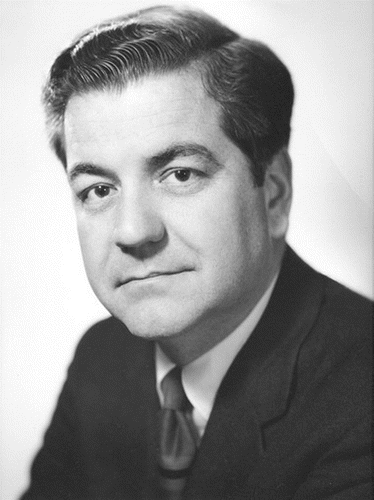 Henry N. Wagner合作论文数The Johns Hopkins Medical Institutions4
 Heinrich R. Schelbert合作论文数Department of Molecular and Medical Pharmacology, University of California Los Angeles4Juying Qian合作论文数4
 Robert E. Wharen合作论文数Department of Neurosurgery (Reimer, Wharen),, Mayo Clinic Jacksonville4B Fan合作论文数3Congna Tian合作论文数3
 Yifan Wang合作论文数3Wei Wang合作论文数3Weixue Wang合作论文数3Wang Xuebin合作论文数3WANG Yong-gang合作论文数3Ke-wei CHU (褚克维)合作论文数3Zhaohuan Zhang合作论文数3




