三河牛具有适应当地气候、生态条件并且生产性能高的特点,2009年已进入国家良种补贴计划,对当地牛群的遗传改良发挥了重要作用.但由于受客观条件的限制,人工授精技术在呼伦贝尔边远地区尚未普及,为此特为不具备冷配条件的地区特培了用于本交的三河牛公牛,以期为边远牧区提供优良种畜,提高当地牛群遗传水平.经2014~2017年的推广应用,杂种一代犊牛增重速度比当地犊牛高20%以上,而且杂交后代具有与当地牛同样的耐粗饲、耐寒、适应性强的特性,同时母牛的配种受胎率高,大大增加了当地牧民的养殖效益.
This study was conducted to establish model for genetic analyses of adult body size and body weight in Sanhe cattle,and to estimate population genetic parameters,in order to provide foundational parameters for establishing breeding objective and forming selection index for Sanhe cattle.Body size and body weight data of 4 491 adult Sanhe cows were measured from 1997 to 2010,a total of 48 946 records were collected from Xiertala Cattle Farm of Inner Mongolia,where the nuclear herd for Sanhe cattle were located,and used for genetic analyses.The 15 body size and body weight traits included body height(BOH),body length (BI),chest girth (CG),cannon circumference (CC),body weight (BW),abdomen circumference (AC),back height (BAH),hip cross height(HCH),chest depth (CD),chest width (CW),hip width (HW),pin bone width (PBW),rump length (RL),head length (HL) and forehead width (FW).DMU package was used for genetic evaluation(AI-REML and EM algorithm) combined with multiple traits animal model,considering age of cow as fixed effect,farm-year-season and additive genetic effect as random effects.Heritabilities and genetic correlations were computed based on estimated variance components,and genetic trends of all traits were analyzed based on estimated breeding values.The results showed that the estimated heritabilities of BOH,BL,CG,CC,BW,AC,BAH,HCH,CD,CW,HW,PBW,RL,HL and FW in adult cows were 0.73±0.02,0.58± 0.02,0.43±0.03,0.51±0.02,0.41±0.03,0.51±0.03,0.60±0.03,0.69±0.03,0.55± 0.03,0.26±0.02,0.28±0.03,0.17±0.02,0.21±0.02,0.69±0.03 and 0.55±0.03,respec-tively.The genetic correlation coefficient among body size and weight traits for adult cows were from-0.19 to 0.92,and their phenotypic correlation coefficient were from-0.30 to 0.93.The genetic correlation coefficient among BOH,BAH and HCH were 0.79-0.88,and their phenotypic correlation coefficient were 0.76-0.93.Genetic correlation among HW,PBW and RL were low (0.11-0.34),and their phenotypic correlation were medium (0.50-0.83).The heritabilities of body size and body weight in adult Sanhe cows are medium to high inheritable traits in general.In which,low genetic correlation exists among traits related to reproduction performance,while higher genetic correlation exists among traits related to body structure.It is suggested that selection system for Sanhe cattle should be strengthened,so that genetic level of economically important traits could be improved steadily.
[Objective]In this study, body measurements at birth of 5521 Sanhe cattle born from 2000 to 2012 were collected for genetic parameters estimation for height at withers, body length, chest girth and cannon circumference at birth and birth weight.[Method]DMU software was used, and AI-REML combined EM algorithm based on multiple-trait animal model was employed including sex and age of dam as fixed effects, birth herd-year-month and additive animal genetic effect as random effects.[Result]The results showed that the heritability estimates for height at withers, body length, chest girth, cannon circumference and birth weight were 0.46, 0.48, 0.38, 0.50 and 0.41, respectively. Genetic correlations among these traits varied from-0.05 (between cannon circumference and body length and birth weight, respectively) to 0.86 (body length and birth weight). Phenotypic correlations between these traits ranged from -0.10 (body length and cannon circumference) to 0.70 (body length and birth weight).[Conclusion] The heritability estimates were between 0.38 and 0.50 for body measurements at birth and birth weight of Sanhe cattle, which are high inheritable. These traits can be directly selected according to their breeding values, or use indirect selection on traits that are difficult to measure but genetically correlated with other traits (e.g. genetic correlation between 0.40-0.86), for further improvement of breeding efficiency and accuracy.
Sanhe Cattle in Inner Mongolia is a local dual purpose breed formed and approved in China with more than 100 years developing history in Hulunbuir pasture.Sanhe cattle is famous for its durability,disease resistance,high quality in both milk and meat production,and suitability for grazing.Since it was approved as a breed in 1986,this breed was preserved adopting selection within family lines in the nucleolus herd,both its performance and reproduction efficiency was preserved under the harsh condition in Hulunbuir pasture.Although Sanhe cattle was challenged by high yield breeds during the past 20 years,such as Holstein,it remained as a major breed because it was highly adapted for the local environment and had excellent performance in meat and milk production.Since the beginning of the 11th five-year plan,state government paid more attention to the genetic improvement of Sanhe from the basis of existing system for breed registration and performance testing.National standard for Sanhe cattle breed was revised and re-published,breeding information database for Sanhe cattle was established and DHI testing system used for dairy cattle was introduced,the dual purpose breeding goal was re-emphasized through introducing elite stock of international recognized similar type of breed,progresses were achieved through this open nucleus breeding system philosophy.This paper first reviewed the breeding history and then summarized the recent progresses in the breeding system to share our experience.
 Li-xin JIANG (姜立鑫)合作论文数4HongJun Wu (吴宏军)合作论文数4Lei ZHOU (周磊)合作论文数3JiuHui Cui (崔久辉)合作论文数3AiRong Liu (刘爱荣)合作论文数3Dongsheng Wang (王东升)合作论文数3TongXi Dou (窦同喜)合作论文数2EnQi Wu (乌恩旗)合作论文数2Xu Zhang (张旭)合作论文数2Huazhu Liu (刘化柱)合作论文数2
 Yachun Wang (王雅春)合作论文数College of Animal Science and Technology, China Agricultural University2
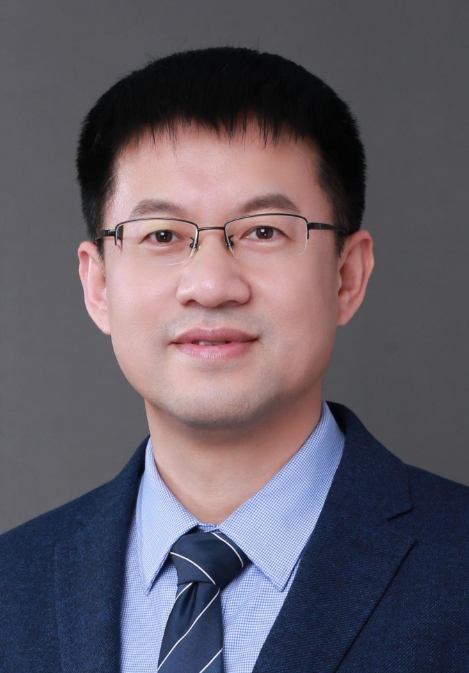 Yi Zhang (张毅)合作论文数College of Animal Science and Technology, China Agricultural University2Xiaoli Ren合作论文数1CHAI He (柴河)合作论文数1LIU You-shan (刘友山)合作论文数1Jian ZHAO (赵健)合作论文数1GangHui Dong (董刚辉)合作论文数1Xiaolin Ma (马孝林)合作论文数1ZHAO Jian (赵建)合作论文数1Shaoxun Zhang (张绍勋)合作论文数1Jingshun Wang (王景顺)合作论文数1Haifeng Li (李海峰)合作论文数1dongsheng wang (王东生)合作论文数1Qingqing Wu (吴青青)合作论文数1




