Objective:To retrospectively summarize the imaging and clinical features of craniopharyngioma in order to improve the preoperative diagnosis level.Methods:One hundred and twenty-seven patients with craniopharyngioma diagnosed by pathology in Sanbo Brain Hospital, Capital Medical University from March 2019 to June 2021 were selected and the pathological coincidence rate of imaging diagnosis were analyzed.Results:The coincidence rate of MRI diagnosis was 89.3%. The coincidence rate of CT diagnosis was 71.5%. On T 2WI and T 1WI enhanced sequences, the solid portion of the tumor may showed uneven hyperintensity, diffuse striation and spotty hyperintensity. MRI sagittal view was helpful in showing small tumors, but less sensitive to calcification than CT. MRI enhancement was very important, especially for patients with solid lesions. Conclusions:The imaging findings of craniopharyngioma are diverse. Some characteristic manifestations provide important information for the diagnosis and differential diagnosis of craniopharyngioma, which can improve the diagnostic accuracy combined with clinical data.
颈动脉狭窄是引起缺血性脑卒中的主要原因之一。当前全球对于颈动脉狭窄的外科治疗已有了多个大宗随机对照临床试验,如北美症状性颈动脉内膜剥脱试验(NASCET)、欧洲颈动脉手术试验(ECST)、无症状颈动脉狭窄手术试验(ACST)等,并已建立了公认的颈动脉狭窄外科治疗指南。近年来在国家政策的推动下,颈动脉内膜剥脱术(carotid endarterectomy,CEA)得到了大力地推广和普及,我国在参考全球指南的基础上,也推出了结合我国实际情况的颈动脉狭窄治疗指南。
Objective:To explore the etiology and treatment of craniopharyngioma with aneurysm.Methods:Seven cases of craniopharyngioma with aneurysm from March 2014 to October 2019 treated in Sanbo Brain Hospital, Capital Medical University were retrospectively analyzed. Among the 7 patients, there were 5 males and 2 females. There were 4 cases of recurrent craniopharyngiomas, 1 case of primary tumor and 2 cases of non-recurrence tumor. Three patients with blood blister-like aneurysms were treated with microsurgical suture after craniopharyngioma resection. Among the three cases with internal carotid artery fusiform aneurysm, 1 case underwent craniopharyngioma resection after internal maxillary artery-radial artery-middle cerebral artery bypass and isolation of the aneurysm; 1 case only underwent internal maxillary artery-radial artery-middle cerebral artery bypass and isolation of the aneurysm for non-recurrence tumor; 1 case underwent craniopharyngioma resection and dynamic observation of aneurysm. One case with a cystic aneurysm of the middle cerebral artery was clipped and the craniopharyngioma did not relapse.Results:All patients had no serious postoperative complications. During the follow-up period, there was no recurrence of craniopharyngioma, no recurrence of treated aneurysms, and the stability of aneurysms was observed.Conclusions:Inflammatory stimulation of craniopharyngioma cystic fluid and operation itself are the important reasons for the occurrence of aneurysms after craniopharyngioma surgery. Choosing appropriate surgical methods can complete the removal of craniopharyngioma and the treatment of aneurysms at one time.
Objective:To evaluate the clinical effect of anterior clinoid process grinding in the treatment of ophthalmic / superior clinoid process aneurysms and sellar tumors.Methods:The clinical data of 16 patients who underwent anterior clinoid process grinding in Sanbo Brain Hospital, Capital Medical University from January 2015 to July 2021 were analyzed retrospectively. There were 1 patient with recurrent craniopharyngioma, 1 patient with recurrent pituitary adenoma, 13 patients with aneurysms, and 1 patient with suprasellar granulosa cell tumor combined with ophthalmic aneurysm of right internal carotid artery. The Modified Rankin Scale (mRS) score was used to evaluate the situation at discharge and in the medium-and-long term.Results:Sixteen patients underwent anterior clinoidprocess grinding. At discharge and the latest follow-up, the mRS scores of the patients were 0-2. A total of 15 aneurysms were treated, and there were no symptoms of visual loss or visual field defect after operation. No cerebrospinal fluid leakage occurred in all patients.Conclusions:The grinding of anterior clinoid process can effectively and fully stretch the optic nerve and internal carotid artery, and can observe the tumor neck at the lower end of pituitary stalk and the ocular segment/superior clinoid process of internal carotid artery under direct vision. It is one of the important auxiliary methods for the treatment of sellar lesions.
恶性颅咽管瘤罕见,发病机制不明,临床预后较差,掌握其临床病理特征对该病的临床治疗及预后评估均具有重要意义。回顾性分析5例鞍区恶性颅咽管瘤患者的临床资料、病理特征、治疗及随访,并复习相关文献。
专业图片对神经外科手术的理解展示与高水平文章发表来说往往有着巨大的作用,具有简单、易懂、醒目与美感的特点,因此对于神经外科医生来说,掌握画图方法与技术非常重要。本文以显微神经外科解剖知识为基础,通过讲解具体病例图片的创作体会,使神经外科医生画图时达到把控结构、形态、比例及榫合关系,用不同画线的粗、细、虚、实勾画成专业图案的目的。
单额或双额冠状切口是神经外科开颅术常用的手术切口,在前颅底、鞍区等部位的外伤、脑血管病、肿瘤等疾病的治疗中均有广泛应用.多数情况下,开颅过程中需涉及到额窦的处理,本视频对单额或双额冠状切口开颅术中额窦的处理进行简要概括,包括手术骨瓣设计、额窦炎发病机制、额窦重建方法及技巧等方面.
目的 探讨动脉粥样硬化性烟雾综合征的临床特征和手术疗效.方法 回顾性分析21例动脉粥样硬化性烟雾综合征病人的临床资料,对比手术前后mRS评分、卒中发生率及症状改善等情况,判断手术疗效.结果 所有病人术中荧光造影提示搭桥血管通畅性良好.术后搭桥血管闭塞1例,脑梗死3例,脑过度灌注1例,伤口浅表部位感染1例,均给予对症处理.影像学随访3~14个月,13例行MRA或CTA检查,搭桥血管通畅性良好6例,不通畅7例.10例行CT灌注(CT perfusion,CTP)或MRI动脉自旋标记灌注技术(arterial spin labeling,ASL)检查,大脑灌注改善7例,无明显改善3例.临床随访7~52个月,病人mRS评分降低13例,无变化6例,升高2例;随访期间未发生缺血性或出血性卒中等严重不良事件,无死亡病例.结论 有吸烟史、合并高血压且超重的中老年人群应警惕动脉粥样硬化性烟雾综合征的发生.颅内外搭桥手术可以显著改善病人预后,降低卒中发生率.
目的 评价颌内动脉搭桥治疗颅内复杂动脉瘤的临床中远期治疗效果.方法 回顾性分析91例颅内复杂动脉瘤行颌内动脉搭桥病人的临床资料,使用mRS评分评价病人中远期预后.结果 出院时mRS评分0~2分67例(73.6%),3~5分23例(25.3%),死亡1例.83例随访31~136个月,平均(82.0±25.0)个月,mRS评分0~2分67例(80.7%),3~5分6例(7.2%);死亡10例(12.0%),其中死于肺部感染5例,大面积脑梗死2例,颅内出血1例,胰腺癌1例,对侧动脉瘤破裂1例.结论 颌内动脉搭桥是治疗颅内复杂动脉瘤的有效方式之一,其术式选择可忽略动脉瘤的个体化差异.
目的 评估症状性颈内动脉或大脑中动脉慢性闭塞病人经颌内动脉搭桥治疗后的血流动力学改变和长期临床效果.方法 回顾性研究25例症状性颈内动脉或大脑中动脉慢性闭塞病人的临床资料,均行颌内动脉-桡动脉-大脑中动脉搭桥治疗.采用超声测量术中血流量,MRI灌注(perfusion weighted imaging,PWI)或CT灌注(CT perfusion,CTP)评估局部脑血流量(regional cerebral blood flow,rCBF)、局部脑血容量(regional cerebral blood volume,rCBV)、平均通过时间(mean transit time,MTT)和达峰时间(time to peak,TTP).结果 术中搭桥血管血流量为(81.36±30.41)ml/min.术后3 d CTA证实搭桥血管通畅率100%.术后血流动力学指标rCBF改善13例,rCBV改善7例,MTT改善18例,TTP改善22例.术后病人症状改善16例,无明显变化9例.随访3个月搭桥血管通畅率96%,6个月时通畅率84%.术后2年死亡2例.20例随访满5年,均无新发神经功能缺失.结论 对症状性颈内动脉或大脑中动脉慢性闭塞病人,颌内动脉搭桥可改善其血流动力学,是治疗上的一种有效选择.
目的 探讨采用大鼠颈动脉进行显微血管吻合技术训练的意义.方法 选取全国不同地域且未行显微血管吻合技术训练的神经外科医师71名.同时选取健康成年雄性SD大鼠142只,分为A、B两组(每组各71只).受训医师先对A组71只大鼠行右侧颈动脉端端吻合术,之后2周内集中进行显微血管吻合技术训练;2周后再对B组71只大鼠行右侧颈动脉端端吻合.分别观测统计血管吻合时间(从开始缝合到缝合完成)、吻合针数、术后即时血管通畅率、术后24 h血管通畅率、术后存活率;并进行比较分析.结果 A组有效完成实验大鼠57只,平均吻合时间为(45.1±6.23)min,平均缝合(6.1±1.42)针,术后即时血管通畅率为77.2%(44/57),术后24 h血管通畅率为46.4%(26/56),术后大鼠存活率为98.2%(56/57).B组有效完成实验大鼠62只,平均吻合时间为35.3 min,平均缝合6.3针,术后即时血管通畅率为91.9%(57/62),术后24 h血管通畅率为57.4%(35/61),术后大鼠存活率为98.4%(61/62).两组大鼠的平均血管吻合时间、术后即时和24 h通畅率的差异有统计学意义(均P<0.05).结论 采用大鼠颈动脉进行显微血管吻合技术训练,可显著提高初学者的血管通畅率,减少吻合时间;并且大鼠术后的存活率高,可作为初学者显微血管吻合技术训练的一种较好的动物模型.
前交通破裂动脉瘤是导致蛛网膜下腔出血最常见病因之一,开颅手术夹闭动脉瘤的同时可以清除血肿,解除脑组织压迫,改善脑循环和代谢.额颞入路可以经外侧裂及额下两个手术路径对动脉瘤进行近端和远端控制,并达到良好的动脉瘤夹闭治疗效果.
Although the extracranial-to-intracranial bypass has been widely used for 5 decades, the substantive modification in this technique has rarely presented except for the internal maxillary artery (IMaxA) bypass. Recently, the IMaxA bypass has been redefined as the new "workhorse" for high-flow arterial reconstruction and replaced the cervical artery bypass as the results of sparing second incision, short graft harvesting, and well-matched caliber between donor and recipient. This video demonstrates a 37-year-old female who presented with a 1-month history of severe headache. Her complex middle cerebral artery (MCA) aneurysm was treated by IMaxA bypass with radial artery graft. Preoperative neuroimaging revealed a giant, fusiform, thrombosed aneurysm that extensively involved the sphenoidal (M1) and insular (M2) segments of the MCA. After a multidisciplinary discussion, the reversal high-flow IMaxA bypass was performed, followed by proximal MCA occlusion. We approached the aneurysm using a frontotemporal craniotomy with zygomatic osteotomy to expose the pterygoid segment of IMaxA (IM2), which is defined as the "SHI" IMaxA bypass method. Simultaneously, the radial artery graft was harvested and prepared before being anastomosed in an end-to-end fashion to the IM2 using No. 9-0 polypropylene. The free end of the RAG was then brought to the sylvian fissure and anastomosed to the M2 in an end-to-side manner. The proximal part of M1 after the bypass takeoff was then occluded with a permanent aneurysm clip (Aesculap Instruments Corp., Tuttlingen, Germany). Complete elimination of the aneurysm with a patent graft artery was observed postoperatively, and the patient was discharged with intact neurologic function (modified Rankin Scale score 0).
目的 总结采用带血管蒂的游离股前外侧肌皮瓣修复巨大头皮缺损病例的治疗经验.方法 回顾性分析1例复发胶质瘤合并头皮感染病人的临床资料,人院后行颅内胶质瘤切除术+去骨瓣减压术+皮下脓肿清除术,术后病人出现头皮缺损,予局部坏死头皮切除术加带血管蒂的游离股前外侧肌皮瓣修复缺损头皮,术中肌皮瓣血管分别与颞浅动脉和颞浅静脉行端端吻合术治疗,术后密切观察头皮颜色和血运情况.结果 转移皮瓣血运良好,术后皮瓣存活,病人恢复良好.随访6个月,一般情况良好.结论 带血管蒂的游离股前外侧肌皮瓣可用于大面积头皮缺损治疗,并取得较好疗效.
Objective To explore the technique and effect of microsuture in the treatment of the middle cerebral artery bifurcation (MCBIF) aneurysms.Methods The clinical data of 3 patients with middle cerebral artery (MCA) bifurcation aneurysms treated with microsuture from April 2017 to October 2018 were analyzed respectively.Results The aneurysms were successfully treated in all 3 patients, and the patency of M1 terminal vessels and M2 branches were ensured.The risk of rupture of aneurysms was eliminated.No added complications after operation , and the recovery was good.Conclusions Microsuture technique is an effective method for the treatment of complex MCBIF aneurysms.Delicate manipulation and rigorous surgical planning can significantly improve the success rate of operation.
Objective To explore the surgical treatment of spindle aneurysms in V4 segment of vertebral artery. Methods The clinical data, surgical methods and prognosis of 6 patients with V4 spindle aneurysms of vertebral artery admitted from 2011 to November 2018 in Sanbo Brain Hospital were retrospectively analyzed,Results There were 4 males and 2 females aged from 45 to 65 years. Aneurysm rupture and bleeding occurred in 3 cases. Far lateral approach was used in all patients. One case was clipped with window aneurysms, 2 cases were treated with occipital artery (OA)- posterior inferior cerebellar artery (PICA) bypass, and 3 cases were treated with vertebral artery occlusion. Postoperative patients were generally in good condition. Postoperative CT arteriography confirmed that the bypass vessels were unobstructed in 2 cases. All vertebral aneurysms were treated satisfactorily and PICA arteries were preserved. Tracheotomy was performed in 5 patients (1 case was incised before operation). Three patients were removed 3 months after operation. The Glasgow Prognosis Score (GOS) was 4 points. Long-term tracheotomy was performed in 1 case, and GOS score was 3 points. Two patients died 4 months and 3 years after operation. Conclusions Craniotomy is an important method for the treatment of spindle aneurysm of V4 segment of vertebral artery. Different surgical methods should be selected according to the size of the aneurysm, the relationship between the location of the aneurysm and PICA, and the compensation of the vertebral artery.
To the Editor: We read with great interest the recent articles by Feng et al1 and Benet et al2 in your esteemed journal regarding internal maxillary artery (IMA) to middle cerebral artery (MCA) bypass with an interposed superficial temporal artery (STA) graft. In this high-quality and detailed article, and an additional 3-dimensional video, the authors examined using the STA trunk as a graft conduit rather than a donor vessel for an IMA bypass procedure. Meanwhile, as the authors previously reported,3 a novel drilling technique called the “lateral triangle” approach was utilized in the procedure, which facilitated dissection of the pterygoid IMA in an easy and safe manner. We congratulate the authors on their achievement of performing an IMA–STA–MCA bypass through such a simple method. However, some aspects of graft selection within the high-flow IMA bypass should be discussed. The selection of a graft in a bypass surgery depends on not only the blood flow through the bypass needed to cover the territories of the occluded vessel, but also the status of the recipient and the donor vessels related to the lesion.4 Multiple graft conduits, such as the radial artery (RA),5-13 saphenous vein (SV),14 cephalic vein (CV),12,15 and STA1,2,16 have been examined for use with this type of bypass modality. The RA, as the most common graft conduit, has several potential advantages including ease of harvesting, good long-term patency, rare complications after harvesting, and well-matched thickness to a recipient artery with regard to physiological structure and size, which improves the ease of anastomosis construction.4,11,13,17-20 However, patients must pass the Allen test to ensure that no ischemic events in the hand will occur upon harvesting of the RA graft. The SV graft is another commonly utilized graft in bypass surgery. However, such a vein graft manifests a considerably thicker wall than the arterial counterpart, which makes anastomosis technically demanding and time-consuming.20 Besides, due to the high flow passing through the vessel, SV grafts are prone to twisting at the anastomotic site.20 Additionally, Shi et al21 have revealed that proatherogenic changes may present in the SV graft after revascularization, creating conditions that could lead to the development of graft thrombosis. Considering these disadvantages, Nossek et al12,15 introduced a new graft conduit, the CV, for IMA bypass. This subcutaneous vein is easily manipulated from the volar forearm between the proximal cubital fossa, where the median cubital vein confluences with the CV and the distal wrist.15 This vein conduit has few valves, rare branches and infrequent complications after upper extremity incision.12 Most importantly, the CV graft is more easily harvested than the wider SV and demonstrates excellent diameter matching with the donor IMA and recipient MCA.12,15 A few concerns have been raised regarding the poor graft patency rate of this venous graft,22 but Noeesk et al15 assumed that such complications would be minimal when CV grafts are used for very short segments. The aim to use the STA as an interposed graft conduit for the IMA bypass procedure was initially proposed by Arbag et al.16 This technique makes arm and cervical incisions unnecessary, avoids potential technical and vascular complications, and decreases the duration of the procedure.1 However, the main diameters of the STA trunk range from 2.0 to 2.2 mm,1,2 which compared to that of the IMA (2.4-3.46 mm), will produce arterial mismatch.1,2,14,16,23-28 Since the vessel radius contributes exponentially to the flow rate, the actual flow rates for this type of bypass will likely be closer to that of a standard STA–MCA bypass. In addition, we are concerned that the short length of the STA graft may not translate to clinical application for free-tension IMA bypass. Specifically, the authors illustrated that a 7.5-cm STA graft can be obtained by starting 1.5 cm below the zygomatic arch. Given that the average length of the required STA graft was 5.6 cm, this result seems questionable due to the different data for the acquired STA trunk. On average, the STA is 31.7 mm from the zygoma to its bifurcation, with an additional length of 5 to 10 mm gained below the zygoma.11,28 This result is supported by Russin and Giannotta,1 who assumed that when harvesting more than 5 cm of the STA, it is very likely that the graft will extend beyond the bifurcation of the STA into the frontal and parietal branches. In addition, it should be mentioned that the length of the arterial graft appears to shorten during the virtual bypass procedure due to arterial vasospasm despite utilization of a pressure distention technique. In our institution, more than 100 IMA bypasses have been performed as treatment for complex cerebrovascular disorders by the senior author (X.S.) with a favorable graft patency rate. For these procedures, the craniotomy and graft harvesting were performed simultaneously, which makes the procedure less time-consuming than the current bypass modality.5-10 In our opinion, the RA remains the first graft choice for the IMA bypass procedure. Vein grafts are prone to be utilized in some circumstances when the RA is either bilateral occluded or unsuitable in diameter during the perioperative period. Meawhile, utilizing the STA trunk as a graft vessel is not recommended in high-flow bypass surgery unless there are definitely no other reasonable options available attribute to the poor diameter match and short length. In conclusion, we appreciated Feng and Benet and colleagues1,2 for raising our awareness of using the STA within high-flow cerebral revascularizations other than conventional low-flow bypass. Our cautionary comments in this letter are meant to emphasize the graft selection scheme of the SanBo team for IMA bypass surgery. Disclosures Beijing Municipal Natural Science Foundation (Grant No. 7161005 to X.S.); Science and Technology Commission Foundation of Beijing (Grant No. Z161100000516019 to X.S.). The authors have no personal, financial, or institutional interest in any of the drugs, materials, or devices described in this article.
目的 探讨大鼠颈总动脉(CCA)端端吻合在初学者显微技术训练中的价值.方法 随机选取来自全国不同地区神经外科医生,且未进行过专门显微技术训练的初学者53名作为研究对象,同时随机选取健康雄性SD大鼠116只,分别行颈总动脉端端吻合术,并在吻合完成后检查即时血管通畅情况、吻合时间(自放置阻断夹至松开阻断夹)、吻合针数,并在24小时后检查次日血管通畅情况及存活率.结果 116只SD大鼠中,麻醉致死率约为6.0% (7/116),大出血致死率约为4.3%(5/116),最终有效研究对象104例,平均缝合6.32针,平均用时64.82 min,即时血管通畅率85.6%(89/104),次日血管通畅率50.0% (52/104),术后次日大鼠存活率100%(104/104).结论 大鼠颈总动脉端端吻合术后的即时、次日血管通畅率均较高,术后存活率高,可以作为未进行过专门显微技术训练的神经外科显微技术初学者训练的一种较好的动物模型.
目的 探讨冠状切口右额开颅经纵裂入路磨除鞍结节,切除鞍内部分颅咽管瘤的手术技巧、疗效与术后并发症的防治.方法 回顾性分析23例采用冠状切口右额开颅经纵裂入路全切的颅咽管瘤病例资料.手术步骤:冠状切口右额骨瓣开颅,分离纵裂,切除肿瘤鞍上部分,然后磨除鞍结节、蝶骨平台及蝶鞍前壁骨质,扩大视交叉前间隙,显露并切除鞍内肿瘤,修补鞍底.结果 全切23例,脑脊液鼻漏1例,无颅内感染及死亡.随访1~25个月,1例术后9个月复发.结论对于侵入鞍内的颅咽管瘤病例,磨除鞍结节,扩大手术视野,有助于达到全切肿瘤的目的.
神经外科专业性强,对于神经外科进修医生的教学难度大,但非常重要。我院对进修医生的带教过程中通过采用 PBL 结合多媒体教学法,有效地提高了学员对神经外科学习的积极性,取得了较好的学习效果。PBL 结合多媒体教学应用于神经外科进修医生的教学,可以取得很好的效果。
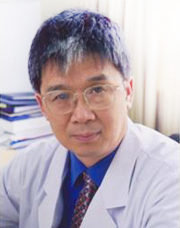 Xiangen Shi (石祥恩)合作论文数首都医科大学三博脑科医院32
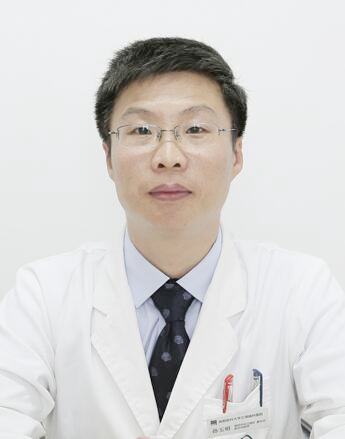 Yuming Sun (孙玉明)合作论文数首医大三博脑科医院(北京)有限公司21
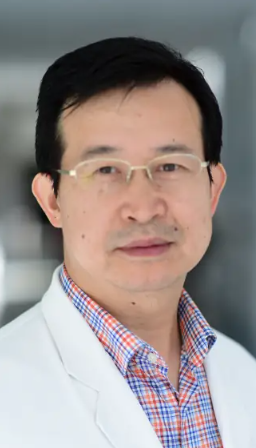 Zhongqing Zhou (周忠清)合作论文数Sanbo Brain Hospital, Capital Medical University21
 Fangjun Liu (刘方军)合作论文数Sanbo Brain Hospital, Capital Medical University17
 Yongli Zhang (张永力)合作论文数Sanbo Brain Hospital,Capital Medical University11
 MengQing Hu (胡孟庆)合作论文数5JiQiang Wang (王计强)合作论文数5
 Bin Wu (吴斌)合作论文数Sanbo Brain Hospital Capital Medical University5Zaitao Yu合作论文数4Lei Ting合作论文数4
 Jie Zhang (张杰)合作论文数Beijing Tiantan Hospital, Capital Medical University4
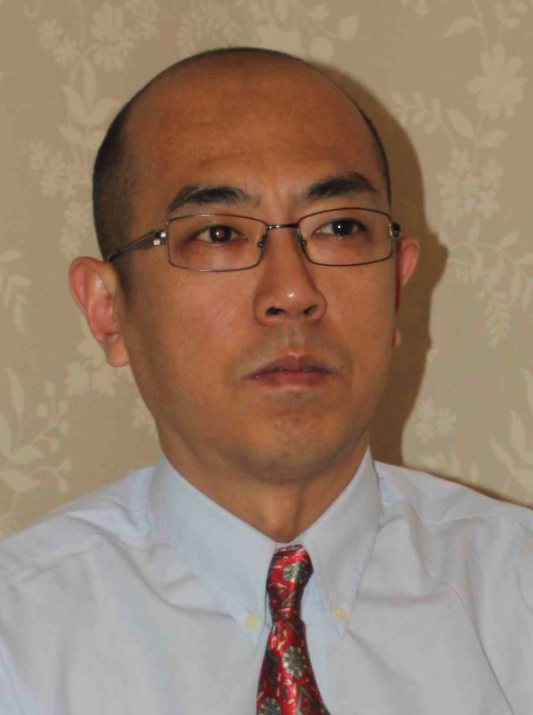 Tao Fan (范涛)合作论文数Capital Medical University4Yang Yang合作论文数3
 ZhiQiang Li (李志强)合作论文数首都医科大学附属北京安贞医院3
 Long Wang (王龙)合作论文数SanBo Brain Hospital, Capital Medical University2Cai-xia ZHANG (张彩霞)合作论文数2YeShuai Hu (胡业帅)合作论文数2Xin Xiang合作论文数2
 Shaohua Yang合作论文数Univ. of N. Texas Hlth. Sci. Center, University of North Texas Health Science Center at Fort Worth2
 Wei Zhang (张伟)合作论文数Department of Neurosurgery, Beijing Tiantan Hospital, Capital Medical University;Graduate School of Capital Medical University2
 Yong Zhang (张勇)合作论文数Capital Medical University2
 Ran Liu合作论文数Department of Pharmacology and Neuroscience, University of North Texas Health Science Center2
 Luokun Xie合作论文数Dept Pharmacol & Neurosci, Univ North Texas Hlth Sci Ctr1Hua She合作论文数Emory Univ, Sch Med, Dept Pharmacol, Atlanta, GA 30322 USA1Liping XIAO (肖莉萍)合作论文数1Jin WANG (王瑾)合作论文数1xiaochun zhao (赵晓春)合作论文数1Hong-Liang Li合作论文数1jinliang liu (刘进良)合作论文数1Pengbo Li (李鹏波)合作论文数1SUN Jian (孙健)合作论文数1HeQian Zhao (赵和千)合作论文数1WeiMin Ni (倪伟民)合作论文数1Tie Fang (方铁)合作论文数1Bo Zhao (赵波)合作论文数1Ming Ren合作论文数1Poteet Ethan C合作论文数1Qian Jia合作论文数1Li Wenjun合作论文数1
 Liangjun Yan合作论文数College of Pharmacy, University of North Texas Health Science Center1
 Yuanbo Liu (刘元波)合作论文数Beijing Tiantan Hospital, Capital Medical University1
 Gourav Roy Choudhury合作论文数Franklin Biolabs1
 Hanli Liu合作论文数Department of Bioengineering, College of Engineering, The University of Texas at Arlington;UT Southwestern Medical Center1
 Chengyin Liu (柳成荫)合作论文数Harbin Institute of Technology, Shenzhen1Marvin Marian A合作论文数1Jinlan Zheng (郑今兰)合作论文数1Zhimin Zhang (张志民)合作论文数1




