患者男性,50岁,因间断黑矇1个月入院,心电图及动态心电图均提示间断高度-三度房室传导阻滞,超声心动图、心脏CT及心脏M RI均提示矫正型大动脉转位.入院后成功行无导线起搏器植入术,将无导线起搏器植入解剖学左室内,术后各项参数稳定.
To study the safety and electrical characteristics of various implanting sites of the Micra pacemaker. A total of 15 patients from Beijing Anzhen Hospital, Capital Medical University, were included, who were implanted with Micra leadless pacemakers and allocated to either the high ventricular septum group (eight patients) or the low ventricular septum group (seven patients) based on their individual patient factors and clinical conditions. The baseline of the patients, the implanting area, the electrocardiogram change after implantation, the implantation data, the threshold, R wave, impedance, and the date of the 1-month follow-up were then analyzed. With all of the data, the characteristics of different implantation sites of the Micra pacemaker were determined. Overall, the thresholds were low at implantation and remained stable over the 1-, 3-, 6-month, 1-, 2-, 3-, and 4-year follow-ups. On comparing the two groups, there was no difference in QRS duration at pacing (140.00 [40.00] ms vs. 179.00 [50.00] ms), threshold at implantation (0.38 [0.22] mV vs. 0.63 [1.00] mV), R wave at implantation ([10.85 ± 4.71] V vs. [7.26 ± 2.98] V), or impedance at implantation ([906.25 ± 162.39] Ω vs. [750.00 ± 173.40] Ω). While the difference in QRS duration between the two groups was not significant, the QRS duration of the high ventricular septum group exhibited a reduced tendency compared with that of the low ventricular group. The corrected QT interval during pacing exhibited a significant difference (440.00 [80.00] ms vs. 520.00 [100.00] ms; p < .05). For the 1-, 3-, 6-month, 1-, 2-, 3-, and 4-year follow-ups, there was no difference between the threshold of the high ventricular septum group and that of the low ventricular septum group ( p > .05). High ventricular septum pacing appears to be a safe site for implantation of the Micra pacemaker. It could entail a shorter QRS duration at pacing and could be more physiological than low ventricular septum pacing.
BACKGROUND:Congenitally corrected transposition of the great arteries (ccTGA) is a rare cardiac anomaly and can lead to abnormal electrical activity of the heart. The implant of a pacemaker in such patients is more complicated than conventional operations. This case report of an adult with ccTGA who had a leadless pacemaker implant will provide a reference for diagnosing and treating such patients.CASE PRESENTATION:A 50-year-old male patient was admitted to hospital having experienced intermittent vision loss for a month. An electrocardiogram and Holter monitoring showed intermittent third-degree atrioventricular block, and echocardiography, cardiac computed tomography and cardiac magnetic resonance imaging confirmed a diagnosis of ccTGA. A leadless pacemaker was successfully implanted into the patient's anatomical left ventricle, and the postoperative parameters were stable.CONCLUSION:Implanting a leadless pacemaker into a patient with a rare anatomical and electrophysiological abnormality, such as ccTGA, is feasible and efficacious, but preoperative imaging evaluation is of considerable importance.
Objective This study aimed to evaluate predictors for adverse cardiovascular outcomes in patients with atrial fibrillation (AF) undergoing coronary stenting. Methods We retrospectively recruited consecutive patients with previously documented non-valvular AF who underwent coronary stenting between January 2010 and June 2015 in 12 hospitals of Beijing, China. Major adverse cardiac/cerebrovascular events (MACCE) were a composite of all-cause death, non-fatal myocardial infarction, repeat revascularization, and ischaemic stroke/systemic thromboembolism (IS/STE). Major bleeding referred to grade 2 or higher of Bleeding Academic Research Consortium criteria. Results A total of 2394 patients (men: 72.3% vs. women: 27.7%, median age: 67 years) were included. The CHA(2)DS(2)-VASc and HAS-BLED were 3.6 +/- 1.6 and 1.9 +/- 0.7, respectively. The median follow-up duration was 36.2 months. There were 230 (9.6%) deaths, 96 (4.0%) IS/STE, 426 (17.8%) MACCE, and 72 (3.0%) major bleeding. Multivariate Cox regression yielded predictive models for (1) all-cause death: diabetes, prior myocardial infarction, chronic kidney disease (CKD), ST-segment elevation myocardial infarction (STEMI) at presentation, heart failure, no use of angiotensin-converting enzyme inhibitors/angiotensin receptor blockers, and statins; (2) IS/STE: advanced age, prior history of ischaemic stroke and intracranial haemorrhage; (3) MACCE: prior history of myocardial infarction and ischaemic stroke, CKD, STEMI, heart failure, and no statin use; (4) major bleeding: prior major bleeding, prior myocardial infarction, CKD and use of oral anticoagulants. Conclusion Chinese patients with AF and coronary stenting had high mortality and incidence of MACCE. We compiled separate predictive models for all-cause death, IS/STE, MACCE, and major bleeding.
目的 探讨通用钢丝支撑的导线(Solia S60)在三维引导鞘支撑下行左束支区域起搏(LBBaP)的可行性、安全性.方法 15例患者入选,在三维引导鞘支撑下应用Solia S60电极行LBBaP,记录术中电极导线的参数,QRS波形态及时限,LBBaP时V5导联左室达峰时间、透视时间及术中并发症等,比较术后随访中起搏参数、QRS时限等变化.结果 15例中12例(80%)成功应用Solia S60完成LBBaP,手术时间(87.73±24)min;术后QRS波时限与术前相比无差异[(120.17±9.3)ms和(119.25±26.5)ms,P>0.05],术后随访电极阻抗相对稳定[单极(418.4±92.0)Ω,双极(642.3±103.9)Ω].失败3例,1例为巨大右房,1例为复杂解剖异常,此2例改为普通起搏;另1例为术中出现停搏之后心室颤动,改为间隔起搏.结论 钢丝支撑的导线在特殊鞘支撑下行LBBaP是可行且安全的.
目的 通过生理药动学(PBPK)模型结合全细胞膜片钳技术研究胺碘酮及其活性代谢产物去乙基胺碘酮对心肌细胞hERG通道和动作电位的影响,评价其体外心脏安全性.方法 基于复合PBPK模型预测胺碘酮、去乙基胺碘酮在人体心肌药动学曲线.选用模型预测的胺碘酮、去乙基胺碘酮浓度(预测胺碘酮血浆浓度0.76 mg/L,心肌浓度17 mg/L)、预测去乙基胺碘酮血浆浓度0.13 mg/L,心肌浓度8.5、17 mg/L)分别灌流HEK293细胞(hERG)、人干细胞诱导分化心肌细胞,采用全细胞膜片钳技术记录并观察药物对外向钾流、心肌细胞动作电位的影响.结果 PBPK模型预测胺碘酮心肌浓度约为血浆浓度的23倍,而去乙基胺碘酮心肌浓度是血浆的约130倍.静脉滴注或口服多次给药后胺碘酮的血浆、心肌浓度均基本保持恒定,而去乙基胺碘酮的血浆、心肌浓度均呈持续升高,消除缓慢,易蓄积.胺碘酮和去乙基胺碘酮均对hERG通道有较强的抑制作用,并呈浓度依赖性;胺碘酮在血浆浓度、心肌浓度下,对hERG通道的抑制率分别为78.9%和95.8%,去乙基胺碘酮在血浆浓度、心肌浓度下(0.13、8.5、17 mg/L)对hERG通道的抑制率分别为28.3%、87.4%和96.7%.胺碘酮、去乙基胺碘酮在血浆浓度下对心肌细胞动作电位的影响不显著,但在心肌浓度下对动作电位幅度、动作电位时程、静息电位均有较强的抑制作用,并使动作电位发放频率加快,且呈现浓度依赖性.结论 临床常用剂量下,分布在心肌的胺碘酮、去乙基胺碘酮对钾离子流、心肌动作电位均有明显的抑制作用.这种抑制作用可能对心律失常的心肌在一定程度上有益,但可能具有一定的安全性风险,特别是去乙基胺碘酮在心肌组织的蓄积效应.
To explore short-term changes after left bundle branch pacing (LBBP) using echocardiography and computed tomography (CT), especially for postoperative ventricular septal perforation. Between January and September 2019, 33 patients with atrioventricular block underwent LBBP at Beijing Anzhen Hospital. All the patients were evaluated using electrocardiography, pacing, parameters and echocardiographic measurements, including for major complications, during the 1, 3, 6, 12 and 24-month follow-up. Interval perforations were examined during a 1-month follow-up echocardiogram and CT. Left bundle branch pacing was successfully performed in 100% (33/33) of patients. The mean seizure threshold was stable and unchanged postoperatively at the 1, 3, 6, 12 and 24-month follow-up. The paced QRS duration of the LBBP was 119.72 ± 2.53 ms and <130 ms in all patients. Unipolar impedance during the procedure was higher than 500 Ω (662.00 ± 181.50 Ω). No ventricular septal perforation occurred at the end of the procedure. At the 1-month follow-up, two patients reported transthoracic echocardiography, with CT revealing septal lead perforation. Through CT, two other patients were found to have septal lead perforation, and echocardiography indicated that the pacing lead had penetrated the interventricular septum and entered the left subendocardium. At the 1, 3, 6, 12 and 24-month follow-up, these four patients exhibited no significant increase in pacing threshold or impedance ( p > .05). No ventricular thrombus or stroke was detected. Permanent LBBP is safe and feasible in patients with bradycardia. Echocardiography and/or CT can more accurately evaluate changes in cardiac structure and function after LBBP.
Background/aim: Patients with atrial fibrillation (AF) and coronary stenting had a poor prognosis. This study aimed to assess the accuracy of CHA2 DS2 -VASc score for predicting and grading adverse clinical outcomes in this population. Materials and methods: We reviewed the clinical data of all patients with previously documented nonvalvular AF who underwent coronary stenting between January 2010 and June 2015 in 12 hospitals of Beijing, China. The study population was divided into three groups: 1) Low CHA2 DS2 -VASc score, ≦ 2 points, 2) Intermediate score, 3-4 points, and 3) High score, ≧ 5 points. Major adverse cardiac/cerebrovascular events (MACCE) were defined as a composite of all-cause death, nonfatal myocardial infarction, repeat revascularization and ischemic stroke/systemic thromboembolism (IS/SE). Results: A total of 2394 patients (men: 72.3% vs. women: 27.7%, median age: 67 years) were included, with the CHA2 DS2 -VASc score of 3.6 ± 1.6. The median follow-up duration was 36.2 months. All-cause mortality increased 3 folds from the low score (4.8%) to the high score group (15.8%). The high score group had more IS/SE (7.4%) and MACCE (26.3%). The CHA2 DS2 -VASc score ≧ 5 points was independently associated with all-cause death (hazard ratio [HR]: 2.303, 95% confidence interval [CI]: 1.492- 3.555), IS/SE (HR: 4.169, 95% CI: 2.216-7.845) and MACCE (HR: 1.468, 95% CI: 1.113-1.936) on multivariate Cox proportional hazards regression. The area under the receiver operating characteristic curve of the CHA2 DS2 -VASc score was 0.644 (95% CI: 0.624-0.663) for all-cause death, 0.647 (95% CI: 0.627-0.666) for IS/SE, and 0.592 (95% CI: 0.572-0.611) for MACCE. Conclusion: CHA2 DS2 -VASc score was a reliable prognostic indicator in patients with AF and coronary stenting.
目的 分析无心肌梗死患者平板运动试验(TET)诱发心电图ST段抬高与冠状动脉狭窄的关系.方法 回顾性选取2008年8月至2018年8月在首都医科大学附属北京安贞医院行诊断性TET检查出现ST段抬高并进一步行冠状动脉造影(CAG)检查的无心肌梗死患者22例.分析TET心电图ST段抬高与CAG检查冠状动脉狭窄的关系.结果 22例患者中,1例(4.5%)冠状动脉正常;12例(54.5%)为单支病变,其中9例左前降支狭窄,3例右冠状动脉狭窄;5例(22.7%)为双支病变,其中1例是左前降支+右冠状动脉狭窄,2例左前降支+左回旋支狭窄,2例是左回旋支+右冠状动脉狭窄;4例(18.2%)为多支病变,均为左前降支+左回旋支+右冠状动脉狭窄.22例患者中11例胸导联ST段抬高,CAG显示均有左前降支病变,狭窄程度为50% ~90%;8例Ⅱ和/或Ⅲ和/或aVF导联ST段抬高,CAG显示其中6例有右冠状动脉病变,狭窄程度为70% ~100%,1例左前降支中段肌桥,对角支70%狭窄,1例只有左回旋支远段20% ~30%狭窄;1例V1及aVR导联ST段抬高提示多支病变,CAG显示左前降支中段狭窄80%,对角支狭窄70%,左回旋支近段狭窄60%,钝缘支近段狭窄80%,右冠状动脉远段狭窄99%;1例V1及Ⅲ导联ST段抬高,CAG显示第一对角支近段狭窄40%,左回旋支近段狭窄50%,右冠状动脉开口狭窄90%;1例aVL导联ST段抬高,CAG显示左前降支中段狭窄90%,左回旋支中段狭窄85%.结论 无心肌梗死患者TET诱发心电图ST段抬高多数与冠状动脉狭窄密切相关,需要高度重视.
Objective: Sex differences in the clinical outcomes of patients with atrial fibrillation (AF) and coronary stenting should be assessed according to age. Methods: We analyzed the clinical data of all patients with nonvalvular AF who underwent coronary stenting between January 2010 and June 2015 in 12 hospitals of Beijing, China. Results: A total of 2,146 patients (71.8% men and 28.2% women) were included in the study. The mean age of the patients was 66.6 +/- 9.4 years. Women in this study were older and had higher prevalence of hypertension, diabetes, chronic kidney disease (CKD), and anemia. Smoking history was found to be higher in men, and women were less likely to be current smokers. The mean follow-up duration was 39.7 months. Women younger than 65 years had a remarkably higher mortality (11.2% vs. 5.3%, p=0.012) and a significantly lower rate of repeat revascularization (1.6% vs. 6.3%, p=0.034) than men. Female gender remained an independent predictor for all-cause mortality [hazard ratio (HR)=2.03, 95% confidence interval (CI): 1.09-3.79, p=0.025], along with heart failure (HR=3.64, 95% CI: 2.02-6.57, p<0.001) and CKD (HR=2.46, 95% CI: 1.09-5.57, p=0.031) after multivariate regression analysis. No significant difference was noted between men and women with regard to mortality, ischemic events, and major bleeding in elderly patients. Conclusion: In Chinese patients younger than 65 years with AF and coronary stenting, female gender was independently associated with increased mortality; men were more likely to receive repeat revascularization possibly due to the current smoking. Whether it was a biological difference or a recognition disparity of the disease between men and women warrants further investigation.
Background: We have compared the patient characteristics and safety and efficacy results of the Micra transcatheter pacemaker from the China Micra Transcatheter Pacing Study with those from the global trials. Subjects and Methods: In this prospective, multicenter, single-arm study, patients with a class I or II guideline recommendation for single-chamber pacemaker therapy were enrolled from seven centers in China between July 30, 2018, and December 12, 2018. The primary outcome measure of this study was freedom from system- or procedure-related major complications through 6 months postimplantation (prespecified performance goal 83%). Patient baseline characteristics and major complications were compared with data from the global trials. Performance after medically indicated magnetic resonance imaging (MRI) scans was characterized. The study was approved by the ethics committee at each participating center and registered with ClinicalTrials.gov (Identifier: NCT03624504). Results: Implantation was successful in 81 of 82 (98.8%) patients with a mean follow-up of 8.7 ± 1.5 months. Chinese patients who had lower body mass index were more often female, and less frequently had a pacing indication associated with atrial fibrillation (AF) compared with global patients. Through 6 months postimplantation, two major complications occurred, with a major complication-free rate of 97.6% (95% confidence interval: 90.6–99.4%), exceeding the primary endpoint performance goal (P = 0.002). The major complication rate was in line with rates from the Micra investigational trial and Post-Approval Registry (2.4% vs. 3.7% and 2.9%, respectively, P = 0.50). Among 14 patients who underwent 3T MRI scans, electrical performance was stable with mean pre- and post-MRI pacing thresholds of <0.5 V. No MRI-related device performance issues were observed. Conclusion: In the hands of new operators in China, the Micra pacemaker was implanted successfully with a very low complication rate. Although Chinese Micra patients were on average of smaller stature and the majority had a pacing indication not associated with AF, Micra performance was excellent and in line with the global trial experience.
Subcutaneous implantable cardioverter-defibrillator (S-ICD) therapy has become a viable alternative to conventional transvenous ICD implantation. Patients with congenitally corrected transposition of the great arteries (ccTGA) have a high risk of sudden cardiac death due to malignant arrhythmia. The interaction between the S-ICD system and the transvenous pacemaker system is not fully understood. We report a case of S-ICD implantation in a patient with ccTGA and a DDD pacemaker. The patient was a 30-year-old man with a previously placed pacemaker with diagnoses of congenital heart disease, ccTGA (SLL), left atrioventricular valve insufficiency, and third-degree atrioventricular block. He presented with an out-of-hospital cardiac arrest, and an S-ICD was implanted to prevent sudden cardiac death. Defibrillation checks were performed successfully. We tested the compatibility of the DDD pacemaker with the S-ICD and found that there was no interference between them. In conclusion, an S-ICD system is a reasonable and safe option in patients with ccTGA.
心力衰竭是各种病因心脏病的终末阶段,所涉及的系统、器官多,发生过程复杂,经过数代人的传承发扬,我国心力衰竭研究取得了令人瞩目的成绩,目前的心力衰竭治疗涵盖药物、介入、外科手术及心理与康复等诸多方面,本文对我国心力衰竭内外科治疗进展作简要叙述.
Object:To discuss the image and electrical characteristics of septal perforation in left bundle branch pacing and how to avoid the septal perforation.Methods:Forty patients in department of cardiology of Beijing Anzhen Hospital with bradyarrhythmia who underwent permanent pacemaker implantation between January 2018 and April 2019 were selected. Then Medtronic 3830 electrode was implanted into their middle septum of the right ventricular, performed the left bundle branch area pacing, and measured the pacing threshold, impedance and sensing function of ventricular electrode during the operation. After operation, echocardiography and cardiac CT scans were performed. According to the presence or absence of interventricular septal perforation, patients were divided into perforation group (7 patients) and non-perforation group (33 patients) , then compared the difference of the above parameters between the two groups.Results:There were no significant differences in gender, age and disease types between perforation group and non-perforation group. There was no significant difference in wire perception between the two groups.The wire impedance of perforated group tends to be lower than that of non perforated group[ (707.000±170.321) Ω vs. (822.727±225.071) Ω, P=0.208].Meanwhile the pacing threshold in perforated group was slightly higher than that in non perforated group[ (0.843±0.310) mV vs. (0.797±0.303) mV, P=0.719].However, the differences ofimpedance and threshold between the groups were not statistically significant. Conclusion:The parameters during operation such as perception, threshold and impedance are not enough to determine whether there is a ventricular septal perforation. We need to find more effective ways to evaluate the presence of interventricular septal perforation, improving the safety of left bundle branch area pacing.
目的 探讨慢性失眠与冠心病病变程度的关系.方法 选择冠心病患者763例,其中合并慢性失眠者276例(观察组)、未合并慢性失眠者487例(对照组).收集两组一般临床资料和疾病相关资料,一般临床资料包括性别、年龄和合并高血压、糖尿病、高脂血症、脑血管病情况及吸烟史,疾病相关资料包括冠心病类型(稳定型心绞痛、不稳定型心绞痛、非ST段抬高型心肌梗死、ST段抬高型心肌梗死)、病变支数[单支病变、双支病变、左主干(LM)/三支病变].采用多因素Logistic回归分析慢性失眠与冠心病LM/三支病变的关系.结果 两组性别构成,合并高血压、糖尿病比例,有吸烟史比例以及LM/三支病变比例比较P均<0.05;两组年龄,合并高脂血症、脑血管病比例,冠心病类型以及单支、双支病变比例比较P均>0.05.多因素Logistic回归分析显示,合并高血压、糖尿病及有吸烟史和慢性失眠是冠心病LM/三支病变发生的独立危险因素(P均<0.05),而性别和合并高脂血症、脑血管病与冠心病LM/三支病变发生无明显相关性(P均>0.05).结论 慢性失眠是冠心病LM/三支病变发生的独立危险因素.
目的 比较直接正向夹层再进入技术(ADR)和补救性ADR治疗慢性完全闭塞(CTO)病变的成功率、疗效和安全性.方法 2017年1月至2019年12月连续入选北京安贞医院和中国人民解放军联勤保障部队980医院使用Stingray球囊辅助ADR治疗的CTO患者.根据ADR使用的时机分为直接ADR组和补救性ADR组,比较两组患者的临床资料、病变特点、操作过程、手术成功率及住院期间的主要不良心脑血管事件(MACCE).结果 总计入选243例ADR治疗的CTO病变患者,其中直接ADR组127例,补救性ADR组116例.直接ADR组ADR手术成功率高于补救性ADR组(89.0%比77.6%,P=0.017),直接ADR组手术时间[89(42,190)min比145(72,213)min]、曝光时间[35(22,164)min比76(38,175)min]、导丝通过CTO病变的时间[32(15,153)min比75(34,165)min]明显短于补救性ADR组;辐射剂量[1.6(0.4,6.9)Gy比3.4(0.8,13.9)Gy]、对比剂用量[175(85,535)ml比255(115,760)ml]明显低于补救性ADR组,差异均有统计学意义(均P<0.001).直接ADR组住院期间MACCE发生率略低于补救性ADR组,但差异无统计学意义(2.4%比5.2%,P=0.428).结论 Stingray球囊辅助下ADR开通CTO病变安全高效.与补救性ADR比,直接ADR提高了ADR的成功率和手术效率,在适宜ADR介入治疗的CTO病变中,建议使用直接ADR.
目的 比较替格瑞洛、氯吡格雷抗栓治疗不稳定型心绞痛(UAP)的疗效与安全性.方法 选取2018年1月-2018年12月在我院心血管内科就诊的108例UAP病人,随机分为氯吡格雷组(54例)和替格瑞洛组(54例),所有UAP病人均给予常规治疗,氯吡格雷组则加用氯吡格雷,替格瑞洛组则加用替格瑞洛,两组均连续治疗4周.观察并比较两组心绞痛发作情况、炎症因子和血脂水平、主要不良心脑血管事件(MACCE)及出血事件发生情况.结果 治疗后两组心绞痛发作频率、发作持续时间均有所改善,且替格瑞洛组发作频率、发作持续时间均低于氯吡格雷组(P<0.05).治疗后,两组超敏C反应蛋白(hs-CRP)、三酰甘油(TG)、总胆固醇(TC)、低密度脂蛋白胆固醇(LDL-C)水平均降低,且替格瑞洛组hs-CRP、TC、TG、LDL-C水平均低于氯吡格雷组(P<0.05).治疗后,两组高密度脂蛋白胆固醇(HDL-C)水平均升高,且替格瑞洛组HDL-C水平高于氯吡格雷组(P<0.05).两组复发再住院、急性冠脉综合征、卒中、心律失常及出血事件的发生率比较,差异均无统计学意义(P>0.05),但替格瑞洛组总MACCE发生率(5.56%)显著低于氯吡格雷组(24.10%,P<0.05).结论 在UAP病人的治疗过程中,替格瑞洛疗效更加显著,可抑制炎症反应以及血脂代谢紊乱,有效缓解UAP病人的临床症状,减少不良反应的发生.
目的 观察替格瑞洛片在氯吡格雷抵抗急性心肌梗死(AMI)患者经皮冠状动脉介入(PCI)术后抗血小板治疗中的应用效果.方法 将90例接受PCI术治疗的氯吡格雷抵抗AMI患者根据PCI术后抗血小板治疗方式不同分为对照组40例和试验组50例.对照组给予阿司匹林每次100 mg,qd,口服+氯吡格雷每次75 mg,qd,口服;试验组给予阿司匹林每次100 mg,qd,口服+替格瑞洛每次90 mg,bid,口服.2组患者均治疗3个月.比较2组患者的血小板聚集率、血清肌酸酐、药物不良反应及随访期间主要不良心脑血管事件(MACCE)发生率.结果 PCI术后30和90 d,试验组的血小板聚集率分别为(44.04±6.26)%和(41.54±6.20)%均显著低于对照组的(48.10±8.37)%和(46.13±7.21)%,差异均有统计学意义(均P<0.05).试验组和对照组术后随访期间MACCE发生率分别为10.00% 和27.50%,血清肌酸酐分别为(114.43±7.84)和(108.17±8.91)μmol·L-1,差异均有统计学意义(均P<0.05).试验组和对照组的药物不良反应发生率分别为14.00% 和7.50%,差异无统计学意义(P>0.05).结论 替格瑞洛片用于氯吡格雷抵抗AMI患者PCI术后抗血小板治疗的临床疗效确切,可迅速、有效地降低血小板聚集率,控制MACCE的发生风险,应用价值高,但用药期间需注意肾功能的监测.
Objective To compare the short-term clinical effect and electrical parameters of His-purkinje bundle pacing (HPBP) and right ventricular inflow tract septal pacing (RVIP) in the elderly.Methods Between April 2017 and September 2019,sixty patients with indications for permanent cardiac pacing and resynchronization therapy in Beijing Anzhen Hospital were divided into the HPBP and RVIP groups,and were analyzed.A ventricular pacing lead was implanted in left ventricular septal sites with left bundle potentials or His potentials in the HPBP group.The lead was placed in right ventricular inflow tract septal sites close to distal His-bundle regions without potentials from the His-purkinje conduction system in the RVIP group.Lead impedance,R wave amplitude,pacing thresholds,QRS duration,left ventricular ejection fraction (LVEF),and left ventricular end-diastolic diameter (LVEDD),mitral regurgitation area reflux,QTc,T wave directivity,Tp-e and Tp-e/QT ratio were compared between the HPBP and RVIP groups during the procedure and the short-month follow-up.Results No significant differences were found in lead impedance,R wave amplitude,QRS duration,LVEF,LVEDD,mitral regurgitation area reflux,QTc,T wave directivity,Tp-e and Tp-e/QT ratio between the HPBP and RVIP groups.However,the pacing threshold was significantly lower in the HPBP group than in the RVIP group (0.7 ± 0.2 vs.0.9 ± 0.3 V,P =0.02).Conclusions The efficacy and electrical parameters of HPBP is comparable with RVIP during the procedure and the short-term follow-up.
 DongFang He (何东方)合作论文数53
 Dongping Fang (方东平)合作论文数Department of Construction Management, School of Civil Engineering, Tsinghua University53YingChuan Zhang (张英川)合作论文数49Peng Hao (郝蓬)合作论文数33ChunShan Lu (卢春山)合作论文数33Guo Li (李果)合作论文数23Lin Zhao (赵林)合作论文数22YunPeng Chi (迟云鹏)合作论文数21WenLong Dai (戴文龙)合作论文数19Qiao-Yuan Li合作论文数18
 Xinchun Yang (杨新春)合作论文数Beijing Chao-Yang Hospital, Capital Medical University;Graduate School of Capital Medical University17
 Dayi Hu (胡大一)合作论文数Dongzhimen Hospital, Beijing University of Chinese Medicine;Peking University People's Hospital;Beijing Tongren Hospital;Capital Medical University16
 Lihua Shang (商丽华)合作论文数The First Hospital of Tsinghua University16
 Jinghua Liu (柳景华)合作论文数Beijng Anzhen Hospital, Capital Medical University15KeJuan Ma (马克娟)合作论文数14CanCan Lin (林璨璨)合作论文数13
 Xingpeng Liu (刘兴鹏)合作论文数Heart Rhythm Care Group13dayi hu (胡大一)合作论文数11
 Liu Meiyan (刘梅颜)合作论文数Affiliated Beijing Anzhen Hospital, Capital Medical University11Jin-ping GUO (郭晋萍)合作论文数11Bing Liu (刘冰)合作论文数11
 Shuzheng Lv (吕树铮)合作论文数Beijing Anzhen Hospital, Capital Medical University11
 Tianchang Li (李田昌)合作论文数The Sixth Medical Center of PLA General Hospital11XiaoJiang Zhang (张晓江)合作论文数10Donghui Zhao合作论文数10
 Yongquan Wu (吴永全)合作论文数Beijing Friendship Hospital, Capital Medical University10
 Xiaofan Wu (吴小凡)合作论文数Beijing Anzhen Hospital, Capital Medical University9
 Guozhong Wang (王国忠)合作论文数民航总医院7
 Yundai Chen (陈韵岱)合作论文数Chinese PLA General Hospital;School of Medicine, Nankai University7
 Jianjun Zhang (张建军)合作论文数Beijing Chao-Yang Hospital, Capital Medical University7
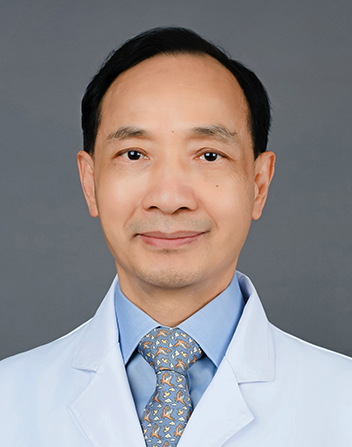 Changsheng Ma (马长生)合作论文数Beijing Anzhen Hospital, Capital Medical University;Graduate School of Capital Medical University7HaiYan Li (李海宴)合作论文数6
 Yida Tang (唐熠达)合作论文数Peking University Third Hospital6
 Ya Yang (杨娅)合作论文数Department of Ultrasound,Beijing Anzhen Hospital,Capital Medical University6tong liu (刘彤)合作论文数5Ruijie Li (李瑞杰)合作论文数5HongYong Song (宋洪勇)合作论文数5YuYun Xu (许玉韵)合作论文数5SanQing Jia (贾三庆)合作论文数5TianJiao Liu (刘天骄)合作论文数5ZhiSheng Wang (王志胜)合作论文数5JinRong Zhang (张金荣)合作论文数5
 Jianyong Zheng合作论文数5Zhi-Min Ma合作论文数4BoYang Zhang (张博阳)合作论文数4TianSong Wang (王天松)合作论文数4QingXiang Li (李庆祥)合作论文数4




