中国传统山水文化独树一帜,为世人所称叹.山水文化是人与自然相互作用的产物,是人以自然山水为载体寄予某种精神需求与价值导向的呈现,具备精神与物质的双重属性,其形成过程展现了"形-意-象"转换的逻辑关系与科学智慧.川西林盘是中国典型的乡村聚落形态,是乡民于川西平原山水自然之中赋予精神创造的景观物象.以山水文化"形-意-象"逻辑关系为整体思路,以"人-情""物-景"为两大方向,综合运用田野调查、数理统计、地理信息技术等方法进行分析和论证,探究川西林盘人文精神需求和物质表征的价值导向及二者之间的内在联系,提出相应的营建办法,致力于"人-情-物-景"的交流与融合,继而建构起川西林盘人居环境营建的整体思路与方法.旨在秉持发扬国故传统、与古为新的精神,以川西林盘为代表寻觅具有中国特色的乡村人居环境营建之路.
在我国经济结构大调整和新型城镇化建设的社会背景 下,苗木基地纷纷走上转型升级之路.针对四川苗木基地苗木市场相对饱和、产业单一、基地缺乏长远规划、同质化严重、科技含量不高的发展困境,探讨四川省苗木基地的三大转型发展方向:苗旅融合、精品培育、产业联动,以期为四川省乃至全国范围内的苗木基地的转型发展提供参考和借鉴.
以CNKI中1999-2018年间的538篇国内西蜀园林立献为对象,运用文献计量内容分析法,借助可视化软件CiteSpace绘制知识图谱,分析其研究现状、研究热点及趋势.研究表明,西蜀园林立献数量持续增长,其研究底蕴深厚,涵盖领域较多.园林历史与发展、园林美学与意境、园林文化与特性、造园要素与景观和旅游开发是当下主要研究主题,"追根"、"交融"和"升华"是研究趋势的根本。最后对西蜀园林研究在对象、方法、合作、主题四个方面的不足提出针对性建议,同时对未来西蜀园林的发展给予憧憬.
新津斑竹林景区以竹闻名,竹景观意境典雅,茂林修竹,画面唯美.但游览空间和空间氛围缺少竹文化景观表达与显现.以该景区为例,阐述了竹文化意境的主要营造手法,对新津斑竹林景区竹文化意境景观的营造方式进行探讨,以期为竹文化景观的建设提供参考.
文化景观是文化地理特征的集中体现,川西林盘文化景观基因识别与提取的研究是对林盘本质的认知和解读.根据文化景观的关键特征,基于文献与实地考察,综合运用问卷与半结构式访谈等方式进行调查,借助SPSS软件进行数据统计和处理,客观地明晰了林盘文化景观的结构组成;并在此基础上引入"景观基因"理论,以川西林盘的文化景观为研究对象,从遗传信息的表达,以及基因所属位列、功能性和重要度2个层面进行了相应的分类,进一步阐释了识别与提取的方法与流程.同时,在土地利用数据、卫星影像及地理信息数据电子地图等资料的辅助下,以新津、温江、崇州林盘群系与鱼子孔、龚林盘和胥家院子聚落单元为例,进行了文化景观基因的识别,归纳梳理出其共性基因、个性基因,并提取出民居、渠系、林地等主体基因,菜地、井等胞质基因、石笼、平桥等附着基因和治水工程、移民文化等调节基因.
Xishu Garden,a regional garden system in Sichuan area,is an important branch of Chinese classical gardens,constituting the Chinese garden system together with the Northern garden,Jiangnan garden,Lingnan garden and so on.In 1964,Mr.Wang Shaozeng began to carry out some related research of the classical gardens in Sichuan,and the research methods and achievements formed a solid foundation for the follow-up study and development of the Xishu Garden,which has important epochal significance and inheritance value.While recalling Mr.Wang,based on his important and fundamental research results,we discuss the appellation of Xishu Garden and its garden art,and analyze its regional style features and the characteristics of humanistic spirit.
不论是野生还是离体条件下,珠芽均是植物进行繁殖再生的重要器官,已从多方面进行了研究,但缺乏全面系统介绍.本综述从植物珠芽的定义、起源与发生部位、发育过程、显微结构、生理生态及实际生产中的作用等方面介绍了珠芽的研究进展,认为植物珠芽可着生于叶腋、花序或叶片表面,是由薄壁细胞分裂分化而来的;珠芽的发育一般经历了启动、膨大和成熟三个阶段,与内源激素的含量和变化有关;珠芽在数量、萌发率和生活力等方面有明显的优势,是良种繁育和种群繁衍的高效方式;并探讨了珠芽形成的分子机制,对未来珠芽的研发进行了展望.
近年来,随着"美丽新村"的建设以及乡村旅游的火热发展,让民宿旅游成为了热点词,然而国内民宿尚未形成成熟体系,粗放式的开发经营模式,加之建设经验的不足,导致出现了许多建设、保护和发展之间的问题.乡土民宿与城市中的民宿不同,除了提供食宿,还具有传承文化、保护地域景观的重要作用.本文通过对之前文献和资料的查阅、梳理后,对乡土民宿这个概念进行简要叙述,同时界定乡土民宿与城市中民宿,并总结出乡土民宿的三大基点,从平衡永续性的视角入手,希望在日后的建设中以经济、人文、景观3个点作为基础,在永续持久性的前提下,共同推进、平衡发展,推动美丽乡村建设,同时为民宿研究贡献微薄之力.
Focuses on some problems existing in the rapid development of today' s B&B, aiming at the drawbacks in Chinese current B&B, this paper insisted that a new brand of Xishu's rural pension should be developed from a more healthy and long-term perspective, when the deeply development of rural tourism and rural construction in Sichuan.The new model was hoped to help Sichuan B & B better development, and construct a more standard and characteristics local pension from the rural perspective.
随着中国近段时期城市建设的放缓,以及“美丽新村”打造的热潮,越来越多的设计师开始介入乡村建设以及乡土景观的营造,给学界带来了大量宝贵的经验和启示,但同时也伴随着景观过于做作、质量参差不齐、同质化严重等诸多问题的出现.什么是乡土景观?好的乡土景观该怎么入手?如何保持其持久的生命力?文本结合笔者在日本为期一个月的考察感悟和之前文献的研究成果,创新提出乡土景观设计的新思考——地域感知坐标以及其构建理念,抛砖引玉,以期为我国现阶段的乡土景观的设计和营造提供新的切入点,为完善乡土景观的建构体系贡献微薄之力.
本文对传统农作物的概念进行了界定,对其历史发展和文化分类进行了系统梳理。同时结合了众多现代农作物应用实例剖析,重点探讨了哪些设计手法最能从形象中展现出传统的历史文化精华,表达人们对于回归田园的情感以及社会约定俗成的实际愿望,从而归纳、提炼出几种有效的对农作物景观运用方式营造的基本观点和设计思路:农作物布局和排版形式优美为中心的农业美学应用模式;全民高度参与和体验以农作物美学为中心的应用模式;以教育为中心的农作物美学应用模式;农作物产品及其衍生物的展示来体现农作物的美学价值的应用模式。
竹景观是西蜀园林植物造景的重要组成部分,不仅具有秀丽美观的形式美,而且具有丰富的意境美,体现了西蜀园林植物造景的特色.在对西蜀园林进行文献阅读和实地调查的基础上,对西蜀园林竹景观意境进行了分析,从物质建构和精神建构两方面探讨了西蜀园林竹景观意境的营造方法,以期为当代西蜀园林植物意境的营造提供参考.
概括了中国土壤重金属污染现状以及危害,总结了土壤重金属污染的植物修复类型和优缺点,超富集植物的研究进展重点阐述了植物对土壤重金属耐性和富集机制,以及超富集植物的种质资源,最后指出了植物修复未来的研究趋势.
City Mountain Park group is based on a city which is in mountainous region.The available geographical environment and the demand of people for urban green space are combined by the city mountain park group.It's a green space layout of the form that will meet people's demand on lives and leisure and enrich the urban form and function.This article was based on the lack of green space development in the mountain city,to Wanzhou's Mountain Park group planning as an example.It explored city Mountain Park group planning,which establish the reference and basis for arhitectrure of city Mountain Park group in the future.
As a principal rusticity landscape,the farmhouse forests in western Sichuan province(FFWS) might be defined as a complex habitation mode or farming type that combines production,daily life and landscape.Meanwhile,the core of FFWS is trees and bamboo,and the main inscapes of this landscape are water,houses and fields.24 sample sites were chosen to analyze the foundation of FFWS,and to investigate their community characteristics such as community type,plane and vertical structures etc..The results indicate that ① the plants in FFWS might be classified into 5 groups of vegetation types,11 vegetation types and 107 formations;② the main vegetation types of FFWS are evergreen broad-leaved forests and bamboo stands,and the frequency is 25% and 32%,respectively;③ the plane structure of communities is characterized by the pure plantations,with the low diversity of the plants and monotonous landscape,and the dominant plants are metasequoia(Metasequoia glyptostroboides),or cedar(Cedrus deodara),or affinis bamboo(Neosinocalamus Keng f.);④ the vertical structure of DFWS might be divided into two groups,one is mono-layer type,and the other is multilayer type.Arbor forest is the dominating community of the multilayer type,by contrast,the frequency of shrub-grass and mono-layer grass is lower(4% and 3%,respectively).The commonly-seen vertical structures of communities are arbor-shrub-grass,arbor-shrub and arbor-grass,among which the arbor-grass shows the highest frequency(38%).
Leadership in Energy and Environment Rating System(LEED) is a national standard set by the U.S Green Building Council(USGBC).The LEED-based certification is viewed as one of the most influential green building evaluation systems in the world at present.In this paper the landscape architecture design of Wanguo Data Center in the city of Chengdu is taken as example and the principles and methods of landscape design are discussed.It is thought that according to the authentication of LEED landscape design ought to adhere to the concepts that a site should be used in a way of sustainable development;the concept on landscape design be abstracted from local culture and fully merged with the architectural design and continue the style;in the process of design and construction,new materials,new methods,new management rules and new permit regulations be used or applied;vegetation be dominated in design to prevent tropical island effect;and the rainwater utilization draw lessons from the design concept of Beijing Olympic Park: most rainwater should be made to infiltrate underground while only an appropriate amount of rainwater be reserved;rainwater should be purified by infiltrating underground before it could be recovered and recycled.And in design rainwater should be reasonably retained as resources and both green electric power and renewable energy be scientifically utilized.
The potted landscape of Lingnan style,with the characteristics of the delicate craftsmanship,peculiar style and outstanding achievements,is an important part of Lingnan culture.With China's accession to the World Trade Organization(WYO),the industrialization of potted landscape is one of the most important path to revitalize the industry of Lingnan potted landscape.In this paper,based on the exploration of the origin and the cultural connotation of the Lingnan miniascape,it analyzes its art features and feasibility of industrial development.Meanwhile,it puts forward some available strategies and suggestions,so as to provide some beneficial references for the development and conservation of the potted landscape in Lingnan.
This study explored the origin and development of the modern garden city,by integrating concepts of the world modern garden city and characteristics of Chengdu cultures,analyzed the application of its aesthetic value and the design of its artistic conception.It was found that Chengdu City had high aesthetic value such as a large area of green spaces and unique recreational cultures,as well as a great potential of unifying idyllic images and natural cultures.To design Chengdu into a world modern garden city,the planning of its urban green space system should be taken as the foundation,one cluster and three districts as the construction system,urban folk cultures,logistics and traffic,information and other such networks as the support to achieve the beauty of nature,social equity and urban-rural integration.
通过对宜宾市彩叶植物的种类及其应用进行调查,总结了宜宾市主要彩叶植物种类。结果表明:应用于宜宾市园林绿地的彩叶植物共有33科45属48种。分析了彩叶植物在宜宾市园林建设中的应用现状,并对今后宜宾市的彩叶植物发展提出建议。
 Qibing Chen (陈其兵)合作论文数College of Landscape Architecture, Sichuan Agricultural University9
 Shixian Luo合作论文数Grad Sch Hort, Chiba Univ4
 ZhouLin Han (韩周林)合作论文数4Guangli Liu (刘光立)合作论文数College of Landscope Architedure, Sichuan Agricultural Unive rsity4
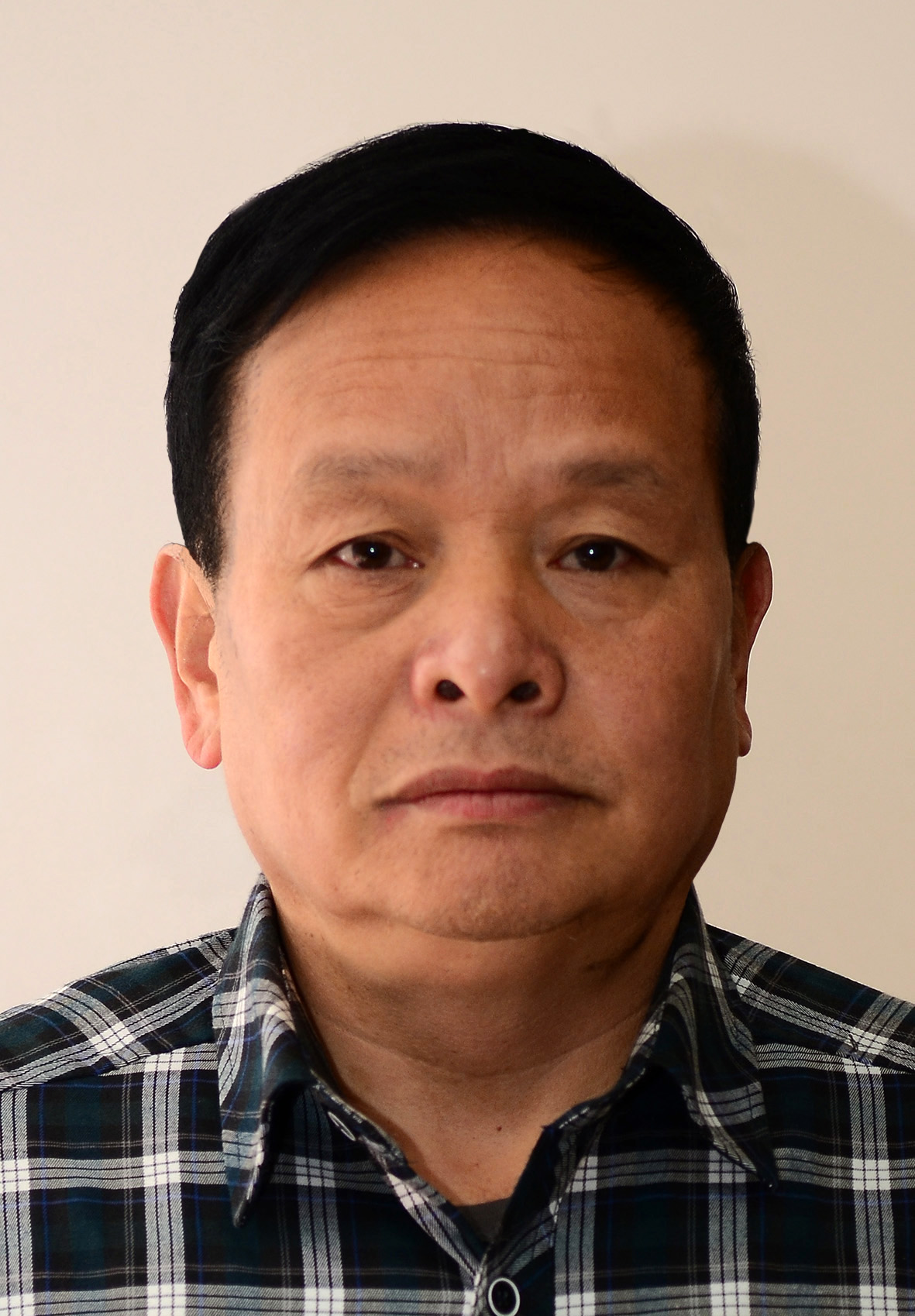 Tingxing Hu (胡庭兴)合作论文数四川农业大学林学园艺学院4SUN Da-yuan (孙大远)合作论文数3Qiuyu Chen (陈秋渝)合作论文数3Junxi Yang (杨俊熙)合作论文数3Xi CHENG (成曦)合作论文数3
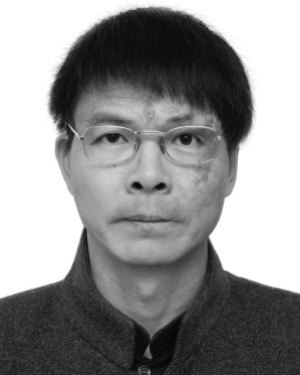 YuanXiang Huang合作论文数2
 Zhigang Hong (洪志刚)合作论文数College of Forestry, Sichuan Agricultural University2shouhong wang (王守洪)合作论文数1LI Jun-zhuo (李俊卓)合作论文数1CHEN Qiuyu (陈秋渝)合作论文数1HU Yu-Han (胡雨寒)合作论文数1Lanfang LIU (刘兰芳)合作论文数1Yuan YU (余渊)合作论文数1wei he (何伟)合作论文数1lina wang (王丽娜)合作论文数1JIANG Nan (江南)合作论文数1Jie DUAN (段捷)合作论文数1junwei tang (唐均畏)合作论文数1Su Jin (苏晋)合作论文数1Zhang Jing (张菁)合作论文数1SHEN Yi (沈逸)合作论文数1Zi-yong WANG (王自勇)合作论文数1WANG Yan-ting (王艳婷)合作论文数1XingLiang Liu (刘兴良)合作论文数1ShaoWei Zheng (郑绍伟)合作论文数1Fei He (何飞)合作论文数1Peng Zhou (周鹏)合作论文数1
 Jianhua Lv (吕建华)合作论文数College of Landscape Architecture, Sichuan Agricultural University1
 Xi Li (李西)合作论文数College of Landscape Architecture, Sichuan Agricultural University1
 Juan He (何娟)合作论文数College of Landscape Architecture, Sichuan Agricultural University1
 Lin Lu (鲁琳)合作论文数College of Landscape Architecture, Sichuan Agricultural University1
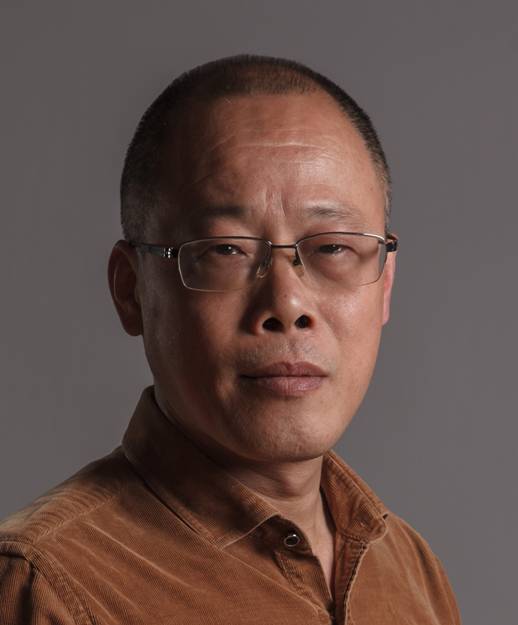 Bin Long (龙彬)合作论文数School of Architecture and Urban Planning, Chongqing University1
 Tao Jiang (姜涛)合作论文数College of Forestry, Guizhou University1
 Fuxing Jiang (姜福星)合作论文数College of Landscope Architedure, Sichuan Agricultural Unive rsity1
 Yupei Yang (杨玉培)合作论文数Sichuan Agricultural University;Sichuan University1Zhaozhe Li (李兆喆)合作论文数1Yu Meng (蒙宇)合作论文数1Qin Tang (唐琴)合作论文数1Ruoying Du (杜若英)合作论文数1Yuxi Liang (梁玉喜)合作论文数1Mingcai Li (李明才)合作论文数1Jian Liu (刘建)合作论文数1Mengyi Zheng (郑梦伊)合作论文数1Longbin Sun (孙隆斌)合作论文数1Qigao Luo (罗启高)合作论文数1




