The dynamic and tissue-specific nature of protein secretion underlies a wide range of physiological and pathological processes, yet tools for profiling the in vivo secretome with high spatial and temporal resolution remain limited. Here, we present STePTag (Spatio-Temporal Protein Tagging), a conditional proximity labeling (PL) system for profiling secreted proteins in live animals. STePTag integrates the rapid labeling kinetics of the PL enzyme TurboID with a destabilized dihydrofolate reductase (DHFR) domain, enabling tight post-translational control of labeling activity through the small-molecule stabilizer trimethoprim (TMP). Targeting STePTag to the endoplasmic reticulum (ER) confines labeling to the secretory pathway and enables robust labeling within 10 min of TMP administration. Furthermore, we design tissue-specific lipid nanoparticles (tsLNPs) to enable programmable, in vivo delivery of STePTag to the mouse liver. Using this approach, we identified 93 liver-derived secretory proteins under physiological conditions and uncovered 40 dynamically regulated proteins in a model of acetaminophen-induced acute liver injury (ALI), including Aldh1a1, which we functionally validated as a protective factor in ALI. Together, STePTag provides a versatile platform for spatiotemporally resolved secretome profiling, enabling the discovery of context-dependent biomarkers and tissue-derived signaling molecules in native physiological environments.
Neuroscience, a cutting-edge field in interdisciplinary research, consistently draws considerable research interest, of which quantitatively probing the neurochemical dynamics is essential for brain science research. In vivo electrochemical analysis, featuring with high sensitivity, high spatiotemporal resolution, free from transfection, and designable electrode/solution interfaces, provides important tools for in vivo neurochemicals sensing. Fast scan cyclic voltammetry combined with microelectrodes can not only enable precise detection of dopamine but also is compatible with existing neurosurgical equipment. This offers new opportunities for the clinical application of in vivo electrochemical analysis and paves new avenues for the diagnosis and treatment of neurological diseases. This review summarized recent progress of in vivo electrochemical techniques for brain neurochemistry and addressed key clinical challenges and their potential solutions.
Potentiometry based on the galvanic cell mechanism, i.e., galvanic redox potentiometry (GRP), has recently emerged as a new tool for in vivo neurochemical sensing with high neuronal compatibility and good sensing property. However, the stability of open circuit voltage (EOC) outputting remains to be further improved for in vivo sensing application. In this study, we find that the EOC stability could be enhanced by adjusting the sort and the concentration ratio of the redox couple in the counterpart pole (i.e., indicating electrode) of GRP. With dopamine (DA) as the sensing target, we construct a spontaneously powered single-electrode-based GRP sensor (GRP2.0) and investigate the correlation between the stability and the redox couple used in the counterpart pole. Theoretical consideration suggests that the EOC drift is minimum when the concentration ratio of the oxidized form (O1) to the reduced form (R1) of the redox species in the backfilled solution is 1:1. The experimental results demonstrate that, compared with other redox species (i.e., dissolved O2 at 3 M KCl, potassium ferricyanide (K3Fe(CN)6), and hexaammineruthenium(III) chloride (Ru(NH3)6Cl3)) used as the counterpart pole, potassium hexachloroiridate(IV) (K2IrCl6) exhibits better chemical stability and outputs more stable EOC. As a result, when IrCl62-/3- with the concentration ratio of 1:1 is used as the counterpart, GRP2.0 displays not only an excellent EOC stability (i.e., 3.8 mV drifting during 2200 s for in vivo recording) but also small electrode-to-electrode variation (i.e., the maximum EOC variation between four electrodes is 2.7 mV). Upon integration with the electrophysiology, GRP2.0 records a robust DA release, accompanied by a burst of neural firing, during the optical stimulation. This study paves a new avenue to stable neurochemical sensing in vivo.
Tinnitus is a widespread and serious clinical and social problem. Although oxidative injury has been suggested to be one of pathological mechanisms in auditory cortex, whether this mechanism could be applied to inferior colliculus remains unclear. In this study, we used an online electrochemical system (OECS) integrating in vivo microdialysis with selective electrochemical detector to continuously monitor the dynamics of ascorbate efflux, an index of oxidative injury, in inferior colliculus of living rats during sodium salicylate-induced tinnitus. We found that OECS with a carbon nanotubes (CNTs)-modified electrode as the detector selectively responses to ascorbate, which is free from the interference from sodium salicylate and MK-801 that were used to induce tinnitus animal model and investigate the N-methyl-d-aspartate (NMDA) receptor mediated excitotoxicity, respectively. With the OECS, we found that the extracellular ascorbate level in inferior colliculus significantly increases after salicylate administration and such increase was suppressed by immediate injection of NMDA receptor antagonist MK-801. In addition, we found that salicylate administration significantly increases the spontaneous and sound stimuli evoked neural activity in inferior colliculus and that the increases were inhibited by the injection of MK-801. These results suggest that oxidative injury may occur in inferior colliculus following salicylate-induced tinnitus, which is closely relevant to the NMDA-mediated neuronal excitotoxicity. This information is useful for understanding the neurochemical processes in inferior colliculus involved in tinnitus and its related brain diseases.
目的 评估流式荧光法(FFIA)、间接免疫荧光法(IIF)及酶联免疫吸附法(ELISA)检测抗双链DNA(dsDNA)抗体用于系统性红斑狼疮(SLE)诊断的临床价值,为临床实践寻找适宜的检测策略.方法 选取我院就诊的SLE患者92例,非SLE自身免疫性疾病患者127例及50例健康体检者,分别采用FFIA、IIF和ELISA检测血清中抗dsDNA抗体,计算各方法检测灵敏度和特异性,采用Kappa检验评估结果一致性,采用受试者工作特征曲线(ROC曲线)比较各方法用于区分SLE和非SLE自身免疫性疾病的效能.结果 用FFIA、IIF、ELISA检测抗dsDNA抗体,SLE组阳性率分别为44.6%、50.0%和62.0%,均高于疾病对照组和健康对照组(P<0.0001).IIF与FFIA、ELISA具有高度的一致性,Kappa值分别为0.64和0.72.FFIA与ELISA检测结果具有中等的一致性,Kappa值为0.56.以串联的方式FFIA-IIF或ELISA-IIF联合检测,可提高SLE诊断的灵敏度,分别达到59.8%和67.4%,其特异性分别为92.1%和89.3%,阴阳性与诊断符合率分别提高到81.0%和81.8%.ROC曲线分析显示,FFIA的AUC最大,达到0.768,ELISA和ⅡF的AUC分别为0.748和0.711.结论 FFIA、ELISA和IIF检测抗dsDNA抗体具有较好的一致性,用于SLE诊断的准确性高.ELISA-IIF或FFIA-IIF(串联)联合检测,可作为临床实践中适用于SLE诊断的抗dsDNA抗体检测模式.
We aimed to explore the prognostic value of albumin–bilirubin (ALBI) scores in unresectable hepatocellular carcinoma (HCC) treated with combined immune checkpoint inhibitors (ICIs) and radiotherapy (RT).
目的:探讨内镜影像系统联合CBL教学法在耳鼻咽喉科学见习带教中的应用及效果.方法:将学生随机分为实验组(内镜影像系统联合CBL教学法)和对照组(传统教学法),通过理论考试及满意度调查进行教学效果评价.结果:实验组在理论总成绩及记忆、理解、应用三种题型的得分及教学满意度均高于对照组,差异具有统计学意义.结论:内镜影像系统联合CBL教学法有助于学生基础理论的理解和掌握,可提高耳鼻咽喉科见习教学效果.
The emergence of resistant Aspergillus spp. is increasing worldwide. Long-term susceptibility surveillance for clinically isolated Aspergillus spp. strains is warranted for understanding the dynamic change in susceptibility and monitoring the emergence of resistance. Additionally, neither clinical breakpoints (CBPs) nor epidemiological cutoff values (ECVs) for Aspergillus spp. in China have been established. In this study, we performed a 20-year antifungal susceptibility surveillance for 706 isolates of Aspergillus spp. in a clinical laboratory at Peking University First Hospital from 1999 to 2019; and in vitro antifungal susceptibility to triazoles, caspofungin, and amphotericin B was determined by the Clinical and Laboratory Standards Institute (CLSI) broth microdilution method. It was observed that Aspergillus fumigatus was the most common species, followed by Aspergillus flavus and Aspergillus terreus. Forty isolates (5.7%), including A. fumigatus, A. flavus, A. terreus, Aspergillus niger, and Aspergillus nidulans, were classified as non-wild type (non-WT). Importantly, multidrug resistance was observed among A. flavus, A. terreus, and A. niger isolates. Cyp51A mutations were characterized for 19 non-WT A. fumigatus isolates, and TR34/L98H/S297T/F495I was the most prevalent mutation during the 20-year surveillance period. The overall resistance trend of A. fumigatus increased over 20 years in China. Furthermore, based on ECV establishment principles, proposed ECVs for A. fumigatus and A. flavus were established using gathered minimum inhibitory concentration (MIC)/minimum effective concentration (MEC) data. Consequently, all the proposed ECVs were identical to the CLSI ECVs, with the exception of itraconazole against A. flavus, resulting in a decrease in the non-WT rate from 6.0 to 0.6%.
目的 探讨经口入路低温等离子切除早期声门型喉癌的效果.方法 2011年9月~2016年1月对105例早期声门型喉癌(T1期87例,T2期18例)全麻下行经口入路低温等离子喉肿瘤切除术,术后定期随访,观察肿瘤复发、转移及生存情况.术后第1年喉镜每3个月复查1次,第2~5年每6个月复查1次,5年以后每年复查1次;颈部超声为6个月复查1次;胸部CT为每年复查1次.结果 105例均在内镜下行低温等离子肿瘤切除术,未发生气道爆燃或气道黏膜灼伤等医疗不良事件.2例术后发热及肺部感染,抗生素治疗5~7d后复查胸片,肺部感染控制后出院.6例术后出现声带粘连,主要表现为声音嘶哑,无明显喉梗阻症状,不影响患者生活质量.2例术后出现颈前皮下气肿,3 cm×3 cm以内,术后3 d皮下气肿逐步消退.术后病理均为喉部鳞状细胞癌.98例中位随访时间61.8月(14~100个月),11例发生喉腔局部肿瘤复发,1、2、3年累积复发率分别为0%、9.2%、11.2%;5例发生颈部淋巴结转移,1、2、3年累积转移率分别为0%、3.1%、5.1%;17例死亡,其中10例死于喉癌及肿瘤复发,5例死于肺癌(考虑为多重癌),2例死于心脑血管疾病,1、3、5年累积生存率分别为100.0%、91.4%、83.8%.结论 经口入路低温等离子切除早期声门型喉癌总体疗效满意.
In recent years, medical imaging technology and computer technology have made great progress. On the one hand, with the development and popularization of electronic laryngoscope, the image of electronic laryngoscope plays a very important role in the diagnosis of vocal cord lesions. On the other hand, deep learning algorithm,especially convolutional neural networkhas gradually become the first choice of medical image recognition since the foundation of deep learning algorithm. So far, deep learning algorithm has made great contributions in many disciplines. In this paper, the basic concept of deep learning, the current status of image recognition of vocal cord lesions, and the prospect of research based on deep learning in vocal cord image lesions recognition are reviewed.
Cytotoxic edema is the initial and most important step in the sequence that almost inevitably leads to brain damage. Exploring the neurochemical disturbances in this process is of great significance in providing a measurable biological parameter for signaling specific pathological conditions. Here, we present an electrochemical system that pinpoints a critical neurochemical involved in cytotoxic edema. Specially, we report a molecularly tailored brain-implantable ascorbate sensor (CFEAA2.0) featuring excellent selectivity and spatiotemporal resolution that assists the first observation of release of ascorbate induced by cytotoxic edema in vivo. Importantly, we reveal that this release is associated with an increase in the amount of cytotoxic edema-inducing agent and that blockage of cytotoxic edema abolishes ascorbate release, further supporting that ascorbate efflux is cytotoxic edema-dependent. Our study holds the promise for understanding the molecular basis of cytotoxic edema that can lead to the discovery of biomarkers or potential therapeutic strategies of brain diseases.
肝癌是高发病率、高致死率的恶性肿瘤,因发病隐匿,大部分患者确诊时已不可切除,且目前尚缺乏有效的治疗手段.放疗是不可切除肝癌的重要局部治疗手段之一.本文将从放疗联合肝动脉栓塞化疗、门脉癌栓的放疗、体部立体定向放疗的应用及放疗技术四个方面,阐述放疗在不可切除肝癌综合治疗中的应用.
目的 探讨中鼻甲连续冠状位断面解剖特点,结合薄层CT扫描及3D数字重建,为自后向前的鼻窦手术提供结构解剖学基础.方法 4具(8侧)成人尸头标本,行鼻窦螺旋CT扫描获取图像后,行连续冠状位断面解剖,并对相应层面的CT图像进行结构标注,观察中鼻甲3部分的形态学特点及与CT影像的对应关系;通过薄层鼻窦CT进行3D立体数字重建中鼻甲.结果 连续冠状位断面解剖自后向前观察中鼻甲各部分形态特点为,中鼻甲水平部内侧游离端为球状并以板状结构附着于鼻腔外侧壁;板状结构向前分为前后骨板,前为筛泡基板,后为中鼻甲基板,斜行向前向上附着于脑板;在筛泡基板与中鼻甲基板之间为前组筛窦;中鼻甲垂直部自中鼻甲水平部以矢状位向上呈扇形附着于额鼻嵴及脑板;以冠状位断面解剖中鼻甲3部分典型形态标注鼻窦CT图像;完成了中鼻甲形态数字三维重建.结论 从冠状位断面形态观察,可以归纳出自后至前中鼻甲形态变化规律,为自后向前的手术径路提供解剖学依据.
恶性淋巴瘤是头颈部常见恶性肿瘤,根据病理类型可分为霍奇金淋巴瘤和非霍奇金淋巴瘤( non-Hodgkin lymphoma, NHL ).弥漫性大 B 细胞淋巴瘤( diffuse large B-cell lymphoma,DLBCL)是成人淋巴瘤中最常见的类型,占 NHL 的 31% ~34% [1].在西方国家,鼻腔鼻窦结外淋巴瘤以DLBCL为主,好发于鼻窦,而在亚洲及其他区域则以NK/T细胞来源为主[2].相较于其他结外区域,原发于鼻腔鼻窦的DLBCL较为少见,且以上颌窦和筛窦为主,原发于额窦则极为罕见.本文报道一例额窦弥漫性大B细胞淋巴瘤.
食管异物是耳鼻咽喉科常见的急重症之一,延误治疗或治疗不当,常引起严重并发症,甚至危及生命[1].患者误咽的异物种类繁多,详细询问异物史对诊断十分重要.CT和食管造影是目前常用的食管异物确诊方法,尤其后者,是判断术前有无食管穿孔重要的评价手段.因金属丝异物细小的特性以及患者往往无法提供准确的异物类型,常会误导临床医师的判断,导致异物取出失败甚至出现严重的并发症.2018 ~2019 年我科收治2 例食管内金属丝异物,现报道如下.
目的 分析悬雍垂低温等离子去黏膜化翻转缝合悬吊术在中度阻塞性睡眠呼吸暂停综合征(OS-AHS)患者外科手术中的临床具体应用价值.方法 回顾性分析在悬雍垂腭咽成形术(UPPP)基础上对多导睡眠监测(PSG)确诊中度OSAHS患者进行手术方式改良,采取低温等离子去黏膜化并悬雍垂翻转“8”字缝合悬吊固定手术的32例患者临床资料.其中16例患者为对照组(开展常规H-UPPP手术),16例患者为实验组(低温等离子行悬雍垂去黏膜化,悬雍垂翻转“8”字缝合悬吊固定术),所有患者术前行药物诱导睡眠内镜(DISE)检查评估患者上气道阻塞情况,根据ESS评分、鼾声量表评分对所有患者主观症状及术后并发症发生情况进行评估,并采用SPSS软件进行统计学分析.结果 所有患者手术前后比较,术后ESS评分、鼾声量表评分明显改善,差异具有统计学意义(P<0.05),两组间手术方式ESS评分、鼾声量表评分比较无统计学意义(P>0.05);两组间手术时间、术中出血量比较差异具有统计学意义(P<0.05);两组间术后疼痛评分比较,实验组明显好于对照组,差异具有统计学意义(P<0.05);实验组术后咽部异物感、咽部干燥、咽部绷紧感与对照组比较,差异均具有统计学意义(P<0.05);无永久性腭咽关闭不全患者;术后两组患者均无围手术期呼吸困难,无围手术期死亡及术后拔管困难.结论 结合低温等离子技术的悬雍垂去黏膜化并翻转缝合悬吊术是针对以腭咽平面、口咽侧壁平面为主要责任平面狭窄及左右狭窄为显著特征的中度OSAHS患者治疗有效的改良手术方法,具有术后反应和主观症状较轻、手术并发症发生率较低的特点,短期疗效确切,值得临床推广.
目的 视神经管毗邻的结构复杂,建立三维视神经模型,以达到多角度直观观察视神经的目的.方法 拷贝头颈CT血管造影(CTA)并对视神经、蝶窦及后组筛窦进行数字化三维重建,分析三维立体图像上视神经的毗邻结构及分型.结果 获得了视神经、蝶窦及后组筛窦的三维模型.根据视神经的三维立体毗邻结构将其分为3种类型,即:蝶窦型、筛窦型和蝶筛型.分析了视神经毗邻位置的分型所对应的蝶窦与筛窦气化程度的关系.结论 三维立体模型中可以全方位直观观察视神经的毗邻结构.
Neuronal communication relies on cooperation between the chemical and electrical patterns of neurons. Thus, techniques for illustrating the linkage of the neurochemical events and action potentials with high temporal and spatial resolution is imperative to gain a comprehensive understanding of the intricacies of brain function. Herein, we integrate galvanic redox potentiometry (GRP) and electrophysiological recording onto a 16-site Au microelectrode array (MEA), one of which is for indicating the ascorbate concentration while the others for single-unit activity assessment. The electrochemical probing site was modified with single-walled carbon nanotubes to promote electron-transfer kinetics of ascorbate at low overpotential so as to enlarge the driving force for the spontaneous ascorbate/O-2 cell reaction. The resulting GRP-based MEA outputs open-circuit potential that is in a linear relationship with the logarithmic ascorbate concentration and exhibits high selectivity against a set of coexisting electroactive species. Furthermore, no reciprocal interference between the two recording systems is observed during concurrent GRP sensing of ascorbate and single-unit recording in a rat brain. In vivo feasibility of the GRP-based MEA is demonstrated by synchronous real-time measurement of ascorbate release and electrical activity from multiple neuronal populations during spreading depression. Our GRP-based MEA sensor creates new opportunities to realize high-throughput screening or mapping of neurochemical patterns in a larger dimension and correlate them to neuron functions across a spatial scale.
Probing chemical information in the central nervous system is essential for understanding the molecular mechanism of brain function. Electrochemistry with tissue-implantable carbon fiber electrodes (CFEs) provides a powerful tool for monitoring the dynamics of neurochemicals in a subsecond time scale; however, the implantation of CFEs into brain tissue immediately causes the nonspecific adsorption of proteins on electrode surfaces. This process can dramatically impact the performance of the electrochemical method in terms of reduced sensitivity and accuracy. Herein, we report a strategy to minimize the electrode biofouling by masking CFEs with leukocyte membranes (LMs). We find that the LM masking endows CFEs with a highly hydrophilic surface that gains a high resistance to nonspecific protein adsorption. The electrode reactivity to target molecules decreases by a small degree due to the membrane coating, but the sensitivity loss of the LM-masked CFEs is greatly lessened even after in vivo implantation for 8 h. This study offers a new method of microelectrode modification by natural cell membranes for sustained sensing performance during long-term in vivo analysis.
先天性梨状窝瘘( congenital pyriform sinus fistula,CPSF)是因胚胎早期鳃器发育异常形成开口于梨状窝的窦道或瘘管,是一种少见的先天性疾病.CPSF的发生有显著的侧别倾向,绝大多数左颈发病,右侧少见,双侧尤为罕见[1].传统治疗方法为颈部开放性手术切除瘘管.Jordan等[2]首次报道支撑喉镜下微创治疗7 例小儿CPSF,因微创、操作简单及安全等特点,目前临床上应用越来越多.2019年我科收治1例小儿双侧CPSF,在弧形喉镜下行低温等离子梨状窝瘘烧灼术,术后随访14 个月,无复发,报道如下.
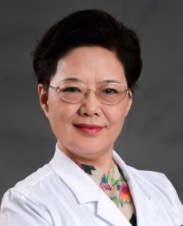 Furong Ma (马芙蓉)合作论文数Peking University Third Hospital16
 Lanqun Mao (毛兰群)合作论文数College of Chemistry, Beijing Normal University11
 Yan Yan (闫燕)合作论文数Department of ENT, Peking University Third Hospital9
 Jin Zeng (曾进)合作论文数ENT Department, Peking University Third Hospital8
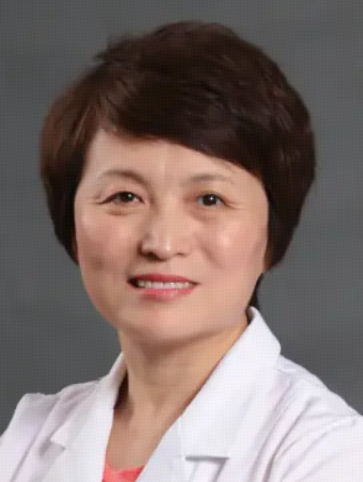 Li Zhu (朱丽)合作论文数Peking University Third Hospital7
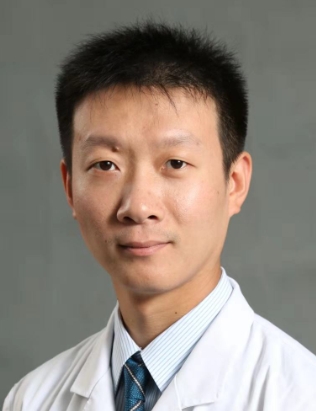 Chen Du (杜晨)合作论文数ENT Department, Peking University Third Hospital7
 Ruoyu Li (李若瑜)合作论文数Peking University First Hospital7
 Huan Wei (魏欢)合作论文数School of Chemistry and Life Resources, Renmin University of China6
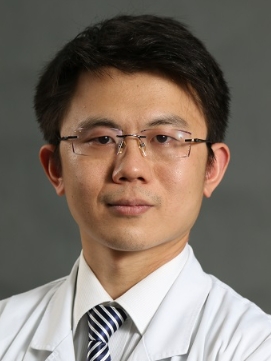 Yu Song (宋昱)合作论文数ENT Department, Peking University Third Hospital5
 Zhe Wan (万喆)合作论文数5
 Yinghong Zhang (张迎宏)合作论文数Department of Otorhinolaryngology, Peking University Third Hospital5
 Ping Yu (于萍)合作论文数Institute of Chemistry, Chinese Academy of Sciences5
 Junxiu Liu (刘俊秀)合作论文数Department of Otorhinolaryngology, Peking University Third Hospital5ShiLong Sun (孙世龙)合作论文数4
 Wei Chen (陈伟)合作论文数School of International Studies, Renmin University of China4Hui Xu (许辉)合作论文数4
 Ying Xin (辛颖)合作论文数Department of Otorhinolaryngology, Peking University Third Hospital4ZhenGong Wu (吴振恭)合作论文数3YunLiang Liu (刘云亮)合作论文数3
 Li Tao合作论文数3
 Tao Li (李涛)合作论文数Department of Otorhinolaryngology, Peking University Third Hospital3
 Yi Zhu (朱毅)合作论文数Tianjin Medical University;Peking University Health Science Center3Li Wang (王丽)合作论文数北京大学生命科学学院3
 Jia Ke (柯嘉)合作论文数Department of Otorhinolaryngology, Peking University Third Hospital3Dezuo Dong合作论文数2Xianggao Zhu合作论文数2Wenliang Ji合作论文数2xu zhang (张栩)合作论文数2Ye Yan合作论文数2
 Chiyu Xu (徐驰宇)合作论文数ENT Department, Peking University Third Hospital2Jinhong LI (李金红)合作论文数2Yu-hui WANG (王玉辉)合作论文数2Qing GUO (郭庆)合作论文数2Xiao-li SUN (孙晓丽)合作论文数2FengYang An (安凤杨)合作论文数2WeiNi Hu (胡伟倪)合作论文数2JianBin Sun (孙健斌)合作论文数2
 Fei Wu (吴菲)合作论文数College of Chemistry, Beijing Normal University2陈薇合作论文数Peking University2
 Jing Jin (金静)合作论文数Dalian Institute of Chemical Physics, Chinese Academy of Sciences;University of Chinese Academy of Sciences2
 Weihu Wang (王维虎)合作论文数Beijing Cancer Hospital2
 Ying Jiang (江迎)合作论文数Key Laboratory of Radiopharmaceuticals, Ministry of Education, Beijing Normal University;College of Chemistry, Beijing Normal University2
 Zhongqi Liu (刘仲奇)合作论文数Peking University Third Hospital2
 Wei Liu合作论文数2
 Yawei Zhou (周亚伟)合作论文数Peking University2Jun Xiong (熊俊)合作论文数2Wei Pang (庞炜)合作论文数2




