Due to the fact that trains operate in a complex environment with the presence of the third-body media (e.g., rain, leaves, oil, and antifreeze for track inspection in winter), low adhesion can occur at the wheel-rail interface, leading to a large slip ratio, which could cause severe wheel and/or rail damage. To help find a solution to this problem, wheel-rail dynamic adhesion characteristic tests were conducted under various third-body media conditions (dry, water, oil, leaves, and antifreeze) using wheel-rail rolling wear and contact fatigue testing machines. The results indicated that the adhesion curve exhibited a double peak in the loading stage under both dry and water conditions. However, under the other conditions (oil, leaves, and antifreeze), the adhesion characteristic curves were all single peak curves. Under the water conditions, the adhesion coefficient in the unloading stage was higher than in the loading stage, and the second peak point in the loading stage was higher than the first peak point. This phenomenon was related to the water volume at the wheel-rail interface, which affected the thickness of the water film. However, under dry conditions, the adhesion coefficient in the unloading stage was lower than in the loading stage, attributed to the formation and removal of oxides on the wheel-rail surface. Additionally, a wheel-rail adhesion model for the large slip ratio range was established, which provided the foundation for theoretical research on wheel-rail adhesion and for the design of locomotive adhesion control methods.
During the locomotive traction process, if the tangential force exceeds the maximum adhesion force of the wheelrail interface, wheel-rail adhesion instability occurs, leading to accelerated damage to the contact surface due to severe wear. Therefore, it is important to study the dynamic behavior of wheel-rail adhesion instability to improve the safety and stability of the train operations. A novel wheel-rail rolling contact experiment machine based on torque control was designed and established to investigate the wheel-rail adhesion instability behavior. The results show that: As the torque of the loading motor increased, the slip ratio initially increased steadily, then rapidly rose and fluctuated. With the decrease in torque adjustment rate, the fluctuation of the slip ratio decreased. Meanwhile, the torque increments had an impact on adhesion instability behavior. When the torque increment was less than 0.6 Nm, with the increase in torque increment, the slip ratio initially increased and then decreased, while the wheel-rail adhesion coefficient increased. However, when the torque increment exceeded 0.6 Nm, as the torque increment increased, the maximum slip ratio remained constant, while the adhesion coefficient decreased, leading to the slippage of the wheel-rail roller. In addition, with the axle loads and rotational speeds increased, the maximum slip ratio and adhesion coefficient decreased. Also, the function relationship between the slip ratio and the torque increment after the critical point (adhesion force saturation point) was proposed, which can provide guidance for vehicles to adjust the adhesion coefficient.
Railroad transportation is an integral part of the transportation sector, especially high-speed railroad, which is a key link in the railroad system. In particular, high-speed railways serve as a crucial component of the railway system, and significant achievements have been made in their construction and operation in recent years. However, as the speed of high-speed trains continues to increase, the use of wheel-rail adhesion is also being challenged. Therefore, to achieve stable tracking of the optimal adhesion state while adopting the feedback dynamic adhesion characteristic model, this study utilizes a machine learning algorithm to perform classification training on discrete points of the simulated adhesion characteristic model under various rail conditions. Subsequently, the trained model is integrated into the vehicle simulation model for real-time identification of current rail surface conditions, and the output value from this module is fed into the subsequent optimal adhesion search algorithm. By dynamically adjusting the initial search step size and its change coefficient, in conjunction with torque controller action, precise operation of the vehicle at the optimal adhesion point can be achieved. Finally, validation is conducted using a semi-physical simulation platform based on ModelinTech real-time simulator.
With the increasing scale of battery systems, the impact of battery inconsistency due to aging on battery pack performance becomes increasingly significant. To achieve high-precision battery pack modeling, we propose an in-situ estimation method for battery inconsistency parameters. The proposed method utilizes current and voltage data recorded by the battery management system (BMS). The respective terminal voltage errors are used as the loss function, and the equivalent circuit model and the fully connected neural network are combined to realize the estimation of inconsistency parameters. Through optimization algorithm, the inconsistency parameters of all cells in the battery pack are simultaneously estimated. The estimation results of full capacity, high-end capacity, and internal resistance exhibit high accuracy with root-mean-square error (RMSE) values of 0.82% (0.393 Ah), 0.70% (0.336 Ah), and 3.34% (0.097 mΩ), respectively. The battery pack model constructed using the estimation results maintains high accuracy across various operating conditions, demonstrating the effectiveness of the proposed method for inconsistency estimation and battery pack modeling.
Purpose Dynamic low adhesion (DLA) has become an urgent problem for the high-speed wheel-rail system because of continuous decrease of adhesion redundancy in the past decades. This article aims to provide a simulation method to reveal the mechanism of DLA under high-frequency vibrations. Design/methodology/approach A transient wheel-rail rolling contact model is developed for a typical Chinese high-speed railway system using the explicit finite element (FE) method. Instantaneous adhesion exploitation levels are studied in the time domain, for which driving cases over corrugated rails are taken as an example. A speed up to 500 km/h is considered together with different traction coefficients and corrugation dimensions. DLA is expected when the instantaneous adhesion exploitation level reaches 1.0, that is adhesion saturates and full sliding contact occurs. Findings The instantaneous adhesion exploitation level can be very high in the presence of corrugation, even at low traction coefficients. DLA is found to occur as great vertical unloading takes place and causes a significant increase of creepage. An approach is further developed to determine the critical depth of corrugation over which DLA occurs. Originality/value This study employs the transient wheel-rail rolling contact model to predict the instantaneous adhesion exploitation level under high-frequency vibrations. The presented results reveal a mechanism of DLA being beneficial to guidelines for future railway practice.
The temperature of lithium-ion batteries is an essential factor in the performance and safety of the battery pack. By predicting batteries' temperature, the battery management system (BMS) can optimize the strategy in advance, improve the precision of temperature control, and enhance the battery pack's performance. A self- training feedforward neural network is proposed as a means of predicting the battery surface temperature 300 slater. By extracting knowledge-driven features from current and voltage data, the structure of the proposed method is greatly simplified, facilitating implementation in areal BMS. The model is capable of self-training and parameter updating at the edge side, addressing the issue of poor generalizability associated with pre-trained models. The proposed method was validated under a variety of temperatures and operating conditions. The root-mean-square error (RMSE) of battery temperature prediction is 0.55 degrees C for constant ambient temperature and 0.64 degrees C for varying ambient temperature. Predicting 100 battery temperatures takes only 94 ms, enabling the BMS of electric vehicles to realize real-time temperature prediction.
为实现可持续交通,可替代能源技术的研究和应用成为未来发展重点,而氢能列车被视为实现未来碳中和的创新解决方案之一.通过梳理国内外轨道交通氢能列车的研制情况,结合近年来氢能列车的采购趋势分析了未来氢能列车的市场前景,基于氢能产业、技术研发、政策扶持、运营模式等方面,剖析了欧洲氢能列车快速增长的原因,总结氢能列车应用的关键因素,并结合氢能产业链,从氢能列车的上游氢能源成本、中游燃料电池系统、下游列车续航里程和运营成本分析了制约我国氢能列车发展的主要因素,提出加大氢能及燃料电池的政策扶持力度、降低氢能列车运行成本、降低氢能列车总成本、提高氢能列车性能、谋划氢能列车的应用场景等发展氢能源列车的建议.
新时代的中国现实题材电视剧正在面临"当下性"与"真实感"的双重挑战.浙产现实题材电视剧善于呈现地域特色,通过地域符号的现代化展现而保持了"当下性",通过普世情感的中国式表达营造了"真实感",为现实题材电视剧建立了"讲好中国式现代化故事"的成功样板.
测速定位技术是轨道交通系统安全防护、牵引优化和运行组织的重要基础.针对磁浮管道物流运输系统多普勒雷达测速定位模块在复杂工况中量测噪声统计特性变化及数据失常的问题,提出一种新型Sage-Husa自适应滤波算法.由于Sage-Husa自适应滤波算法存在计算量大、易发散等问题,在其基础上进一步改进,引入模糊推理系统,以残差协方差的实际值与理论值之比作为模糊推理系统的输入,输出调节因子对量测噪声协方差进行实时修正.设置失常数据判断阈值,通过调节卡尔曼增益实现对失常数据的补偿,有效地提高了对磁浮管道物流运输系统的速度估计精度.仿真实验结果表明,在测速数据正常的情况下,相比于传统卡尔曼滤波器、Sage-Husa自适应滤波器,新型Sage-Husa自适应滤波器精度分别提高10.88%和4.97%;在测速数据失常的情况下,相较于前2种卡尔曼滤波器,新型Sage-Husa自适应滤波器能够更好地剔除失常数据的影响,且能够较快地收敛到真实值附近.最后通过实测车载数据对新型Sage-Husa自适应滤波算法进一步验证,并与传统的卡尔曼滤波算法以及Sage-Husa自适应滤波算法对比,其算法精度分别提高10.3%和3.6%.新型Sage-Husa自适应滤波算法对随机量测噪声抑制能力更强,速度估计精度更高,并具有对失常数据的补偿能力,能够适应管轨车辆测速定位的场景需求,为管道物流系统乃至其他轨道交通系统的安全运行提供可靠保障.
广电5G网络利用5G网络的高可靠性、低时延、网络切片和边缘计算特性,为5G+园区综合能源场景的自动化监控通信方案提供了可行性.本文概述分析了广电5G网络在园区综合能源场景应用中结合边缘计算的优势,以某园区综合能源系统为例,重点研究了园区综合能源边缘计算系统的设计与实现.
With the development of the power supply system of metro, in particular the application of energy recovery and storage technologies, the system composition has changed significantly. However, given the lack of an effective approach for inter-system simulation in this respect, the optimal allocation of power supply can hardly be achieved. Using the method of Energetic Macroscopic Representation (EMR), the paper builds up the simulation model of energy coupling, reflecting the energy relations among vehicles, power supply systems and energy conservation systems. It then verifies the model using Simulink software. The results indicate that the model presents a valid tool for the inter-system simulation of energy transmission among the power supply systems, providing reference to the optimization of the power supply and energy conservation performances of metro.
飞轮储能系统作为当前最受关注的储能系统之一,在轨道交通领域的优势较为显著.基于轨道交通领域中最为典型的城市轨道(地铁)及高铁系统,分析了飞轮储能技术的研究应用现状及发展趋势.介绍了飞轮储能的技术原理及其特点,基于两种典型轨道交通系统,梳理了飞轮储能技术的应用现状;分析并展望了飞轮储能技术在轨道交通领域的发展趋势,为行业研究或工程应用提供借鉴.
为了避免车载燃料电池在加载工况下电堆出现"氧饥饿"现象,提升其响应速度,提出了一种计及电堆允许电流的燃料电池空气流量控制方法.首先,依据电堆阴极实时空气流量,估算电堆允许电流用以限制电堆电流;然后,根据负载需求功率实时获取需求电流;最后,动态计算所需空气流量,控制空压机转速.同时,设计补偿环节,修正参考电流使其与电堆电流保持一致.仿真结果表明:当负载需求功率急剧增加时,计及电堆允许电流的控制方法可以在避免"氧饥饿"的基础上缩短实际电堆功率加载时间.
采用模糊综合评价方法对铁道客车的技术代系进行了研究.在模糊综合评价方法的基础上,将构成客车的车体、转向架、车钩缓冲装置、制动系统及车载电器设备的关键技术作为评价指标,建立了铁道客车分层次模糊评价模型.通过对各技术指标发展及技术性能指标的模糊化处理,构建了模糊评价矩阵,得到了各型车辆的技术评价值.按照各型车辆的技术评价值分布来判定车辆所属的技术代系,分析结果反映出了我国铁道客车的技术发展历程,可为新一代车辆的研发提供一种技术评价方法.
超级电容作为储能系统在轨道交通系统的应用成为能源交通融合的变革.在全面整合分析超级电容和轨道交通融合发展的最新研究成果基础上,围绕如何高效利用能源、降低能耗等问题,系统地论述了超级电容在轨道交通领域应用的研究进展.特别针对常规储能、再生制动、热管理系统等方面进行了全面综述,分析了能源交通融合发展进程中存在的问题及挑战,并对其未来的发展指明了方向.
文中提出了一种柴电混合动力调车机车动力系统的设计方案.首先对柴电混合动力调车机车的工作原理及功率流动进行分析,然后参照东风系列内燃调车机车的运行工况对柴电混合动力调车机车的动力系统进行能量配置,基于MATLAB建立了柴油发电机组与动力电池系统仿真模型,根据调车机车运行工况进行仿真分析.针对不同体系、不同特性的动力电池,提出了3000 hp(2237 kW)柴电混合动力调车机车动力电池配置方案,并进行经济性对比分析.最终设计方案在降低燃油消耗量的同时,可大幅提升动力电池寿命周期内的经济效益.
虚拟电池在与电池相关领域的开发环节起到了重要的作用.文中针对虚拟电池搭建一个硬件在环仿真平台,包括dSPACE、虚拟电池、充放电设备以及数据采集设备等.根据虚拟电池的实际使用场景,文中建立电池等效模型,并将多串电池模型计算过程进行矩阵化处理.考虑电池组中电池存在不一致性,根据正态分布对电池模型参数进行差异化的处理,并通过MATLAB软件进行多串电池模型的联合仿真.结果 显示所提出地方法能够较好的模拟电池组中电池的动态性能以及单体的不一致性.
无绝缘高温超导线圈具有良好的电热稳定性和机械紧凑性,但其充电过程中却有明显的磁场延迟现象.为详细了解无绝缘高温超导线圈励磁过程的瞬态特性,建立了无绝缘高温超导线圈的同轴圆环等效电路模型.通过绕制一个670匝的无绝缘高温超导双饼线圈,在液氮温度下进行不同充电速率的励磁实验,初步验证了等效电路模型的正确性.基于该模型,针对线圈励磁过程的充电和恒流阶段,仿真得到了线圈各匝的径向电流分布规律和电热损耗特性.
: The gauge-adjustable wheelset is a feasible means to realize the railway transportation over networks with different gauges, and the relevant research is still in its infancy in China. Using the explicit finite element method, a 3D gauge-adjustable-wheelset-track coupled model is developed, in consideration of an involute spline between the wheel and its axle, to simulate in the time domain the transient wheel-rail rolling-sliding contact and the dynamic contact in the spline and their interactions at speeds up to 400 km/h. 3D geometry of the wheel-rail and spline, high-frequency structural vibrations of the system and a time-varying traction/braking torque are all taken into account. The wheel-rail and spline contact are both solved by a surface-to-surface contact algorithm with the Coulomb friction integrated. The results show that under the condition of a straight cylindrical spline with 32 teeth, a constant flank clearance of 0.1 mm and no irregularities exciting, the resulting wheel-rail contact forces fluctuate fiercer than those of the integral wheelset, for example, the fluctuation of the vertical contact force increases by 3.7% of the static load at 400 km/h. Due to the parallel and angular misalignment of the spline, circumferentially, two zones of the spline are under contact under a traction coefficient of 0.05, being on the left and right sides and relatively stable in location, and each part covers 5-6 teeth with different working surfaces (II and I surfaces, respectively). The maximum pressure and tangential contact stress, occurring on the side of the primary suspension and at the root or on the top of a tooth, are typically 102 MPa and 4.6 MPa, respectively, at 400 km/h. As the teeth move in and out of the bearing zones continuously, the maximum stresses occurring on a tooth vary significantly during loading and unloading processes. At the traction coefficient of 0.3, the left bearing zone disappears and the right expands to 18 teeth, and the maximum pressure tangential contact stresses change to 89 MPa and 5.2 MPa, respectively, because of the increase of bearing teeth and total contact area on these teeth. This work provides an appealing tool for the strength and dynamics analyses and design of spline in future gauge-adjustable wheelsets.
有轨电车燃料电池混合动力系统配置对整车动力性能、系统效率及经济效益具有重要影响,但是目前缺乏有效的优化匹配方法.基于有轨电车沿线动态工况下的牵引功率计算,提出了面向服役周期成本最低的燃料电池有轨电车混合动力系统匹配优化方法.以混合动力系统整车服役周期成本最低、体积/重量最小为目标函数,以动力性能、直流母线电压、电源输出功率、功率/能量实时平衡、储能系统充放电倍率及其充放电深度和SOC(state of charge)为约束条件,建立了多目标多约束配置优化模型.采用多目标优化方法获取Pareto前沿,同时给出了体积/重量可接受、经济性最优的推荐方案确定方法.仿真结果表明,多目标匹配优化方法配置的有轨电车燃料电池混合动力系统满足了所有设计指标,混合动力系统全寿命周期成本从7000万元降为1500万元.
 Yifan YAN (闫一凡)合作论文数6
 Jianqiang Liu (刘建强)合作论文数School of Electrical Engineering, Beijing Jiaotong University5Ziliang YU (于子良)合作论文数4
 Weige Zhang (张维戈)合作论文数School of Electrical Engineering, Beijing Jiaotong University4Yiou WANG (王轶欧)合作论文数3
 Shulin Liang (梁树林)合作论文数State Key Laboratory of Rail Transit Vehicle System, Southwest Jiaotong University3
 Xin Zhao (赵鑫)合作论文数Institute for Wheel-Rail Interaction and Vibration & Noise, State Key Laboratory of Rail Transit Vehicle System, Southwest Jiaotong University3
 Pengfei Liu (刘鹏飞)合作论文数School of Mechanical Engineering, Shijiazhuang Tiedao University3XIE Su-ming合作论文数2
 Long Cheng合作论文数2Laixian PENG (彭来先)合作论文数2Hongtao Lin合作论文数2
 Xinyuan Fan合作论文数Beijing Jiaotong Univ, Dept Elect Engn, Beijing 100044, Peoples R China2Yang GAO (高阳)合作论文数2Lintao LUO (罗林涛)合作论文数2
 Wenjian Wang (王文健)合作论文数School of Mechanical Engineering, Southwest Jiaotong University2
 Wenbo Ni (倪文波)合作论文数Department of Railway Vehicle Engineering, School of Mechanical Engineering, Southwest Jiaotong University2
 Haohao Ding (丁昊昊)合作论文数School of Mechanical Engineering, Southwest Jiaotong University2
 Bangcheng Sun (孙帮成)合作论文数Tangshan Railway Vehicle Co.,Ltd2Zhang, Yanru合作论文数Department of Electrical and Computer Engineering, University of Houston;c;Department of Electrical and Computer Engineering, University of Houston2
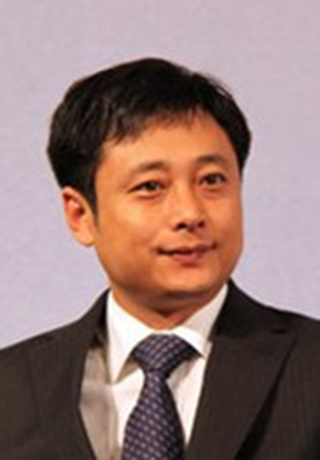 Jiuchun Jiang (姜久春)合作论文数School of Electrical Engineering, Beijing Jiaotong University2
 Zhanguo Wang (王占国)合作论文数School of Electrical Engineering, Beijing Jiaotong University2
 Jun Guo (郭俊)合作论文数State Key Laboratory of Traction Power,Southwest Jiaotong University2GUO Ai (郭爱)合作论文数1ZHANG Chi (张弛)合作论文数1Kangshuai Wang合作论文数1Aifeng Chen合作论文数1Shuangchao Huang合作论文数1Xiaofeng Shen (申晓凤)合作论文数1Zhidong Jia合作论文数1JI Qiao (季巧)合作论文数1
 Hao Gao (高昊)合作论文数School of Mechanical Engineering, Shanghai Jiao Tong University1Kaiyuan Zheng (郑凯元)合作论文数1Lang Qin (秦朗)合作论文数1SUN Hao (孙昊)合作论文数1CHEN Chao (陈超)合作论文数1Xiaodong WANG (王晓东)合作论文数1
 Yang Wang合作论文数1
 Jie Yang合作论文数1
 Xiaojia Su合作论文数School of Electrical Engineering, Beijing Jiaotong University1
 Xitian He合作论文数Beijing Jiaotong Univ, Natl Act Distribut Network Technol Res Ctr NANTEC, Beijing 100044, Peoples R China1Hongkai CAO (曹洪凯)合作论文数1Chunyan SHENG (盛春艳)合作论文数1FU Li (符里)合作论文数1Xueming CAO (曹雪铭)合作论文数1
 Yong Yang合作论文数Beijing Jiaotong University1
 Chaoqun Niu (牛超群)合作论文数Faculty of Information Technology, Beijing University of Technology1
 Nan Zhao合作论文数1
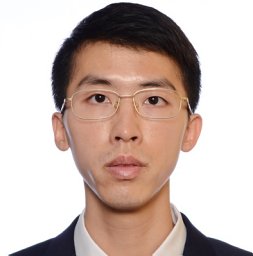 Jingxi Yang合作论文数Institute of Power Electronics and Electric Traction, Beijing Jiaotong University, Beijing, China1




