Skeletal tissue development and regeneration in mammals are intricate, multistep, and highly regulated processes. Various signaling pathways have been implicated in the regulation of these processes, including redox. Redox signaling is the signal transduction by electron transfer reactions involving free radicals or related species. Redox homeostasis is essential to cell metabolic states, as the ROS not only regulates cell biological processes but also mediates physiological processes. Following a bone fracture, redox signaling is also triggered to regulate bone healing and regeneration by targeting resident stromal cells, osteoblasts, osteoclasts and endothelial cells. This review will focus on how the redox signaling impact the bone development and bone regeneration.
目的:探讨用芳香疗法结合穴位按摩疗法治疗阴虚火旺型失眠症的临床效果.方法:选取2018年4月至2020年1月期间上海市松江区方塔中医医院收治的97例阴虚火旺型失眠症患者为研究对象.按照就诊顺序的编号将其分为治疗组和对照组.采用舒乐安定对对照组48例患者进行治疗,采用芳香疗法结合穴位按摩疗法对治疗组49例患者进行治疗.治疗4周后,对比两组患者的临床疗效、睡眠质量的改善情况及治疗的安全性.结果:治疗第1周、第2周及第4周,两组患者匹茨堡睡眠质量指数量表(PSQI)的评分均低于治疗前,P<0.05.但治疗后两组患者PSQI的评分相比,P>0.05.与对照组患者相比,治疗组患者治疗效果的优良率较高,P<0.05.两组患者治疗的总有效率相比,P>0.05.治疗期间及治疗4周后,对照组48例患者中,共有9例患者出现头晕、口干、撤药综合征等不良反应.治疗组49例患者均未出现明显的不良反应.结论:采用芳香疗法结合穴位按摩疗法对阴虚火旺型失眠症患者进行治疗的效果良好,可改善其睡眠质量,且其无明显的不良反应.
OBJECTIVE:To study the therapeutic effects of the ultramicro needle-knife combine with cervical spine fine adjusting on youth cervical curvature abnormality case. METHODS:From November 2016 to October 2018, 88 young patients with abnormal curvature of cervical spine were treated. Due to loss of follow up, 86 cases were actually completely including 37 males and 49 females, ranging in age from 20 to 40 years old, with an average of (30.55±5.21) years old, and the course of disease ranged from 1 to 42 months, with a mean of (14.21±7.38) months. All the patients were divided into two groups:treatment group (44 cases) and control group (42 cases). The patients in the treatment group were treated with ultramicro needle-knife and cervical spine fine adjusting, and the patients in the control group were treated with conventional acupuncture and manipulation. The treatments were done 1 time per week in the treatment group while 3 times per week in control group every week, with a duration of 3 weeks for both groups. Before treatment, 3 weeks after treatment, and at the end of 1 month follow-up, the score of neck pain questionnaire(NPQ), range of the motion(ROM) in the cervical region and the D values of cervical physiological curvature were recorded. The efficacy at the end of treatment and in the follow up was evaluated. During the treatment, the patients were also required to correct the bad posture in daily life, to sleep in a low pillow position, and put a moderately columnar pillow behind the neck for 0.5 hours every morning and evening. RESULTS:Two patients in the control group were dropped out after 3 weeks treatment. No adverse reactions were found in the 2 groups during the treatment period. Compared with those before treatment, all scores at all the observation time points were significantly improved between two groups after treatment(all P<0.05). The NPQ scores of cervical symptoms were different significantly between two groups(all P<0.05). The changing range of the the NPQ score of cervical symptoms and cervical spine alignment curve of the treatment group were better than those of the control group (P<0.05).There was statistical difference in NPQ scores between different time points, in the other words, there was time effect(F=203.63, P=0.000). There was interaction between time factor and group factor(F=4.964, P=0.012). There was no statistical difference in the changing range of the ROM score between two groups (all P>0.05). There was statistical difference in ROM scores between different time points, there was time effect (F=240.32), P=0.000). There was no interaction between time factor and group factor (F=0.311, P=0.734). The effective rate of the treatment group and control group were 90.91%(40 / 44) and 80.95%(34 / 42) respectively, the treatment group was more effective than the control group (P<0.05). During the follow-up period, the effective rate of the treatment group and the control group were 84.09%(37 / 44) and 76.19%(32 / 42) respectively. Obviously, the difference of total effective rate between two groups had no statistical signification(P>0.05) in the follow-up duration. CONCLUSION:The method of needle knife combined with cervical spine fine adjusting has a better therapeutic efficiency than conventional acupuncturecombined with manipulation in treating youth cervical curvature abnormality patients. Because this novel method can recover the cervical curvature, relieve the neck pain, and improve cervical mobility.
目的 观察耳穴贴压联合中医定向透药治疗项痹病的临床疗效.方法 选取2017年3月~2018年2月我科治疗的项痹病患者20例,以随机数字表法将患者分为对照组和观察组,每组10例.对照组仅给予耳穴贴压治疗,治疗组在耳穴贴压的基础上联合中医定向透药治疗,均治疗4周.对比两组治疗前后的治疗效果及总有效率.结果 与对照组比较,治疗组治疗后效果优于对照组,差异具有统计学意义(P<0.05);治疗后治疗组有效率高于对照组,差异具有统计学意义(P<0.05).结论 应用耳穴贴压联合中医定向透药治疗项痹病可提高治疗效果,减轻患者疼痛.
目的:基于“瘀水互患”理论探讨运用化瘀利水法治疗气滞血瘀型腰椎间盘突出症(LDH)的临床疗效.方法:将68例气滞血瘀型腰椎间盘突出症患者随机分为两组(治疗组和对照组各34例),对照组给予身痛逐瘀汤(牛膝、地龙、香附、羌活、秦艽、炙甘草、当归、川芎、五灵脂、桃仁、没药、红花),水煎400 mL,1剂/d,饭后30 min温服200mL,2次/d.治疗组给予自拟化瘀利水方(延胡索、红花、桃仁、川芎、赤芍、白术、桂枝、猪苓、茯苓、泽泻、草薢、车前子、牛膝、地龙),水煎400mL,1剂/d,饭后30 min温服200mL,2次/d.连续治疗14 d为1疗程,共治疗2个疗程.分别在治疗前、治疗1个疗程(14 d)、2个疗程(28 d)及治疗结束后2周随访,记录简化McGill疼痛评分、腰椎Oswedtry功能障碍指数,并在治疗4周结束时评定临床疗效.结果:治疗组和对照组各脱落2例,治疗组出现胃肠道不适4例,对照组出现胃肠道不适5例,所有患者经对症处理后好转,两组未出现其他明显不良反应.与治疗前比较,两组治疗后各个观察时点腰椎各项评分均显著改善,差异有统计学意义(P<0.05).组间比较,治疗14d,28 d及治疗结束后2周随访时,治疗组各个观察时点腰椎McGill疼痛积分和腰椎ODI功能评分改善均优于对照组,差异均有统计学意义(P<0.05).治疗前后不同时间点腰椎McGill疼痛积分的差异有统计学意义,即存在时间效应(F=314.11,P<0.001),时间因素和分组因素存在交互效应(F=3.276,P=0.027).治疗前后不同时间点腰椎ODI功能评分差异有统计学意义,即存在时间效应(F=429.43,P<0.001),但时间因素和分组因素并不存在交互效应(F=2.564,P=0.063).治疗组痊愈10例,显效14例,有效4例,无效4例,愈显率为75%(24/32),总有效率为87.5%(28/32).对照组痊愈8例,显效8例,有效10例,无效6例,愈显率为50.0%(16/32),总有效率为81.25%(26/32).两组总有效率差异无统计学意义(P>0.05),但两组愈显率差异有统计学意义(P<0.05),化瘀利水方组疗效明显优于身痛逐瘀汤组.结论:气滞血瘀型腰椎间盘突出症的基本病机为血瘀与水湿互结为患,治当以活血化瘀、行气止痛、利水消肿之法.运用化瘀利水法中药内治能标本兼治,短期可消除神经根水肿,改善微循环,缓解腰腿痛症状,疗效满意,是治疗气滞血瘀型腰椎间盘突出症的有效方法,无严重不良反应.
Objective To investigate the clinical efficacy of Zhu's "neck seven needles" in treating cervical spondylotic radiculopathy. Method Ninety-six patients with cervical spondylotic radiculopathy were randomized to two groups. The treatment group received Zhu's "neck seven needles" therapy and the control group, cervical vertebra traction therapy. Both groups were treated once every other day, for a total of 10 days. The symptoms were scored using the Short-form McGill Pain Questionnaire (SF-MPQ-2) before and after treatment. Result The SF-MPQ-2 score decreased significantly in both groups of patients after treatment compared with before. It decreased more in the treatment group than in the control group and the difference was statistically significant (P<0.01). The total efficacy rate was significantly higher in the treatment group than in the control group (P<0.01). Conclusion Zhu's "neck seven needles" is clinically more effective than conventional cervical vertebra traction in treating cervical spondylotic radiculopathy.
目的 评估个性化音乐对手术患者和医务人员的影响.方法 将行择期手术的100例患者及参与手术的医护人员30名随机分为对照组和观察组,对照组50例患者、医务人员15名,观察组患者50例、医务人员15名,对照组患者行常规护理模式,观察组患者在此基础上应用个性化音乐疗法,采用测量身体指标和SAS评分量表比较两组患者和医务人员的焦虑情况.结果 对照组患者入室后血压、心率高于观察组,对照组患者及医务人员SAS评分高于观察组.结论 个性化音乐可缓解患者和医护人员的焦虑心理有利于患者的身心健康及提高医务人员的工作积极性.
Objective:To observe the therapeutic effect of the nape seven needles combined with cervical spine fine adjusting for youth cervical curvature abnormality.Methods:All 64 youth cases with cervical curvature abnormality were randomly divided into treatment group who were treated with nape seven needles and cervical spine fine adjusting,and control group which were treated with conventional acupuncture and manipulation.The treatments were done 3 times in every week,with duration of 3 weeks for both groups.The clinical therapeutic efficiency were evaluated and compared after treatment by McGill therapeutic effects score and the D values of cervical physiological curvature in all patients.Results:In the control group,there was one failure.The McGill pain score of two groups were reduced after treatment(P<0.05).The McGill pain score had no statistics significance between the treatment group and control group after treatment(P>0.05).There was a certain degree of recovery of the D values of cervical physiological curvature(P<0.05).The improvement of the D values of cervical physiological curvature before and after treatment was superior to that of the control group(P<0.05).The effective rate and the total effective rate of the treatment group were 81.25% and 93.75% respectively.While that of the control group were 61.29% and 80.64 %.Obviously,the treatment group was more effective than the control group (P< 0.05).Conclusion:The method of nape seven needles combined with cervical spine fine adjusting has a better therapeutic efficiency than conventional acupuncture combines with manipulation in treating youth cervical curvature abnormality patients which relieves the neck pain and recover the cervical curvature.
Objective:To evaluate the clinical effect of massage kneading method on insomnia with heart and spleen deficiency type.Methods:33 patients were treated by massage kneading method.After 1 and 2 weeks, observe the changes of Pittsburgh Sleep Quality Index.Results:The PSQI total score,sleep quality,sleep effi-ciency,falling asleep time,sleep time,sleep disturbance scores were lower after 1 and 2 weeks than those before treatment ( P<0 .05 );the total effective rate was 81 .25%.Conclusion:The massage kneading method at Yin-tang,Taiyang,Shenmen,Sanyinjiao,Neiguan,Baihui,Fengchi has a curative effect on insomnia with heart and spleen deficiency type.
Objective:To observe the clinical curative effect and safety of Shi’s acupuncture therapy combined with oral application of Yishen Juanbi Wan(益肾蠲痹丸,YSJBW)for the treatment of knee osteoarthritis(KOA).Methods:One hundred and twenty patients with KOA were randomly divided into 2 groups,60 cases in each group.The patients were treated with Shi’s acupuncture therapy combined with oral application of YSJBW(group A)and traditional acupuncture therapy(group B)respectively.The vsual analogue scores(VAS)and West-ern Ontario and McMaster Universities(WOMAC)scores were recorded and compared between the 2 groups before the treatment and after 3 -week treatment respectively.The treatment -related adverse reactions were observed during the treatment.Results:Three patients(1 case in group A and 2 cases in group B)dropped out after 3 -week treatment.There was no statistical difference in knee pain VAS scores and WOMAC scores between the 2 groups before the treatment(7.14 +/-1.14 vs 7.20 +/-1.15 points,t =-0.180,P =0.858;57.26 +/-8.49 vs 56.36 +/-8.76 points,t =0.404,P =0.688).The knee pain VAS scores(2.90 +/-1.47,3.83 +/-1.51 points)and WOMAC scores(25.69 +/-5.31,34.90 +/-4.75 points)decreased in the 2 groups after 3 -week treatment(t =11.559,P =0.000;t =9.505,P =0.000;t =13.319,P =0.000;t =9.627,P =0.000).There was no statistical difference in the descent degree of knee pain VAS scoresbetween the 2 groups(4.18 +/-1.95 vs 3.34 +/-1.89 points,t =1.537,P =0.121),while the knee -joint WOMAC scores decreased more significantly in group A compared to group B(31.65 +/-12.79 vs 21.86 +/-12.22 points,t =2.830,P =0.006).No adverse reac-tions were found in the 2 groups during the treatment period.Conclusion:Either Shi’s acupuncture therapy combined with oral application of YSJBW or the traditional acupuncture therapy can relieve knee pain with less adverse reactions in the treatment of KOA.However,the former surpasses the latter in improving knee function,so it is worthy of popularizing in clinic.
腰椎间盘突出症(LIDH)是临床的常见病、多发病[1-2],电针腰突穴疗法作为治疗LIDH的非手术疗法之一,近年来有诸多成功报道[3,4].为进一步证实及推广这一治疗腰突症的特色方法,本研究自2012年5月-2013年1月,采用单穴电针腰突穴并与常规取穴电针组比较,观察了78例LIDH患者.现报告如下.
目的 探寻神经干取穴电针治疗腰椎间盘突出症的有效方法.方法 将61例单纯L4-5椎间盘突出症患者随机分为2组,两点神经干取穴电针为治疗组,常规取穴电针为对照组,2组的电针治疗参数一致.比较2组腰椎功能改善情况及临床综合疗效.结果 2组患者治疗后腰椎ODI评分较治疗前均有明显改善,治疗组改善情况优于对照组(P<0.01);随访临床疗效,治疗组总有效率明显高于对照组(P<0.05).结论 两点神经干取穴电针治疗腰椎间盘突出症较常规取穴电针具有更好的临床疗效.
目的:探讨膝骨关节炎患者股四头肌肌张力与膝关节功能的关系.方法:选择80例单侧膝骨关节炎患者,采用Myotonometer肌肉状态测试系统测定并对比患者双侧股四头肌的肌张力,同时采用美国特种外科医院膝关节评分标准评定患侧膝关节功能,采用相关分析和回归分析的方法研究股四头肌肌张力与膝关节功能的关系.结果:①股四头肌肌张力.静息状态下健侧股内侧肌压力-位移曲线下面积、股直肌压力-位移曲线下面积、股外侧肌压力-位移曲线下面积及股四头肌压力-位移曲线下面积均值均低于患侧,差异均有统计学意义[(20.97±3.36) kg·mm,(22.78±2.85)kg· mm,t=-4.935,P=0.000;(18.00±3.69)kg· mm,(18.98±3.91)kg· mm,t=-3.309,P =0.002;(17.78±3.55)kg· mm,(19.19±3.31) kg· mm,t=-4.437,P =0.000;(18.89±3.02)kg·mm,(20.32±2.94) kg·mm,t=-7.704,P=0.000].②股四头肌肌张力与膝关节功能的相关分析.本组患者患侧美国特种外科医院膝关节功能评分为(74.72±8.87)分.直线相关分析结果显示,患侧膝关节功能评分与静息状态下股内侧肌压力-位移曲线下面积、股直肌压力-位移曲线下面积、股外侧肌压力-位移曲线下面积及股四头肌压力-位移曲线下面积均值均呈负相关(r=-0.686,P=0.000;r=-0.570,P=0.000;r=-0.656,P=0.000;r=-0.719,P=0.000).③股四头肌肌张力与膝关节功能的回归分析.本组患者患侧美国特种外科医院膝关节功能评分与股四头肌静息状态下压力-位移曲线下面积均值的散点图提示二者存在直线相关趋势.以患侧膝关节功能评分为自变量(X),以患侧股四头肌静息状态下压力-位移曲线下面积均值为因变量(y),建立直线回归方程,Y=38.57-0.244X(F=62.126,P=0.000).结论:膝骨关节炎患者患侧股四头肌肌张力与膝关节功能呈负线性关系.由此推测,股四头肌肌张力降低可能既是膝骨关节炎的病变结果又是其病因,而通过改善患侧股四头肌肌张力或许能从力学机制上阻断或减缓膝骨关节炎发展的恶性循环.
Objective:To study the effect of muscular tension of quadriceps femoris in knee osteoarthritis by ac-upuncture.Methods:80 cases that conformed to the inclusive criteria were observed by HSS therapeutic effect score to evaluate the muscular tension of quadriceps femoris.Results:The muscular tension of the quadriceps femoris in disabled knee was lower than that of the healthy knee( P<0.01);The HSS therapeutic effect score and the muscular tension of quadriceps femoris of the disabled knee were significantly improved after the treat-ment( P<0.01) .Conclusion:Static muscular tension of quadriceps femoris in disabled knee is lower than that of the healthy knee.Acupuncture can cure the knee osteoarthritis because it can recover the balance of the disa-bled knee.
Objective:To observe the clinical lumbar functional -recovering effect of Yaotu point electroacu-puncture on treating lumbar intervertebral disc herniation .Methods:78 cases of LIDH patients were randomly divided into treatment group treated with local single -point electroacupuncture stimulation and control group treated with conventional electroacupuncture stimulation , both of whom were treated with the same time inter-val, intensity and acupuncture frequency .The lumbar disability index was evaluated with ODI before and after treatment among all patients .Results:The ODI presented statistically significant differences after treatment in both groups (P<0.01).However, the changing range of the ODI of the treatment group was more significant than that in the control group (P<0.01).Conclusion:Electroacupuncture at Yaotu point has a better lumbar functional recovering effect than conventional electroacupuncture stimulation for treating lumbar intervertebral disc herniation .
目的 探讨采用带转子护翼钢板(trochanter stabilizing plate,TSP)复合动力髋螺钉(dynamic hip screw,DHS)内固定治疗累及大转子的老年不稳定型转子周围骨折的处理策略和疗效.方法 2007年9月至2009年4月收治的累及大转子的老年不稳定型转子周围骨折32例,按Evans Jensen分型,ⅢB型15例,Ⅳ型17例,均为闭合性骨折.术中闭合复位或开放复位,带TSP护翼DHS内固定,手术操作均按常规要求进行.结果 30例获得随访,平均12个月(4~22个月),骨折全部愈合.结论 带TSP护翼DHS内固定系统,能重建转子部外侧壁,有效阻挡大转子外移,设计合理,固定牢靠,操作简单,是治疗累及大转子的老年不稳定型转子周围骨折的理想方法之一.
本文通过与镇痛泵相比较,观察了新一代选择性环氧化酶2(cyclooxygenase-2,COX-2)抑制剂塞来昔布(西乐葆)在骨科人工全髋关节置换患者围手术期镇痛的疗效及安全性.
目的总结肱骨近端肿瘤大块切除人工肩关节置换术中采用聚四氟乙烯(polytetrafluethlene,PTFE)材料行动力起止点重建,以及周围软组织修复的方法及疗效。方法2004年1月-2006年6月,收治肱骨近端骨肿瘤5例。男4例,女1例,年龄23~72岁。骨肉瘤3例,骨巨细胞瘤2例。MTS(musculoskeletal tumor society)外科分期ⅠB型2例,ⅡB型3例。肿瘤大小为6cm×4cm×4cm~9cm×7cm×7cm。病程3~19个月。经影像学检查证实侵犯周围软组织。术中距肿瘤边界3~5cm连同周围软组织行大块肿瘤切除术,并予以定制人工肩关节肿瘤假体置换,骨水泥固定。采用PTFE材料修复肩袖等软组织缺损并重建动力起止点。结果术后患者引流量为250~600mL,伤口均Ⅰ期愈合。5例均获随访,随访时间24~47个月,平均38个月。末次随访时4例假体位置良好,无松动、下沉、磨损等并发症;1例肩关节假体术后27个月出现向上轻度脱位,外展功能受限明显,未作特殊处理。患者肿瘤均未见复发。末次随访时关节功能采用美国肌肉骨骼肿瘤学会保肢评分系统进行评定:优2例,良1例,可2例。结论PTFE材料可在肱骨近端恶性肿瘤大块切除人工肩关节置换中应用,以帮助解决肩关节周围软组织缺损修复以及动力起止点重建的问题。
[Objective]To seek for a method to rebuild radial head for comminuted radial head fractures,and recommend a new technique of bipolar radial head replacement.[Method]Five patients with fresh comminuted radial head fractures were treated by Tornier cement stem and bipolar radial prothesis.Among them,three were females and two were males,with the average age of 37.4Y(29-48Y).Four cases were to Mason type Ⅲ and one Mason type Ⅳ.All the patients underwent operation within 3-11 days with an average of 6 days after injury.Rehabilitation began in Mason type Ⅲ radial head fracture patients 48 h postoperatively.Both medial and lateral ligaments were repaired in one case of Mason type Ⅳ fracture.Plastic brace were used for 3 weeks during functional rehabilitation.The postoperative elbow joint was evaluated clinically by Broberg and Morrey score.[Result]All the patients healed by first intention were followed up for 7 to 50 months,with an average of 30 months.According to elbow functional evaluation criteria by Broberg and Morrey scores,there were excellent results in three and good in two respectively with an average of 92.2 points.[Conclusion]Cement stem and bipolar radial head prothesis replacement is a good technique for treating comminuted radial head fractures because it meets the designing principle of modern orthopaedics.
 XiaoEn Wei (卫晓恩)合作论文数10YuYun Xu (徐玉云)合作论文数6
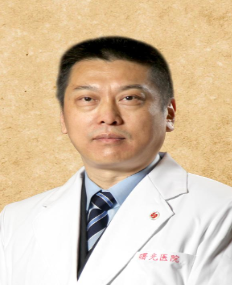 Hongsheng Zhan (詹红生)合作论文数Shuguang Hospital Affiliated to Shanghai University of Traditional Chinese Medicine6ShouHao Zhu (朱首豪)合作论文数5Wei Xie (谢玮)合作论文数5Dongxun Zhu (朱东勋)合作论文数3Mingyun Zhang (张明云)合作论文数2Jie LI (李婕)合作论文数2ShiRong Huang (黄仕荣)合作论文数2Yong Chen (陈勇)合作论文数2Jianjun Dong (董建军)合作论文数2Gongfu DING (丁功福)合作论文数1Jie Li (李婕)合作论文数1Shen Jingsong合作论文数1wencai xu (许文彩)合作论文数1ying qiang (强英)合作论文数1Zhou Lin合作论文数1liping zhuang (庄丽萍)合作论文数1Lian SHEN (沈莲)合作论文数1minmin zhang (张敏敏)合作论文数1Jing LIANG (梁晶)合作论文数1Hai-bin ZHANG (张海滨)合作论文数1yue ma (马跃)合作论文数1zhongmei huang (黄忠妹)合作论文数1Zhi-Qiang Li合作论文数1Wei Gu合作论文数1Hao Zhang合作论文数1SHEN Jiawen (沈佳雯)合作论文数1Xuejun ZHAO (赵学军)合作论文数1chunying xu (徐春英)合作论文数1Wei-qiang FAN (范伟强)合作论文数1Weiguo WANG (王卫国)合作论文数1LinHai Yu (郁林海)合作论文数1ShengLi Fang (方胜利)合作论文数1Tao Wang (汪韬)合作论文数1Hu Zhang (张琥)合作论文数1JunLong Wang (王俊龙)合作论文数1Ye Tao (陶冶)合作论文数1Fen Huang (黄芬)合作论文数1Jun Sun (孙骏)合作论文数1Weifang Xu (徐卫芳)合作论文数1Lei Wu (吴镭)合作论文数1
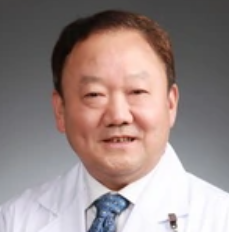 Ruming Zhang (张如明)合作论文数Fudan University Shanghai Cancer Center1Yan Jin (金艳)合作论文数1Kai Chen (陈凯)合作论文数1Huimin Gao (高会敏)合作论文数1
 Yan Xie (谢燕)合作论文数Shanghai University of Traditional Chinese Medicine1Weiguo Shen (沈卫国)合作论文数1
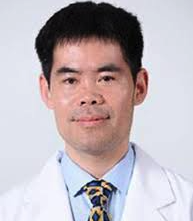 Yuelong Cao (曹月龙)合作论文数Shuguang Hospital Affiliated to Shanghai University of Traditional Chinese Medicine1




