Importance: Rescue workers are at high risk for post-traumatic stress disorder (PTSD) due to the high-intensity nature. Efficacy of acupuncture for PTSD has been reported. However, to date, there have been no reports of acupuncture interventions for rescue workers who screen positive for acute or chronic stress. Objective: To evaluate the clinical efficacy and safety of acupuncture in treating rescue workers who screened positive for PTSD. Design, setting, and participants: The PTSD Checklist for DSM-5 (PCL-5) and the Acute Stress Disorder Scale (ASDS) were used to screen 5098 high-stress rescue workers between June and August 2022, of which 149 screening positive. Sixty participants were randomly selected and divided into two groups. The control and treatment groups received psychodynamic therapy and acupuncture treatment, respectively, once a week for 6 weeks. Participants were blinded to their own grouping. The efficacy evaluators, subjects and statistical analysts were blinded. Interventions: Weekly acupuncture or psychodynamic therapy for 6 weeks. Main outcomes and measures: Scores on the PCL-5 and the ASDS were used as primary outcomes from baseline to 6 weeks. Any adverse effects and side effects experienced during the study were recoded. Results: A total of 43 participants were enrolled (mean (P25, P75) age, 22(21, 25) years; 43 men [97.7%]) underwent randomization. The demographic and baseline characteristics were balanced between groups. After 6 weeks intervention, the ASDS and total PCL-5 scores of participants in both groups reduced significantly. Compared with the control group, acupuncture group resulted in a significantly greater decrease in scores. The between-group differences were -7.87(95%CI, -15.48 to -0.26; P=0.043) in the ASD score and -8.04(95%CI, -15.63to-0.46; P=0.038) in PCL score. There were no serious adverse events. Conclusion and relevance: In this random clinical trial of rescue workers who screened positive for PTSD, acupuncture has been shown to serve as a safe and efficient early intervention. Acupuncture may be implemented before and after a disaster strikes in order to minimize mental health problems among rescue workers, and thus save as many lives as possible. Trail registration: Chinese Clinical Trial Registry: ChiCTR1900023441.
Objective To explore the effectiveness of a nutritional intervention in rescuers who screened positive for depression. Methods A randomized controlled trial design was employed. From June to August, 2022, 4,460 rescuers were screened using the Self-Rating Depression Scale (SDS), and 1,615 positive cases were identified. Thirty-one volunteers were recruited and randomly divided into a nutritional intervention group and a control group. The intervention group received health education and nutritional intervention (a compound paste therapy primarily composed of red roses and Seville orange flowers), while the control group received psychological education. SDS scores were assessed before and after the intervention. Results There was a statistically significant decline in SDS scores in the nutritional intervention group after the intervention (P < 0.05). Furthermore, the SDS scores of the intervention group were significantly lower than those of the control group, both before and after the intervention (P < 0.05). No severe adverse reactions were observed during safety evaluation. Conclusion The nutritional intervention effectively reduced the depression scores in rescuers. Early nutritional intervention is recommended for rescuers who initially screen positive for depression.
EpiRiskNet combines time-series data with graph and static information to enhance forecasting accuracy. This model features the SCI-Block for improved feature extraction and interaction learning, leveraging the capabilities of SCINet and Triformer to manage diverse feature scales. The model’s standout attribute, scalability, is driven by Triformer’s Patch Attention mechanism, ensuring efficient processing of large-scale data. EpiRiskNet was tested across several locations, including Liaoning, Chongqing, Heilongjiang, and Guangxi, where it demonstrated greater accuracy than other methods. This accuracy is crucial for effectively forecasting disease risks. The model’s adaptability to various regional conditions underscores its significance in public health and epidemiology. Moreover, its modular and flexible design makes EpiRiskNet suitable for a wide range of applications that require advanced data processing and predictive analytics.
Objective:This study aimed to reveal the insomnia burden and relevant influencing factors among informal caregivers (ICs) of hospitalized patients with lung cancer.Methods:A cross-sectional study on ICs of hospitalized patients with lung cancer was conducted from December 31, 2020 to December 31, 2021. ICs' burden was assessed using the Caregiver Reaction Assessment (CRA), Hospital Anxiety and Depression Scale (HADS), and Insomnia Severity Index (ISI). Linear and logistic regression models were used to identify the influencing factors.Results:Among 289 ICs of hospitalized patients with lung cancer, 83 (28.72%), 53 (18.34%), and 14 (4.84%) ICs experienced mild, moderate, and severe insomnia, respectively. The scores concerning self-esteem, lack of family support, financial problems, disturbed schedule, and health problems were 4.32 ± 0.53, 2.24 ± 0.79, 2.84 ± 1.14, 3.63 ± 0.77, and 2.44 ± 0.95, respectively. ICs with higher Activities of Daily Living Scale (ADLS) scores were associated with a lower risk of insomnia, with an odd ratio ( OR) and 95% confidence interval ( CI) of 0.940 (0.898-0.983). Among the ICs, female gender ( OR = 2.597), alcohol consumption ( OR = 3.745), underlying medical conditions ( OR = 11.765), long-term caregiving experience ( OR = 37.037), and higher monthly expenses ( OR = 5.714) were associated with a high risk of insomnia.Conclusion:Of the hospitalized patients with lung cancer, 51.9% experienced insomnia. Patients' ADL, ICs gender, alcohol consumption, underlying medical conditions, caregiving duration, and monthly expenses were influencing factors. Therefore, prompt screening and early intervention for ICs of patients with lung cancer is necessary.
Post-traumatic stress disorder (PTSD) is a mental disorder that occurs in individuals after encountering sudden, catastrophic, or threatening events. The treatment methods mainly include psychological intervention, drug therapy, physical therapy, traditional Chinese medicine characteristic therapy, and nutritional intervention therapy, and the effects varies. Due to the complexity of PTSD pathogenesis, diversity of symptoms, and individual differences in patients, there is currently no unified and standardized clinical pathway for different types of PTSD patients. In this article, the latest research progress at home and abroad is summarized by referring to relevant international clinical practice guidelines, and the current treatment status of PTSD is sorted out and summarized, in order to provide a reference for further exploring the pathogenesis and precise and efficient treatment methods of PTSD.
Objective: To explore the risk intensity and related influencing factors of post-traumatic stress disorder (PTSD) among high-stress rescue workers, and to provide effective tools for the risk assessment of PTSD in military rescue workers. Method: From June to August 2022, cluster sampling was used to select the high-stress rescue personnel of an Army department as the survey subjects. The acute Stress reaction (ASD) scale and PTSD checklist were used to evaluate the risk of PTSD in military rescue personnel. Multivariate logistic regression were used to analyze the influencing factors of PTSD. Results: The age of 4 460 subjects was (24.38±4.072) years old, including 4 396 males (98.6%). The positive rate of initial screening for ASD was 2.85% (127/4 460). The positive rate of PTSD was 0.67% (30/4 460). Multivariate logistic regression model analysis showed that female, older age, recent trauma exposure history, passive smoking and alcohol consumption were at higher risk of ASD, the values of OR (95%CI) were 4.183 (1.819-9.618), 6.278 (1.363-28.912), 3.094 (1.500-6.379), 2.059 (1.298-3.267) and 2.607 (1.614-4.211), respectively; Lower education level was associated with lower risk of ASD, OR (95%CI) was 0.593 (0.359-0.978); People who are older, thinner, have a history of mental illness, and drink alcohol were at higher risk for PTSD, the values of OR (95%CI) were 20.144 (2.459-165.043), 10.287 (2.218-47.700), 91.104 (8.592-965.980) and 2.866 (1.144-7.180), respectively. Conclusion: Gender, age, education level, passive smoking, alcohol consumption, past history of mental illness and body mass index may be related to the potential risk of PTSD in rescue workers,passive smoking, alcohol consumption, and weight controlling should be focused on to reduce potential risks of PTSD.
In this study, we focus on exploring the propagation characteristics of particle swarms in social networks and analyze the diffusion process of viruses among populations based on system dynamics. The article mainly discusses three propagation influence mechanisms, including individual attributes, group attributes, and particle swarm attributes, and delves into the modeling of diffusion processes based on network structures. Firstly, we adopt the main roads in the transportation network (hub nodes) as the initial network backbone. On this basis, by introducing branch networks with small-world characteristics and scale-free characteristics, we construct a transportation network that integrates multiple properties. Using this network, we conducted a detailed simulation and analysis of the COVID-19 transmission process and compared and verified it with the infection dynamic data of COVID-19 in Shanghai from March to September 2022. The verification results reveal that our proposed model can significantly improve prediction accuracy. Compared with other existing dynamic models, our model demonstrates excellent performance, possessing high practical application value. This study provides robust theoretical support for the propagation characteristics of particle swarms in social networks and lays the foundation for further research and application in related fields.
目的 探讨基于"四会"培养目标下某军校医学研究生医学统计学课程的授课效果及其影响因素,为提高军事医学研究生医学统计学的授课效果提供参考.方法 基于横断面设计,通过整群抽样方法选取某军校 2021 年秋季学期选修了临床研究设计课程的全体 178 名研究生作为研究对象进行在线问卷调查.调查内容包括基本情况、医学统计学授课情况及满意度,采用二元 logistic 回归模型分析授课效果的影响因素.结果 共收集到 160 份有效问卷(89.9%),研究生最关注的前三位授课内容为"常用概率分布(81.3%)"、"寿命表法与生存分析"(76.9%)和"定量/定性变量统计描述"(71.3%).研究生对统计学内容为理解及以上的为 94 人(58.8%),对教学满意度为满意及以上的有 135人(84.4%);多因素分析显示,常常阅读相关课外书(OR=4.155,95%CI:1.919~8.993)、认为课时应增加(OR=0.395,95%CI:0.192~0.816)和授课评价8 分及以上(OR=0.395,95%CI:0.192~0.816)与统计教学理解程度相关;常常阅读相关课外书(OR=3.32,95%CI:1.338~8.24)、认为课时应增加(OR=3.391,95%CI:1.431~8.034)、授课评价 8 分以上(OR=4.262,95%CI:1.427~12.73)、是否统招(OR=0.293,95%CI:0.096~0.892)和对教学内容感兴趣(OR=3.14,95%CI:1.453~6.783)与授课满意度相关.结论 应针对不同的研究生特点并结合军校医学研究生实际需求开展医学统计学教学.
目的 探讨同型半胱氨酸和血糖联合检测与脑卒中患病风险的相关性,为脑卒中的早期防治提供循证依据.方法 采用回顾性调查研究方法,选择2007年1 月至2012年12月解放军总医院确诊的1364例脑卒中住院患者为观察组,按年龄、性别、体质量指数(BMI)进行1:1 配对选择同期在本院住院治疗的1364例单纯腰椎间盘突患者为对照组.通过医疗记录收集2组患者的年龄、性别、病史、家族病史、身高、体质量、血压、血清总胆固醇、三酰甘油、低密度脂蛋白胆固醇、高密度脂蛋白胆固醇、同型半胱氨酸和空腹血糖水平等临床特征资料.采用配对χ2 检验(McNemar检验)、连续变量的配对t检验和Wilcoxon配对符号秩和检验等比较2 组患者各类指标的差异,采用配对logistic回归模型分析方法分析脑卒中患病风险因素.结果 观察组与对照组患者的年龄、性别、BMI及高脂血症家族史比较差异无统计学意义(P>0.05),观察组患者中吸烟、饮酒者占比和有高血压、脑卒中、冠状动脉性心脏病(CAHD)、糖尿病等家族史者占比、有高血压、脑卒中、CAHD、高脂血症、糖尿病既往史者占比以及目前有高血压、血脂异常、血糖以及同型半胱氨酸水平增高者占比均显著高于对照组(P<0.05).调整吸烟情况、饮酒史、家族史(高血压、脑卒中、CAHD、高脂血症、糖尿病)、既往史(高血压、脑卒中、CAHD、高脂血症、糖尿病)、是否患有高血压以及血脂异常因素后,空腹血糖水平增高、同型半胱氨酸水平增高与脑卒中的发生相关(P<0.05).与血糖正常的患者相比较,高血糖患者发生脑卒中的风险增加74.7%(P<0.05);与正常水平同型半胱氨酸患者相比较,高同型半胱氨酸患者发生脑卒中的风险增加47.4%(P<0.05).调整吸烟情况、饮酒史、家族史(高血压、脑卒中、CAHD、高脂血症、糖尿病)、既往史(高血压、脑卒中、CAHD、高脂血症、糖尿病)、是否患有高血压以及血脂异常因素后,空腹血糖增高、同型半胱氨酸增高以及空腹血糖和同型半胱氨酸均增高是发生脑卒中的危险风险(P<0.05).与同型半胱氨酸和空腹血糖水平均正常的患者相比较,仅同型半胱氨酸增高的患者、仅空腹血糖增高的患者发生脑卒中的风险分别增加108.1%(P<0.05)和66.0%(P<0.05),高同型半胱氨酸伴高血糖的患者发生脑卒中的风险增加113.7%(P<0.05).结论 高同型半胱氨酸和高血糖可能对脑卒中患者具有正向协同作用,高空腹血糖伴高同型半胱氨酸显著增加脑卒中的患病风险.临床防治过程中应控制血糖和同型半胱氨酸水平,以降低脑卒中的发生风险.
 Xiaoyong Sai (赛晓勇)合作论文数Chinese PLA General Hospital9
 Qiongxuan Li (李琼轩)合作论文数7Qiao CHEN (陈巧)合作论文数4Rufang Gong合作论文数3Dongyao Li合作论文数2Yujian SONG (宋玉健)合作论文数2Yuan-yuan SUN (孙媛媛)合作论文数2Chunyan Li合作论文数1Muhong Deng合作论文数1YI Zhiyong (衣志勇)合作论文数1Ruixin Li合作论文数1JinJie Dai (戴锦杰)合作论文数1
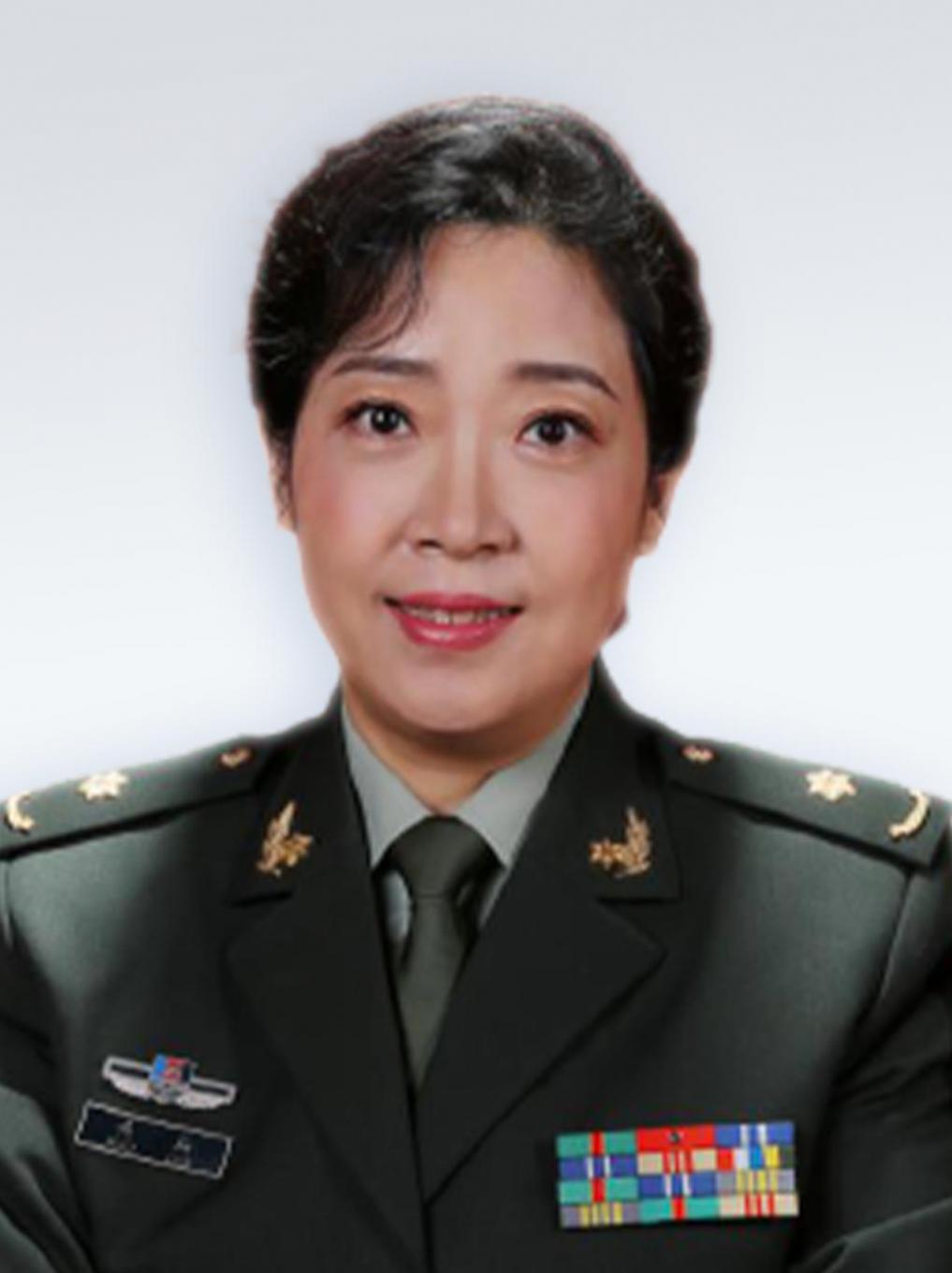 Ling Guan (关玲)合作论文数解放军总医院第六医学中心1
 Xiaoling Zhang (张小玲)合作论文数School of Atmospheric Sciences, Chengdu University of Information Technology1Yi Hu (胡毅)合作论文数School of Medicine, Nankai University;Chinese PLA General Hospital1Nan Lu (卢楠)合作论文数1




