目的:观察头针联合综合康复训练对脑性瘫痪合并智力障碍患者粗大运动功能及日常生活能力的影响.方法:选取河南中医药大学第一附属医院收治的脑性瘫痪合并智力障碍患者144例,按1:1的比例分为两组.对照组给予综合康复训练[运动疗法(推荐强度A级)、推拿按摩(推荐强度B级)、认知训练言语康复训练(推荐强度B级)];治疗组在对照组治疗基础上给予头针(百会、运动区、四神聪、智三针、平衡区)治疗,留针40 min,1次/d.两组均以治疗20 d为1个疗程,共3个疗程后判定疗效.结果:治疗组显效29例,好转32例,无效11例,有效率为84.72%(61/72).对照组显效15例,好转35例,无效22例,有效率为69.44%(50/72).两组疗效对比,差异有统计学意义(P<0.01).治疗1、2、3个疗程,两组之间在下肢肌群肌张力、粗大运动功能量表88项(GMFM-88)及日常生活能力量表(ADL)评分,均有统计学差异(P<0.01).智力水平在治疗1个疗程时两组之间无明显统计学差异(P>0.05),但上升趋势治疗组优于对照组(P<0.01);第2、3个疗程两组之间有明显的统计学差异(P<0.01).结论:头针联合综合康复训练治疗脑性瘫痪合并智力障碍疗效确切.
目的 探讨蒲金口服液对缺氧缺血性脑损伤(Hypoxic-ischemic brain damage,HIBD)幼鼠的神经保护机制.方法 单侧颈总动脉结扎联合缺氧环境制备HIBD幼鼠模型.动物分为中药组、西药组、模型组、假手术组、空白组.中药组蒲金口服液0.1 mL/(kg·d)灌胃;西药组单唾液酸四己糖神经节苷脂钠注射液3 mL/(kg·d)腹腔注射;余组生理盐水0.1 mL/(kg·d)灌胃,均每日1次,连续14 do Morris水迷宫测试学习与记忆行为能力,尼氏染色观察脑组织神经元,透射电镜观察突触超微结构,Western Blot检测脑组织PSD-95、NMDAR-2B表达.结果 蒲金口服液可改善HIBD幼鼠神经损伤,上调脑组织突触后密度蛋白95(PSD-95)、谷氨酸受体2B抗体(NMDAR-2B)表达(P<0.05).结论 蒲金口服液改善HIBD幼鼠神经行为学表现,可能与其调控PSD-95、NMDAR-2B表达,维护突触稳态有关.
The incidence of cerebral palsy (CP) is high in China, which brings huge economic burden to patients, families and society. Foot deformities such as scissors gait, flat foot, varus or valgus are the main manifestations of lower limb spasm in patients with spastic cerebral palsy. Cerebral palsy is a kind of non-progressive brain injury and nerve damage. At present, there is no effective treatment. If the foot deformity was not corrected for a long time, the muscles, fascia and ligament will change and contracture will occur, which can lead to secondary skeletal deformity, osteoarthritis of talocalcaneal, talonavicular and phalangeal joints, bony deformities of talocalcaneal joints and talonavicular joints, and miss the opportunity for passive traction correction. Patients with flat feet are prone to limb fatigue and pain when standing, walking, running and jumping for a long time, so it is necessary to screen and diagnose as soon as possible and implement rehabilitation training. Currently, there is no unified standard for the evaluation of foot deformity in children with CP. This review summarizes the evaluation methods for foot deformity in children with CP, mainly inclu-ding the principles, evaluation methods, advantages, disadvantages and scope of application of related evaluation tools for static analysis (footprint analysis, imaging evaluation, angle of standing calcaneus rest position, subtalar joint hardness, surface electromyography, etc.) and dynamic analysis (gross motor function grading system, Berg balance scale, plantar pressure system, etc.). The purpose is to provide reference for the diagnosis, rehabilitation treatment and rehabilitation outcomes evaluation of foot deformities in children with CP. The review found that the static analysis and evaluation method was mainly used for structure evaluation, while the dynamic analysis and evaluation method was mainly used for the evaluation of balance and motor function.
Objective . To evaluate the efficacy of psychotherapy in children with tic disorder and to provide basis for the application of psychotherapy in the treatment of children with tic disorder. Methods . A detailed search was conducted based on PubMed, Cochrane library database, CNKI, Wanfang Data, and VIP database to determine the randomized controlled trial (RCT) of psychotherapy combined with drugs and oral drugs in the treatment of tic disorder. The search time was from the establishment of the database to August 20, 2021. All kinds of extracted data are meta analyzed, and the statistical software used is Review Manager 5.3 software. Results . According to the inclusion and exclusion criteria, 14 clinical trials were finally included, including 513 TD children, including 267 in the psychological intervention group and 246 in the control group. All trials were conducted in China and published from 2013 to 2021. In terms of clinical efficacy, compared with the control group, the psychotherapy combined with drugs group had more advantages in improving the effective rate (RR = 3.25, 95% CI: 2.17~4.85, Z = 5.74, P < 0.00001) and improving the clinical symptoms of children with TD (WM = −5.36, 95% CI: -6.41 ~ -4.30, Z = 9.97, P < 0.00000 1). Conclusion . Psychotherapy as an adjuvant therapy for clinical treatment of TD can improve the clinical efficacy, but due to the low methodological quality of the existing trials, the research may have potential bias. In the future, large sample, multicenter, and double-blind randomized controlled trials need to be carried out to provide further support.
AbstractBackgroundThe EVEN‐plus syndrome (epiphyseal–vertebral–ear–nose dysplasia plus associated findings) is an extremely rare autosomal recessive inherited disease characterised by specific facial features and skeletal dysplasia. It has a prenatal onset due to defects in the HSPA9 gene. The syndrome has not been reported previously in China.MethodsThis study reported the characteristics, examination results, diagnosis and treatment of a female case aged 3 years and 3 months.ResultsThe patient had global developmental delay and specific facial features, including a prominent forehead, a bilateral auricle deformity, a collapsed nose, a high palatine arch, a short neck and other appearance abnormalities. Her hip joint magnetic resonance imaging (MRI) results showed bilateral femoral head epiphyseal dysplasia with a fork‐shaped malformation at the distal end, and her brain MRI showed white matter myelin dysplasia. HSPA9 compound heterozygous variants c.882_c.883delAG and c.613A>G were identified by exome sequencing.ConclusionsThis finding expands the spectra of EVEN‐plus syndrome phenotype and pathogenic variants and suggests that c.882_c.883delAG may have a higher distribution frequency in East Asian populations.
孤独症谱系障碍(austim spectrum disorder,ASD)是一种以社交和沟通障碍以及重复和限制性行为为特征的神经发育障碍.ASD的表型异质性使得确定核心症状涉及的确切病因和病理生理机制困难重重,且这些症状通常伴有注意缺陷多动障碍、癫痫发作和感觉运动异常等共患病.动物模型提供了阐明疾病的病因和发病机制的重要平台.越来越多的研究利用如环境暴露、母体免疫激活(maternal immune activation,MIA)等诱导的动物模型进行孤独症谱系障碍病因病机的探讨以及药物治疗靶点的筛选.该文综述常见动物模型的不同神经网络机制、脑组织及相关因子变化、症状表型等方面,为今后进行精准动物实验研究提供针对性的动物模型选择,也可为阐明疾病神经生物学、开发潜在的治疗药物提供参考.
Autism spectrum disorder (ASD) is a complex disorder of neuropsychiatric development in children (American Psychiatric Association D S, 2013). The Diagnostic and Statistical Manual of Mental Disorders Fifth Edition (DSM-5) is a 14-year revision that uses a large number of clinical studies as evidence-based to make leapfrog adjustments to many psychiatric disorders, including autism spectrum disorder. DSM-5 argues that autism spectrum disorder is characterized by social and communication disorders, repetitive stereotypes, and narrow interests. The prevalence of the disease is one in 54 in the United States, and the upward trend is obvious, placing a heavy burden on families and society (Persico et al., 2021). Due to the large base of Chinese population and the prevalence rate is still unclear, the China Colorful Deer Children ’ s Behavior Correction Center has found that by 2017, there were about three million children with autism spectrum disorder aged 0 – 14 in China, and the incidence is still growing, which means that patients with autism spectrum in China have become a huge medical group (Wucailu children ’ s behavior correction center, 2015). According to the statistics of the census of disabled persons in China, childhood autism has accounted for the fi rst place in China ’ s mental disabilities, but unfortunately there is no explicit report on the epidemi-ological investigation of the prevalence of autism spectrum disorder in China from 2017 to 2021. Early detection and early intervention are key to the clinical treatment of children with autism spectrum disorder (Siu A L et al., 2016). It is conducive to improving the core symptoms of children with ASD, helping children to integrate into society as soon as possible, and
Angelman综合征(angelman syndrome,AS)是一种由15号染色体长臂在11~13区(15q11~13)从头微缺失或父源性的15号染色体相关单亲二倍体等引起的遗传性相关的神经源性疾病,临床表现多样,临床诊断有一定困难.本文现回顾性分析1例Angelman综合征患儿的临床资料.患儿,男,1岁3个月,发现全面发育迟缓9个月,入院见表观异常,语言、运动发育落后,基因检测提示父源单亲二倍体,并复习国内外相关文献以了解该病的报道情况,为AS的临床诊治提供参考,以提高临床工作者对该病的认识.
 Yamin KONG (孔亚敏)合作论文数7
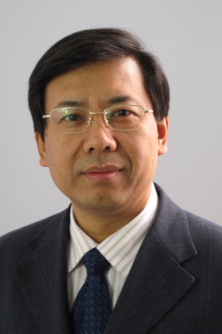 BingXiang Ma (马丙祥)合作论文数The First Affiliated Hospital of Henan University of CM7HuaWei Li (李华伟)合作论文数3Li Rui-Xing合作论文数2CHEN Huimin (陈慧敏)合作论文数1Hua-Wei Li合作论文数1Hongyun ZHOU (周鸿雲)合作论文数1Suzhen GUO (郭素真)合作论文数1Wenli SHI (史文丽)合作论文数1RongYi Zhou (周荣易)合作论文数1KeGong Xie (谢克功)合作论文数1WeiLi Dang (党伟利)合作论文数1XiuBo Dou (都修波)合作论文数1
 Hong Zheng (郑宏)合作论文数The First Affiliated Hospital of Henan University of CM1




