The resonant structure of the four pion final state in the decay τ → 3ππντ is analyzed using 4.27 million τ+τ− pairs collected by the CLEO II experiment. We search for second class currents in the decay τ → ωπντ using spin-parity analysis and establish an upper limit on the non-vector current contribution. The mass and width of the ρ resonance are extracted from a fit to the τ → ωπντ spectral function. A partial wave analysis of the resonant structure of the τ → 3ππντ decay is performed; the spectral decomposition of the four pion system is dominated by the ωπ and a1π final states.
A study of charm fragmentation into D∗+ s and D + s in e +e− annihilations at √ s = 10.5 GeV is presented. This study using 4.72±0.05 fb−1 of CLEO II data reports measurements of the cross-sections σ(D∗+ s ) and σ(D + s ) in momentum regions above x = 0.44, where x is the Ds momentum divided by the maximum kinematically allowed Ds momentum. The Ds vector to vector plus pseudoscalar production ratio is measured to be PV (x(D + s ) > 0.44) = 0.44± 0.04.
We have searched for the charmless hadronic decay of B-0 mesons into two neutral pions. Using 9.13 fb(-1) taken at the Y(4S) with the CLEO detector, we obtain an improved upper limit for the branching fraction B(B-0-->pi(0)pi(0)) < 5.7 x 10(-6) at the 90% confidence level.
We have studied two-body charmless decays of the $B$ meson into the final states $\rho^0 \rho^0$, $K^{*0} \rho^0$, $K^{*0} K^{*0}$, $K^{*0} \bar{K^{*0}}$, $K^{*+} \rho^0$, $K^{*+} \bar{K^{*0}}$, and $K^{*+} K^{*-}$ using only decay modes with charged daughter particles. Using 9.7 million $B \bar{B}$ pairs collected with the CLEO detector, we place 90% confidence level upper limits on the branching fractions, $(0.46-7.0)\times 10^{-5}$, depending on final state and polarization.
We present the first measurement of the D*+ width using 9/fb of e+ e- data collected near the Upsilon(4S) resonance by the CLEO II.V detector. Our method uses advanced tracking techniques and a reconstruction method that takes advantage of the small vertical size of the CESR beam spot to measure the energy release distribution from the D*+ -> D0 pi+ decay. We find Gamma(D*+) = 96 +- 4 (Statistical) +- 22 (Systematic) keV. We also measure the energy release in the decay and compute Delta m = m(D*+) - m(D0) = 145.412 +- 0.002 (Statistical) +- 0.012 (Systematic) MeV/c^2
We have searched for the charmless hadronic decay of B0 mesons into two neutral pions. Using 9.13fb^-1 taken at the Upsilon(4S) with the CLEO detector, we obtain an improved upper limit for the branching fraction BR(B0-->pi0pi0) < 5.7*10^-6 at the 90% confidence level.
Using 13.7 fb^-1 of data recorded by the CLEO detector at CESR, we investigate the spectrum of charmed baryons which decay into Lambda_c^+ pi^- pi^+ and are more massive than the Lambda_c1 baryons. We find evidence for two new states: one is broad and has an invariant mass roughly 480 MeV above that of the Lambda_c^+; the other is narrow with an invariant mass of 596 +- 1 +- 2 MeV above the Lambda_c^+ mass. These results are preliminary.
We have measured the branching fraction and photon energy spectrum for the radiative penguin process b-->s gamma. We find Beta(b-->s gamma) = (3.21+/-0.43+/-0.27(+0.18)(-0.10))x10(-4), where the errors are statistical, systematic, and from theory corrections. We obtain first and second moments of the photon energy spectrum above 2.0 GeV, = 2.346+/-0.032+/-0.011 GeV, and -(2) = 0.0226+/-0.0066+/-0.0020 GeV(2), where the errors are statistical and systematic. From the first moment, we obtain (in the modified minimal subtraction renormalization scheme, to order 1/M(3)(B) and beta(0)alpha(2)(s)) the heavy quark effective theory parameter Lambda = 0.35+/-0.08+/-0.10 GeV.
Using 13.6 fb of continuum two-jet e+e− → cc events collected with the CLEO detector, we have searched for baryon number correlations at the primary quark level. We have measured the likelihood for a Λc charmed baryon to be produced in the hemisphere opposite a Λc − relative to the likelihood for a Λc charmed baryon to be produced opposite an anticharmed meson D; in all cases, the reconstructed hadrons must have momentum greater than 2.3 GeV/c. We find that, given a Λc − (reconstructed in five different decay modes), a Λc is observed in the opposite hemisphere (0.72 ± 0.11)% of the time (not corrected for efficiency). By contrast, given a D in one hemisphere, a Λc is observed in the opposite hemisphere only (0.21± 0.02)% of the time. Normalized to the total number of either Λc − or D “tags”, it is therefore 3.52±0.45±0.42 times more likely to find a Λc opposite a Λc − than a D meson. This enhancement is not observed in the JETSET 7.3 e+e− → cc Monte Carlo simulation. 13.30.-a, 13.60.Rj, 13.65.+i, 14.20.Lq Typeset using REVTEX
The tau decays to six-pion final states have been studied with the CLEO detector at the Cornell Electron Storage Ring. The measured branching fractions are B(tau(-)-->2pi(-)pi(+)3pi(0)nu(tau)) = (2.2+/-0.3+/-0.4)x10(-4) and B(tau(-)-->3pi(-)2pi(+)pi(0)nu(tau)) = (1.7+/-0.2+/-0.2)x10(-4). A search for substructure in these decays shows that they are saturated by intermediate states with eta or omega mesons. We present the first observation of the decay tau(-)-->2pi(-)pi(+)omega(nu)tau and the branching fraction is measured to be (1.2+/-0.2+/-0.1)x10(-4). The measured branching fractions are in good agreement with the isospin expectations but somewhat below the conserved-vector-current predictions.
The Lambda+c lifetime is measured using 9.0 fb(-1) of e+e- annihilation data collected on or just below the Upsilon(4S) resonance with the CLEO II.V detector at CESR. Using an unbinned maximum likelihood fit, the Lambda+c lifetime is measured to be 179.6+/-6.9(stat)+/-4.4(syst) fs. The precision of this colliding beam measurement is comparable to other measurements, which are based on fixed-target experiments, with different systematic uncertainties.
We have measured the CP asymmetry A(CP) identical with[gamma(b-->sgamma)-gammab-->sgamma)]/[gamma(b-->sgamma)+gamma(b-->sgamma)] to be A(CP) = (-0.079+/-0.108+/-0.022) (1.0+/-0.030), implying that, at 90% confidence level, A(CP) lies between -0.27 and +0.10. These limits rule out some extreme non-standard-model predictions, but are consistent with most, as well as with the standard model.
We analyze 9.7 x 10^6 B\bar{B}$ pairs recorded with the CLEO detector to determine the production ratio of charged to neutral B-meson pairs produced at the Y(4S) resonance. We measure the rates for B^0 -> J/psi K^{(*)0} and B^+ -> J/psi K^{(*)+} decays and use the world-average B-meson lifetime ratio to extract the relative widths f+-/f00 = Gamma(Y(4S) -> B+B-)/Gamma(Y(4S) -> B0\bar{B0}) = = 1.04 +/- 0.07(stat) +/- 0.04(syst). With the assumption that f+- + f00 = 1, we obtain f00 = 0.49 +/- 0.02(stat) +/- 0.01(syst) and f+- = 0.51 +/- 0.02(stat) +/- 0.01(syst). This production ratio and its uncertainty apply to all exclusive B-meson branching fractions measured at the Y(4S) resonance.
 C. Bebek合作论文数138
 Romulus Godang合作论文数Department of Physics, College of Arts and Sciences, University of South Alabama;University of Mississippi138
 Roy A. Briere合作论文数Department of Physics, Mellon College of Science, Carnegie Mellon University138
 David G. Cassel合作论文数Department of Physics, College of Arts & Sciences, Cornell University136Bernard Gittelman合作论文数136a i rubiera合作论文数135
 Jean Etienne Duboscq合作论文数Cornell University135
 David Cinabro合作论文数College of Liberal Arts and Sciences, Wayne State University;U.S. Department of Energy135P. Gaidarev合作论文数134R. Hans合作论文数134L. Gibbons合作论文数133E. Nordberg合作论文数133
 Marina Artuso合作论文数Department of Physics, College of Art and Sciences, Syracuse University133A. Shapiro合作论文数133
 Klaus Honscheid合作论文数Department of Physics, College of Arts and Sciences, The Ohio State University133Jon Urheim合作论文数133A. Anastassov合作论文数132
 K. K. Gan合作论文数Department of Physics, College of Arts and Sciences, The Ohio State University132
 A. Mahmood合作论文数University at Albany132S. Athar合作论文数132
 Andreas Warburton合作论文数Department of Physics, Faculty of Science, McGill University;Harvard University132H. Schwarthoff合作论文数131d riley合作论文数131
 Yurii Maravin合作论文数Department of Physics, Kansas State University;Abastumani Astrophysical Observatory, Ilia State University131R. Ammar合作论文数131C. Sedlack合作论文数130K. M. Ecklund合作论文数130
 Alice L. Bean合作论文数Department of Physics & Astronomy, College of Liberal Arts & Sciences, University of Kansas130
 Giuliana Bonvicini合作论文数CEPRA130M. Lohner合作论文数129
 John Yelton合作论文数Department of Physics, College of Liberal Arts and Sciences, University of Florida;Institute for High Energy Physics and Astrophysics, College of Liberal Arts and Sciences, University of Florida129
 Ron Poling合作论文数School of Physics and Astronomy, College of Science and Engineering, University of Minnesota129S. Kopp合作论文数129J. Hinson合作论文数129
 Vladimir Savinov合作论文数Department of Physics & Astronomy, University of Pittsburgh;The Department of Quantum Reality, University of Pittsburgh128B. Eisenstein合作论文数128M. Marsh合作论文数127
 Ralf Ehrlich合作论文数AGR127
 Gobinda Majumder合作论文数Department of High Energy Physics, Tata Institute of Fundamental Research127S. Timm合作论文数126
 Sheldon Stone合作论文数Department of Physics, College of Arts and Sciences, Syracuse University126K. Mclean合作论文数126M. Selen合作论文数126
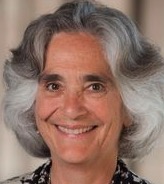 Persis Drell合作论文数Physics Department, School of Humanities and Sciences, Stanford University;School of Engineering, Stanford University125Rj Morrison合作论文数124Hp Paar合作论文数124T. Hart合作论文数124K. Berkelman合作论文数124C. Prescott合作论文数123




