A search for the direct production of Higgs bosons in the di-tau decay mode is performed with 86.3±3.5 pb−1 of data collected with the Collider Detector at Fermilab during the 1994–1995 data taking period of the Tevatron. We search for events where one tau decays to an electron plus neutrinos and the other tau decays hadronically. We perform a counting experiment and set limits on the cross section for supersymmetric Higgs boson production where tanβ is large and mA is small. For a benchmark parameter space point where mA0=100 GeV/c2 and tanβ=50, we limit the production cross section multiplied by the branching ratio to be less than 77.9 pb at the 95% confidence level compared to the theoretically predicted value of 11.0 pb. This is the first search for Higgs bosons decaying to tau pairs at a hadron collider. CDF Collaboration, CLARK, Allan Geoffrey (Collab.), D'ONOFRIO, Monica (Collab.), WU, Xin (Collab.). Search for supersymmetric Higgs bosons in the di-tau decay mode in pp collisions at s√=1.8 TeV. Physical Review. D, 2005, vol. 72, no. 07, p. 072004 DOI : 10.1103/PhysRevD.72.072004
The reconstruction of photons in the ATLAS detector is stud ied with data taken during the 2004 Combined Test Beam, where a full slice of the ATLAS de tector was exposed to beams of particles of known energy at the CERN SPS. The results pres ent d show significant differences in the longitudinal development of the electromagnetic sho wer between converted and unconverted photons as well as in the total measured energy. The potentia l to use the reconstructed converted photons as a means to precisely map the material of the tracke r in front of the electromagnetic calorimeter is also considered. All results obtained are co mpared with a detailed Monte-Carlo simulation of the test-beam setup which is based on the same s imulation and reconstruction tools as those used for the ATLAS detector itself.
In 2004 at the ATLAS (A Toroidal LHC ApparatuS) combined test beam, one slice of the ATLAS barrel detector (including an Inner Detector set-up and the Liquid Argon calorimeter) was exposed to particles from the H8 SPS beam line at CERN. It was the first occasion to test the combined electron performance of ATLAS. This paper presents results obtained for the momentum measurement p with the Inner Detector and for the performance of the electron measurement with the LAr calorimeter (energy E linearity and resolution) in the presence of a magnetic field in the Inner Detector for momenta ranging from 20 GeV/c to 100 GeV/c. Furthermore the particle identification capabilities of the Transition Radiation Tracker, Bremsstrahlungs-recovery algorithms relying on the LAr calorimeter and results obtained for the E/p ratio and a way how to extract scale parameters will be discussed.
A fully instrumented slice of the ATLAS detector was exposed to test beams from the SPS (Super Proton Synchrotron) at CERN in 2004. In this paper, the results of the measurements of the response of the barrel calorimeter to hadrons with energies in the range 20–350GeV and beam impact points and angles corresponding to pseudo-rapidity values in the range 0.2–0.65 are reported. The results are compared to the predictions of a simulation program using the Geant 4 toolkit.
The response of the ATLAS barrel calorimeter to pions with momenta from 2 to 180 GeV is studied in a test–beam at the CERN H8 beam line. The mean energy, the energy resolution and the longitudinal and radial shower profiles, and, various observables characterising the shower topology in the calorimeter are measured. The data are compared to Monte Carlo simulations based on a detailed description of the experimental set–up and on various models describing the interaction of particles with matter based on Geant4.
A fully instrumented slice of the ATLAS central detector was exposed to test beams from the SPS (Super Proton Synchrotron) at CERN in 2004. In this paper, the response of the central calorimeters to pions with energies in the range between 3 and 9 GeV is presented. The linearity and the resolution of the combined calorimetry (electromagnetic and hadronic calorimeters) was measured and compared to the prediction of a detector simulation program using the toolkit Geant 4.
The ATLAS TRT barrel is a tracking drift chamber using 52,544 individual tubular drift tubes. It is one part of the ATLAS Inner Detector, which consists of three sub-systems: the pixel detector spanning the radius range 4 to 20 cm, the semiconductor tracker (SCT) from 30 to 52 cm, and the transition radiation tracker ( TRT) from 56 to 108 cm. The TRT barrel covers the central pseudo-rapidity region |eta| < 1, while the TRT endcaps cover the forward and backward eta regions. These TRT systems provide a combination of continuous tracking with many measurements in individual drift tubes ( or straws) and of electron identification based on transition radiation from fibers or foils interleaved between the straws themselves. This paper describes the recently-completed construction of the TRT Barrel detector, including the quality control procedures used in the fabrication of the detector.
The ATLAS (A Toroidal LHC ApparatuS) Inner Detector provides charged particle tracking in the centre of the ATLAS experiment at the Large Hadron Collider (LHC). The Inner Detector consists of three subdetectors: the Pixel Detector, the Semiconductor Tracker (SCT), and the Transition Radiation Tracker (TRT). This paper summarizes the tests that were carried out at the final stage of SCT+TRT integration prior to their installation in ATLAS. The combined operation and performance of the SCT and TRT barrel and endcap detectors was investigated through a series of noise tests, and by recording the tracks of cosmic rays. This was a crucial test of hardware and software of the combined tracker detector systems. The results of noise and cross-talk tests on the SCT and TRT in their final assembled configuration, using final readout and supply hardware and software, are reported. The reconstruction and analysis of the recorded cosmic tracks allowed testing of the offline analysis chain and verification of basic tracker performance parameters, such as efficiency and spatial resolution, in combined operation before installation.
The ATLAS TRT end-cap is a tracking drift chamber using 245, 760 individual tubular drift tubes. It is a part of the TRT tracker which consist of th e barrel and two end-caps. The TRT end-caps cover the forward and backward pseudo-rapidity re gion 1.0 < |η | < 2.0, while the TRT barrel centralη region|η | < 1.0. The TRT system provides a combination of continuous track ing with many measurements in individual drift tubes (or straws ) and of electron identification based on transition radiation from fibers or foils interleaved bet w en the straws themselves. Along with other two sub-systems, namely the Pixel detector and Semi Co nductor Tracker (SCT), the TRT constitutes the ATLAS Inner Detector. This paper describes th recently completed and installed TRT end-cap detectors, their design, assembly, integratio n nd the acceptance tests applied during the construction.
The ATLAS TRT end-cap is a tracking drift chamber using 245,760 individual tubular drift tubes. It is a part of the TRT tracker which consist of the barrel and two end-caps. The TRT end-caps cover the forward and backward pseudo-rapidity region 1.0 < vertical bar eta vertical bar < 2.0, while the TRT barrel central eta region vertical bar eta vertical bar < 1.0. The TRT system provides a combination of continuous tracking with many measurements in individual drift tubes ( or straws) and of electron identification based on transition radiation from fibers or foils interleaved between the straws themselves. Along with other two sub-systems, namely the Pixel detector and Semi Conductor Tracker (SCT), the TRT constitutes the ATLAS Inner Detector. This paper describes the recently completed and installed TRT end-cap detectors, their design, assembly, integration and the acceptance tests applied during the construction.
The ATLAS inner detector consists of three sub-systems: the pixel detector spanning the radius range 4cm-20cm, the semiconductor tracker at radii from 30 to 52 cm, and the transition radiation tracker (TRT), tracking from 56 to 107 cm. The TRT provides a combination of continuous tracking with many projective measurements based on individual drift tubes (or straws) and of electron identification based on transition radiation from fibres or foils interleaved between the straws themselves. This paper describes the on and off detector electronics for the TRT as well as the TRT portion of the data acquisition (DAQ) system.
A straw proportional counter is the basic element of the ATLAS Transition Radiation Tracker (TRT). Its detailed properties as well as the main properties of a few TRT operating gas mixtures are described. Particular attention is paid to straw tube performance in high radiation conditions and to its operational stability.
Since the summer of 2005, the vacuum ultra-violet Free-ele ctron LASer in Hamburg (FLASH) has operated as a user facility at the Deutsches Elek tronen-Synchrotron (DESY), delivering ultra-short laser pulses of tens of femtosecond durat ion with a high peak brilliance of up to 1028photons/(smm2 mrad2 0.1%bandwidth). Due to the statistics of the Self-Amplified Spontaneous Emission (SASE) process, each photon pulse differs fr om the previous one in the number of modes per pulse, the wavelength (0 .5% fluctuations) and the intensity, making experiments more complicated. Thus, for certain experiments the detail ed knowledge of the beam properties on a shot-to-shot basis is mandatory. In this paper we descri be an online method to gain spectral information about the individual Free-Electron Laser (FEL) pulses that is based on rare-gas photoionization and photoelectron spectroscopy.
In this paper we present the performance of two algorithms currently running in the Tile Calorimeter Read-Out Driver boards for the commissioning of ATLAS. The first algorithm presented is the so called Optimal Filtering. It reconstructs the deposited energy in the Tile Calorimeter and the arrival time of the data. The second algorithm is the MTag which tags low transverse momentum muons that may escape the ATLAS muon spectrometer first level trigger. Comparisons between online (inside the Read-Out Drivers) and offline implementations are done with an agreement around 99% for the reconstruction of the amplitude using the Optimal Filtering algorithm and a coincidende of 93% between the offline and online tagged muons for the MTag algorithm. The processing time is measured for both algorithms running together with a resulting time of 59.2 mu s which, although above the 10 mu s of the first level trigger, it fulfills the requirements of the commissioning trigger (similar to 1 Hz). We expect further optimizations of the algorithms which will reduce their processing time below 10 mu s.
 Pavel Murat合作论文数Fermi National Accelerator Laboratory207
 Alvin Laasanen合作论文数Purdue University206G. Latino合作论文数INFN Sezione di Firenze, Università di Firenze206
 Andrey Korytov合作论文数Institute for High Energy Physics and Astrophysics, Department of Physics, College of Liberal Arts and Sciences, University of Florida;European Center for Nuclear Research;Fermilab206
 Niccolò Moggi合作论文数Department of Industrial Engineering, University of Bologna204
 Stefano Miscetti合作论文数Laboratori Nazionali di Frascati, INFN203
 Patrick Lukens合作论文数Particle Physics Division, Fermi National Accelerator Laboratory203S. Belforte合作论文数202
 Joey W Huston合作论文数Department of Physics & Astronomy, College of Natural Science, Michigan State University202
 Nicola Bacchetta合作论文数Fermi National Accelerator Laboratory;European Organization for Nuclear Research202Toru Okusawa合作论文数202
 Morris Binkley合作论文数Collider Detector Facility Department, Fermi National Accelerator Laboratory201
 Paoletti Riccardo合作论文数Dipartimento Di Scienze Fisiche, Della Terra E Dell’ambiente, Universita di Siena201
 Daniela Bortoletto合作论文数Department of Physics, University of Oxford201K. Goulianos合作论文数200
 Manfred Paulini合作论文数Department of Physics, Mellon College of Science, Carnegie Mellon University200Robert a Handler合作论文数200
 Dario Bisello合作论文数Department of Physics and Astronomy "Galileo Galilei", University of Padova199
 Gino Bolla合作论文数Fermi National Accelerator Laboratory199
 Dante Amidei合作论文数Department of Physics, College of Literature, Science, and the Arts, University of Michigan199Carl Haber合作论文数Physics Division, Lawrence Berkeley National Laboratory199
 Lee G. Pondrom合作论文数Department of Physics, University of Wisconsin–Madison199
 Fabio Happacher合作论文数Istituto Nazionale di Fisica Nucleare199
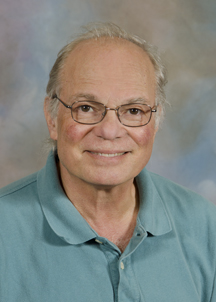 Arie Bodek合作论文数Department of Physics and Astronomy, School of Arts & Sciences, University of Rochester199Gabriela L Piacentino合作论文数199
 C. Bromberg合作论文数Michigan State University, USA199Michele Loreti合作论文数199Y. Gotra合作论文数198
 Giorgio Apollinari合作论文数Fermi National Accelerator Laboratory198
 Giorgio Chiarelli合作论文数Istituto Nazionale di Fisica Nucleare198C. Blocker合作论文数198C. Grosso-Pilcher合作论文数198M. Lindgren合作论文数197P. Giannetti合作论文数INFN Sezione di Pisa197S. Leone合作论文数196
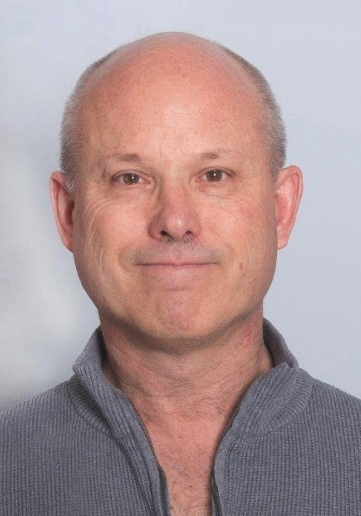 Joseph Boudreau合作论文数Department of Physics and Astronomy, University of Pittsburgh196Franco Bedeschi合作论文数Istituto Nazionale di Fisica Nucleare Sezione di Pisa195D. Lucchesi合作论文数195
 Jacobo Konigsberg合作论文数Institute for High Energy Physics and Astrophysics, University of Florida;Department of Physics, College of Liberal Arts and Sciences, University of Florida195
 Ray Culbertson合作论文数Fermi National Accelerator Laboratory195Franco Semeria合作论文数195
 Steven Errede合作论文数Department of Physics, The Grainger College of Engineering, University of Illinois Urbana-Champaign195
 Anwar Bhatti合作论文数Department of Physics, College of Computer, Mathematical, & Natural Sciences, University of Maryland195R. G. Feild合作论文数194F. Rimondi合作论文数194
 Kaori Maeshima合作论文数Fermi National Accelerator Laboratory194
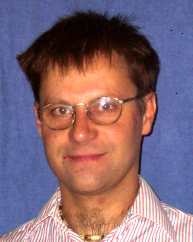 Pawel De Barbaro合作论文数Department of Physics and Astronomy, School of Arts and Sciences, University of Rochester;CERN194M. Shimojima合作论文数193
 Melissa Franklin合作论文数Department of Physics, Harvard University193




