Poverty is a complex, multidimensional, and deeply rooted structural issue that necessitates a more contextual, integrative, and responsive approach in regional development planning, particularly when addressing local socioeconomic. As a persistent global challenge, poverty cannot be effectively addressed through uniform, top-down development models. Instead, it requires spatially nuanced strategies that are attuned to the specific characteristics of rural and urban areas. This study aims to examine the evolving trends and thematic patterns in research on regional development planning as it relates to poverty alleviation, utilizing a bibliometric analysis to uncover knowledge structures and scholarly contributions. A total of 111 articles published between 2003 and 2025 were retrieved from the Scopus database and analyzed using VOSviewer and Biblioshiny to produce visual maps of keyword co-occurrences, authorship patterns, and thematic evolution. The findings indicate that area-based approaches emphasizing community participation, optimization of local potential, and cross-sector collaboration are highly effective in adaptively addressing the complexity of poverty. These approaches offer flexibility and adaptability in addressing diverse local needs. Over the past two decades, Environmental Science has emerged as the most significant disciplinary contributor, whereas disciplines such as economics, management, and decision sciences remains relatively limited. Furthermore, the research concentration among specific authors and institutions suggests the need for expanding interdisciplinary collaboration networks. The study concludes by recommending the promotion of integrative, interdisciplinary research that synthesizes energy policy, environmental sustainability, economic and political dimensions, and local sociocultural values as a foundation for inclusive and sustainable poverty alleviation strategies in both rural and urban contexts.
Peatland is one type of marginal land the community chooses to develop agricultural land and plantations. Sporadic use of peatlands causes extensive damage to peat ecosystems in Indonesia. Restoration of damaged peat ecosystems can be done using natural succession, rehabilitation, restoration, and other methods by scientific and technological developments. This research was conducted using qualitative methods and a literature study. This research aims to comprehensively and discursively understand the literature on a phenomenon related to how TKPPEG "Harapan Kita" restores peat ecosystems through rewetting through the construction of canal blocks and the development of Peatland Stewardship Village (DMPG) through an integrated agricultural system approach. From this literature study, it is known that there is a strong correlation between the existence of canal blocks and the increase in groundwater levels, which has an impact on agricultural land productivity. The integrated agricultural system being developed combines the Waringin variant of sheep farming, seasonal crop farming in the form of pineapple (Ananas et al..) and cassava (Manihot esculenta) cultivation, and annual crops in the form of areca palm trees (Areca catechu) and rambutan trees (Nephelium lappaceum L). This agricultural system can increase land productivity and environmental conservation in an integrated manner.
This research attempts to investigate, assess and test the key factor influencing the economic growth of communities around forests in Indonesia. The study employed a mixed-methods approach, integrating both qualitative and quantitative techniques. Qualitative data was gathered through in-depth interviews with managers of Indonesian forest management firms, complemented by observations and documentation. The subsequent phases of data analysis involved data reduction, visualization, and verification. Quantitative data were gathered via a survey questionnaire completed by 100 managers of Indonesian forest management organizations, which were then analyzed using partial least squares (PLS). The research identified several qualitative factors that are necessary for the communities surrounding forests in Indonesia, including a multi-business policy and sustainable forest management. The quantitative research results prove that Multi Business Policy positively affects Economic Development of Community around Forests, Multi Business Policy positively affects Sustainable Forest Management, Sustainable Forest Management positively affects Economic Development of Community around Forests, and Sustainable Forest Management mediates the relationship between Multi Business Policy to Economic Development of Community around Forests. Policies and regulations regarding market certainty and sales of the results of multi-community businesses are needed which are guaranteed by the government.
Introduction: The government's efforts to control peatland ecosystem damage are a corrective measure to improve management systems in peatland areas. This case study focuses on the KHG Kampar River – Gaung River and KHG Gaung River – Batangtuaka River in Riau Province. These locations were chosen due to their representation of peatland ecosystem restoration activities from 2017 to 2022. Theoretical Review: Hajer and Wagenaar (2003: 33-37) explain in more detail that deliberative policy is an approach in the public decision-making process that focuses on deep discussion and reflection of various views and approaches before reaching a final decision. This approach involves the active participation of various stakeholders or citizens in decision-making. Collaborative policy dialogue is an alternative approach in policy-making that is becoming increasingly relevant in the Information Age due to technological changes and globalization. Methods: Using a systematic qualitative methodology, this study adopts a descriptive approach to describe field phenomena. Result and Discussion: This study identifies stakeholders, their involvement, and the impact of their collaboration and synergy. Stakeholder collaboration is crucial for addressing peatland ecosystem management issues in these areas. The collaborations include interactions between central and local governments (provincial and district), the government and the private sector, and the government and local communities. Conclusion: Successful stakeholder collaboration has supported the region's sustainable development goals (SDGs). Four pillars were achieved in the efforts to control peatland ecosystem damage: the social pillar, the economic pillar, the environmental pillar, and the governance pillar.
This research aims to describe and analyzing the community empowerment in Situ Gunung tourist area in collaborative governance perspective. A qualitative case study approach was used in this research by considering problems related to community empowerment around the Situ Gunung tourist area. Research findings show the conflict between local communities, NGOs, and PT Fontis Aqua Vivam. The institutional leadership has an important role to facilitate the collaboration between various related parties from government, universities, private sector, NGOs and community. Meetings and consultations were held with various stakeholders to resolve problems in Situ Gunung. Several meetings were held, but not all hopes and agreements were implemented. The conclusion of this research is the community empowerment in Collaborative Governance perspective can improve the economy of community around the Situ Gunung tourist area by involving 5 actors of government, private sector, community, NGOs and academics.
Post-order new economic growth has decreased. The source of the decline in economic growth is that state revenues in the oil and gas sector have decreased. Indonesia needs more consistent high economic growth to accelerate Indonesia's leap to become a high-income country. In this situation Thus, there are several challenges so that Indonesia can achieve growth targets and, at the same time maintain growth The challenges that must be faced in the form of quality sources of Power are human beings who still have valued investment in resources Power life and wealth intellectuals who are still low, plus with Posture exports that have not been worth economy high. With this, an appropriate policy strategy is needed for the three things above to become locomotives of future economic growth. Although Indonesia needs high economic growth, several boundaries must be adhered to, namely, the nature of economic growth must be inclusive, so as not to widen the gap in social inequality. A growth economy must be supported by a diversity of rich life and, at the same time intended to guard sustainability naturally as a source of main Continuity of Development and Justice between generations.
The slightly sweet and acidic taste offered by Pontianak Siam oranges is influenced by the total soluble solids (TSS) and acidity in the fruit, in which, measuring these attributes is commonly performed using instruments that potentially damage the fruit's structure, thus, impractical for fresh fruit products. Moreover, the process of classifying the quality of fresh oranges has been based on physical appearance, leading to subjective results. Correspondingly, the objective of the study is to develop a prediction method for the physicochemical characteristics of Pontianak Siam oranges based on VIS-NIR-Fluorescence spectroscopy and an artificial neural network (ANN) model. The method is applicable to classify oranges based on physicochemical characteristics without damaging the fruit's structure. As a result, the best model for classifying the maturity level of Pontianak Siam oranges was obtained using a dataset with all feature combined spectra, attaining a training accuracy of 0.99 and testing accuracy of 1. The best model for predicting TSS was obtained using all feature combined spectra dataset, attaining R2 training = 0.89 and R2 testing = 0.91. The best model for predicting acidity was obtained using all feature reflectance spectra datasets, attaining R2 training = 0.96 and R2 testing = 0.97. The best model for predicting fruit firmness was obtained using all feature reflectance spectra dataset, attaining R2 training = 0.97, R2 testing = 0.89. Overall, the combination of Vis-NIR reflectance and fluorescence spectroscopy have the potential to be applied for non-destructive assessment of citrus quality in terms of visual classification and maturity parameters prediction.
Purpose: The aims of this study is to analyze the local economic development in Sumenep Regency with a collaborative governance perspective. We employed qualitative research techniques that focused on describing and understanding the subject. Methods: Our analysis of the data involved interactive methods. We conducted in-depth interviews with 30 individuals who represented various stakeholders in local economic development, including the government, private sector, community, media, and universities. Research is focused on context systems, collaboration drivers, collaboration dynamics and collaborative action. In this study, the weak collaboration context system is caused by weak network ties and low stakeholder interaction frequency. Meanwhile the leadership factor has an important role in building and strengthening stakeholder networks and interactions as a driving force for collaboration. Finding: The findings of this study construct the theory of collaborative governance put forward by Emerson and Nabatchi (2015) by adding elements of social capital, forming collaborative institutions (Koperasi or BUMDes) and strengthening collaborative institutional capacities. Contribution/Originality: The research uncovers the significance of collaborative institution formation (Koperasi or BUMDes) and the role of social capital in successful collaborative governance for local economic development. These research suggests a collaborative governance model based on Emerson and Nabatchi's regime combined with collaborative institution formation. Emphasizes the importance of strengthening social capital and collaborative institutions for achieving successful collaborative goals in local economic development.
This study investigates the correlation between bureaucratic reform and performance due to conflicting theories about existing phenomena. In theory, it is posited that implementing bureaucratic reform should enhance performance by addressing various bureaucratic issues, resulting in a positive or directly proportional correlation. However, empirical evidence indicates persistent problems in bureaucratic performance, including public service-related complaints and other issues within the government. The government's proclamation of bureaucratic reform is expected to address these existing problems and facilitate the realization of Indonesia's goal of establishing a world-class government. Understanding the correlation between bureaucratic reform and performance achievement is crucial for designing effective programs to achieve the goals of bureaucratic reform. Given that certain conditions regarding bureaucratic reform within the work units of BPS (Statistics Indonesia) have not yet received national recognition, examining the correlation between bureaucratic reform and performance achievement is of utmost importance for BPS. A quantitative approach with correlation analysis was employed as the analytical method. The study's results reveal a positive correlation between bureaucratic reform and performance achievement, albeit not highly intense. This suggests that the variation in performance, which can be attributed to the implementation of bureaucratic reform, is not highly significant. Consequently, it becomes apparent that other factors beyond bureaucratic reform substantially influence performance at BPS. Therefore, BPS must optimize the implementation of bureaucratic reform to enhance productivity and attain superior performance.
Purpose: This paper will explore the tourism economy in collaborative governance perspective. Design/methodology/approach: This article is a theoretical study. The information is collected by the snowball method. All related theories and research are collected systematically. Data collected from secondary sources. The secondary resources are textbooks and research results. Textbooks are used to collect theories related to the research topic. Empirical research is used to link existing theories with the latest conditions in the field. Findings: Public administration literature shows are five paradigms ``developed in public administration, namely: Old Public Administration (OPA), New Public Administration (NPA), New Public Management (NPM), New Public Services (NPS) and Governance. Research limitations/implications: This is an theoretical study. This study is limited to theoretical examination for the the tourism economy in collaborative governance perspective. Therefore, future research should examine empirically to get confirmation for the theories. Practical implications: This research can be used by future researcher as the basis to examine empirically tourism economy in collaborative governance perspective. Social Implications: The results can enrich literature Collaborative governance, especially in the case of tourism economy. Originality/value: This is an early compilation to examine the tourism economy in collaborative governance perspective.
Community involvement in determining the direction of autonomous region development is still rare. Regional autonomy, conceptualized as the local government’s freedom to take care of domestic affairs, is the best way to implement a decentralized governmental approach. This research aims to determine the effectiveness of implementing regional autonomy in the development of Batu City tourism using a qualitative approach with a descriptive type of research. The research locations are Batu City and Batu City’s local government office. Batu City was chosen because it has a history of tourism development in a relatively short period of time. The study found that the state still manages Batu City’s tourism development policy and development, so the tourism has not referred to the local tourism development master plan. The study aims to know the effectiveness of participatory policy approaches in developing Batu City tourism as an autonomous region.
Indonesia, known for its geological richness, often experiences natural disasters. One such event was the eruption of Mount Semeru in December 2021 in Lumajang Regency, East Java. The incident posed complex recovery challenges. According to the National Disaster Management Agency (BNPB) report, infrastructure damage reached billions of rupiahs, and thousands of residents were displaced. The challenges extended beyond infrastructure recovery, encompassing the psychological recovery of traumatized residents. Disruptions to the local economy, family separations, and other losses exacerbated the psychosocial burden faced by the affected population. The communities impacted by the eruption of Mount Semeru faced diverse challenges, particularly in religious aspects and the fulfillment of funeral rites (Rukun Kematian). This study highlights the importance of meeting funeral rites needs at every Social Facility (Fasilitas Sosial or Fasos) as a primary foundation for post-disaster recovery. Through collaboration with BNPB, the Social Assistance Program has successfully allocated resources for meeting these needs. Surveys of each Fasos revealed their specific requirements, ranging from funeral equipment to loudspeakers. Technical assistance related to funeral rites was provided by competent practitioners. Although it has shown positive impacts, this research emphasizes the sustainability of assistance as a key factor in the long-term recovery of the affected community. As a recommendation, this assistance should continue, considering the dynamics and changing needs of the community, to ensure ongoing optimal support in facing post-disaster challenges.
The purpose of this research is the implementation of the policy of Presidential Decree No. 7 of 2020 in an effort to prevent the Pandemic at the National Police Headquarters, the impact of implementing policies to prevent the spread of the Pandemic at the National Police Headquarters and the model of implementing policies at the National Police Headquarters in preventing the spread of the Pandemic. This research is qualitative because to maintain regularity and consistency. The results of the study indicate that the implementation of the policies set at the National Police Headquarters is to maintain a distance and a ban on traveling out of town. Meanwhile, the impact of this implementation is the increase in the duties of personnel at the National Police Headquarters due to the implementation of social distancing protocols during the pandemic, resulting in high crime. The Merilee S. Grindle model used to assess the success of implementation is influenced by two major variables, namely the content of the policy and the implementation environment. The type of policy implementation that is in accordance with the program to accelerate the handling of Covid-19 is substantive and procedural politics
This study aims to analyze and describe corruption forms, causes, and prevention. This study uses a qualitative approach through a case study of the Riau Provincial Government. This study shows the findings that there have been many cases of corruption committed by state civil servants and state officials, based on a comparison of data sources from the Corruption Eradication Commission (Indonesia KPK), police, and courts from 2017 to 2020. Based on the results and the identification of corruption cases, there were various findings according to the types, modes, and causes of corruption. Therefore, they can be used as empirical data to formulate strategies to prevent corruption. The researchers conclude that the Riau Provincial Government has demonstrated skills and success in preventing corruption, and the level of corruption can be suppressed and reduced significantly every year. In increasing efforts to prevent corruption, the researcher suggests five stakeholders collaborate (Pentahelix) and strengthen e-government governance. With the role and dimensions of Penta helix cooperation and the presence of IT-based governance, it will strengthen efforts to prevent corruption sustainably. This research creates a novelty in the paradigm that corruption will be prevented optimally if understood in depth, including its form, typology, and causes so that prevention can be carried out comprehensively, with an approach not limited to legal provisions, administration, and technology. However, the most critical task is forming a mentality of honesty and loyalty as state apparatus in providing services to the community and the state.
This research intends to investigate the implementation and what indicator that is used in implementing the remuneration of government and non-government educational staff in the university with the general service institution status. This research is conducted in Faculty of Engineering, University of Brawijaya, Malang-Indonesia. Location shows that the social situation which is categorized by three unsure that are location that is Faculty of Engineering, University of Brawijaya, perpetrator that is educational staff of Engineering Faculty, University of Brawijaya that accepts the remuneration, and activity that is the remuneration process. The research method uses the models of Miles and Huberman that is through the process of data reduction, data presentation, conclusion, and triangulation. This research is hoped to be able to analyze how the implementation is by accurate, equitable, and feasible based on the staff performance and then to propose a recommendation of educational staff remuneration system, so the remuneration system later is applied regarding to the available principals and the rules that have been applied. The result shows that in reality, in the implementation of the remuneration based on the performance in Faculty of Engineering University of Brawijaya, there is still a problem such as there is a difference between the remuneration that is accepted by government and non-government employee. In addition, there has not been objective and transparent in giving the rating weight in the duty letter
This study uncovers the partnership interactions that occur in village government in East Java and aims to determine the partnership, described and explained in the form of a quadrant-type of analysis through two dimensions of Government and Non-partnership. The existence of two institutions (village government and BPD) that carried out village governance requires a robust partnership and mutual interactions among both in the implementation of their activities, the pattern of partnership relations itself has become a trend in public administration and good governance practices, where partnerships are considered capable of increasing the effectiveness of governance in the provision of public services. The data analysis used in this research is descriptive quantitative by measuring the mean of two dimensions, so that it can describe the quadrant that explains the partnership relationship between the two institutions. The results of this analysis indicate that the partnership relationship that occurs occupies the partnership quadrant, meaning that there is a high alliance between the two institutions.
This study aims to describe and analyze the ability to absorb local people's aspirations by the Gorontalo Regional Development Planning Agency (RDPA) from the public administration perspective. Currently, there are many cases of serious conflict between the government and the community because policies are taken without paying attention to the people's aspirations. This is where the importance of development planning issues must be related to the concept of public administration, where the government must know and understand what the community needs properly. This study uses a qualitative descriptive method involving informants and respondents from various parties. The results show that DPA has good quality in absorbing community aspirations in development planning programs, but it is not yet fully optimal, and there are still some obstacles. The absorption of community aspirations is more optimally carried out through the Development Planning Forum and the Face-to-Face Model Deliberation of Regional Apparatus Work Units in a persuasive manner so that bottom-up proposals are more qualified and focused. Furthermore, it is recommended that training be carried out in the community, especially for the head of the local community, to inventory development needs in their area so that each plan's activity and the proposals are more quality. In this study, it was found novelty that the RDPA Gorontalo was able to play a role in improving the quality of participatory planning in the Gorontalo regional development planning system, both as policy formulation and in its operations.
This research focuses on health and education as basic needs to build society through public services. Quality and accessibility are a series of processes to provide valuable services to society as a whole. Additionally, there is regional development to be closer and reach the community to avoid imbalances that occur between regions. This study used survey data collection methods and data analysis using quantitative descriptive. The sample of this study was 195 respondents spread across three districts of the City of Mojokerto using stratified random sampling related to a proportional sample. The findings in this study indicate that public services affected the quality and accessibility improvement of the people of Mojokerto Regency. However, public perception still showed that public services are not yet quality and affordable in all areas of society. Thus, public services have not been felt with the ease of access in some areas. There needs to be an evaluation of public services to provide welfare and improve connectivity between regions.
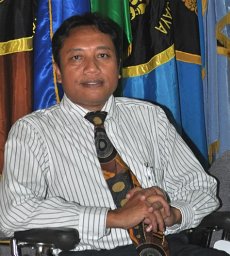 Bambang Supriyono合作论文数Faculty of Administrative Sciences, University of Brawijaya Veteran Street6
 Franky Djafar合作论文数3
 Agus Suryono合作论文数Business Incubator, AKSI Asosiasi Klaster Indonesia Indonesian Cluste3
 Choirul Saleh合作论文数University of Brawijaya3Meika Dwi Nastiti Mulyaningsih合作论文数2Cik Ida Kumalasari Amirudin合作论文数2
 Mochammad Rozikin合作论文数University of Brawijaya2Abdul Wahib Muhaimin合作论文数University of Brawijaya2Bambang Santoso Haryono合作论文数Brawijaya Univ2Soesilo Zauhar合作论文数Brawijaya Univ2
 Luqman Hakim合作论文数Dept Agribusiness, Univ Syiah Kuala2
 Irwan Noor合作论文数Econ Dept, Brawijaya Univ2
 Mohammad Nuh合作论文数Institute Technology of Sepuluh Nopember Surabaya;c;Institute Technology of Sepuluh Nopember Surabaya2
 Andy Wijaya合作论文数2Ahmad Avatar Tulsi合作论文数1femy m g tulusan合作论文数1Dadan Sutrisno合作论文数1
 Romy Hermawan合作论文数University of Brawijaya1Zaenal Fanani合作论文数1
 rini yulianingsih合作论文数Faculty of Agricultural Technology, Brawijaya University1La Choviya Hawa合作论文数1
 Inggang Perwangsa Nuralam合作论文数1
 Dhiana Puspitawati合作论文数University of Brawijaya1
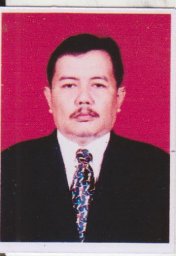 salmin dengo合作论文数1
 Bambang Slamet Riyadi合作论文数Nasional University1
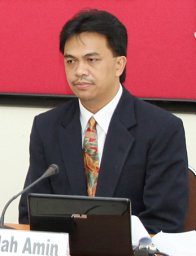 Fadillah Amin合作论文数Brawijaya Univ1
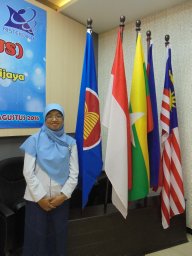 Dina Indriani合作论文数University of Brawijaya1
 Endah Setyowati合作论文数Fac Sci Adm, Univ Brawijaya1
 Sumartono Sumartono合作论文数Public Administration Lecturer, Brawijaya University1
 Rillia Aisyah Haris合作论文数universitas wiraraja sumenep1
 Wike Wike合作论文数University of Brawijaya1arifin md salleh合作论文数universiti teknologi mara1
 Masturah Ma'in合作论文数Fac Business & Management, Univ Teknol MARA1Z. Fanani合作论文数1
 Nuddin Harahab合作论文数Postgrad Environm Sci, Brawijaya Univ1Ike Wanusmawatie合作论文数1
 Dimas Firmanda Al Riza合作论文数Faculty of Agricultural Technology, University of Brawijaya1
 Naoshi Kondo合作论文数1




