: Deep Learning algorithms are becoming common in solving different supervised and unsupervised learning problems. Different deep learning algorithms were developed in last decade to solve different learning problems in different domains such as computer vision, speech recognition, machine translation, etc. In the research field of computer vision, it is observed that deep learning has become overwhelmingly popular. In solving computer vision related problems, we first take a CNN (Convolutional Neural Network) which is trained from scratch or some times a pre-trained model is taken and further fine-tuned based on the dataset that is available. The problem of training the model from scratch on new datasets suffers from catastrophic forgetting . Which means that when a new dataset is used to train the model, it forgets the knowledge it has obtained from an existing dataset. In other words different datasets does not help the model to increase its knowledge. The problem with the pre-trained models is that mostly CNN models are trained on open datasets, where the data set contains instances from specific regions. This results into predicting disturbing labels when the same model is used for instances of datasets collected in a different region. Therefore, there is a need to find a solution on how to reduce the gap of Geo-diversity in different computer vision problems in developing world. In this paper, we explore the problems of models that were trained from scratch along with models which are pre-trained on a large dataset, using a dataset specifically developed to understand the geo-diversity issues in open datasets. The dataset contains images of different wedding scenarios in South Asian countries. We developed a Lifelong CNN that can incrementally increase knowledge i.e., the CNN learns labels from the new dataset but includes the existing knowledge of open data sets. The proposed model demonstrates highest accuracy compared to models trained from scratch or pre-trained model. datasets
This paper considers the problem of modeling long-term adverse events following prostatic surgery performed on patients with urination problems, using the French national health insurance database (SNIIRAM), which is a non-clinical claims database built around healthcare reimbursements of more than 65 million people. This makes the problem particularly challenging compared to what could be done using clinical hospital data, albeit a much smaller sample, while we exploit here the claims of almost all French citizens diagnosed with prostatic problems (with between 1.5 and 5 years of history). We introduce a new model, called ZiMM (Zero-inflated Mixture of Multinomial distributions) to capture such long-term adverse events, and we build a deep-learning architecture on top of it to deal with the complex, highly heterogeneous and sparse patterns observable in such a large claims database. This architecture combines several ingredients: embedding layers for drugs, medical procedures, and diagnosis codes; embeddings aggregation through a self-attention mechanism; recurrent layers to encode the health pathways of patients before their surgery and a final decoder layer which outputs the ZiMM’s parameters.
We use neural guidance to direct search of the DPLL algorithm. We compare SAT-solving performance of various heuristics and two neural architectures: LSTM and a message-passing architecture. By a large margin the best one is the message passing architecture, which has more desirable theoretical properties and which is capable of solving complicated instances of SAT problems even when used with a naive implementation of the DPLL algorithm.
Many current approaches to deep learning make use of high-level toolkits such as TensorFlow, Torch, or Caffe. Toolkits such as Caffe have a layer-based programming framework with hard-coded gradients specified for each layer type, making research using novel layer types problematic. Toolkits such as Torch and TensorFlow define a computation graph in a host language such as Python, where each node represents a linear algebra operation parallelized as a compute kernel on GPU and stores the result of evaluation; some of these toolkits subsequently perform runtime interpretation over that graph, storing the results of forward calculations and reverse-accumulated gradients at each node. This approach is more flexible, but these toolkits take a very limited and ad-hoc approach to performing optimization. Also problematic are the facts that most toolkits lack type safety, and target only a single (usually GPU) architecture, limiting users’ abilities to make use of heterogeneous and emerging hardware architectures. We introduce a novel framework for high-level programming that addresses all of the above shortcomings.
TensorFlow is an interface for expressing machine learning algorithms, and an implementation for executing such algorithms. A computation expressed using TensorFlow can be executed with little or no change on a wide variety of heterogeneous systems, ranging from mobile devices such as phones and tablets up to large-scale distributed systems of hundreds of machines and thousands of computational devices such as GPU cards. The system is flexible and can be used to express a wide variety of algorithms, including training and inference algorithms for deep neural network models, and it has been used for conducting research and for deploying machine learning systems into production across more than a dozen areas of computer science and other fields, including speech recognition, computer vision, robotics, information retrieval, natural language processing, geographic information extraction, and computational drug discovery. This paper describes the TensorFlow interface and an implementation of that interface that we have built at Google. The TensorFlow API and a reference implementation were released as an open-source package under the Apache 2.0 license in November, 2015 and are available at www.tensorflow.org.
I received my Ph. D in Compute Science from UC, Santa Cruz in 2005, advised by Prof. Alex Pang. I worked at NVIDIA for 9 years on GPU architecture. I started to work on the Goolge Brain team since 2015, and spend most of my time on TensorFlow.
 Geoffrey Irving合作论文数UK AI Safety Institute9
 Rafal Józefowicz合作论文数The D. E. Shaw Group8
 Michael Isard合作论文数Google DeepMind8
 Derek Murray合作论文数Google Brain8
 Sanjay Ghemawat合作论文数Google8
 Josh Levenberg合作论文数Google7
 Benoit Steiner合作论文数Anthropic;Facebook7
 Matthieu Devin合作论文数Google Brain7
 Yangqing Jia (贾扬清)合作论文数NVIDIA7
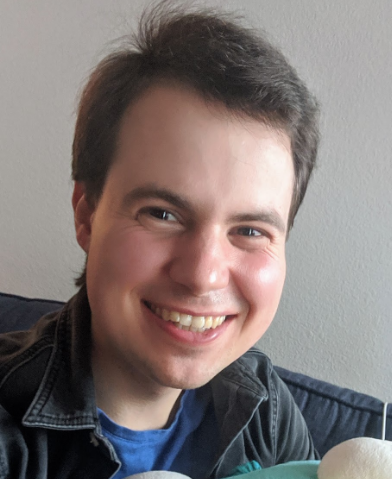 Christopher Olah合作论文数Anthropic6
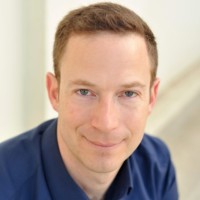 Jonathon Shlens合作论文数Google DeepMind6
 Eugene Brevdo合作论文数Google DeepMind;Google Brain6
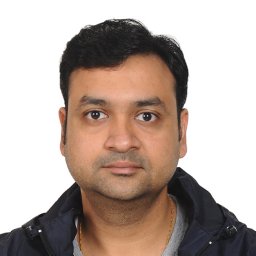 Ashish Agarwal合作论文数Department of Electrical and Computer Engineering;Boston University6
 Manjunath Kudlur合作论文数Useful Sensors Inc.6
 Paul Barham合作论文数Google DeepMind6
 Mike Schuster合作论文数Two Sigma6
 Martin Wicke合作论文数Google Research6
 Zhifeng Chen合作论文数Apple5
 Pete Warden合作论文数Google Brain, Mountain View, CA 94043 USA5
 Andy Davis合作论文数Google Brain, Mountain View, CA 94043 USA5
 Łukasz Kaiser合作论文数OpenAI;CNRS5
 Martín Abadi合作论文数Department of Computer Science and Engineering, Baskin School of Engineering, University of California, Santa Cruz;Google5
 Fernanda Viégas合作论文数Google;Harvard John A. Paulson School of Engineering and Applied Sciences, Harvard University;Insight and Interaction Lab, Harvard University5
 Yuan Yu合作论文数Microsoft5
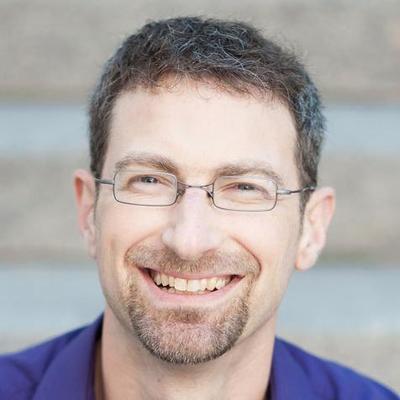 Martin Wattenberg合作论文数John A. Paulson School of Engineering and Applied Sciences, Harvard University;Google Research5
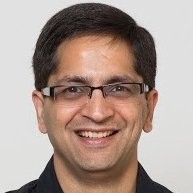 Rajat Monga合作论文数Plaksha Technology Leaders Program5
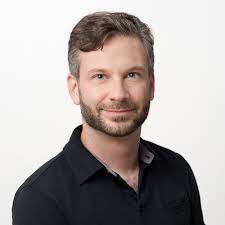 Greg Corrado合作论文数Google5
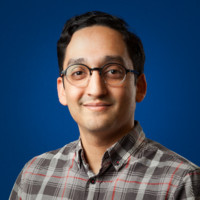 Vijay Vasudevan合作论文数Lutra AI5
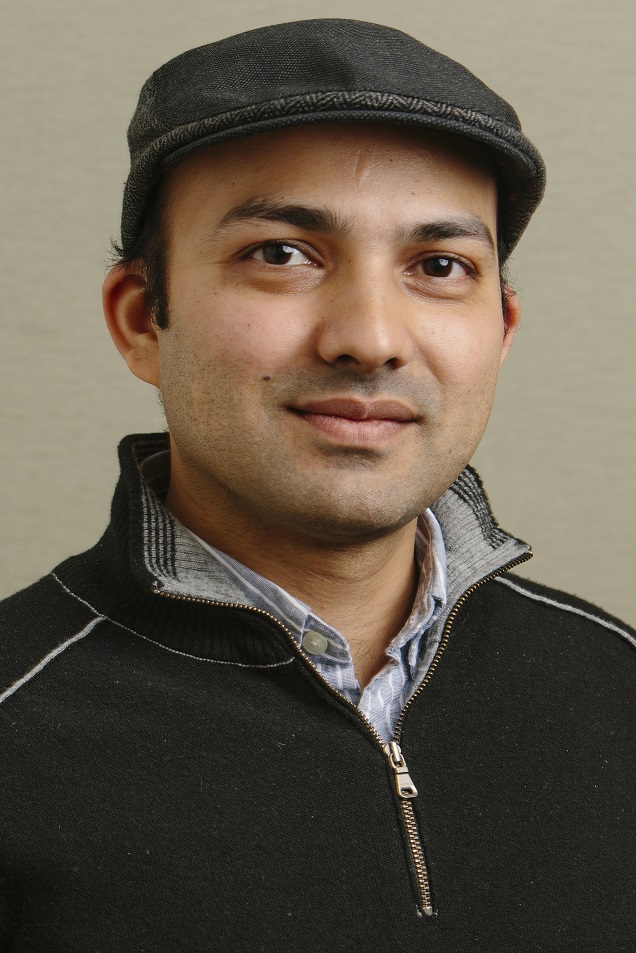 Kunal Talwar合作论文数Apple5
 Craig Citro合作论文数Indiana University5
 Ian Goodfellow合作论文数Stealth Startup5
 Sherry Moore合作论文数Sherry Q. Moore LLC;Google Research4Paul Tucker合作论文数4Dandelion Mané合作论文数Google Brain, Mountain View, CA 94043 USA4
 Oriol Vinyals合作论文数Google DeepMind4
 Ilya Sutskever合作论文数Safe Superintelligence Inc4
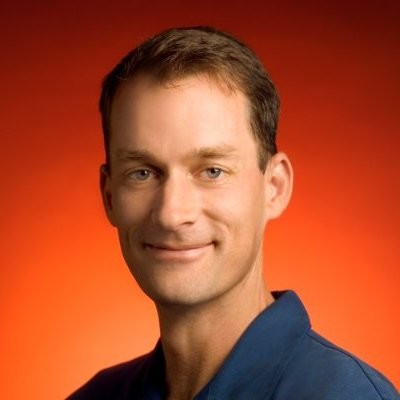 Jeff Dean合作论文数DiscoveryLoop4
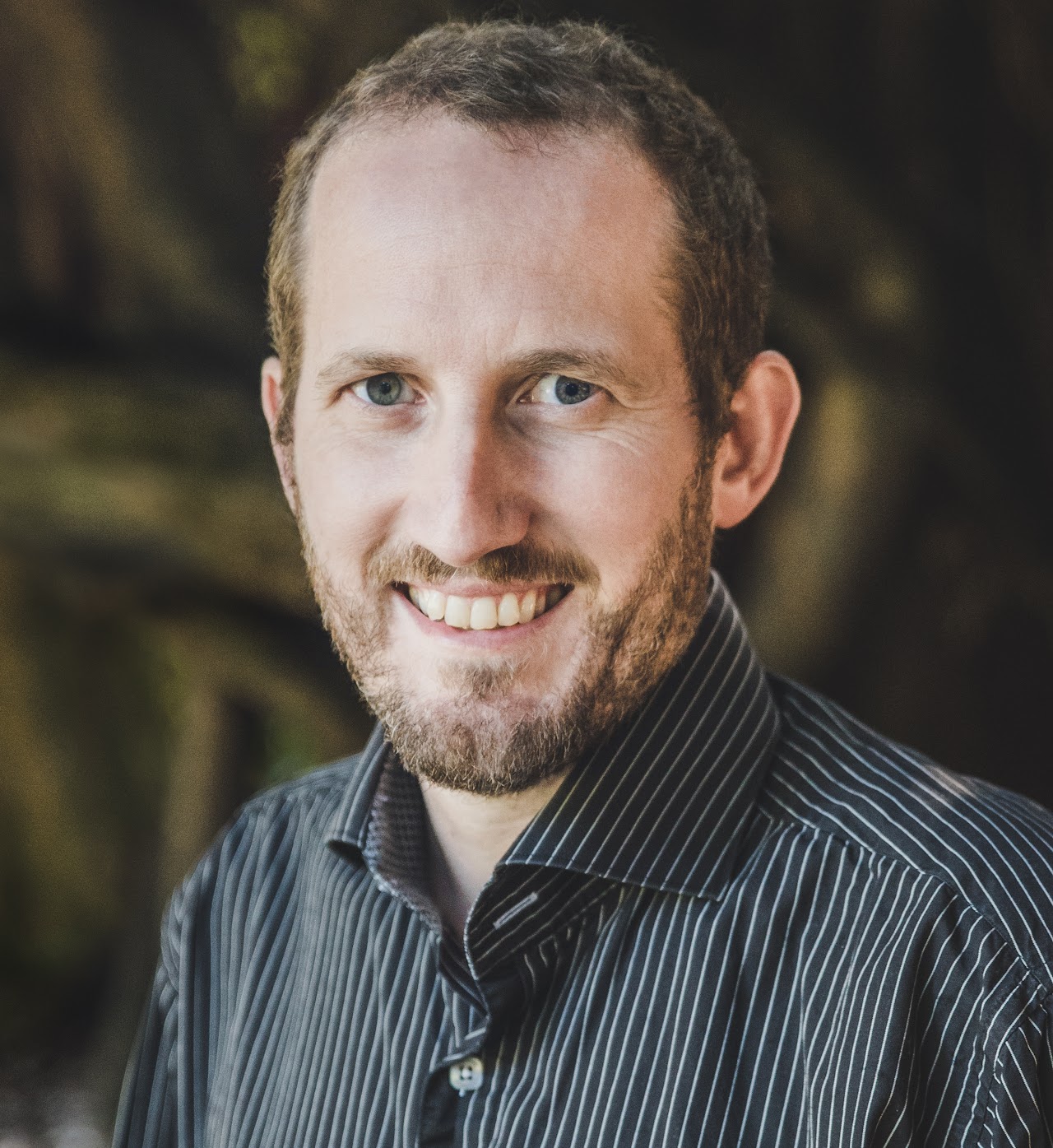 Vincent Vanhoucke合作论文数Waymo4Dan Mané合作论文数3Xiaoqiang Zheng合作论文数2Rohan Jain合作论文数1
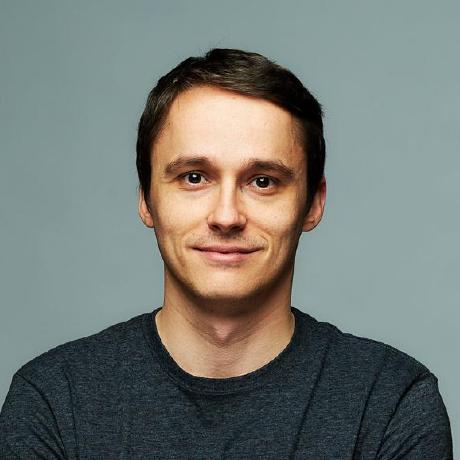 Daniel Smilkov合作论文数Lilac AI1Aaron Jaffey合作论文数1
 Paul A. Tucker合作论文数Google1Charles Nicholson合作论文数1Zongheng Yang合作论文数1Sukriti Ramesh合作论文数1
 Illia Polosukhin合作论文数NEAR1
 Andreas Veit合作论文数Google1




