This article examines the Arab-Israeli conflict by focusing on the often-overlooked period of the British Mandate in Palestine (1919-1948). While contemporary analyses frequently center on post-1948 developments, this study argues that the foundations of the conflict were laid during British colonial administration, whose policies were ambiguous, reactive, and primarily driven by imperial interests rather than local realities. The paper traces how conflicting promises made to Jews and Arabs, mismanagement of governance, and escalating cycles of violence shaped early political dynamics, fostering deep mistrust among all actors involved. By situating the Mandate within broader geopolitical shifts -from the collapse of the Ottoman Empire to the rise of fascism in Europe- the article demonstrates how British rule failed to provide political stability and instead catalyzed long-term polarization. Understanding this period is crucial to comprehending subsequent wars, refugee crises, and contemporary violence in the region.
Este artículo analiza el conflicto árabe-israelí centrándose en el período a menudo ignorado del Mandato Británico en Palestina (1919-1948). Mientras que los estudios contemporáneos suelen enfocarse en los acontecimientos posteriores a 1948, este trabajo sostiene que las bases del conflicto se establecieron durante la administración colonial británica, cuyas políticas fueron ambiguas, reactivas y motivadas principalmente por intereses imperiales más que por las realidades locales. El texto examina cómo las promesas contradictorias hechas a judíos y árabes, la gestión ineficaz del gobierno y los ciclos crecientes de violencia moldearon las dinámicas políticas iniciales, generando una desconfianza profunda entre los actores implicados. Al situar el Mandato en el contexto de cambios geopolíticos más amplios —desde la caída del Imperio otomano hasta el ascenso del fascismo en Europa—, el artículo demuestra cómo el dominio británico fracasó en garantizar estabilidad política y contribuyó a una polarización duradera. Comprender este periodo resulta esencial para entender las guerras, crisis de refugiados y violencia contemporánea en la región.
The invasion of Ukraine in February of 2022 triggered a multitude of debates between pundits and policy makers alike over Russia's, and more specifically, Vladimir Putin's motivations in invading Ukraine.Without oversimplifying excessively, on the one hand, one group argued that Putin's move was understandable given the fact that since the end of the Cold War, North Atlantic Treaty Organization (nato) expansion was bringing the alliance dangerously close to Russia's traditional sphere of influence and therefore represented a direct threat to the national security interests of the country.Following this logic therefore, Putin's invasion was a defensive move against nato and the United States aggressive and anti-Russian post-Cold War European policy.The most vocal of proponents of this argument is the renowned University of Chicago academic, John Mearsheimer.He argues that prevailing view in the West is that the Ukraine war is primarily due to Russian aggression and Putin's desire to revive the Soviet empire (Giles, 2022).However, Mearsheimer argues that the United States and nato are to blame for the invasion because the expansion of the alliance into Russia's traditional sphere of influence threatened the latter's geopolitical integrity.Russia was too weak to respond to nato's enlargement when Bulgaria, Estonia, Latvia, Lithuania, Romania, Slovakia, and Slovenia joined in 2004.However, the red line for Moscow was the formal announcement of Ukraine and Georgia's desire to join nato in 2008.At the time, Putin even went so far as to say that Ukraine was not even a real country (Marson, 2009).Great powers are always sensitive to potential threats in their spheres of influence and Russia should not be portrayed as
Living and working abroad has had a significant impact on my teaching and research on Canadian foreign policy in North America. Ironically, working in Mexico has provided better access to Canadian, United States, and Mexican foreign policymakers as they see me as a channel to voice their concerns on North American cooperation. Often, I will be invited to a workshop in Mexico to speak about Canada, while on other occasions, I will be invited to Canada to speak about Mexico. I am much more aware of the positions of all three North American countries and why they have these positions. With specific reference to Canada and the actual content of its foreign policy, I have come to see that Canadian foreign policy is strikingly more “realist” than what I was taught in Canada in Canadian foreign policy courses, showing how externality provides new insights into Canada.
Para lograr manejarlas adecuadamente las crisis, primero es necesario entender qué son y cuáles son sus principales características. Existe una gran cantidad de literatura al respecto y no es posible asignarle una sola definición al término. Si se analiza la teoría de la crisis, lo más factible es encontrar cuatro corrientes depensamiento. La primera se refiere a la crisis solamente como una amenaza, la segunda define el concepto como un periodo de interrupción, la tercera combina las visiones de amenaza e interrupción y la cuarta presenta las dos caras de una crisis. La negativa está asociada con el peligro que representan este tipo de fenómenos y la positiva con las nuevas oportunidades de cambio que éstos propician.
Alan Bersin, exsubsecretario de Homeland Security en Estados Unidos, y Athanasios Hristoulas colaboran en este analisis, sobre la reciente crisis entre Mexico y ese pais, los acuerdos alcanzados y sus consecuencias
Abstract The dynamics of foreign policy making in the United States, Mexico, and Canada—the three countries that make up North America—has been influenced by political geography, political culture, and state–society relations. The combination of these three factors helps to explain America’s slow emergence as a great power, its unique brand of civic nationalism, the moralistic terms in which the aims of U.S. foreign policy are often cast, the lack of consistency in American diplomacy, and the hesitation the United States has often shown about accepting or adhering to multilateral commitments. For Mexico and Canada, the proximity of the United States has fundamentally shaped their external relations whether as a force of repulsion or a source of attraction. For much of the past century, Mexican foreign policy treaded a path of resistance to U.S. domination, driven by the political traditions of nationalism, populism, and anti-imperialism. In the case of Canada, it has also at times sought greater independence from the United States through economic nationalism while also carving out a distinctive foreign policy identity as a liberal and idealistic middle power. In the second half of the twentieth century, Canada cycled through four somewhat distinctive eras of foreign policy: the liberal internationalism of the 1940s to 1968; the left nationalism of the Trudeau era; Brian Mulroney’s commitment to continentalism; and Jean Chrétien’s renewed commitment to left nationalism that has ruined cross-border relations and diminished Canada’s relevance in Washington.
La cooperación entre los tres países de América del Norte en materia de seguridad ha sido problemática. Si bien hubo momentos de cooperación internacional y en algunos casos ha sido proactiva: México, Estados Unidos y Canadá son tres Estados diferentes con agendas nacionales distintas.En este artículo se remarcan los problemas más significativos de la relación trilateral desde la firma del Tratado de Libre Comercio (1993) hasta los actuales retos que existen en materia de seguridad tras la victoria de Donald Trump, la cual ha impactado a toda América del Norte.
Nunca tantas crisis internacionales se habian producido simultaneamente en el mundo. Sin duda, un factor importante que ha contribuido a todos estos conflictos ha sido la naturaleza pasiva de la politica exterior de Estados Unidos, sobre todo a partir del segundo mandato de Barack Obama
En paises como Estados Unidos y Canada, las unidades de asuntos internos han sido cruciales para limitar la corrupcion de las fuerzas de seguridad. ?Cabe este modelo en Mexico?
La captura de Joaquin Guzman Loera ha tenido efectos muy importantes. Sin embargo, esta por verse si las autoridades terminaran de capitalizarla y si tendran exito en tareas como la profesionalizacion policial, el combate a la corrupcion y la regeneracion social, sin las cuales un cambio de fondo es improbable
 Patrick M.A. James合作论文数John H. Daniels Faculty of Architecture, Landscape, and Design, University of Toronto2Steven J. Rosen合作论文数1richard haass合作论文数1Leslie H. Gelb合作论文数1Samuel F. Wells合作论文数1James R. Kurth合作论文数1Samuel P. Huntington合作论文数1Richard Betts合作论文数1Robert Art合作论文数1robert gilpin合作论文数1Barry Blechman合作论文数1Max Boot合作论文数1Peter J. Katzenstein合作论文数1Robert Powell合作论文数1Loch K. Johnson合作论文数1thomas carothers合作论文数1alexander hamilton合作论文数Ctr Hlth Innovat, Queens Univ1John Gaddis合作论文数1
 Joseph Grieco合作论文数Department of Political Science, Trinity College of Arts & Sciences, Duke University1Robert Axelrod合作论文数1
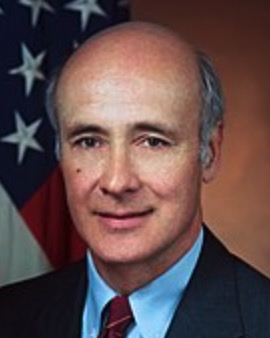 Joseph S. Nye合作论文数John F. Kennedy School of Government, Harvard University1
 Robert O. Keohane合作论文数Princeton University,Woodrow Wilson School of Public and International Affairs1
 Michael Brecher合作论文数Department of Political Science, McGill University1Alexander L. George合作论文数Stanford University1Patrick James合作论文数1
 Christopher Gelpi合作论文数Duke University1James Meernik合作论文数University of North Texas;California State University;University of North Texas, California State University1Joseph M. Grieco合作论文数Department of Political Science;Duke University;Department of Political Science, Duke University1
 Bruce Bueno De Mesquita合作论文数Department of Politics, Ares & Science, New York University1
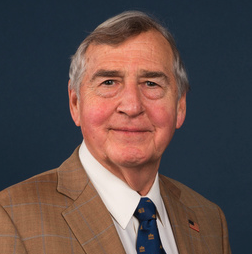 Graham Allison合作论文数Belfer Center for Science & International Affairs, Harvard Kennedy School, Harvard University1
 Kimi Lynn King合作论文数University of North Texas1
 Duncan Snidal合作论文数Nuffield College, University Of Oxford1Christopher C. Sarver合作论文数1Kenneth N. Waltz合作论文数1
 John R. Oneal合作论文数Department of Political Science, College of Arts & Sciences, The University of Alabama1Philip Zelikow合作论文数1Robert Jervis合作论文数1Charles W. Kegley合作论文数1Daryl G. Press合作论文数1
 Ross E. Burkhart合作论文数Department of Political Science, Boise State University1
 Paul K. Huth合作论文数Center for International Development and Conflict Management, University of Maryland1Richard Smoke合作论文数1Stephane Roussel合作论文数1
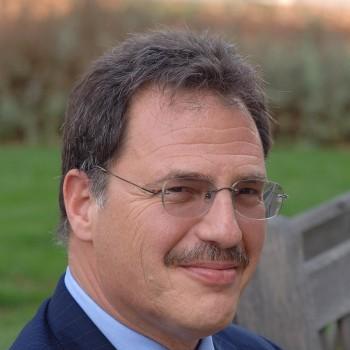 Larry Diamond合作论文数Department of Political Science, School of Humanities and Sciences, Stanford University;Freeman Spogli Institute for International Studies, Stanford University;Hoover Institution1
 Benjamin O. Fordham合作论文数Department of Political Science;University at Albany;Department of Political Science, University at Albany1
 Margaret (Peg) G. Hermann 合作论文数Department of Political Science, Maxwell School, Syracuse University1
 Helen V. Milner合作论文数Department of Politics, School of Public and International Affairs, Princeton University1John Jay合作论文数1
 Harvey M. Sapolsky合作论文数Department of Political Science, MIT1




