The size required to store an array is crucial for an embedded system, as it affects the memory size, the energy per memory access, and the overall system cost. Existing techniques for finding the minimum number of resources required to store an array are less efficient for codes with large loops and not regularly occurring memory accesses. They have to approximate the accessed parts of the array leading to overestimation of the required resources. Otherwise, their exploration time is increased with an increase over the number of the different accessed parts of the array. We propose a methodology to compute the minimum resources required for storing an array which keeps the exploration time low and provides a near-optimal result for regularly and non-regularly occurring memory accesses and overlapping writes and reads.
Many cryptographic primitives that are used in cryptographic schemes and security protocols such as SET, PM, IPSec and VPN's utilize hash functions-a special family of cryptographic algorithms. Hardware implementations of cryptographic hash functions provide high performance and increased security. However, potential faults during their normal operation cause significant problems in the authentication procedure. Hence, the on-time detection of errors is of great importance, especially when they are used in security-critical applications, such as military or space. In this paper, two Totally Self-Checking (TSC) designs are introduced for the two most-widely used hash functions: SHA-1 and SHA-256. To the best of authors' knowledge, there is no previously published work presenting TSC hashing cores. The achieved fault coverage is 100% in the case of odd erroneous bits. The same coverage is achieved for even erroneous bits, if they are appropriately spread. Additionally, experimental results in terms of frequency, area, throughput, and power consumption are provided. Compared to the corresponding Duplicated with Checking (DWC) architectures, the proposed TSC-based designs are more efficient in terms of area, throughput/area, and power consumption. Specifically, the introduced TSC SHA-1 and SHA-256 cores are more efficient by 16.1% and 20.8% in terms of area and by 17.7% and 23.3% in terms of throughput/area, respectively. Also, compared to the corresponding DWC architectures, the proposed TSC-based designs are on average almost 20% more efficient in terms of power consumption. (C) 2016 Elsevier B.V. All rights reserved.
In this paper, a new methodology for computing the Dense Matrix Vector Multiplication, for both embedded (processors without SIMD unit) and general purpose processors (single and multi-core processors, with SIMD unit), is presented. This methodology achieves higher execution speed than ATLAS state-of-the-art library (speedup from 1.2 up to 1.45). This is achieved by fully exploiting the combination of the software (e.g., data reuse) and hardware parameters (e.g., data cache associativity) which are considered simultaneously as one problem and not separately, giving a smaller search space and high-quality solutions. The proposed methodology produces a different schedule for different values of the (i) number of the levels of data cache; (ii) data cache sizes; (iii) data cache associativities; (iv) data cache and main memory latencies; (v) data array layout of the matrix and (vi) number of cores.
High-throughput designs of hash functions are strongly demanded due to the need for security in every transmitted packet of worldwide e-transactions. Thus, optimized and non-optimized pipelined architectures have been proposed raising, however, important questions. Which is the optimum number of the pipeline stages? Is it worth to develop optimized designs or could the same results be achieved by increasing only the pipeline stages of the non-optimized designs? The paper answers the above questions studying extensively many pipelined architectures of SHA-1 and SHA-256 hashes, implemented in FPGAs, in terms of throughput/area (T/A) factor. Also, guides for developing efficient security schemes designs are provided.
It is well-known that today׳s compilers and state of the art libraries have three major drawbacks. First, the compiler sub-problems are optimized separately; this is not efficient because the separate sub-problems optimization gives a different schedule for each sub-problem and these schedules cannot coexist as the refining of one, causes the degradation of another. Second, they take into account only part of the specific algorithm׳s information. Third, they take into account only a few hardware architecture parameters. These approaches cannot give an optimal solution. In this paper, a new methodology/pre-compiler is introduced, which speeds up loop kernels, by overcoming the above problems. This methodology solves four of the major scheduling sub-problems, together as one problem and not separately; these are the sub-problems of finding the schedules with the minimum numbers of (i) L1 data cache accesses, (ii) L2 data cache accesses, (iii) main memory data accesses, (iv) addressing instructions. First, the exploration space (possible solutions) is found according to the algorithm׳s information, e.g. array subscripts. Then, the exploration space is decreased by orders of magnitude, by applying constraint propagation to the software and hardware parameters. We take the C-code and the memory architecture parameters as input and we automatically produce a new faster C-code; this code cannot be obtained by applying the existing compiler transformations to the original code. The proposed methodology has been evaluated for five well-known algorithms in both general and embedded processors; it is compared with gcc and clang compilers and also with iterative compilation.
Hashing cores are utilized by many existing high performance cryptographic systems, used in security schemes such as SET, PKI, and IPSec. Efficient operation of these hardware modules can be degraded, especially when they operate in harsh environments i.e. space applications, military or medical applications. In this paper, a Totally Self-Checking (TSC) design is introduced for the SHA-256 hash function, suitable for harsh environments. The achieved fault coverage is 100% in the case of odd erroneous bits. The same coverage is achieved for even number of erroneous bits, if they are appropriately propagated. Performance measurements are reported for ASIC and reconfigurable technologies, highlighting issues that must be respected by the designer. The introduced TSC hashing core is area-efficient by 19%, compared to the corresponding Duplicated with Checking (DWC) one.
In this paper, a new methodology for speeding up edge and line detection algorithms is presented, achieving improved performance over the state of the art software library OpenCV (speedup from 1.35 up to 2.22) and other conventional implementations, in both general and embedded processors, by reducing the number of load/store and arithmetic instructions, the number of data cache accesses and data cache misses in memory hierarchy and the algorithm memory size. This is achieved by fully exploiting the combination of the software and hardware parameters which are considered simultaneously as one problem and not separately. Furthermore, the edge and line detection algorithms have been simplified for a computer vision application in a Virtex-5 Xilinx FPGA using Microblaze soft processor (detection and measurement of flow fronts in a microfluid device); it achieves speedup up to 660 times in comparison with conventional software implementations.
In this paper, a new methodology for speeding up Matrix–Matrix Multiplication using Single Instruction Multiple Data unit, at one and more cores having a shared cache, is presented. This methodology achieves higher execution speed than ATLAS state of the art library (speedup from 1.08 up to 3.5), by decreasing the number of instructions (load/store and arithmetic) and the data cache accesses and misses in the memory hierarchy. This is achieved by fully exploiting the software characteristics (e.g. data reuse) and hardware parameters (e.g. data caches sizes and associativities) as one problem and not separately, giving high quality solutions and a smaller search space.
This book describes scalable and near-optimal, processor-level design space exploration (DSE) methodologies. The authors present design methodologies for data storage and processing in real-time, cost-sensitive data-dominated embedded systems. Readers will be enabled to reduce time-to-market, while satisfying system requirements for performance, area, and energy consumption, thereby minimizing the overall cost of the final design.
Memory management searches for the resources required to store the concurrently alive elements. The solution quality is affected by the representation of the element accesses: a sub-optimal representation leads to overestimation and a non-scalable representation increases the exploration time. We propose a methodology to near-optimal and scalable represent regular and irregular accesses. The representation consists of a set of pattern entries to compactly describe the behavior of the memory accesses and of pattern operations to consistently combine the pattern entries. The result is a final sequence of pattern entries which represents the global access scheme without unnecessary overestimation.
In this study, novel pipelined architectures, optimised in terms of throughput and throughput/area factors, for the SHA-512 cryptographic hash function, are proposed. To achieve this, algorithmic- and circuit-level optimisation techniques such as loop unrolling, re-timing, temporal pre-computation, resource re-ordering and pipeline are applied. All the techniques, except pipeline are applied in the function's transformation round. The pipeline was applied through the development of all the alternative pipelined architectures and implementation in several Xilinx FPGA families and they are evaluated in terms of frequency, area, throughput and throughput/area factors. Compared to the initial un-optimised implementation of SHA-512 function, the introduced five-stage pipelined architecture improves the both the throughput and throughput/area factors by 123 and 61.5%, respectively. Furthermore, the proposed five-stage pipelined architecture outperforms the existing ones both in throughput (3.4× up to 16.9×) and throughput/area (19.5% up to 6.9×) factors.
The Matrix Vector Multiplication algorithm is an important kernel in most varied domains and application areas and the performance of its implementations highly depends on the memory utilization and data locality. In this paper, a new methodology for MVM including different types of matrices, i.e. Regular, Toeplitz and Bisymmetric Toeplitz, is presented in detail. This methodology achieves higher execution speed than the software state of the art library, ATLAS (speedup from 1.2 up to 4.4), and other conventional software implementations, for both general (SIMD unit is used) and embedded processors. This is achieved by fully and simultaneously exploiting the combination of software and hardware parameters as one problem and not separately.
In this paper, area-efficient and high-throughput multi-mode architectures for the SHA-1 and SHA-2 hash families are proposed and implemented in several FPGA technologies. Additionally a systematic flow for designing multi-mode architectures (implementing more than one function) of these families is introduced. Compared to the corresponding architectures that are produced by a commercial synthesis tool, the proposed ones are better in terms of both area (at least 40%) and throughput/area (from 32% up to 175%). Finally, the proposed architectures outperform similar existing ones in terms of throughput and throughput/area, from 4.2× up to 279.4× and from 1.2× up to 5.5×, respectively.
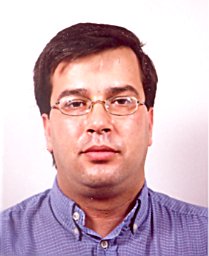 George Theodoridis合作论文数Aristotle University44
 Athanasios Kakarountas合作论文数Comp Sci & Biomed Informat, Univ Thessaly42
 D. J. Soudris合作论文数Electrical and Computer Engineering
Democritus University of Thrace42
D. J. Soudris合作论文数Electrical and Computer Engineering
Democritus University of Thrace42 Harris E. Michail合作论文数VLSI Design Laboratory, University of Patras40
 Konstantinos Masselos合作论文数31
 Francky Catthoor合作论文数Assiocated Division ESAT-INSYS, Integrated Systems, Department of Electrical Engineering, Catholic University of Leuven;IMEC31Gregory Dimitroulakos合作论文数VLSI Design Laboratory, University of Patras31
 Thanos Stouraitis合作论文数System-on-Chip Lab, Electrical and Computer Engineering Department, Khalifa University;Robotics and Intelligent Systems Institute, Khalifa University30Michalis D. Galanis合作论文数Department of Electrical and Computer Engineering;University of Patras;VLSI Design Laboratory26
 Angeliki Kritikakou合作论文数University of Patras22
 Athanasios Milidonis合作论文数Nokia19
 George Athanasiou合作论文数Electrical Engineering School and Access Linnaeus Center, KTH Royal Institute of Technology;c;Electrical Engineering School and Access Linnaeus Center, KTH Royal Institute of Technology18S. Theoharis合作论文数17
 Vasilios Kelefouras合作论文数University of Patras16Nikolaos D. Zervas合作论文数15P. Merakos合作论文数14
 Hugo De Man合作论文数Katholieke Universiteit Leuven14
 Odysseas G. Koufopavlou合作论文数Dept Elect & Comp Engn, Univ Patras10Chrissavgi Dre合作论文数10
 Grigoris Dimitroulakos合作论文数10
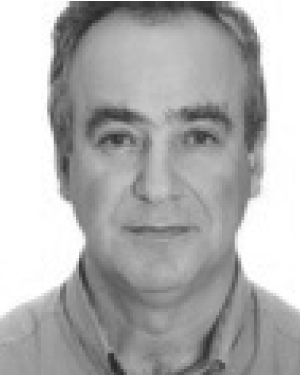 Spiridon Nikolaidis合作论文数9
 Spyros Tragoudas合作论文数Electronic Design and Test Automation Laboratory, School of Electrical, Computer and Biomedical Engineering, College of Engineering, Computing, Technology, and Mathematics, Southern Illinois University9
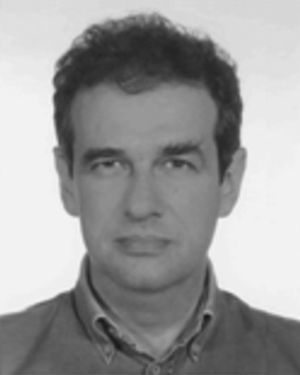 Efstathios D. Kyriakisbitzaros合作论文数VLSI Design Lab, University of Patras8Mk Birbas合作论文数7
 Nikolaos Alachiotis合作论文数The Exelixis Lab, Heidelberg Institute for Theoretical Studies7DE METAFAS合作论文数6
 Antonios Thanailakis合作论文数Department of Electrical and Computer Engineering, Democritus University of Thrace6Anna Tatsaki合作论文数6
 Andreas Gregoriades合作论文数Centre of HCI6
 Nicolas Sklavos合作论文数Scytale Group, Computer Engineering and Informatics Department, Polytechnic School, University of Patras6E. Karaolis合作论文数6Ss Nikolaidis合作论文数5N. A. Kyrloglou合作论文数5Vassilis Paliouras合作论文数Electrical and Computer Engineering Department;University of Patras5M. Perakis合作论文数4Kostas Masselos合作论文数4Spiros Nikolaidis合作论文数4
 Yiannis Andreopoulos合作论文数Department of Electronic and Electrical Engineering, Faculty of Engineering Sciences, University College London4V. Spiliotopoulos合作论文数4
 Kostas Katis合作论文数4K. Papadomanolakis合作论文数4P. K. Merakos合作论文数3D. Soudris合作论文数3
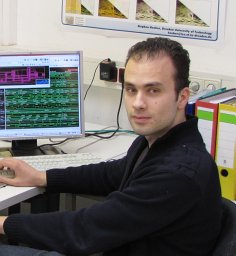 Thanasoulis, V.合作论文数Endowed Dept. for Parallel VLSI Syst. & Neuromorphic Circuits, Tech. Univ. Dresden;c;Endowed Dept. for Parallel VLSI Syst. & Neuromorphic Circuits, Tech. Univ. Dresden3
 Tariq Salim Durrani (塔里克·杜拉尼)合作论文数University of Strathclyde Glasgow3
 Vasileios Porpodas合作论文数University of Edinburgh3Odysseas G Koufopavlou合作论文数VLSI Design Laboratory - Department of Electrical and Computer Engineering;Univeristy of Patras3




