Objectives: MicroRNAs (miRNA) are regulators of cellular processes including (anti-) angiogenesis and differentiation of trophoblast cells.They play a role in the pathophysiology of pre-eclampsia (PE).The aim of this study is to investigate the
A convolutional neural network (CNN) architecture is developed to improve the pulse shape discrimination (PSD) power of the gadolinium-loaded organic liquid scintillation detector to reduce the fast neutron background in the inverse beta decay candidate events of the NEOS-II data. A power spectrum of an event is constructed using a fast Fourier transform of the time domain raw waveforms and put into CNN. An early data set is evaluated by CNN after it is trained using low energy β and α events. The signal-to-background ratio averaged over 1–10 MeV visible energy range is enhanced by more than 20% in the result of the CNN method compared to that of an existing conventional PSD method, and the improvement is even higher in the low energy region.
Hyper-Kamiokande (HK) is the next generation underground water Cherenkov detector that builds on the highly successful Super-Kamiokande (SK) experiment. The 260,000-ton detector has an 8.4 times larger fiducial volume than its predecessor. HK's low energy threshold combined with the very large fiducial volume make the detector unique; HK is expected to acquire an unprecedented exposure of 3.8 Mton-year over a period of 20 years starting in 2027. It has an extremely diverse science program including long-baseline neutrino oscillation measurements, nucleon decay searches, atmospheric neutrinos, neutrinos from the sun and supernova explosions, and neutrinos from other astrophysical origins. Like DUNE, the flagship project of the U.S. high-energy physics program, HK measures fundamental properties of neutrinos such as the search for leptonic CP violation and neutrino physics beyond the Standard Model.
Using a data sample of $$\sqrt{s}=13\,\text {TeV}$$ proton-proton collisions collected by the CMS experiment at the LHC in 2017 and 2018 with an integrated luminosity of $$103\text {~fb}^{-1}$$ , the $$\text {B}^{0}_{\mathrm{s}} \rightarrow \uppsi (\text {2S})\text {K}_\mathrm{S}^{0}$$ and $$\text {B}^{0} \rightarrow \uppsi (\text {2S})\text {K}_\mathrm{S}^{0} \uppi ^+\uppi ^-$$ decays are observed with significances exceeding 5 standard deviations. The resulting branching fraction ratios, measured for the first time, correspond to $${\mathcal {B}}(\text {B}^{0}_{\mathrm{s}} \rightarrow \uppsi (\text {2S})K_\mathrm{S}^{0})/{\mathcal {B}}(\text {B}^{0}\rightarrow \uppsi (\text {2S})K_\mathrm{S}^{0}) = (3.33 \pm 0.69 (\text {stat})\, \pm 0.11\,(\text {syst}) \pm 0.34\,(f_{\mathrm{s}}/f_{\mathrm{d}})) \times 10^{-2}$$ and $${\mathcal {B}}(\text {B}^{0} \rightarrow \uppsi (\text {2S})\text {K}_\mathrm{S}^{0} \uppi ^{+} \uppi ^{-})/ {\mathcal {B}}(\text {B}^{0} \rightarrow \uppsi (\text {2S})\text {K}^{0}_{\mathrm{S}}) = 0.480 \pm 0.013\,(\text {stat}) \pm 0.032\,(\text {syst})$$ , where the last uncertainty in the first ratio is related to the uncertainty in the ratio of production cross sections of $$\hbox {B}^{0}_{\mathrm{s}}$$ and $$\hbox {B}^{0}$$ mesons, $$f_{\mathrm{s}}/f_{\mathrm{d}}$$ .
The B$^0_s$ and B$^+$ production yields are measured in PbPb collisions at a center-of-mass energy per nucleon pair of 5.02 TeV. The data sample, collected with the CMS detector at the LHC, corresponds to an integrated luminosity of 1.7 nb$^{-1}$. The mesons are reconstructed in the exclusive decay channels B$^0_s$ $\to$ J/$\psi(\mu^+\mu^-)\phi($K$^+$K$^-)$ and B$^+$ $\to$ J/$\psi(\mu^+\mu^-)$K$^+$, in the transverse momentum range 7-50 GeV/c and absolute rapidity 0-2.4. The B$^0_s$ meson is observed with a statistical significance in excess of five standard deviations for the first time in nucleus-nucleus collisions. The measurements are performed as functions of the transverse momentum of the B mesons and of the PbPb collision centrality. The ratio of production yields of B$^0_s$ and B$^+$ is measured and compared to theoretical models that include quark recombination effects.
The mass of the W boson, a mediator of the weak force between elementary particles, is tightly constrained by the symmetries of the standard model of particle physics. The Higgs boson was the last missing component of the model. After observation of the Higgs boson, a measurement of the W boson mass provides a stringent test of the model. We measure the W boson mass, M W , using data corresponding to 8.8 inverse femtobarns of integrated luminosity collected in proton-antiproton collisions at a 1.96 tera–electron volt center-of-mass energy with the CDF II detector at the Fermilab Tevatron collider. A sample of approximately 4 million W boson candidates is used to obtain M W = 80 , 433.5 ± 6.4 stat ± 6.9 syst = 80 , 433.5 ± 9.4 MeV / c 2 , the precision of which exceeds that of all previous measurements combined (stat, statistical uncertainty; syst, systematic uncertainty; MeV, mega–electron volts; c , speed of light in a vacuum). This measurement is in significant tension with the standard model expectation.
The MIP Timing Detector will provide additional timing capabilities for detection of minimum ionizing particles (MIPs) at CMS during the High Luminosity LHC era, improving event reconstruction and pileup rejection. The central portion of the detector, the Barrel Timing Layer (BTL), will be instrumented with LYSO:Ce crystals and Silicon Photomultipliers (SiPMs) providing a time resolution of about 30 ps at the beginning of operation, and degrading to 50-60 ps at the end of the detector lifetime as a result of radiation damage. In this work, we present the results obtained using a 120 GeV proton beam at the Fermilab Test Beam Facility to measure the time resolution of unirradiated sensors. A proof-of-concept of the sensor layout proposed for the barrel region of the MTD, consisting of elongated crystal bars with dimensions of about 3 x 3 x 57 mm^3 and with double-ended SiPM readout, is demonstrated. This design provides a robust time measurement independent of the impact point of the MIP along the crystal bar. We tested LYSO:Ce bars of different thickness (2, 3, 4 mm) with a geometry close to the reference design and coupled to SiPMs manufactured by Hamamatsu and Fondazione Bruno Kessler. The various aspects influencing the timing performance such as the crystal thickness, properties of the SiPMs (e.g. photon detection efficiency), and impact angle of the MIP are studied. A time resolution of about 28 ps is measured for MIPs crossing a 3 mm thick crystal bar, corresponding to an MPV energy deposition of 2.6 MeV, and of 22 ps for the 4.2 MeV MPV energy deposition expected in the BTL, matching the detector performance target for unirradiated devices.
At the Fermilab Tevatron proton-antiproton ($p\bar{p}$) collider, high-mass electron-neutrino ($e\nu$) pairs are produced predominantly in the process $p \bar{p} \rightarrow W(\rightarrow e\nu) + X$. The asymmetry of the electron and positron yield as a function of their pseudorapidity constrain the slope of the ratio of the $u$- to $d$-quark parton distributions versus the fraction of the proton momentum carried by the quarks. This paper reports on the measurement of the electron-charge asymmetry using the full data set recorded by the Collider Detector at Fermilab in 2001--2011 and corresponding to 9.1~fb$^{-1}$ of integrated luminosity. The measurement significantly improves the precision of the Tevatron constraints on the parton-distribution functions of the proton. Numerical tables of the measurement are provided.
A combination of searches for top squark pair production using proton-proton collision data at a center-of-mass energy of 13 TeV at the CERN LHC, corresponding to an integrated luminosity of 137 fb(-1) collected by the CMS experiment, is presented. Signatures with at least 2 jets and large missing transverse momentum are categorized into events with 0, 1, or 2 leptons. New results for regions of parameter space where the kinematical properties of top squark pair production and top quark pair production are very similar are presented. Depending on themodel, the combined result excludes a top squarkmass up to 1325 GeV for amassless neutralino, and a neutralinomass up to 700 GeV for a top squarkmass of 1150 GeV. Top squarks with masses from 145 to 295 GeV, for neutralino masses from 0 to 100 GeV, with a mass difference between the top squark and the neutralino in a window of 30 GeV around the mass of the top quark, are excluded for the first time with CMS data. The results of theses searches are also interpreted in an alternative signal model of dark matter production via a spin-0 mediator in association with a top quark pair. Upper limits are set on the cross section for mediator particle masses of up to 420 GeV.
Measurements of differential and double-differential cross sections of top quark pair ($\text{t}\overline{\text{t}}$) production are presented in the lepton+jets channels with a single electron or muon and jets in the final state. The analysis combines for the first time signatures of top quarks with low transverse momentum $p_\text{T}$, where the top quark decay products can be identified as separated jets and isolated leptons, and with high $p_\text{T}$, where the decay products are collimated and overlap. The measurements are based on proton-proton collision data at $\sqrt{s} = $ 13 TeV collected by the CMS experiment at the LHC, corresponding to an integrated luminosity of 137 fb$^{-1}$. The cross sections are presented at the parton and particle levels, where the latter minimizes extrapolations based on theoretical assumptions. Most of the measured differential cross sections are well described by standard model predictions with the exception of some double-differential distributions. The inclusive $\text{t}\overline{\text{t}}$ production cross section is measured to be $\sigma_{\text{t}\overline{\text{t}}} = $ 791 $\pm$ 25 pb, which constitutes the most precise measurement in the lepton+jets channel to date.
We report an observation of new bottom baryons produced in p (cid:1) p collisions at the Tevatron. Using 1 : 1 fb (cid:2) 1 of data collected by the CDF II detector, we observe four (cid:2) 0 b (cid:1) (cid:3) resonances in the fully reconstructed decay mode (cid:2) 0 b ! (cid:2) (cid:4) c (cid:1) (cid:2) , where (cid:2) (cid:4) c ! pK (cid:2) (cid:1) (cid:4) . We interpret these states as the (cid:3) (cid:5)(cid:1)(cid:6)(cid:3) b baryons and measure the following masses: m (cid:3) (cid:4) b (cid:7) 5807 : 8 (cid:4) 2 : 0 (cid:2) 2 : 2 (cid:5) stat : (cid:6) (cid:3) 1 : 7 (cid:5) syst : (cid:6) MeV =c 2 , m (cid:3)
The upgrades of the CMS and ATLAS experiments for the high luminosity phase of the Large Hadron Collider will employ precision timing detectors based on Low Gain Avalanche Detectors (LGADs). We present a suite of results combining measurements from the Fermilab Test Beam Facility, a beta source telescope, and a probe station, allowing full characterization of the HPK type 3.1 production of LGAD prototypes developed for these detectors. We demonstrate that the LGAD response to high energy test beam particles is accurately reproduced with a beta source. We further establish that probe station measurements of the gain implant accurately predict the particle response and operating parameters of each sensor, and conclude that the uniformity of the gain implant in this production is sufficient to produce full-sized sensors for the ATLAS and CMS timing detectors.
A. Cerrie,26 L. Cerritor ,28 Y.C. Chen, 1 M. Chertok,7 G. Chiarelli,42 G. Chlachidze, 15 K. Cho,25 D. Chokheli,13 A. Clark,18 C. Clarke, 54 M.E. Convery, 15 J. Conway, 7 M. Corboz,15 M. Cordelli,17 C.A. Cox,7 D.J. Cox, 7 M. Cremonesi, 42 D. Cruz,48 J. Cuevas y,9 R. Culbertson, 15 N. d’Ascenzov,15 M. Dattagg,15 P. de Barbaro, 45 L. Demortier,46 M. Deninno,6 M. D’Erricokk,40 F. Devoto, 21 A. Di Cantoll ,42 B. Di Ruzzap,15 J.R. Dittmann, 5 S. Donati ll ,42 M. D’Onofrio,27 M. Dorigott ,49 A. Driutti rrss,49 K. Ebina,53 R. Edgar, 32 A. Elagin,48 R. Erbacher, 7 S. Errede, 22 B. Esham, 22 R. Eusebi, 48 S. Farrington, 39
The second-order Fourier coefficients (v(2)) characterizing the azimuthal distributions of Y(1S) and Y(2S) mesons produced in PbPb collisions at root s(NN) = 5.02 TeV are studied. The Y mesons are reconstructed in their dimuon decay channel, as measured by the CMS detector. The collected data set corresponds to an integrated luminosity of 1.7 nb(-1). The scalar product method is used to extract the v2 coefficients of the azimuthal distributions. Results are reported for the rapidity range vertical bar y vertical bar < 2.4, in the transverse momentum interval 0 < pT < 50 GeV/c, and in three centrality ranges of 10-30%, 30-50% and 50-90%. In contrast to the J/psi mesons, the measured v(2) values for the Y mesons are found to be consistent with zero. (C) 2021 The Author(s). Published by Elsevier B.V.
Supernovae are among the most magnificent events in the observable universe. They produce many of the chemical elements necessary for life to exist and their remnants---neutron stars and black holes---are interesting astrophysical objects in their own right. However, despite millennia of observations and almost a century of astrophysical study, the explosion mechanism of supernovae is not yet well understood. Hyper-Kamiokande is a next-generation neutrino detector that will be able to observe the neutrino flux from the next galactic supernova in unprecedented detail. In this thesis, I investigate how well such an observation would allow us to reconstruct the explosion mechanism. I develop a high-precision supernova event generator and use a detailed detector simulation and event reconstruction to explore Hyper-Kamiokande's response to five supernova models simulated by different groups around the world. I show that 300 neutrino events in Hyper-Kamiokande---corresponding to a supernova at a distance of at least 60 kpc---are sufficient to distinguish between these models with high accuracy. These findings indicate that, once the next galactic supernova happens, Hyper-Kamiokande will be able to determine details of the supernova explosion mechanism.
A measurement is presented of electroweak (EW) production of a W boson in association with two jets in proton-proton collisions at s = 13 Te . The data sample was recorded by the CMS Collaboration at the LHC and corresponds to an integrated luminosity of 35.9 fb - 1 . The measurement is performed for the l ν jj final state (with l ν indicating a lepton-neutrino pair, and j representing the quarks produced in the hard interaction) in a kinematic region defined by invariant mass m jj \u003e 120 Ge and transverse momenta p T j \u003e 25 Ge . The cross section of the process is measured in the electron and muon channels yielding σ EW ( W jj ) = 6.23 ± 0.12 (stat) ± 0.61 (syst) pb per channel, in agreement with leading-order standard model predictions. The additional hadronic activity of events in a signal-enriched region is studied, and the measurements are compared with predictions. The final state is also used to perform a search for anomalous trilinear gauge couplings. Limits on anomalous trilinear gauge couplings associated with dimension-six operators are given in the framework of an effective field theory. The corresponding 95% confidence level intervals are - 2.3 c W W W / Λ 2 2.5 Te - 2 , - 8.8 c W / Λ 2 16 Te - 2 , and - 45 c B / Λ 2 46 Te - 2 . These results are combined with the CMS EW Zjj analysis, yielding the constraint on the c W W W coupling: - 1.8 c W W W / Λ 2 2.0 Te - 2 .
A search is conducted for a low-mass charged Higgs boson produced in a top quark decay and subsequently decaying into a charm and a strange quark. The data sample was recorded in proton-proton collisions at $\\sqrt{s}=$ 13 TeV by the CMS experiment at the LHC and corresponds to an integrated luminosity of 35.9 fb$^{-1}$. The search is performed in the process of top quark pair production, where one top quark decays to a bottom quark and a charged Higgs boson, and the other to a bottom quark and a W boson. With the W boson decaying to a charged lepton (electron or muon) and a neutrino, the final state comprises an isolated lepton, missing transverse momentum, and at least four jets, of which two are tagged as b jets. To enhance the search sensitivity, one of the jets originating from the charged Higgs boson is required to satisfy a charm tagging selection. No significant excess beyond standard model predictions is found in the dijet invariant mass distribution. An upper limit in the range 1.68-0.25% is set on the branching fraction of the top quark decay to the charged Higgs boson and bottom quark for a charged Higgs boson mass between 80 and 160 GeV.
 Matthew Herndon合作论文数Department of Physics, University of Wisconsin–Madison606
 K. Lannon合作论文数575
 Massimo Casarsa合作论文数Istituto Nazionale di Fisica Nucleare571
 Arie Bodek合作论文数Department of Physics and Astronomy, School of Arts & Sciences, University of Rochester565
 Jacobo Konigsberg合作论文数Institute for High Energy Physics and Astrophysics, University of Florida;Department of Physics, College of Liberal Arts and Sciences, University of Florida564
 Javier Cuevas Maestro合作论文数Universidad de Oviedo;European Organization for Nuclear Research561
 Bo Jayatilaka合作论文数Fermi National Accelerator Laboratory558
 Ben Kilminster合作论文数Physik-Institut, University of Zurich557
 Giorgio Apollinari合作论文数Fermi National Accelerator Laboratory553B. Blumenfeld合作论文数553
 Jay R. Dittmann合作论文数Department of Physics, College of Arts and Sciences, Baylor University550K. Hatakeyama合作论文数548
 Pawel De Barbaro合作论文数Department of Physics and Astronomy, School of Arts and Sciences, University of Rochester;CERN544P. E. Karchin合作论文数535K. Goulianos合作论文数532G. Latino合作论文数INFN Sezione di Firenze, Università di Firenze529K. Burkett合作论文数525
 John S. Conway合作论文数Department of Physics and Astronomy, University of California, Davis520V. E. Barnes合作论文数519T. Kamon合作论文数519
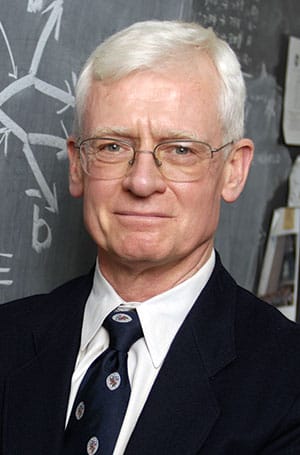 Bruce Barnett合作论文数William H. Miller III Department of Physics and Astronomy, Krieger School of Arts and Sciences, Johns Hopkins University519
 Daniela Bortoletto合作论文数Department of Physics, University of Oxford515
 Manfred Paulini合作论文数Department of Physics, Mellon College of Science, Carnegie Mellon University514
 Jane M. Nachtman合作论文数Department of Physics and Astronomy, College of Liberal Arts and Sciences, University of Iowa514I. Gorelov合作论文数512
 Luc Demortier合作论文数Laboratory of Experimental High Energy Physics, The Rockefeller University510
 Heather Kay Gerberich合作论文数On Point Technology, LLC509
 Steven Errede合作论文数Department of Physics, The Grainger College of Engineering, University of Illinois Urbana-Champaign509
 Thomas Müller合作论文数Institute of Experimental Particle Physics, Karlsruhe Institute of Technology508Max Goncharov合作论文数508
 Fabio Happacher合作论文数Istituto Nazionale di Fisica Nucleare508
 Roman Lysák合作论文数Department of Experimental Particle Physics, Division of Elementary Particle Physics, Institute of Physics of the Czech Academy of Sciences507
 Joey W Huston合作论文数Department of Physics & Astronomy, College of Natural Science, Michigan State University507
 Niccolò Moggi合作论文数Department of Industrial Engineering, University of Bologna507
 Melissa Franklin合作论文数Department of Physics, Harvard University506M. A. Ciocci合作论文数505Andrea Bocci合作论文数CERN504Alvin Laasanen合作论文数Purdue University503C. Grosso-Pilcher合作论文数503S. M. Farrington合作论文数502Andrew Beretvas合作论文数499
 C. Bromberg合作论文数Michigan State University, USA499
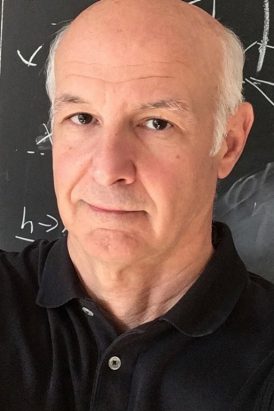 Dante Amidei合作论文数Department of Physics, College of Literature, Science, and the Arts, University of Michigan497G. Flanagan合作论文数497
 Giorgio Chiarelli合作论文数Istituto Nazionale di Fisica Nucleare497
 Ray Culbertson合作论文数Fermi National Accelerator Laboratory497
 Davit Chokheli合作论文数Georgian Technical University;Joint Institute for Nuclear Research497
 Andy Hocker合作论文数Fermi National Accelerator Laboratory496R. Forrest合作论文数496




