Assessment of deconvolution performance of synthetic chimeric cell populations in in-silico mixing experiments.
Longitudinal changes of somatic nuclear and mitochondrial DNA mutations in genetically stable CLL.
Despite the promise of single-cell transcriptomics for understanding cell states in heterogeneous populations, widely used platforms have limited ability to link transcriptional states to somatic mutations within the same cells. Here, we introduce Genotyping in Fixed Transcriptomes (GIFT) for the simultaneous detection of large numbers of targeted genetic variants with whole transcriptome profiles in single cells. The core innovation of GIFT is a rationally designed gapfilling reaction between adjacent single-stranded DNA (ssDNA) probes that barcodes native transcript sequence to enable highly-specific targeted mutation detection. GIFT achieves greater than 99% genotyping accuracy and flexible capture of hundreds of mutations per cell, including in formalin-fixed, paraffin-embedded (FFPE) tissue, enabling clonal lineage tracing in heterogeneous settings. We demonstrate the unique scalability of GIFT by profiling more than 700,000 cells from 35 donors with myeloproliferative neoplasms (MPN), revealing mutation-dependent hematopoietic responses to systemic inflammation associated with the characteristic JAK2V617 mutation, including an allelic dose gradient of interferon-associated transcriptional programs and priming of hematopoietic stem cells that develop into divergent disease states. The technical advantages of GIFT enable direct resolution of genotype-to-phenotype relationships via clonal tracing with comprehensive cell-state measurements at single-cell resolution.
Identification of cell types and tracking of mitochondrial DNA mutations in immunosuppression tapering (IST) cohort using ASAP-seq.
Identification of high-confidence mitochondrial DNA mutations for Tapestri analysis.
Mounting evidence implicates herpesvirus reactivation in the etiology of Alzheimer's disease, yet we lack a refined molecular characterization of pathogenesis in neurodegeneration. Here, we mine over 10 petabytes of human sequencing data for viral transcripts, identifying recurrent herpes simplex virus 1 (HSV-1) reactivation in healthy but not pathological post-mortem human brain tissue. Integrative single-nucleus analyses resolve direct evidence of HSV-1 expression in RORB+ glutamatergic neurons, implicating viral reactivation in a neuronal population progressively lost during dementia.
Blood and bone marrow counts of immunosuppression tapering (IST) cohort from routine clinical measurements.
Differential phenotypes of physiologic (donor-) and malignant hematopoietic (recipient-derived) cells.
Mitochondrial and somatic nuclear DNA mutations identified in CLL using single cell DNA sequencing.
Longitudinal changes of somatic nuclear and mitochondrial DNA mutations in naturally progressing CLL.
Innate immune cells constitute the majority of the tumor microenvironment (TME) and mediate anti-tumor immunity and immunotherapy responses. While single-cell T and B cell receptor sequencing have revealed insights into the clonal dynamics of adaptive immunity, the lack of analogous tools has precluded similar analysis of innate immune cells. Here, we describe a method leveraging somatic mitochondrial DNA (mtDNA) mutations to reconstruct clonal lineage relationships between cells in native human tissues. By jointly profiling single-cell chromatin accessibility and mtDNA variants, we resolve clonal dynamics of 218,715 cells from matched tumors, tissues, and blood from patients with lung and ovarian cancers. Clonal tracing reveals that TME-resident myeloid subsets, including macrophages and type 3 dendritic cells (DC3), are clonally related to circulating and tissue-infiltrating monocytes. We further identify distinct DC-biased and macrophage-biased clones, whose circulating monocyte precursors exhibit distinct epigenetic profiles, suggesting intratumoral myeloid differentiation fate may be peripherally programmed before TME infiltration.
 Ludwig Leif S合作论文数Charité-Universitätsmedizin Berlin, MIT and Harvard76
 Catherine J. Wu合作论文数Department of Medical Oncology, Dana-Farber Cancer Institute;Division of Stem Cell Transplantation and Cellular Therapies, Dana-Farber Cancer Institute;Harvard Medical School41
 Livius Penter合作论文数Labor für Pädiatrische Molekularbiologie, Charité - Universitätsmedizin Berlin40
 Shuqiang Li合作论文数39
 Donna Neuberg合作论文数Department of Biostatistics, Harvard T.H. Chan School of Public Health;Dana-Farber Cancer Institute36Satyen Gohil合作论文数35
 Ignaty Leshchiner合作论文数Broad Institute of MIT and Harvard;Department of Medicine, Boston University33
 Maurer Katie合作论文数Kimmel Center for Biology and Medicine at the Skirball Institute, New York University School of Medicine;Sackler Institute of Graduate Biomedical Sciences, New York University School of Medicine;New York University School of Medicine, New York University School of Medicine33
 Robert J. Soiffer合作论文数Department of Medical Oncology, Dana-Farber Cancer Institute;Division of Hematologic Malignancies, Dana-Farber Cancer Institute;Harvard Medical School33Garcia Jacqueline S合作论文数Department of Medicine, The University of Chicago32Cieri Nicoletta合作论文数32
 Jerome Ritz合作论文数Connell and O'Reilly Families Cell Manipulation Core Facility, Dana-Farber Cancer Institute;Harvard Medical School32Haoxiang Lyu合作论文数31
 Gad A. Getz合作论文数Harvard Medical School;Department of Pathology, Massachusetts General Hospital;Broad Institute of Harvard and MIT31Oliveira Giacomo合作论文数IRCCS, San Raffaele Scientific Institute31
 Ansuman Satpathy合作论文数Parker Institute for Cancer Immunotherapy, Stanford University;Wing Venture Capital;Arpelos Biosciences;Santa Ana Bio, Inc.;Cartography Biosciences;Immunai30
 Martin Aryee合作论文数Department of Data Science, Dana-Farber Cancer Institute;Department of Biostatistics, Harvard T.H. Chan School of Public Health, Harvard University;Broad Institute of MIT and Harvard30
 Marwan Kwok合作论文数Institute of Cancer and Genomic Sciences, College of Medical and Dental Sciences, University of Birmingham30
 Haesook T. Kim合作论文数Department of Data Science, Dana-Farber Cancer Institute;Harvard School of Public Health;Department of Biostatistics and Computational Biology, Dana-Farber Cancer Institute30Wesley Lu合作论文数28
 Lars Bullinger合作论文数26
 Vijay Sankaran合作论文数Division of Hematology/Oncology, Center for Life Sciences, Boston Children's Hospital;Dana-Farber Cancer Institute;Harvard Medical School25Kenneth J. Livak合作论文数21
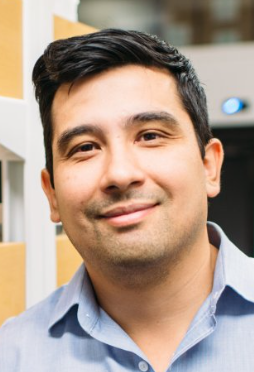 Jason Buenrostro合作论文数Department of Stem Cell and Regenerative Biology, Harvard University;Broad Institute19Kenneth J Livak合作论文数16
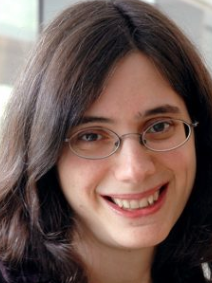 Aviv Regev合作论文数Howard Hughes Medical Institute;Statistics + Data Science Center, Schwarzman College of Computing, Massachusetts Institute of Technology;Broad Institute, Massachusetts Institute of Technology;The Center for Microbiome Informatics & Therapeutics, Massachusetts Institute of Technology16
 Jacob C Ulirsch合作论文数Illumina Artificial Intelligence Laboratory15
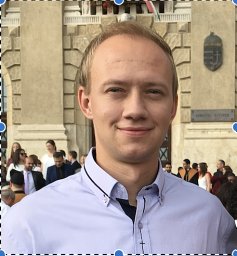 Daniel Bence合作论文数Faculty of Medicine, University of Debrecen12
 Katalin Sandor Danielne合作论文数Department of Pathology, Stanford Medicine11
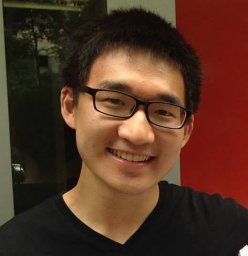 Bao Erik L合作论文数10Yajie Yin合作论文数9
 Sowmya Iyer合作论文数Verve Therapeutics9Tsion Abay合作论文数8Lena Nitsch合作论文数8Vincent Liu合作论文数8
 Courtney Montgomery合作论文数8
 J. Keith Joung合作论文数Harvard Medical School;Arena BioWorks;Nvelop Therapeutics;SeQure Dx;Chroma Medicine;Pairwise Plants8Jacob C. Gutierrez合作论文数7Frank A. Buquicchio合作论文数7Sara P. Garcia合作论文数7
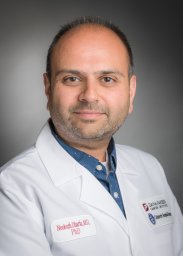 Dharia Neekesh V合作论文数Dept Cell Biol, Scripps Res Inst7
 Jeffrey Verboon合作论文数Division of Basic Sciences, Fred Hutchinson Cancer Research Center7
 Francisca Vazquez合作论文数Broad Institute7
 Kartha Vinay K合作论文数Bioinformatics Program, Boston University7Muus Christoph合作论文数7
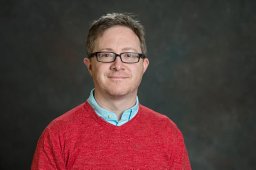 Brett A. Mckinney合作论文数Department of Genetics, University of Alabama School of Medicine7Kimberly Stegmaier合作论文数Department of Pediatric Oncology, Dana-Farber Cancer Institute and Boston Children's Hospital/Broad Institute7
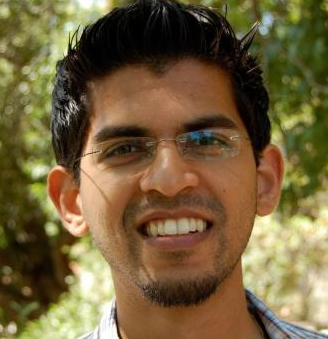 Anshul Kundaje合作论文数Department of Genetics, Stanford University7Wenxi Zhang合作论文数6




