Presented herein are embodiments of state-of-the-art speech recognition systems developed using end-to-end deep learning. In embodiments, the model architecture is significantly simpler than traditional speech systems, which rely on laboriously engineered processing pipelines; these traditional systems also tend to perform poorly when used in noisy environments. In contrast, embodiments of the system do not need hand-designed components to model background noise, reverberation, or speaker variation, but instead directly learn a function that is robust to such effects. A phoneme dictionary, nor even the concept of a “phoneme,” is needed. Embodiments include a well-optimized recurrent neural network (RNN) training system that can use multiple GPUs, as well as a set of novel data synthesis techniques that allows for a large amount of varied data for training to be efficiently obtained. Embodiments of the system can also handle challenging noisy environments better than widely used, state-of-the-art commercial speech systems.
We present OpenSeq2Seq - an open-source toolkit for training sequence-to-sequence models. The main goal of our toolkit is to allow researchers to most effectively explore different sequence-to-sequence architectures. The efficiency is achieved by fully supporting distributed and mixed-precision training. OpenSeq2Seq provides building blocks for training encoder-decoder models for neural machine translation and automatic speech recognition. We plan to extend it with other modalities in the future.
We present OpenSeq2Seq - a TensorFlow-based toolkit for training sequence-to-sequence models that features distributed and mixed-precision training. Benchmarks on machine translation and speech recognition tasks show that models built using OpenSeq2Seq give state-of-the-art performance at 1.5-3x less training time. OpenSeq2Seq currently provides building blocks for models that solve a wide range of tasks including neural machine translation, automatic speech recognition, and speech synthesis.
The text localization and recognition in real time scene text images is still a big issue in current application. Mobile application and digitization in real world gives a vital and broad impact on real time scene text images. However, the efficiency of recognition rate depends upon the text localization, i.e., higher the purity of text background segmentation and decomposition, higher the rate of accuracy for the image recognition. In this paper, we present a new scene text detection algorithm based on Stroke detection and Hog Transform method. The method introduces an approach for character detection and recognition which combines the advantages of Hog Transform and Connected Component methods. Characters are detected and recognized on the basis of image regions which contain strokes of specific orientations in a specific relative position, where the strokes are efficiently detected by convolving the image gradient field with a set of oriented bar filters. The method was evaluated on a standard dataset consisting mostly real time images where it achieves state-of-the-art results in both text localization and recognition. The results clearly depict the higher bit of accuracy in terms of localization and recognition for a collected dataset.
We show that an end-to-end deep learning approach can be used to recognize either English or Mandarin Chinese speech-two vastly different languages. Because it replaces entire pipelines of hand-engineered components with neural networks, end-to-end learning allows us to handle a diverse variety of speech including noisy environments, accents and different languages. Key to our approach is our application of HPC techniques, enabling experiments that previously took weeks to now run in days. This allows us to iterate more quickly to identify superior architectures and algorithms. As a result, in several cases, our system is competitive with the transcription of human workers when benchmarked on standard datasets. Finally, using a technique called Batch Dispatch with GPUs in the data center, we show that our system can be inexpensively deployed in an online setting, delivering low latency when serving users at scale.
We present a state-of-the-art speech recognition system developed using end-to-end deep learning. Our architecture is significantly simpler than traditional speech systems, which rely on laboriously engineered processing pipelines; these traditional systems also tend to perform poorly when used in noisy environments. In contrast, our system does not need hand-designed components to model background noise, reverberation, or speaker variation, but instead directly learns a function that is robust to such effects. We do not need a phoneme dictionary, nor even the concept of a "phoneme." Key to our approach is a well-optimized RNN training system that uses multiple GPUs, as well as a set of novel data synthesis techniques that allow us to efficiently obtain a large amount of varied data for training. Our system, called Deep Speech, outperforms previously published results on the widely studied Switchboard Hub5'00, achieving 16.0% error on the full test set. Deep Speech also handles challenging noisy environments better than widely used, state-of-the-art commercial speech systems.
We consider the problem of automatically collecting semantic labels during robotic mapping by extending the mapping system to include text detection and recognition modules. In particular, we describe a system by which a SLAM generated map of an office environment can be annotated with text labels such as room numbers and the names of office occupants. These labels are acquired automatically from signs posted on walls throughout a building. Deploying such a system using current text recognition systems, however, is difficult since even state-of-the-art systems have difficulty reading text from non-document images. Despite these difficulties we present a series of additions to the typical mapping pipeline that nevertheless allow us to create highly usable results. In fact, we show how our text detection and recognition system, combined with several other ingredients, allows us to generate an annotated map that enables our robot to recognize named locations specified by a user in 84% of cases.
Reading text from photographs is a challenging problem that has received a significant amount of attention. Two key components of most systems are (i) text detection from images and (ii) character recognition, and many recent methods have been proposed to design better feature representations and models for both. In this paper, we apply methods recently developed in machine learning -- specifically, large-scale algorithms for learning the features automatically from unlabeled data -- and show that they allow us to construct highly effective classifiers for both detection and recognition to be used in a high accuracy end-to-end system.
 Adam Coates合作论文数Apple6
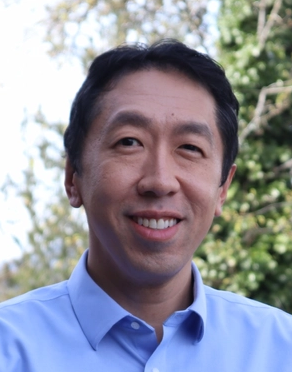 Andrew Ng (吳恩達)合作论文数Landing AI;Deeplearning. Ai;AI Fund;Coursera;Computer Science Department, Stanford University5
 Sanjeev Satheesh合作论文数NVIDIA5
 Bipin Suresh合作论文数3
 Awni Hannun合作论文数Machine Learning Research Group, Apple3
 Ryan Prenger合作论文数NVIDIA3
 Gregory Diamos合作论文数Lamini;Celestial AI;MLCommons3
 Bryan Catanzaro合作论文数NVIDIA3Jared Casper合作论文数NVIDIA3
 Erich Elsen合作论文数Databricks3Vitaly Lavrukhin合作论文数NVIDIA, Santa Clara, CA 95051 USA2
 Igor Gitman合作论文数Res AI, Microsoft2
 Shubho Sengupta合作论文数Meta2
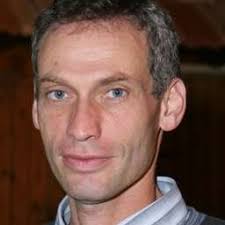 Boris Ginsburg合作论文数NVIDIA2Paulius Micikevicius合作论文数Computer Science Program
School of Electrical Engineering and Computer Science
University of Central Florida2
Boris Ginsburg合作论文数NVIDIA2Paulius Micikevicius合作论文数Computer Science Program
School of Electrical Engineering and Computer Science
University of Central Florida2 David Wu合作论文数Department of Computer Science, The University of Texas at Austin2
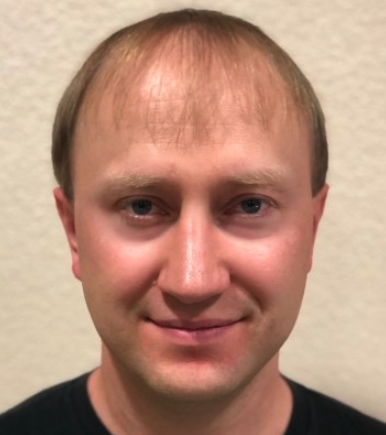 Oleksii Kuchaiev合作论文数NVIDIA2Bo Xiao合作论文数1Zhiqian Wang合作论文数1
 Yi Wang (王毅)合作论文数College of Language and Culture, Northwest A&F University1Sherjil Ozair合作论文数1Libby Lin合作论文数1Billy Jun合作论文数1Tony Han合作论文数1Linxi Fan合作论文数1Rishita Anubhai合作论文数1Sengupta Shubhabrata合作论文数1
 Mike Chrzanowski合作论文数NVIDIA1Jun Zhan合作论文数1David Seetapun合作论文数Baidu Silicon Valley AI Lab, Sunnyvale, CA and Baidu Speech Technology Group, Beijing, China1
 Christopher Fougner合作论文数Batelle1
 Sharan Narang合作论文数Meta1
 Eric Battenberg合作论文数Google Research1Carpenter, B.合作论文数1
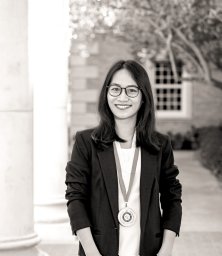 Huyen Nguyen Ngoc合作论文数Institute of Medical Virology, University of Zurich Zurich1
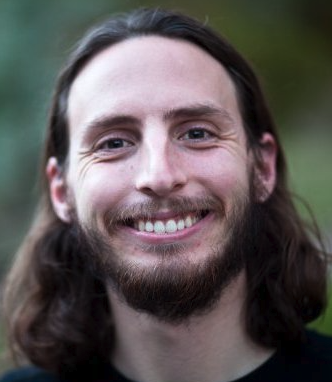 Jesse Engel合作论文数Google DeepMind1
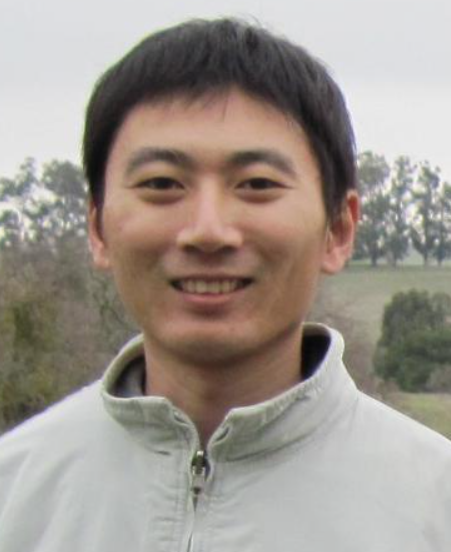 Tao Wang合作论文数Department of Genetics, Stanford University;Stanford AI Lab1
 Jingdong Chen (陈景东)合作论文数School of Marine Science and Technology, Northwestern Polytechnical University1
 Kai Wang合作论文数Zoox1
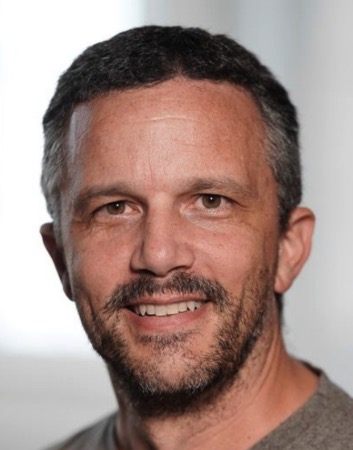 Serge Belongie合作论文数Department of Computer Science, University of Copenhagen;European Laboratory for Learning and Intelligent Systems;Det Nationale Center for AI i Samfundet1
 Jason Li合作论文数Nvidia1
 Boris Babenko合作论文数Google Research1
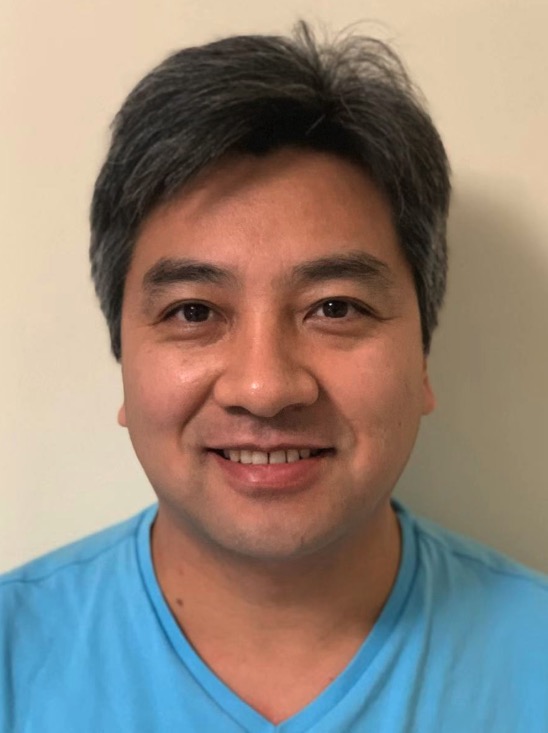 Chong Wang合作论文数Meta1
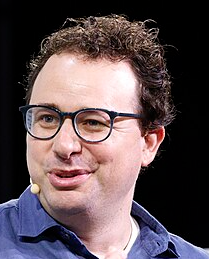 Dario Amodei合作论文数Anthropic1
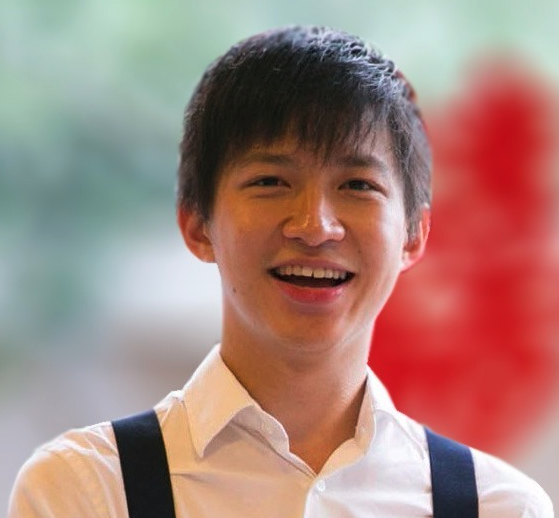 Dani Yogatama合作论文数Reka;Department of Computer Science, University of Southern California1
 Zhenyao Zhu合作论文数Waymo1
 Patrick LeGresley合作论文数NVIDIA1
 Jonathan Raiman合作论文数NVIDIA1




