Fugatto is a versatile audio synthesis and transformation model capable of following free-form text instructions with optional audio inputs. While large language models (LLMs) trained with text on a simple next-token prediction objective can learn to infer instructions directly from the data, models trained solely on audio data lack this capacity. This is because audio data does not inherently contain the instructions that were used to generate it. To overcome this challenge, we introduce a specialized dataset generation approach optimized for producing a wide range of audio generation and transformation tasks, ensuring the data reveals meaningful relationships between audio and language. Another challenge lies in achieving compositional abilities -- such as combining, interpolating between, or negating instructions -- using data alone. To address it, we propose ComposableART, an inference-time technique that extends classifier-free guidance to compositional guidance. It enables the seamless and flexible composition of instructions, leading to highly customizable audio outputs outside the training distribution. Our evaluations across a diverse set of tasks demonstrate that Fugatto performs competitively with specialized models, while ComposableART enhances its sonic palette and control over synthesis. Most notably, we highlight our framework's ability to execute emergent sounds and tasks -- sonic phenomena that transcend conventional audio generation -- unlocking new creative possibilities. \href{https://fugatto.github.io/}{Demo Website.}
Upcycling pre-trained dense language models into sparse mixture-of-experts (MoE) models is an efficient approach to increase the model capacity of already trained models. However, optimal techniques for upcycling at scale remain unclear. In this work, we conduct an extensive study of upcycling methods and hyperparameters for billion-parameter scale language models. We propose a novel "virtual group" initialization scheme and weight scaling approach to enable upcycling into fine-grained MoE architectures. Through ablations, we find that upcycling outperforms continued dense model training. In addition, we show that softmax-then-topK expert routing improves over topK-then-softmax approach and higher granularity MoEs can help improve accuracy. Finally, we upcycled Nemotron-4 15B on 1T tokens and compared it to a continuously trained version of the same model on the same 1T tokens: the continuous trained model achieved 65.3% MMLU, whereas the upcycled model achieved 67.6%. Our results offer insights and best practices to effectively leverage upcycling for building MoE language models.
Large language models (LLMs) have shown promise in proving formal theorems using proof assistants such as Lean. However, existing methods are difficult to reproduce or build on, due to private code, data, and large compute requirements. This has created substantial barriers to research on machine learning methods for theorem proving. This paper removes these barriers by introducing LeanDojo: an open-source Lean playground consisting of toolkits, data, models, and benchmarks. LeanDojo extracts data from Lean and enables interaction with the proof environment programmatically. It contains fine-grained annotations of premises in proofs, providing valuable data for premise selection-a key bottleneck in theorem proving. Using this data, we develop ReProver (Retrieval-Augmented Prover): an LLM-based prover augmented with retrieval for selecting premises from a vast math library. It is inexpensive and needs only one GPU week of training. Our retriever leverages LeanDojo's program analysis capability to identify accessible premises and hard negative examples, which makes retrieval much more effective. Furthermore, we construct a new benchmark consisting of 98,734 theorems and proofs extracted from Lean's math library. It features challenging data split requiring the prover to generalize to theorems relying on novel premises that are never used in training. We use this benchmark for training and evaluation, and experimental results demonstrate the effectiveness of ReProver over non-retrieval baselines and GPT-4. We thus provide the first set of open-source LLM-based theorem provers without any proprietary datasets and release it under a permissive MIT license to facilitate further research.
Parameter efficient learning methods (PERMs) have recently gained significant attention as they provide an efficient way for pre-trained language models (PLMs) to adapt to a downstream task. However, these conclusions are mostly drawn from in-domain evaluations over the full training set. In this paper, we present comparisons between PERMs and finetuning from three new perspectives: (1) the effect of sample and model size to in-domain evaluations, (2) generalization to unseen domains and new datasets, and (3) the faithfulness of generations. Our results show that for in-domain settings (a) there is a cross point of sample size for which PERMs will perform better than finetuning when training with fewer samples, and (b) larger PLMs have larger cross points. For cross-domain and cross-dataset cases, we show that (a) Adapter (Houlsby et al., 2019) performs the best amongst all the PERMs studied here, and (b) it outperforms finetuning if the task dataset is below a certain size. We also compare the faithfulness of generations and show that PERMs can achieve better faithfulness score than finetuning, especially for small training set, by as much as 6%. Finally, we apply Adapter to MT-NLG 530b (Smith et al., 2022) and achieve new state-of-the-art results on Xsum (Narayan et al., 2018) for all ROUGE scores (ROUGE-1 49.17, ROUGE-2 27.20, ROUGE-L 40.98).
In this paper we propose Flowtron: an autoregressive flow-based generative network for text-to-speech synthesis with control over speech variation and style transfer. Flowtron borrows insights from IAF and revamps Tacotron in order to provide high-quality and expressive mel-spectrogram synthesis. Flowtron is optimized by maximizing the likelihood of the training data, which makes training simple and stable. Flowtron learns an invertible mapping of data to a latent space that can be manipulated to control many aspects of speech synthesis (pitch, tone, speech rate, cadence, accent). Our mean opinion scores (MOS) show that Flowtron matches state-of-the-art TTS models in terms of speech quality. In addition, we provide results on control of speech variation, interpolation between samples and style transfer between speakers seen and unseen during training. Code and pre-trained models will be made publicly available at this https URL
Mellotron is a multispeaker voice synthesis model based on Tacotron 2 GST that can make a voice emote and sing without emotive or singing training data. By explicitly conditioning on rhythm and continuous pitch contours from an audio signal or music score, Mellotron is able to generate speech in a variety of styles ranging from read speech to expressive speech, from slow drawls to rap and from monotonous voice to singing voice. Unlike other methods, we train Mellotron using only read speech data without alignments between text and audio. We evaluate our models using the LJSpeech and LibriTTS datasets. We provide F0 Frame Errors and synthesized samples that include style transfer from other speakers, singers and styles not seen during training, procedural manipulation of rhythm and pitch and choir synthesis.
Presented herein are embodiments of state-of-the-art speech recognition systems developed using end-to-end deep learning. In embodiments, the model architecture is significantly simpler than traditional speech systems, which rely on laboriously engineered processing pipelines; these traditional systems also tend to perform poorly when used in noisy environments. In contrast, embodiments of the system do not need hand-designed components to model background noise, reverberation, or speaker variation, but instead directly learn a function that is robust to such effects. A phoneme dictionary, nor even the concept of a “phoneme,” is needed. Embodiments include a well-optimized recurrent neural network (RNN) training system that can use multiple GPUs, as well as a set of novel data synthesis techniques that allows for a large amount of varied data for training to be efficiently obtained. Embodiments of the system can also handle challenging noisy environments better than widely used, state-of-the-art commercial speech systems.
In this paper we propose WaveGlow: a flow-based network capable of generating high quality speech from mel-spectrograms. WaveGlow combines insights from Glow and WaveNet in order to provide fast, efficient and high-quality audio synthesis, without the need for auto-regression. WaveGlow is implemented using only a single network, trained using only a single cost function: maximizing the likelihood of the training data, which makes the training procedure simple and stable. Our PyTorch implementation produces audio samples at a rate of more than 500 kHz on an NVIDIA V100 GPU. Mean Opinion Scores show that it delivers audio quality as good as the best publicly available WaveNet implementation. All code will be made publicly available online.
The functional relationship between an input and a sensory neuron's response can be described by the neuron's stimulus-response mapping function. A general approach for characterizing the stimulus-response mapping function is called system identification. Many different names have been used for the stimulus-response mapping function: kernel or transfer function, transducer, spatiotemporal receptive field. Many algorithms have been developed to estimate a neuron's mapping function from an ensemble of stimulus-response pairs. These include the spike-triggered average, normalized reverse correlation, linearized reverse correlation, ridge regression, local spectral reverse correlation, spike-triggered covariance, artificial neural networks, maximally informative dimensions, kernel regression, boosting, and models based on leaky integrate-and-fire neurons. Because many of these system identification algorithms were developed in other disciplines, they seem very different superficially and bear little relationship with each other. Each algorithm makes different assumptions about the neuron and how the data is generated. Without a unified framework it is difficult to select the most suitable algorithm for estimating the neuron's mapping function. In this review, we present a unified framework for describing these algorithms called maximum a posteriori estimation (MAP). In the MAP framework, the implicit assumptions built into any system identification algorithm are made explicit in three MAP constituents: model class, noise distributions, and priors. Understanding the interplay between these three MAP constituents will simplify the task of selecting the most appropriate algorithms for a given data set. The MAP framework can also facilitate the development of novel system identification algorithms by incorporating biophysically plausible assumptions and mechanisms into the MAP constituents.
Keyword spotting (KWS) constitutes a major component of human-technology interfaces. Maximizing the detection accuracy at a low false alarm (FA) rate, while minimizing the footprint size, latency and complexity are the goals for KWS. Towards achieving them, we study Convolutional Recurrent Neural Networks (CRNNs). Inspired by large-scale state-of-the-art speech recognition systems, we combine the strengths of convolutional layers and recurrent layers to exploit local structure and long-range context. We analyze the effect of architecture parameters, and propose training strategies to improve performance. With only ~230k parameters, our CRNN model yields acceptably low latency, and achieves 97.71% accuracy at 0.5 FA/hour for 5 dB signal-to-noise ratio.
We show that an end-to-end deep learning approach can be used to recognize either English or Mandarin Chinese speech-two vastly different languages. Because it replaces entire pipelines of hand-engineered components with neural networks, end-to-end learning allows us to handle a diverse variety of speech including noisy environments, accents and different languages. Key to our approach is our application of HPC techniques, enabling experiments that previously took weeks to now run in days. This allows us to iterate more quickly to identify superior architectures and algorithms. As a result, in several cases, our system is competitive with the transcription of human workers when benchmarked on standard datasets. Finally, using a technique called Batch Dispatch with GPUs in the data center, we show that our system can be inexpensively deployed in an online setting, delivering low latency when serving users at scale.
We present a state-of-the-art speech recognition system developed using end-to-end deep learning. Our architecture is significantly simpler than traditional speech systems, which rely on laboriously engineered processing pipelines; these traditional systems also tend to perform poorly when used in noisy environments. In contrast, our system does not need hand-designed components to model background noise, reverberation, or speaker variation, but instead directly learns a function that is robust to such effects. We do not need a phoneme dictionary, nor even the concept of a "phoneme." Key to our approach is a well-optimized RNN training system that uses multiple GPUs, as well as a set of novel data synthesis techniques that allow us to efficiently obtain a large amount of varied data for training. Our system, called Deep Speech, outperforms previously published results on the widely studied Switchboard Hub5'00, achieving 16.0% error on the full test set. Deep Speech also handles challenging noisy environments better than widely used, state-of-the-art commercial speech systems.
Deep learning technology and related algorithms have dramatically broken landmark records for a broad range of learning problems in vision, speech, audio, and text processing. Meanwhile, kernel methods have found common-place usage due to their nonlinear expressive power and elegant optimization formulation. Based on recent progress in learning high-level, class-specific features in unlabeled data, we improve upon the result by combining nonlinear kernels and multi-layer (deep) architecture, which we apply at scale. In particular, our experimentation is based on k-means with an RBF kernel, though it is a straightforward extension to other unsupervised clustering techniques and other reproducing kernel Hilbert spaces. With the proposed method, we discover features distilled from unorganized images. We augment high-level feature invariance by pooling techniques.
Random forest classification is a well known machine learning technique that generates classifiers in the form of an ensemble ("forest") of decision trees. The classification of an input sample is determined by the majority classification by the ensemble. Traditional random forest classifiers can be highly effective, but classification using a random forest is memory bound and not typically suitable for acceleration using FPGAs or GP-GPUs due to the need to traverse large, possibly irregular decision trees. Recent work at Lawrence Livermore National Laboratory has developed several variants of random forest classifiers, including the Compact Random Forest (CRF), that can generate decision trees more suitable for acceleration than traditional decision trees. Our paper compares and contrasts the effectiveness of FPGAs, GP-GPUs, and multi-core CPUs for accelerating classification using models generated by compact random forest machine learning classifiers. Taking advantage of training algorithms that can produce compact random forests composed of many, small trees rather than fewer, deep trees, we are able to regularize the forest such that the classification of any sample takes a deterministic amount of time. This optimization then allows us to execute the classifier in a pipelined or single-instruction multiple thread (SIMT) fashion. We show that FPGAs provide the highest performance solution, but require a multi-chip / multi-board system to execute even modest sized forests. GP-GPUs offer a more flexible solution with reasonably high performance that scales with forest size. Finally, multi-threading via Open MP on a shared memory system was the simplest solution and provided near linear performance that scaled with core count, but was still significantly slower than the GP-GPU and FPGA.
Area V2 is a major visual processing stage in mammalian visual cortex, but little is currently known about how V2 encodes information during natural vision. To determine how V2 represents natural images, we used a novel nonlinear system identification approach to obtain quantitative estimates of spatial tuning across a large sample of V2 neurons. We compared these tuning estimates with those obtained in area V1, in which the neural code is relatively well understood. We find two subpopulations of neurons in V2. Approximately one-half of the V2 neurons have tuning that is similar to V1. The other half of the V2 neurons are selective for complex features such as those that occur in natural scenes. These neurons are distinguished from V1 neurons mainly by the presence of stronger suppressive tuning. Selectivity in these neurons therefore reflects a balance between excitatory and suppressive tuning for specific features. These results provide a new perspective on how complex shape selectivity arises, emphasizing the role of suppressive tuning in determining stimulus selectivity in higher visual cortex.
 Bryan Catanzaro合作论文数NVIDIA10
 Jack L. Gallant合作论文数Department of Neuroscience, University of California, Berkeley;Department of Electrical Engineering and Computer Sciences, University of California, Berkeley9
 Rafael Valle合作论文数Meta Superintelligence Labs5
 Adam Coates合作论文数Apple4
 nicolas beauchesne合作论文数3
 Kendrick Kay合作论文数Department of Radiology, University of Minnesota3
 Awni Hannun合作论文数Machine Learning Research Group, Apple3
 Gregory Diamos合作论文数Lamini;Celestial AI;MLCommons3
 Carl Case合作论文数Augment3
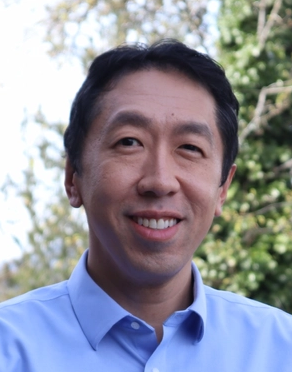 Andrew Ng (吳恩達)合作论文数Landing AI;Deeplearning. Ai;AI Fund;Coursera;Computer Science Department, Stanford University3
 Sanjeev Satheesh合作论文数NVIDIA3Jared Casper合作论文数NVIDIA3
 Erich Elsen合作论文数Databricks3
 Ben Willmore合作论文数Department of Physiology, Anatomy & Genetics, University of Oxford3
 Mohammad Shoeybi合作论文数NVIDIA2
 Christopher Fougner合作论文数Batelle2
 Shubho Sengupta合作论文数Meta2
 Ping Wei (平伟)合作论文数NVIDIA2
 Jason Li合作论文数Nvidia2
 Thomas Naselaris合作论文数Program in Neuroscience2
 Stephen V. David合作论文数Laboratory of Brain, Hearing, and Behavior, Oregon Hearing Research Center, Oregon Health and Science University;School of Medicine, Oregon Health and Science University2Michael C.-K. Wu合作论文数2Chao-Han Yang合作论文数1Kevin Shih合作论文数1Aya Aljafari合作论文数1Shuqi Dai合作论文数1Joao Santos合作论文数1Bo Xiao合作论文数1Zhiqian Wang合作论文数1Sherjil Ozair合作论文数1Libby Lin合作论文数1Billy Jun合作论文数1Tony Han合作论文数1Linxi Fan合作论文数1Rishita Anubhai合作论文数1Shixing Yu合作论文数1Sengupta Shubhabrata合作论文数1Peiyang Song合作论文数1
 Mike Chrzanowski合作论文数NVIDIA1
 Siddharth Gururani合作论文数NVIDIA Research1
 Arushi Goel合作论文数VICO Group, School of Informatics, University of Edinburgh1Rahul Chalamala合作论文数1Aithal Ashwath合作论文数1oskar ibatullin合作论文数1Jun Zhan合作论文数1Aidan M. Swope合作论文数1
 Alex Gu合作论文数Massachusetts Institute of Technology;E14 Fund1
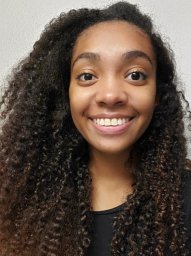 Virginia Adams合作论文数1David Seetapun合作论文数Baidu Silicon Valley AI Lab, Sunnyvale, CA and Baidu Speech Technology Group, Beijing, China1