French, Arthur B. M.D.; Barss, Theodore P. M.D.; Fairlie, Chester S. M.D.; Bengle, Armand L. Jr. M.D.; Jones, Chester M. M.D.; Linton, Robert R. M.D.; Beecher, Henry K. M.D. Author Information
THE toxic effects of chloroform on the liver are well known and feared. Studies on animals have suggested a similar role for other anesthetic agents, particularly the ethers. Goldschmidt, Ravdin and Lucké1 showed that in dogs three hours of anesthesia with divinyl ether or chloroform produced central necrosis of the liver in a large proportion of the animals studied. Diethyl ether produced similar changes, not quite so severe or frequent. The same workers2 showed the dangers inherent in translation of results from one species to another when they repeated these experiments in monkeys. Here they found histologic changes only with . . .
Gastrointestinal allergic disease undoubtedly does exist, but its frequency has been tremendously overrated. It is believed that in many cases there is not sufficient evidence for attributing chronic, recurrent digestive disturbances to allergic reaction, and that skepticism is particularly important because such a diagnosis exposes the patient to an unwarranted type of dietary management that is complicated, frequently unwise, and not too infrequently used as a substitute for critical clinical thinking. The demonstration and subsequent elimination of allergic substances that may at times be productive of digestive symptoms is, of course, important, and when based on proper evaluation of a carefully taken history will undoubtedly yield brilliant results.
Present evidence indicates that tetraethylammonium ion blocks autonomic effector systems at their ganglia.Injection of the drug prevents the passage through the superior cervical ganglion of nerve impulses to the nictitating membrane of the cat (1).Similarly, there occurs inhibition of the effect on the decentralized heart of preganglionic stimulation of either vagal cardio-inhibitory fibers or of the cardio-accellerators (2).The sharp fall in arterial blood pressure accompanying intra- venous injection results from ganglionic blockade of the sympathetic vasoconstrictor nerves (2).The action of tetraethylammonium has been ex- tensively studied in man by Lyons and his as- sociates (3 to 5).After single intravenous injec- tion of 200 to 300 mgm. of the chloride salt there is a fall in blood pressure and a rise in heart rate.These values have usually returned to normal in 10 to 15 minutes after injection.There is an ac- companying sensation of tingling and warmth of the face and extremities and sometimes drowsiness and momentary paralysis of accommodation.
THE COMPLAINT of pain has a high incidence in the civilian psychoneuroses, as well as in combat neuroses.1It occurs in cases of hysteria and anxiety neurosis as precise descriptions of headache, thoracic pain, cardiac pain and abdominal pain. In cases of hypochondriasis it is described in vaguer terms. It is one of the most difficult symptoms to evaluate and to treat. The problem arises as to whether in psychoneurotic persons one is dealing with thresholds of perception which differ from the normal or with different capacities toward reaction or elaboration of stimuli perceived with equal intensity by the normal person. The purpose of this study is to investigate the threshold of perception and reaction in a series of psychoneurotic patients and in a series of normal control subjects, in an experimental situation. The Wolff-Hardy apparatus offers an instrument which can be readily used in the investigation of this
A comparative study has been made of the analgesic effects on human beings of morphine sulfate and one of its derivatives, monoacetylmorphine. 1 Twenty-four normal males, ranging in age from 17 to 25 years, were used as test subjects in the experiments. Pain was produced by means of heat stimulation of the skin of the forehead by means of a modified Hardy-Wolff 2 cutaneous heat radiation apparatus. Two components of the pain experience were studied: first, the threshold of perception of pain, and, second, the threshold of reaction to pain. The accuracy of the method had been established previously by control observations on the variations in sensitivity to pain in 200 normal subjects. 3 The measure of the threshold of pain perception was taken to be the lowest strength of stimulus necessary to cause a sharp prick or piercing jab following a sensation of diffuse, burning heat. The threshold of
A striking variation in the intensity of pain, experienced in diseases with apparently similar lesions, is a common observationi. This fact may indicate a variation in pain sensitivity in different individuals, or a variation in pain sensitivity in a given person because of different environmental or physiological conditions. The amount of pain arising from lesions cannot be quantitatively measured. One must, therefore, employ the alternative of introducing a measured stimulus and, by the artificial production of pain, study individual responses under varying conditions. By such studies, one may hope to obtain an explanation of clinical variations in pain. Numerous studies on pain sensitivity have been made (1 to 6). Prior to 1940, attempts to quantitate cutaneous pain sensitivity were limited chiefly by the technical difficulties of creating a stimulus which could be accurately measured and which produced a readily appreciated end-point of pain. The cutaneous heat-radiation apparatus, developed by Hardy, Wolff, and Goodell (6), overcame both of these difficulties. Visceral pain also has been studied experimentally by many investigators (7 to 9), but, so far as is known, no satisfactory quantitative measurements of visceral pain sensitivity have been made. The present study constitutes an attempt to measure pain sensitivity in 200 normal subjects. They were considered to be normal in that they showed no evidence of physical or mental disease, either by examination or by history. Their ages ranged from 10 to 85 years. A majority of the group were of Northern European stock; the remainder included 25 Southern Negroes, 15 Ukrainians, and 30 of Jewish and other Mediterranean races. Various economic, occupational,
Original Article from The New England Journal of Medicine — The Effect of Sulfanilamide Powder on the Healing of Sterile and Infected Wounds — With Special Reference to Tensile Strength and Ascorbic Acid Content in the Scar
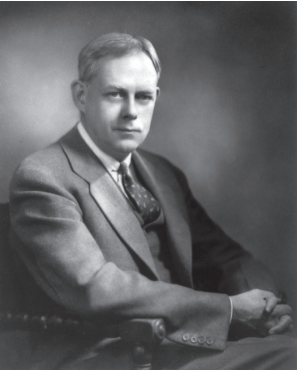 Tracy B. Mallory合作论文数Massachusetts General Hospital62
 George W. Holmes合作论文数37Aubrey O. Hampton合作论文数18Frederick T. Lord合作论文数15Edward D. Churchill合作论文数10Arlie V. Bock合作论文数10Arthur W. Allen合作论文数9Wyman Richardson合作论文数9Beth Vincent合作论文数9Leland S. Mckittrick合作论文数8Fuller Albright合作论文数6James C. White合作论文数5Maurice Fremont-Smith合作论文数5Marshall K. Bartlett合作论文数5Earle M. Chapman合作论文数5Edward L. Young合作论文数5Anna E. Ryan合作论文数5James H. Means合作论文数5Edward G. Thorp合作论文数4A. William Reggio合作论文数3CHAPMAN W P合作论文数3Richard C. Cabot合作论文数3Robert R. Linton合作论文数3Henry K. Beecher合作论文数3F. M. Painter合作论文数3Walter Bauer合作论文数3Alfred O. Ludwig合作论文数3E. Parker Hayden合作论文数3George A. Leland合作论文数3Edward B. Benedict合作论文数3Arthur B. French合作论文数3Daniel F. Jones合作论文数3Walter E. Garrey合作论文数3Ernest M. Daland合作论文数3Donald S. King合作论文数3Francis T. Hunter合作论文数3Clifford C. Franseen合作论文数3John P. Monks合作论文数2Thomas V. Urmy合作论文数2P D WHITE合作论文数Appl Stat Grp, Univ West England2Bock A V合作论文数2WHITE B V合作论文数2Daniel Fiske Jones合作论文数2Henry D. Stebbins合作论文数2James Howard Means合作论文数2
 David Young合作论文数Lawrence Livermore National Laboratory2Fletcher H. Colby合作论文数2Benjamin V. White合作论文数2Hugo Roesler合作论文数2




