Angiocardiography was performed on 105 patients using 90 per cent Hypaque. In 38 children, uniformly good visualization was obtained. In 67 adults, good left heart visualization was obtained with equal frequency, after either central or peripheral injection. No serious reactions occurred, and mild reactions were infrequent (26.6 per cent). 90 per cent Hypaque proved to be a safe and successful angiocardiographic contrast medium. Note: The Hypaque used in this study was generously donated by Winthrop Laboratories. Addendum: Since the completion of the above study, 90 per cent Hypaque has been used in over 300 additional angiographic examinations, with similar experience as to quality of visualization and infrequency of reactions.
The occurrence of an elevated right diaphragm following abdominal surgery presents a difficult diagnostic and therapeutic problem. Although the incidence of subphrenic infections has decreased due to the extensive use of multiple antibiotics, there may be masking or a more insidious onset of such a serious closed abscess when it does occur.
THE term "malignant lymphoma" has been rather generally accepted, in America at least, to designate malignant tumors that are characterized by progressive enlargement of lymphoid tissue in various parts of the body. Pathologists have subdivided this group on a histologie basis into several more or less characteristic types. Clinically, the disease as a rule progresses with a varying degree of rapidity to a fatal termination, the average duration of life being from two to three years.1 Gall and Mallory2 reported 10 cases with survival, free of disease, for six years or more after surgical removal. In a more recent paper, . . .
THE purpose of this paper is to state briefly the causes that, in my opinion, have led to an increase in the cost of sickness, to review the various attempts that have been made to meet it, and to suggest certain lines of approach that might lead to a solution of the problem.The present high cost of sickness had its beginning in the latter part of the last century, and is due almost entirely to the rapid advances of medical science and the general acceptance of the community hospital instead of the home as the best place for the . . .
IT is a pleasure and a privilege to honor an old friend and associate. Preston M. Hickey did much for roentgenology and for all those who were privileged to associate with him. A charter member of the American Roentgen Ray Society, the first Editor of its Journal, a past president and a most trusted advisor, he helped to establish the principles through which the Society has reached its present high position in medicine. He was an untiring worker, a careful, conscientious investigator, an excellent diagnostician and teacher. Outstanding among his many qualifications was his clearness of thought and his keen judgment of men. To be numbered among his friends was indeed an honor. He was especially fitted by temperament and training to become a leader and a teacher. Fortunately, in the later years of his life, such an opportunity came to him, as Professor of Roentgenology at the University of Michigan at Ann Arbor. Here he continued the work so well begun by Dr. Van Zwaluwenburg and developed a Department of Roentgenology which is now one of the leading research and teaching institutions in this country; also, he has left behind him a group of men who are carrying on the Hickey tradition. What more could one ask? In selecting a subject for presentation this evening my first choice was one which Dr. Hickey did so much to establish on a sound basis, namely, the relation of the roentgenologist to the hospital. This highly specialized subject would not, I fear, be of sufficient interest to an audience composed of practitioners in all branches of medicine, and for this reason I have elected to discuss with you this evening some of the common causes of pulmonary hemorrhage, or blood-spitting, and the various ways in which a roentgenological examination may be of help in the diagnosis and treatment of the patient. What are some of the common causes of blood-spitting and pulmonary hemorrhage? My personal impressions are naturally somewhat influenced by the specialty to which I belong and the Hospital in which I work. Dr. Richard Cabot once said that from his observations at the Massachusetts General Hospital the most common cause of blood-spitting was cardiac disease. No doubt the frequency with which this symptom appears as a presenting symptom varies widely in different clinics and with different physicians. At the Massachusetts General Hospital, Dr. Cabot's remark is, I think, still true, particularly if we include not only valvular disease but pulmonary emboli, and allied conditions. In our Clinic, tuberculosis is a rather uncommon cause, although in general practice it still ranks among the first. I have been particularly interested in a small group of cases of tuberculous origin in which the physical and x-ray examinations were essentially negative, although the patient may have had as a presenting symptom a considerable pulmonary hemorrhage, and in some cases tubercle bacilli were found in the sputum.
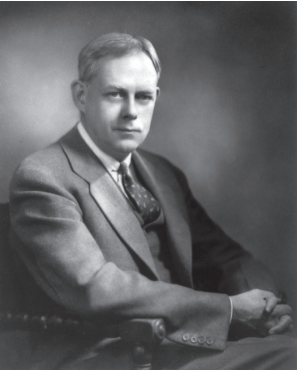 Tracy B. Mallory合作论文数Massachusetts General Hospital172
 Chester M. Jones合作论文数37Maurice Fremont-Smith合作论文数29Frederick T. Lord合作论文数24Edward D. Churchill合作论文数22Arlie V. Bock合作论文数19Leland S. Mckittrick合作论文数15James H. Means合作论文数15Arthur W. Allen合作论文数14Fuller Albright合作论文数13Aubrey O. Hampton合作论文数12William B. Breed合作论文数11Wyman Richardson合作论文数9Richard C. Cabot合作论文数8F. M. Painter合作论文数8W. Jason Mixter合作论文数8Donald S. King合作论文数8P D WHITE合作论文数Appl Stat Grp, Univ West England7Beth Vincent合作论文数7Edward L. Young合作论文数7Francis T. Hunter合作论文数7E. Parker Hayden合作论文数6James C. White合作论文数5Bock A V合作论文数5Earle M. Chapman合作论文数5Robert R. Linton合作论文数5Richard H. Miller合作论文数5Walter Bauer合作论文数5Henry H. Faxon合作论文数5Alfred Kranes合作论文数5William D. Smith合作论文数5Harold L. Higgins合作论文数5Sven M. Gundersen合作论文数5John I. Bradley合作论文数5J. Dellinger Barney合作论文数4James Howard Means合作论文数4Richard W. Dwight合作论文数4Oliver Cope合作论文数4Daniel F. Jones合作论文数4Howard B. Sprague合作论文数4Clifford C. Franseen合作论文数4Daniel Fiske Jones合作论文数3Bernard M. Jacobson合作论文数3Alfred O. Ludwig合作论文数3Channing C. Simmons合作论文数3E. Ross Mintz合作论文数3Edward G. Thorp合作论文数3George A. Leland合作论文数3




