Four major anomalies of the venous system were encountered during abdominal aortic surgery. These were transposition of the inferior vena cava, duplication of the inferior vena cava, circumaortic venous collar, and retroaortic left renal vein. Although these anomalies are not common, each poses a particular problem related to its recognition, protection from injury, and intraoperative management.
The experience with 140 cases of early hemorrhage or graft thrombosis after femoropopliteal bypass arterial reconstruction at the Massachusetts General Hospital is reviewed. Postoperative hemorrhage occurred in one of two patterns. The first was bleeding within the first 24 hours secondary to technical aspects of the reconstruction and unrelated to sepsis. Re-exploration and local repair resulted in early patency in 88 percent of patients with an eight percent mortality rate. The second pattern was bleeding within 3 to 28 days. This was always related to sepsis. The only effective treatment was ligation of the involved vessels and grafting through an uninvolved route. All attempts at local repair resulted in recurrent bleeding. Early thrombosis occurred in 98 grafts. Surgically correctable causes were discovered in two thirds. Graft revision was performed on 66 patients with two deaths. At discharge, 48 grafts (73 percent] remained patent. Best long-term patency rates were obtained when correctable problems were discovered at re-exploration. Compared with results of uncomplicated reconstruction, the prognosis is poor for patency of grafts that require re-exploration for acute complications, even when revision is successful. Nevertheless, many limbs may be salvaged with proper management.
Composite Dacron-autogenous vein grafts designed so that the vein portion is placed across the knee joint were used in 40 limbs to bypass femoropopliteal arteriosclerotic obstructions. The five-year accumulative patency rate was 53% compared to 72% for autogenous vein grafts in a larger series. This was superior to Dacron bypass grafting alone, femoral endarterectomy, and composite femoral endarterectomy with short distal venous bypass grafts. Important technical details are considered. It is our opinion that the composite Dacron vein grafts when properly constructed and implanted are a useful method to restore the arterial circulation to the lower leg if the saphenous vein is too short or not usable for other reasons.
A series of seventeen mycotic aneurysms treated over the past fifteen years at this institution has been reported. Thirteen of these involved the abdominal aorta and four involved peripheral vessels. Rupture of the aneurysm occurred in ten. There were no survivors in the seven patients with ruptured aneurysms that involved the aorta, four of whom underwent emergency surgery. There were two survivors among the three patients with peripheral ruptured mycotic aneurysms. There were five survivors of the seven with nonruptured aneurysms treated surgically. Four of the six patients with mycotic nonruptured aneurysms of the aorta treated surgically survived and are well at periods of nineteen months to nine years.
SAPHENOUS-vein femoral popliteal bypass autograft has been demonstrated clinically to be an effective long-term vascular reconstructive procedure in many patients with arteriosclerotic occlusion of the femoral artery in the thigh. Late failures are ascribable to a number of different factors, many of which are not now preventable.During the past year we have observed several patients in whom a segmental stenosis of a portion of the graft endangered the functional integrity of the entire reconstruction. It is impossible to estimate how frequently such segmental stenosis results in late occlusion as compared with generalized progression of proximal or distal disease. However, . . .
THE USE of vascular homografts in arterial reconstruction attained wide use during the past decade but since has been abandoned by most surgeons, including ourselves, because of the high incidence of failures. While early graft occlusion is almost always a result of technical failure, late closure of arterial homografts seem to relate for the most part to the atheromatous degeneration and aneurysm formation which occurs in these homologous tissues. While at the present time the use of arterial homografts is of historical interest only, it should be pointed out that many patients are alive and well today as a result of their use in an era when a more acceptable means of arterial reconstruction was not available. Some patients, however, still return for the treatment of complications of their use. Accordingly, we have reviewed all cases performed by two of us (R.R.L and C.V.M.) in order to determine the long-term
LINTON, ROBERT R. M.D.; ELLIS, DANIEL S. M.D.; GEARY, JOSEPH E. M.D. Author Information
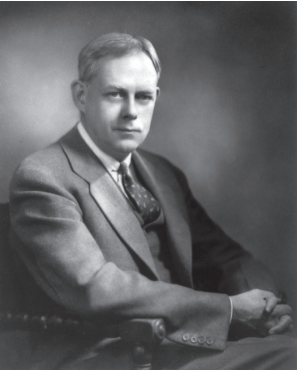 Tracy B. Mallory合作论文数Massachusetts General Hospital14
 George W. Holmes合作论文数5R.Clement Darling合作论文数5Charles V. Menendez合作论文数5Aubrey O. Hampton合作论文数4Irad B. Hardy合作论文数4John I. Bradley合作论文数4Chester M. Jones合作论文数3Henry K. Beecher合作论文数3Richard W. Dwight合作论文数3Beth Vincent合作论文数3Harold L. Higgins合作论文数3Daniel S. Ellis合作论文数3Wg Austen合作论文数2Richard C. Cabot合作论文数2Richard H. Miller合作论文数2F. M. Painter合作论文数2Gilbert T. Hyatt合作论文数2E. Parker Hayden合作论文数2Oliver Cope合作论文数2Joe Vincent Meigs合作论文数2Harry F. Hartwell合作论文数2Leland S. Mckittrick合作论文数2Arthur B. French合作论文数2John J. Cranley合作论文数2James L. Buchanan合作论文数From the Department of Surgery and the Surgical Research Laboratories of the Harvard Medical School, Massachusetts General Hospital Boston2Harry M. Spence合作论文数2Fuller Albright合作论文数2Cg Child合作论文数1Arthur W. Allen合作论文数1T Kalil合作论文数1earle m chapman合作论文数1T B MALLORY合作论文数1R WARREN合作论文数1paul l frederick合作论文数1R C Darling合作论文数1Wd Warren合作论文数1Mj Orloff合作论文数1Jw Lord合作论文数1Lw Ottinger合作论文数1Richard B. Capps合作论文数1Mj Buckley合作论文数1AB BARNES合作论文数1Mikkelse.Wp合作论文数1H Gaylis合作论文数1Ed Mundth合作论文数1Edward D. Churchill合作论文数1




