Presentation of Case*A fifty-two-year-old woman was admitted to the hospital because of obstruction of the large bowel.Two and a half years previously she had the onset of repeated episodes of profuse vaginal bleeding; she was postmenopausal. Examination of two uterine curettings revealed no evidence of a malignant tumor, and cytologic examination for neoplastic cells was negative. Six months later she was admitted to another hospital because of recurrent vaginal bleeding. Physical examination was negative except for slight enlargement of the uterus. Laparotomy disclosed that the uterus was somewhat enlarged, with multiple small fibroids, and adherent posteriorly; a hysterectomy . . .
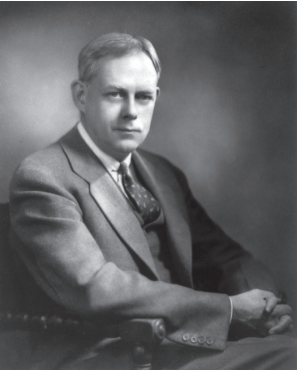
HOWARD FRANK ROOT, M.D.Howard Frank Root was born in Ottumwa, Iowa, on August 28, 1890, and died at his home in Brookline, Massachusetts, on November 17, 1967. He was one of five children born to Mary and Frank Root. He graduated from the local high school in 1909 with a scholarship to Harvard, entered Harvard College in the fall and graduated Phi Beta Kappa in 1913.During his four years in Cambridge, he came to know the underprivileged through his work with Phillips Brooks House assisting in the activities of the Boy's Club. When unable to meet the cost . . .
My role in this program is clearly limited to a discussion of the report of the Millis Commission on Graduate Education (except that section on family practice) and specifically to present what might be a reasonable response to a study and its recommendations, which if followed, would alter greatly our present concept of education beyond medical school and would require drastic changes in its overall structure. I begin with the assumption that those responsibile for education at this level recognize a need for and welcome a study in depth of graduate education, hopeful that from a better understanding of its weaknesses as well as its strength will come more coordinated and efficient educational opportunities for all of the recent medical school graduates. Before proceeding to the report itself, I would like to comment briefly on the commission which developed it. There are undoubtedly many who believe that those selected to
ALL your presidents have, in addition to surgery, one thing in common — the Presidential Address. The subject finally selected will, to no small degree, reflect the varying special interests and activities of each.I have recently fulfilled my responsibilities to the Council on Medical Education and Hospitals of the American Medical Association. The eleven years as a member, five of them as chairman of this Council, have been at times exciting, always challenging and very sobering whenever I contemplated the staggering responsibilities facing medicine. The need to give this address has challenged me to review critically my own . . .
As stated elsewhere in this issue (p. 389) by Dr. Kurt W. Deuschle, "The major purpose of medical education is to educate all types of physicians needed to provide medical services to society...." The recent explosion in developments in medical knowledge and techniques, however, has tremendously increased the difficulties in maturing the educational processes necessary to bring to the public the many benefits of these advances. The much-discussed doctor shortage, the acknowledgedly long and costly preparation for medical practice, the frequently expressed concern over the decreasing number of highly qualified applicants to our present schools, the large number of internships and the too few new graduates to fill them, and the continuing popularity of the specialties as opposed to family practice, give cause for deep concern about present concepts and methodologies and suggest the need for a thoughtful, unprejudiced, and imaginative look at our entire educational program. The points considered
I would like to acknowledge my indebtedness to a man—a man with a mission to which he devoted himself in thought and in action throughout his working hours—an indebtedness which can now be repaid only by increased efforts in support of the principles for which he stood. I did not know Ed Turner until he came to the Council on Medical Education and Hospitals. The breadth of his understanding of people and their needs, his knowledge of and devotion to medical education in its broadest sense, and the untiring and thoughtful application of an active, orderly, and imaginative mind to medicine's many problems, present and future, have been and will continue to be an inspiration to me for which I shall be forever grateful. Dr. Vannevar Bush must have had such a man in mind when he described a cultured gentleman: "He is a man who aspires to wisdom, because
AT THE recent meeting of the House of Delegates in San Francisco several resolutions were introduced which had as their objectives the supplying of certain hospital service functions through the means of interns. One resolution 1 suggested that since nonuniversity affiliated hospitals were experiencing difficulty in obtaining interns in requisite number and caliber, the problem might be solved by having the American Medical Association take appropriate measures to investigate the feasibility of the use of senior medical students to replace first-year interns in affiliated hospitals, thereby making such interns available for the nonaffiliated institutions. Another resolution 2 pointed up the critical shortage of interns in community and municipal hospitals and proposed that medical schools adopt a policy of encouraging a reasonable percentage of graduates to seek a two-year rotating internship in such institutions. A third 3 resolution indicated that the intern shortage interferes with the quality and the quantity of
The Miller-Abbott tube for the small intestine has acquired a permanent place in the therapeutic and diagnostic armamentarium of the surgical clinic. Its established uses are (1) in intestinal obstruction,1(2) in roentgen diagnosis of lesions of the small intestine2and (3) as an adjunct to operations involving intestinal suture to remove tension from the line of suture.3We have recently been impressed by its value in an additional group of conditions as a part of the technic of laparotomy. These cases are those in which it is of advantage to decrease the volume of the intraperitoneal contents (cases 1 and 2) or to have a method for the certain identification of intestinal loops (case 3). Its use in decreasing the intraperitoneal volume in operations for ventral hernia has been pointed out by Johnston.4Many others have undoubtedly employed the Miller-Abbott tube in these operations, but
In this paper I shall try to give a general picture of the diabetic patient with gangrene, to describe the organization for and the principles of management of cases of diabetic gangrene at the New England Deaconess Hospital and possibly, through a study of my results, to indicate how I have arrived at my present conception of the operative treatment of this condition. I do not wish to add to the many reports on the details of management of diabetic gangrene or to enter into any controversy as to the indications for amputation or the level at which it should be done.ORGANIZATION FOR THE CARE OF "SURGICAL DIABETIC" PATIENTS AT THE NEW ENGLAND DEACONESS HOSPITALI did my first amputation for gangrene—a closed amputation through the upper third of the lower part of the leg—in May 1923. Insulin had been given to the first patient in the New England
In this discussion we shall presuppose an understanding of the handicaps of the diabetic patient in addition to his carbohydrate intolerance. We refer to the high incidence of arteriosclerosis, particularly in the coronary vessels and the vessels of the kidneys; the susceptibility to and seriousness of infection both in the field of operation and in the urinary tract; the effect of prolonged or acute sepsis on the diabetic state, and the frequency with which pressure, of little consequence to the non-diabetic patient, may result in an area of necrosis, particularly on the heels and over the sacrum. We also assume a careful evaluation and treatment of the patient's general condition, with particular reference to his state of nutrition and any vitamin or other deficiency which may exist. PREOPERATIVE TREATMENT Operations of Election. —It is our aim, in general, to send the diabetic patient to the operating room well fed, with
During the ten year period from 1929 to 1939, 288 patients have been under the care of the members of the Peripheral Vascular Clinic at the Massachusetts General Hospital for the treatment of obliterative arterial disease due either to thrombo-angiitis obliterans or to peripheral arteriosclerosis. Between May 1923 and Jan. 1, 1939, 565 patients with arteriosclerotic gangrene associated with diabetes mellitus have been operated on by my associate Dr. Theodore C. Pratt and myself at the New England Deaconess Hospital. The disease of these patients was so advanced as to warrant their admission to the wards of either hospital. From a review of the records of these patients we shall try to summarize the problems in diagnosis and hospital treatment which this group presents. SYMPTOMS AND SIGNS OF OBLITERATIVE ARTERIAL DISEASE History.— The symptoms of progressive occlusion of the arterial supply to an extremity are similar regardless of the
 Tracy B. Mallory合作论文数Massachusetts General Hospital19
 George W. Holmes合作论文数15Chester M. Jones合作论文数8Aubrey O. Hampton合作论文数5Arthur W. Allen合作论文数2Hf Root合作论文数2Robert R. Linton合作论文数2Richard H. Miller合作论文数2Frederick T. Lord合作论文数2Alfred O. Ludwig合作论文数2Arlie V. Bock合作论文数2E. Parker Hayden合作论文数2Henry H. Faxon合作论文数2Daniel F. Jones合作论文数2Sydney C. Graves合作论文数2Fuller Albright合作论文数2Richard H. Sweet合作论文数2James H. Townsend合作论文数1Henry R. Viets合作论文数1Thomas V. Urmy合作论文数1Richard C. Cabot合作论文数1
 Robert Edward Scully合作论文数Harvard Medical School;Massachusetts General Hospital1Maurice Fremont-Smith合作论文数1Edward D. Churchill合作论文数1Earle M. Chapman合作论文数1Betty U. Mcneely合作论文数1Richard Schatzki合作论文数1Robert E. Scully合作论文数1Benjamin Castleman合作论文数1Daniel Fiske Jones合作论文数1Edwin M. Cole合作论文数1F. Dennette Adams合作论文数1John W. Cass合作论文数1W. Jason Mixter合作论文数1Channing C. Simmons合作论文数1Wyman Richardson合作论文数1Richard W. Dwight合作论文数1Horace K. Sowles合作论文数1Michael E. Murray合作论文数1Edward G. Thorp合作论文数1George A. Leland合作论文数1Oliver Cope合作论文数1Joe V. Meigs合作论文数1Langdon Parsons合作论文数1Edward L. Young合作论文数1Logan H. Roots合作论文数1Ernest M. Daland合作论文数1James B. Ayer合作论文数1




