Der menschengemachte Klimawandel ist einer der größten Herausforderungen der Zukunft. Die Weichen werden in der derzeitigen Generation gestellt. Da der Gesundheitssektor mit einem beachtlichen Anteil zu der Freisetzung von Treibhausgasemission beiträgt, müssen dringend Maßnahmen zur Gegensteuerung eingeleitet werden. Eine Leitlinie als erste Handlungsempfehlung für den intensiv- und notfallmedizinischen Bereich ist daher notwendig. Im Rahmen des Leitlinienprogramms der Arbeitsgemeinschaft der Wissenschaftlichen Medizinischen Fachgesellschaften (AWMF e. V.) wurde unter Beteiligung von 12 Fachgesellschaften und Initiativen eine S1-Leitlinie entwickelt und im Oktober 2024 veröffentlicht. Die Leitliniengruppe legte relevante Themenschwerpunkte fest und führte eine systematische Literaturrecherche durch. Aufgrund der S1-Klassifikation wurde keine gesonderte Evidenzaufbereitung vorgenommen. Die Einstufung der Empfehlungen fand im formalen Konsensbildungsprozess statt. Die Leitlinie enthält 73 Empfehlungen zur Umsetzung von nachhaltigen Ansätzen in der Intensiv- und Notfallmedizin. Sie betreffen sowohl das interprofessionelle Team der Bereiche als auch die Organisationsstruktur des Krankenhauses. Die Leitlinie zeigt auf, dass bereits jetzt relevante und konkrete Möglichkeiten für ein nachhaltigeres Arbeiten in der Intensiv- und Notfallmedizin existieren. Es besteht jedoch weiterer Forschungsbedarf (z. B. genaue Analysen, siehe Life Cycle Assessment, LCA), wie eine Reduzierung der Umweltauswirkungen medizinischer Einrichtungen erreicht und weiterhin eine hochwertige PatientInnenversorgung aufrechterhalten werden können.
BACKGROUND:Man-made climate change is one of the greatest challenges of the future. The course is being set in the current generation. As the healthcare sector contributes a considerable proportion of greenhouse gas emissions, measures to counteract this must be introduced as a matter of urgency. A guideline is therefore necessary as an initial recommendation for action in the intensive care and emergency medicine sector. METHODS:As part of the guideline program of the Association of the Scientific Medical Societies in Germany (AWMF e. V.), an S1 guideline was developed with the participation of 12 professional societies and initiatives, and published in October 2024. The guideline group defined relevant key topics and carried out a systematic search of the literature; due to the S1 classification, no separate evidence review was carried out. The classification of the recommendations took place in a formal consensus-building process. RESULTS:The guideline contains 73 recommendations for the implementation of sustainable approaches in intensive care and emergency medicine. These are recommendations that concern both the interprofessional team in the departments and the organizational structure of the hospital. CONCLUSION:The guideline shows that there are already relevant and concrete possibilities for more sustainable work in intensive care and emergency medicine. However, there is a need for further research (e.g., detailed analyses, such as life cycle assessment) on how exactly to reduce the environmental impact of medical facilities, while maintaining high-quality patient care.
Insufficient antimicrobial exposure is associated with worse outcomes in sepsis. We evaluated whether therapeutic drug monitoring (TDM)-guided antibiotic therapy improves outcomes. Randomized, multicenter, controlled trial from January 2017 to December 2019. Adult patients (n = 254) with sepsis or septic shock were randomly assigned 1:1 to receive continuous infusion of piperacillin/tazobactam with dosing guided by daily TDM of piperacillin or continuous infusion with a fixed dose (13.5 g/24 h if eGFR ≥ 20 mL/min). Target plasma concentration was four times the minimal inhibitory concentration (range ± 20%) of the underlying pathogen, respectively, of Pseudomonas aeruginosa in empiric situation. Primary outcome was the mean of daily total Sequential Organ Failure Assessment (SOFA) score up to day 10. Among 249 evaluable patients (66.3 ± 13.7 years; female, 30.9%), there was no significant difference in mean SOFA score between patients with TDM (7.9 points; 95% CI 7.1–8.7) and without TDM (8.2 points; 95% CI 7.5–9.0) (p = 0.39). Patients with TDM-guided therapy showed a lower 28-day mortality (21.6% vs. 25.8%, RR 0.8, 95% CI 0.5–1.3, p = 0.44) and a higher rate of clinical (OR 1.9; 95% CI 0.5–6.2, p = 0.30) and microbiological cure (OR 2.4; 95% CI 0.7–7.4, p = 0.12), but these differences did not reach statistical significance. Attainment of target concentration was more common in patients with TDM (37.3% vs. 14.6%, OR 4.5, CI 95%, 2.9–6.9, p < 0.001). TDM-guided therapy showed no beneficial effect in patients with sepsis and continuous infusion of piperacillin/tazobactam with regard to the mean SOFA score. Larger studies with strategies to ensure optimization of antimicrobial exposure are needed to definitively answer the question.
Taxines are the active, poisonous constituents in yew plants (Taxus spp.) and can result in life-threatening cardiac toxicity. Rapid elimination of yew plant material and administration of active charcoal can limit absorption of toxins. Treatment is confined to supportive care. Therapeutic interventions such as utilization of digoxin immune fab, hemodialysis and temporary cardiac pacing may be utilized. Extracorporeal life support should be considered for severe cases.
Click to increase image sizeClick to decrease image size Ethical approvalWe have received written consent to participate from the patient and his relatives. An ethics approval was not filed.Data sharingAll data, if not given in this article, are openly available on request.Disclosure statementNo potential conflict of interest was reported by the authors.
Trotz neuer Konzepte und verbesserter Reanimationsmaßnahmen bei Patienten mit präklinischem Herz-Kreislauf-Stillstand ist das Outcome nach konventioneller kardiopulmonaler Reanimation (CPR) weiterhin sehr eingeschränkt. Einen der Hauptgründe stellt eine prolongierte „Low-flow“-Phase während CPR mit insuffizienter Organperfusion dar. In retrospektiven Untersuchungen konnte gezeigt werden, dass bei ausgewählten Patienten durch den frühzeitigen Einsatz einer venoarteriellen extrakorporalen Membranoxygenierung (va-ECMO) unter Reanimation, der sog. extrakorporalen kardiopulmonalen Reanimation (ECPR), eine Verbesserung der Überlebensrate erreicht werden kann. In dieser Fallserie wird das Management von 3 Patienten mit präklinischem Herz-Kreislauf-Stillstand vorgestellt und anhand der gegenwärtigen Literatur kritisch diskutiert. Alle Patienten erlitten einen präklinisch beobachteten Herz-Kreislauf-Stillstand mit umgehender CPR. Bei prolongierter CPR mit Ausbleiben eines „return of spontaneous circulation“ (ROSC) wurde eine vaECMO entweder präklinisch oder nach dem Transport des sich in Reanimation befindlichen Patienten in die Klinik etabliert. Zwei der Patienten verstarben im weiteren Verlauf; eine Patientin wurde nach vollständiger Genesung in die häusliche Umgebung entlassen. Durch den Einsatz einer ECPR bei prolongiertem Herz-Kreislauf-Stillstand ohne ROSC kann das Outcome eines ausgewählten Patientenkollektivs verbessert werden. Die Indikationsstellung erfolgt individuell und sollte vom erfahrenen ECPR-Team anhand definierter Ein- und Ausschlusskriterien gestellt werden. Das Outcome ist hauptsächlich von der Länge und der Qualität der CPR vor ECMO-Anschluss abhängig, sodass die Entscheidungsfindung frühzeitig, z. B. nach Etablierung der Maßnahmen des Advanced Life Support (ca. 10–15 min), erfolgen sollte.
Adipositas ist ein wesentlicher Risikofaktor für eine diastolische Herzinsuffizienz, die sog. Adipositas-Kardiomyopathie.
Despite new concepts and strategies of basic and advanced life support, the outcome of patients with out-of-hospital cardiac arrest (OHCA) remains poor. The main reason accounting for these poor results is a low-flow phase during conventional cardiopulmonary resuscitation (CPR) with insufficient end organ perfusion. The early use of venoarterial extracorporeal membrane oxygenation (vaECMO) during CPR, i.e. extracorporeal resuscitation (ECPR) might improve OHCA survival rates as well as the neurological outcome in resuscitated patients. This article on a case series discusses the management of ECPR in three patients with OHCA. All patients suffered from a witnessed OHCA and received effective bystander CPR. After subsequent advanced cardiac life support could not achieve a return of spontaneous circulation (ROSC), vaECMO support was established as a bridge to therapy on site or after transportation to a primary or tertiary hospital. During the course of therapy two patients died and one patient was discharged after a full recovery. Early ECPR might improve the outcome in patients with prolonged cardiac arrest without ROSC. The use of ECPR should be based on the individual decision of an experienced ECPR team considering defined inclusion and exclusion criteria. As the outcome mainly depends on the duration and quality of conventional CPR, ECPR support should be requested immediately after establishing advanced life support (approximately 10-15 min).
Wir berichten über eine zum Aufnahmezeitpunkt 74-jährige Patientin, die sich mit thorakalen Schmerzen, einer rechtsseitigen Hemiplegie sowie zweimaligem Hämatemesis (hellrot) in unserer Klinik vorstellte.
Obesity is an important risk factor for the development of heart failure.In normotensive obese patients, a reduced peripheral resistance is typically observed and is accompanied by an increased fluid volume and an increase in cardiac work, resulting in hypertrophy and diastolic heart failure, which can be visualized with echocardiography. However, in the presence of arterial hypertension cardiac geometry is not different to hypertensive heart disease without obesity. Furthermore, the typical changes found with obesity, such as reduced peripheral resistance and increased blood volume, are no longer present. Obstructive sleep apnea (OSA) is very common in obesity and warrants screening but levels of the heart failure marker N-terminal pro-brain natriuretic peptide (NT-ProBNP) might be misleading as the values are lower in obesity than in normal weight controls.Body weight reduction is advisable but difficult to achieve and much more difficult to maintain. Furthermore, diet and exercise has not been proven to enhance life expectancy in obesity. However, with bariatric surgery, long-term weight reduction can be achieved and mortality can be reduced.With effective weight loss and improved clinical outcome after bariatric surgery, treatment of obesity has shifted much more into focus. Regardless of technical challenges in the work-up of obese patients, clinical symptoms suggestive of cardiac disorders warrant prompt investigation with standard techniques following recommendations as established for normal weight patients.
Objective: Pheochromocytomas are rare chromaffin cell-derived tumors causing paroxysmal episodes of headache, palpitation, sweating and hypertension. Life-threatening complications have been described in case reports and small series. Systematic analyses are not available. We took an opportunity of a large series to make a survey.Design and methods: We analyzed records of patients diagnosed with pheochromocytomas in three geographically spread German referral centers between 2003 and 2012 (n=135).Results: Eleven percent of the patients (ten women, five men) required in-hospital treatment on intensive care units (ICUs) due to complications caused by unsuspected pheochromocytomas. The main reasons for ICU admission were acute catecholamine induced Tako-Tsubo cardiomyopathy (n=4), myocardial infarction (n=2), acute pulmonary edema (n=2), cerebrovascular stroke (n=2), ischemic ileus (n=1), acute renal failure (n=2), and multi organ failure (n=1). One patient required extracorporeal membrane oxygenation due to a hypertensive crisis with lung edema occurring during delivery (n=1). Two patients died of refractory shock and pheochromocytomas were found postmortem. Two patients were treated by emergency surgery. Compared to pheochromocytoma patients without life-threatening events (n=120), patients with complications had a significant larger maximal tumor diameter (7.0 vs 4.5 cm, P<0.01), higher levels of catecholamines (20-vs ninefold upper limit of normal, P<0.01), and tended to be younger (42 vs 51 years, P=0.05).Conclusion: Although pheochromocytomas are rare, they are likely to be associated with a life-threatening situation. Clinicians have to be aware of these situations and perform a timely diagnosis.
Aim: To compare enzyme immunoassay (EIA) with liquid chromatographic tandem mass spectrometric (LC-MS/MS) measurements of normetanephrine (NMN) and metanephrine (MN) for diagnosis of pheochromocytoma (PHEO).
Aims: Secondary hypertension consists a well-defined group of diseases, with pheochromocytomas being one of these entities. Clinical experience suggests that complete removal of pheochromocytomas improves blood pressure (BP); however, this was never formally demonstrated.
Objective: A TRB-3 knockdown in insulin resistant mice decreased atherosclerosis. Suppression of TRB-3 in macrophages results in increased macrophage viability, increased adhesion of monocytes and increased phagocytosis. TRB-3 is induced by endoplasmatic reticulum (ER) stress.
 Bruno Allolio合作论文数Universitätsklinikum in Würzburg27
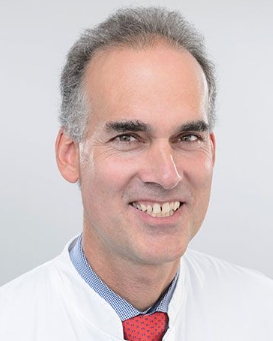 Martin Fassnacht合作论文数Medizinische Klinik I, Universitätsklinikum Würzburg21
 Stefanie Hahner合作论文数Diabetes Unit;Department of Medicine;University Hospital;University of Wurzburg;University Hospital, University of Wurzburg16
 Stefan Frantz合作论文数Medizinische Klinik und Poliklinik I, Universität Würzburg11
 Stefan Störk合作论文数Deutsches Zentrum fiir Herzinsuffizienz, University Hospital Würzburg7
 AC Koschker合作论文数6
 Georg Ertl合作论文数Department of Internal Medicine I6
 Guelmisal Gueder合作论文数5Johann Bauersachs合作论文数5
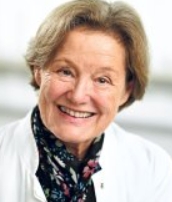 Christiane Angermann合作论文数Outpatient Division Cardiology, Julius-Maximilians-University of Würzburg5D.C. Aumann合作论文数5Guido Michels合作论文数3
 Ralf Muellenbach合作论文数Department of Anaesthesia and Critical Care, University of Würzburg3Felix Beuschlein合作论文数3P Adam合作论文数2M. Bala合作论文数2N. Weeverink合作论文数2Finn Wilkens合作论文数2L Friedmann合作论文数2H Faleschini合作论文数2Isabell Wagenhauser合作论文数2
 Stefan Hagel合作论文数2Maximilian Kippnich合作论文数2
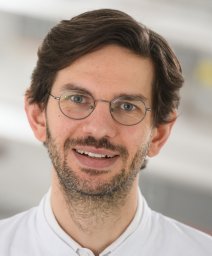 Manuel Krone合作论文数Infection Control and Antimicrobial Stewardship Unit, University Hospital Wuerzburg;Institute for Hygiene and Microbiology, University of Wuerzburg;Department of Internal Medicine I, University Hospital Wuerzburg2B Lengenfelder合作论文数2S. Scheithauer合作论文数2
 Mathias Pletz合作论文数Institute for Infectious Diseases and Infection Control, Jena University Hospital2Güder Gülmisal合作论文数2Thomas Lehmann合作论文数2
 Martin Reincke合作论文数Medizinische Fakultat, Ludwig-Maximilians-Universitat Munchen;Medizinische Klinik und Poliklinik IV, Ludwig-Maximilians-Universitat Munchen2Raida Anna合作论文数2Hermes Carsten合作论文数2
 Tobias Wengenmayer合作论文数2Kranke Peter合作论文数2Uwe Janssens合作论文数2Kai hu合作论文数2
 Claudia Sommer合作论文数Department of Neurology, University of Wuerzburg2
 Tilo Winkler合作论文数Department of Anesthesia and Critical Care, Massachusetts General Hospital and Harvard Medical School2Janett Kreutziger合作论文数2Michael Kiehntopf合作论文数2Martina Zink合作论文数2Sarah Johanssen合作论文数2
 Stefan Kluge合作论文数Department of Intensive Care Medicine, Universitätsklinikum Hamburg-Eppendorf;Center for Anesthesiology and Intensive Care Medicine, Universitätsklinikum Hamburg-Eppendorf2Silke Wiedmann合作论文数2
 Wiebke Arlt合作论文数Department of Metabolism and Systems Science, University of Birmingham;Queen Elizabeth Hospital Birmingham, Birmingham Health Partners Centre for Endocrinology, Diabetes and Metabolism2
 Markus Kredel合作论文数2
 Marcelo Gama De Abreu合作论文数Case Western Reserve University;Department of Intensive Care and Resuscitation, Cleveland Clinic;TU Dresden2
 Alexander Brinkmann合作论文数2




