In recent years, Strategy as Practice has emerged as a distinctive approach for studying strategic management, organizational decision-making and managerial work (Whittington 1996; Johnson et al. 2003; Jarzabkowski et al. 2007). It focuses on the micro-level social activities, processes and practices that characterize organizational strategy and strategizing. This provides not only an organizational perspective into strategy but also a strategic angle for examining the process of organizing, and thereby serves as a useful research programme and social movement for connecting contemporary strategic management research with practice-oriented organizational studies.
Gov4You is a federal government agency responsible for managing and sharing citizen information for large groups of the population. The Gov4You department was created almost 15 years ago to meet the election promise of providing better information services to the citizens. The department was setup to provide complete digital services for citizens. The digital citizen services must cater to the large demographic differences, and for those that are digitally savvy as well as those without any access to the Internet. These services are currently provided by several different departments that sometimes require physical visits by the citizens to the departments with a lot of paper work for identification and service request forms. However, citizens demand better services that use digital platforms in 24 × 7 formats. This concept of providing service using a digital transformation is referred to as ‘Smart …
Power and domination once occupied center stage in organizational sociology. But as the field developed, the concept of power was marginalized and its overall significance for the drama of organization life neglected. Normative critiques of domination were recast as puzzles of obedience to authority, while scholars wishing to study the concrete workings of power regimes found themselves groping in the shadows. In this introduction, we advocate putting power and domination back on the agenda. Following the lead of classical theorists of power, we argue that organizations should be seen as scenes of struggles and as political projects to be constantly achieved and reconstructed. We critique structural and abstract perspectives that neglect the constant engagement of people in the negotiation of rules, meanings, and destinies. And we survey novel ideas that can help us to see power not as an abstract entity but as a pattern of interactions and social relationships that is instantiated in specific projects of domination and resistance. It is through this lens that power studies can be reinvigorated.
L'objet de cet article est d'analyser l'apport potentiel des travaux de Pierre Bourdieu pour les sciences des organisations. Les principaux concepts de cette sociologie sont presentes, avant de mettre en evidence quelques pistes d'application possibles en sciences de gestion. La dimension resolument critique de l'œuvre, qui valorise la part de reflexivite dans le travail du chercheur pour renouveler les pratiques scientifiques, est enfin soulignee.
general and organizational and management theory in particular. It is to be found at the heart of all social relationships, and forms a leitmotiv for social action (Russell, 1938; Foucault, 1977; Laclau & Mouffe, 1985; Clegg, 1989; Machiavelli, 1981). In other words, it is an integral part of social living involving groups or individuals within organizations. Although its role is a pivotal one, the “scientific” treatment to which this concept is subjected gives rise to a paradox in that substantial organizational research overtly dedicated to the topic are still few and far between. This is in spite of the numerous empirical projects which have been carried out and the excellent synoptic works which now exist. All things considered, one could assume either that power is merely subordinate to other organization-based social phenomena or that, by dint of its very significance, power merits only the courtesy of a “passing” glance, and constitutes so obvious a topic of discussion that we need barely tarry to pay it any particular attention.
En France, les mouvements sociaux renvoient souvent, dans le langage commun, a une realite negative, synonyme de protestations sociales, qui seraient soit le produit principal du corporatisme de certains corps de metier (les cheminots ), soit la voie que choisissent d'emprunter les salaries afin de reagir face a des situations desesperees comme les fermetures sauvages d'entreprises ou les delocalisations massives.
Over the last 30 years, there has been an increasing interest in organizational analysis for the work of Pierre Bourdieu. However, the consequent body of literature often lacks an integrated comprehension of Bourdieusian theory and therefore fails to fully exploit its potentialities. In this essay, we argue for a more systematic engagement with the work of Bourdieu by organizational scholars and emphasize the opportunity to develop cumulative research on domination within and between organizations. The means by which systems of domination are reproduced without conscious intention by agents is a central issue for Bourdieu and arguably the primary reason for the development of his theoretical framework. It is thus through the study of domination that one can acquire a panoramic vision of Bourdieusian concepts that have been otherwise too often tackled separately. Moreover, domination is also a key entry to the understanding of how social scientists produce their own knowledge and of their role as members of society. We emphasize that as scholars, we have a moral responsibility to be reflexive about our practice and the social worlds we study in order to ultimately use the knowledge we produce to inform and direct social progress.
Pourquoi parler du pouvoir dans et autour des organisations ? Le pouvoir marque par son omnipresence dans les sciences sociales en general, dans les sciences des organisations en particulier. Une recherche comparative sur Google laisse apparaitre que le concept est tout simplement le plus cite de tous les concepts des sciences sociales : le score pour « social power » est de 376...
This paper aims at analysing the potential contribution of Pierre Bourdieu’s work to organization science. Firstly, his main concepts are presented and some tracks are given to put them in practice in our fields. In the last part, we are emphasizing on the critical insights of a Bourdieusian perspective, which endorse the reflexivity dimension that helps researchers to overcome the established scientific practices.
 Isabelle Huault合作论文数4
 Eero Vaara合作论文数Said Business School, University of Oxford4
 david seidl合作论文数3linda rouleau合作论文数3David Courpasson合作论文数Unité Pédagogique et de Recherche Hommes et Stratégies Equipe Management des Ressources Humaines3Bernard Leca合作论文数Laboratoire de Génie Enzymatique, URA 1535-CNRS-Université Claude Bernard3
 Linda Rouleau合作论文数HEC Montréal2B Unhelkar合作论文数1Th Davenport合作论文数1J. Manyika合作论文数1Dave J. Orr合作论文数1Linda M. Orr合作论文数1james a george合作论文数1TW Oestreich合作论文数1Jason Wingard合作论文数1james v luisi合作论文数1
 Deborah Soule合作论文数Massachusetts Institute of Technology1
 Carlos Ramirez合作论文数HEC Paris1alon halevy合作论文数1
 Henri Bergeron合作论文数1
 Rodolphe Durand合作论文数Society and Organizations (S&O) Institute/HEC Paris1
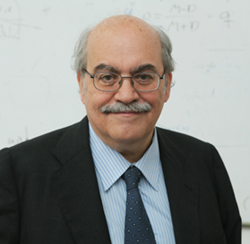 Andreu Mas-Colell合作论文数Department of Economics and Business, Universitat Pompeu Fabra1
 Baek-Young Choi合作论文数University of Missouri1
 James A. Rodger合作论文数Indiana University of Pennsylvania1
 Michael Lounsbury合作论文数Department of Strategy, Entrepreneurship and Management, Alberta School of Business, University of Alberta1Alex Berson合作论文数1
 Tuba Kocaturk合作论文数Building Technology Department, Delft University of Technology1Graham Hooley合作论文数1
 Nalin Kulatilaka合作论文数School of Management, Boston University1
 Uwe Bombosch合作论文数1Raphaël Dornier合作论文数1
 Fons Trompenaars合作论文数Centre for International Business Studies, UK1
 Lynda M. Applegate合作论文数Harvard Business School, Harvard University1Patrick Castel合作论文数1Coauthor Evelyn Roxburgh合作论文数1
 Stefan Bente合作论文数1
 Robert Austin合作论文数Copenhagen Business School, Frederiksberg, Denmark, and Harvard Business School1Brigitte Nicoulaud合作论文数1Shiv S. Mathur合作论文数1
 Alan Eardley合作论文数School of Computing, Staffordshire University1
 Rini van Solingen合作论文数Faculty of Electrical Engineering, Mathematics Computer Science, Delft University of Technology1John Storck合作论文数1
 Alex Cameron合作论文数School of Life Sciences, Faculty of Science, Engineering and Medicine, The University of Warwick1
 Keesook J. Han合作论文数1
 Benachir Medjdoub合作论文数School of Architecture Design and the Built Environment, Nottingham Trent University1
 David Seidl合作论文数Central Seismological Observatory1
 Raymond E. Miles合作论文数Haas School of Business, University of California, Berkeley1Alfred Kenyon合作论文数1
 Charles C. Snow合作论文数1




