Despite the growing interest in citizen science, many projects continue to operate in isolation. This study explores the current state and potential for cooperation among citizen science projects in Austria by analyzing the extent, reasons and obstacles for cooperation. Through a questionnaire distributed to 121 projects listed on the Austrian citizen science platform Österreich forscht, 50 projects were examined. The analysis found that interactions between these projects are limited, with most cooperation focusing on sharing experiences. The primary motivation for (future) cooperation is achieving common goals, while the main obstacle to cooperating with other citizen science projects is a lack of capacity and resources. The role of the citizen science platform for increasing cooperation ranges from networking (events) to highlighting long-term projects that have the necessary infrastructure for cooperation. Future research could expand to projects outside the platform and examine the characteristics of collaborators.
Background Citizen science is increasingly recognized as a valuable scientific approach across disciplines, contexts, and research areas. However, its rapid expansion and diverse methodologies make it challenging to establish a single definition or universal criteria for what constitutes citizen science. Building on our previously published work that detailed findings from a vignette study used to identify the ECSA Characteristics, this paper specifically focuses on the descriptive results from that study and examines the Characteristics in relation to the ECSA 10 Principles of Citizen Science. Methods We developed the ECSA Characteristics through a vignette study, a survey method that captures diverse perspectives on complex topics. We then reviewed the ECSA 10 Principles of Citizen Science, a broad framework for best practices in citizen science, to identify its gaps and limitations, showing how the ECSA Characteristics can help address them. Results The results highlight the disciplinary distinctions as well as ambiguities surrounding various citizen science practices. In this context, it is beneficial to adopt an inclusive approach and language that allows the audience to define its own criteria depending on its needs, intended use and specific circumstances. Conclusions The ECSA Characteristics were developed in a spirit of openness; identifying areas with diverse and even conflicting views was central to this practice. We recommend their use as a whole set and contend that no one area or characteristic is more important than the other. They should be considered as a toolkit with examples that can guide efforts towards defining citizen science for a specific context and purpose. They are built on the ECSA 10 Principles, addressing some of their gaps and limitations, while at the same time acknowledging the need to update and improve the 10 Principles based on developments in the field.
Zusammenfassung Gemeinsam Fragen stellen, Faszination teilen und zusammen forschen – diese Bedürfnisse teilen viele Menschen. Die gewonnenen Ergebnisse gemeinsam zu diskutieren und zu kommunizieren bildet einen Grundstein unserer wissensbasierten Demokratie. Während das gemeinschaftliche Forschen in Museen, Archiven oder Vereinen und auch privat schon eine lange Tradition hat, erlebt Citizen Science derzeit an Universitäten und wissenschaftlichen Einrichtungen einen großen Aufschwung. Neue Technologien – soziale Medien, Apps, mobile Sensorik – haben die Möglichkeiten für gemeinsames Forschen immens erweitert und die sich daraus ergebenden Gewinne für Wissenschaft und Gesellschaft potenziert. Dieses Handbuch soll in das Thema Citizen Science einführen und als praktische Handreichung für gelingende Citizen-Science-Projekte dienen.
While citizen science (CS) has gained global reputation as a valuable participatory research methodology, over the last decade its demarcation is still somewhat controversial. Attempts to reach a precise definition of CS have resulted in several sets of criteria, principles and minimum requirements without universal normative power. In search of a transparent and just selection process, platforms offering access to CS projects started to define their own selection criteria. In 2017, the Austrian CS community co-created a set of 20 quality criteria to define minimum requirements for CS projects to be listed on the national platform Österreich forscht. After more than five years of applying the criteria, we reflect on the implications for CS projects in Austria. Our mixed method approach of qualitative and quantitative analysis across 103 projects shows no disadvantage for specific research domains or types of institution, but certain challenges for project coordinators to apply all criteria to their projects. The analysis suggests an overall improvement of projects, especially in regard to their ‘citizen scientificity’, meaning that the criteria helped them to better distinguish themselves from other scientific methods, improving their engagement, communication and open data management.
Background Citizen science is increasingly recognized as a valuable scientific approach across disciplines, contexts, and research areas. However, its rapid expansion and diverse methodologies make it challenging to establish a single definition or universal criteria for what constitutes citizen science. This paper introduces the ECSA Characteristics of Citizen Science, offering a nuanced exploration of the field to support stakeholders, including policymakers and research funders, in understanding and applying citizen science effectively. Methods We developed the ECSA Characteristics through a vignette study, a survey method that captures diverse perspectives on complex topics. We then reviewed the ECSA 10 Principles of Citizen Science, a broad framework for best practices in citizen science, to identify its gaps and limitations, showing how the ECSA Characteristics can help address them. Results The results highlight the disciplinary distinctions as well as ambiguities surrounding various citizen science practices. Two challenges exist when defining citizen science. A very strict definition could exclude valuable practices, hindering innovation and discouraging public participation. Conversely, a loose definition might make it difficult for specific audiences to apply it effectively in their own contexts. Therefore, it is beneficial to adopt an inclusive approach and language that allows the audience to define its own criteria depending on its needs, intended use and specific circumstances. Conclusions: The ECSA Characteristics were developed in a spirit of openness; identifying areas with diverse and even conflicting views was central to this practice. We recommend their use as a whole set and contend that no one area or characteristic is more important than the other. They should be considered as a toolkit with examples that can guide efforts towards defining citizen science for a specific context and purpose. They are built on the ECSA 10 Principles, addressing some of their gaps and limitations, while at the same time acknowledging the need to update and improve the 10 Principles based on developments in the field.
Background:Citizen science is increasingly recognized as a valuable scientific approach across disciplines, contexts, and research areas. However, its rapid expansion and diverse methodologies make it challenging to establish a single definition or universal criteria for what constitutes citizen science. Building on our previously published work that detailed findings from a vignette study used to identify the ECSA Characteristics, this paper specifically focuses on the descriptive results from that study and examines the Characteristics in relation to the ECSA 10 Principles of Citizen Science. Methods:We developed the ECSA Characteristics through a vignette study, a survey method that captures diverse perspectives on complex topics. We then reviewed the ECSA 10 Principles of Citizen Science, a broad framework for best practices in citizen science, to identify its gaps and limitations, showing how the ECSA Characteristics can help address them. Results:The results highlight the disciplinary distinctions as well as ambiguities surrounding various citizen science practices. In this context, it is beneficial to adopt an inclusive approach and language that allows the audience to define its own criteria depending on its needs, intended use and specific circumstances. Conclusions:The ECSA Characteristics were developed in a spirit of openness; identifying areas with diverse and even conflicting views was central to this practice. We recommend their use as a whole set and contend that no one area or characteristic is more important than the other. They should be considered as a toolkit with examples that can guide efforts towards defining citizen science for a specific context and purpose. They are built on the ECSA 10 Principles, addressing some of their gaps and limitations, while at the same time acknowledging the need to update and improve the 10 Principles based on developments in the field.
Background Citizen science is increasingly recognized as a valuable scientific approach across disciplines, contexts, and research areas. However, its rapid expansion and diverse methodologies make it challenging to establish a single definition or universal criteria for what constitutes citizen science. Building on our previously published work that detailed findings from a vignette study used to identify the ECSA Characteristics, this paper specifically focuses on the descriptive results from that study and examines the Characteristics in relation to the ECSA 10 Principles of Citizen Science. Methods We developed the ECSA Characteristics through a vignette study, a survey method that captures diverse perspectives on complex topics. We then reviewed the ECSA 10 Principles of Citizen Science, a broad framework for best practices in citizen science, to identify its gaps and limitations, showing how the ECSA Characteristics can help address them. Results The results highlight the disciplinary distinctions as well as ambiguities surrounding various citizen science practices. In this context, it is beneficial to adopt an inclusive approach and language that allows the audience to define its own criteria depending on its needs, intended use and specific circumstances. Conclusions The ECSA Characteristics were developed in a spirit of openness; identifying areas with diverse and even conflicting views was central to this practice. We recommend their use as a whole set and contend that no one area or characteristic is more important than the other. They should be considered as a toolkit with examples that can guide efforts towards defining citizen science for a specific context and purpose. They are built on the ECSA 10 Principles, addressing some of their gaps and limitations, while at the same time acknowledging the need to update and improve the 10 Principles based on developments in the field.
Zusammenfassung Derzeit stehen wir vor großen gesellschaftlichen Herausforderungen – Biodiversitätsverlust, Klimawandel, dadurch ausgelöste Migrationsbewegungen, komplexere Nahrungsmittelproduktion und viele mehr. Diese werden auch in Citizen-Science-Projekten thematisiert, weil wir diesen Herausforderungen als Gesellschaft nur mit heterogenen, vielschichtigen Wissensbeständen und einer internationalen Perspektive begegnen können.
Some wildlife species can successfully adapt to urban environments. To prevent potential conflict of these species with humans or their pets, a better understanding of the presence of urban wildlife is needed. However, traditional monitoring methods are often inadequate because many privately owned properties are inaccessible. In this study, we analyse reports of European hedgehogs (Erinaceus europaeus or E. roumanicus) and badgers (Meles meles) provided by two long-term citizen science projects in the city of Vienna, Austria - stadtwildtiere.at and roadkill.at - to assess habitat preferences and potential ecological interactions. Vienna has a human population of about 2x10⁶ and covers an area of 415 km2, 50 % of which is green space in the form of forests, parks and private gardens. A total of 356 hedgehog and 918 badger sightings were reported between 2012 and 2023. Sightings of both species were positively associated with a mix of sealed/built-up areas and green spaces with meadows and shrubs. However, sightings of both species were negatively associated with arable land, most likely due to the avoidance of open terrain, reduced food availability or simply because both nocturnal species were more difficult to spot on dark arable land. The steeper the slope of a habitat, the fewer hedgehogs were reported, whereas for badgers, a positive correlation between slope and reports was observed in areas with built-up fractions over 15 %. Overall, we observed hardly any hedgehog reports in areas in which badgers were reported. We conclude that citizen science wildlife monitoring can be a good data source to better understand human-wildlife interactions and could therefore be a model for other urban areas and species.
Machine learning approaches for pattern recognition are increasingly popular. However, the underlying algorithms are often not open source, may require substantial data for model training, and are not geared toward specific tasks. We used open-source software to build a green toad breeding call detection algorithm that will aid in field data analysis. We provide instructions on how to reproduce our approach for other animal sounds and research questions. Our approach using 34 green toad call sequences and 166 audio files without green toad sounds had an accuracy of 0.99 when split into training (70%) and testing (30%) datasets. The final algorithm was applied to amphibian sounds newly collected by citizen scientists. Our function used three categories: “Green toad(s) detected”, “No green toad(s) detected”, and “Double check”. Ninety percent of files containing green toad calls were classified as “Green toad(s) detected”, and the remaining 10% as “Double check”. Eighty-nine percent of files not containing green toad calls were classified as “No green toad(s) detected”, and the remaining 11% as “Double check”. Hence, none of the files were classified in the wrong category. We conclude that it is feasible for researchers to build their own efficient pattern recognition algorithm.
In these proceedings the growing and reflective community of Citizen Science actors give insights into their findings which were presented at the joint conference of Osterreich forscht and the European Citizen Science Association (ECSA) in Vienna 2024. The conference key topic was change, since we face changes in various aspects, in nature and society as well in the way Citizen Science is executed and perceived. Enjoy reading and get guidance and inspiration for your further work in the field of Citizen Science.
Citizen science (CS) initiatives are diverse, leading to a complex landscape of approaches and terminology. To address this complexity and foster a shared understanding, criteria were co-created with CS researchers, practitioners and citizen scientists to guide project inclusion on online CS platforms. At the ECSA2024 conference workshop, participants discussed the utility of these criteria, sharing experiences and reflections. The workshop employed a fishbowl exercise followed by a world cafe setup to delve into key topics such as project evaluation and progression, criteria and terminology application, and potential barriers to inclusion. Participants expressed caution regarding mandatory criteria, emphasizing the need for flexibility, particularly in the social sciences and humanities. While some criteria may enhance project communication and funding prospects, concerns were raised about the eurocentric nature and global applicability of the criteria. Despite limited familiarity and implementation of existing criteria, there is a growing understanding of their potential importance and usefulness within the CS community. Challenges remain regarding implementation processes and project exclusion concerns, but positive examples showcase the potential benefits of embracing criteria in CS networks and platforms.
We aim to understand the distribution and environmental drivers for the occurrence of the European green toad (Bufotes viridis) in Austria and create breeding habitats for it. Citizen scientists can use a custom smartphone application (AmphiApp) to record data such as the calls of anurans and photographic documentation. The records are validated by experts. To provide breeding habitats for green toads, we gave citizen scientists 300 small plastic ponds (1.20L x 0.9W x 0.4D m) to place on their land (garden, backyard). These citizen scientists will monitor their pond every two weeks for two seasons (March-August 2024 & 2025) for the occurrence of amphibians and their invertebrate prey. During the first two months, most pond owners have been highly motivated and have followed the monitoring scheme, despite the involved procedure, likely due to our active engagement with them (e.g., during the pond delivery by team members, emails, phone calls and messaging within AmphiApp).
This paper presents the Scalability Toolkit developed in 2021-2023 within the "Mutual Learning Exercise on Citizen Science Initiatives - Policy and Practice" to provide a theoretical and methodological framework to support the scaling of CS projects and initiatives responsibly and inclusively. The Toolkit is made of three components: i) a multidimensional qualitative definition of scalability, ii) an operational scalability matrix composed of four models (scaling up, out, deep and down) and two approaches (top-down and bottom-up), and iii) eight action areas for policy making. Building on this work, further research as well as a cultural mind shift is needed to urther develop value-driven scalability models in CS according to more qualitative and ethical dimensions, the specific logic of CS projects as well as their domain and context dependency.
An important factor in the decline of global animal diversity is road traffic, where many animals are killed. This study aimed to collect data on vertebrate roadkill in the city of Vienna, Austria, between 2017 and 2022 using three different approaches: citizen science, systematic monitoring by bicycle along a 15 km route, and systematic monitoring on foot along a 3 km route. During 359 monitoring events, only four roadkill incidences (three Erinaceus sp., one Rattus sp.) were found by bicycle or on foot. At the same time citizen scientists reported 1 roadkill squirrel on the bicycle route and 84 roadkill incidences for the entire city area. Hedgehogs and urban birds were commonly reported species by citizen scientists. Although no amphibian or reptile roadkill was found during systematic monitoring, they were reported by citizen scientists. The low number of roadkill incidences found suggests a potentially low population density that makes the impact of roadkill even more severe – a hypothesis that should be further investigated amidst the global decline in biodiversity.
This editorial gives a brief overview of the many contributions published in the Proceedings of the Austrian Citizen Science Conference 2023.
Citizen science (CS) can foster transformative impact for science, citizen empowerment and socio-political processes. To unleash this impact, a clearer understanding of its current status and challenges for its development is needed. Using quantitative indicators developed in a collaborative stakeholder process, our study provides a comprehensive overview of the current status of CS in Germany, Austria and Switzerland. Our online survey with 340 responses focused on CS impact through (1) scientific practices, (2) participant learning and empowerment, and (3) socio-political processes. With regard to scientific impact, we found that data quality control is an established component of CS practice, while publication of CS data and results has not yet been achieved by all project coordinators (55%). Key benefits for citizen scientists were the experience of collective impact (“making a difference together with others”) as well as gaining new knowledge. For the citizen scientists’ learning outcomes, different forms of social learning, such as systematic feedback or personal mentoring, were essential. While the majority of respondents attributed an important value to CS for decision-making, only few were confident that CS data were indeed utilized as evidence by decision-makers. Based on these results, we recommend (1) that project coordinators and researchers strengthen scientific impact by fostering data management and publications, (2) that project coordinators and citizen scientists enhance participant impact by promoting social learning opportunities and (3) that project initiators and CS networks foster socio-political impact through early engagement with decision-makers and alignment with ongoing policy processes. In this way, CS can evolve its transformative impact.
 Heigl Florian合作论文数Inst Zool, Univ Nat Resources & Life Sci71
 Barbara Kieslinger合作论文数Centre for Social Innovation20
 Susanne Hecker合作论文数Dept Ecosyst Serv, UFZ Helmholtz Ctr Environm Res18
 Katherin Wagenknecht合作论文数TH Wildau11
 Teresa Schaefer合作论文数11
 Anett Richter合作论文数Thunen Inst Biodivers9
 Johann G. Zaller合作论文数Institut für Zoologie, Universitat fur Bodenkultur Wien9
 Katrin Vohland合作论文数9
 Muki Haklay合作论文数Learning Planet Institute;Department of Geography, University College London;Mapping for Change8
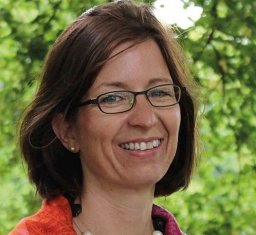 Aletta Bonn合作论文数Biodiversity and Macroecology Group;Department of Animal and Plant Sciences;University of Sheffield;Biodiversity and Macroecology Group, University of Sheffield8
 L. Ceccaroni合作论文数Tech Media Telecom Factory SL,8Sasha Woods合作论文数7Marzia Mazzonetto合作论文数7
 Maike Weißpflug合作论文数Museum für Naturkunde7
 Dilek Fraisl合作论文数7
 Katharina T. Paul合作论文数University of Vienna7
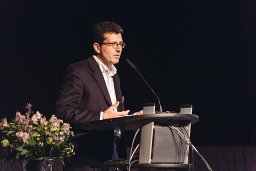 Andrea Sforzi合作论文数Museo di Storia Naturale della Maremma7Theresa Walter合作论文数6Gerid Hager合作论文数6
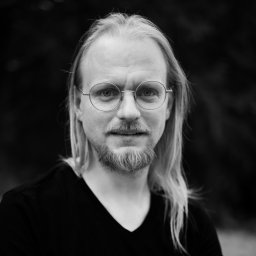 Bastian Greshake Tzovaras合作论文数Goethe Univ, Inst Cell Biol & Neurosci, Dept Appl Bioinformat, D-60438 Frankfurt, Germany6
 Christian Nold合作论文数School of Engineering & Innovation, The Open University6Monika Maciuliene合作论文数Fac Social Sci Arts & Humanities, Kaunas Univ Technol6
 Bálint Balázs合作论文数Social Science Research Group, Environmental6
 Uta Wehn合作论文数6Thomas Hübner合作论文数5Marlene Ernst合作论文数5
 Margaret Gold合作论文数5
 Michela Vignoli合作论文数5
 Alice Motion合作论文数School of Chemistry, Faculty of Science, The University of Sydney5
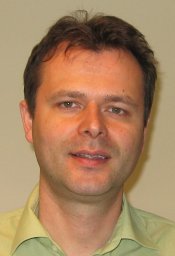 Steffen Fritz合作论文数International Institute for Applied Systems Analysis5Robert Brodschneider合作论文数Institut für Zoologie, Karl-Franzens-Universität Graz5
 Peter Kraker合作论文数Know-Center, Graz, Austria5Christin Liedtke合作论文数4Susanne Tönsmann合作论文数4Ronald Würflinger合作论文数4Marika Cieslinski合作论文数4Maria Zacharias合作论文数4
 Jennifer Hatlauf合作论文数Inst Wildlife Biol & Game Management, Univ Nat Resources & Life Sci4
 Linda See合作论文数International Institute for Applied Systems Analysis4
 Silke L Voigt-Heucke合作论文数Animal Behavior, Freie Universität Berlin4Silke Schweiger合作论文数Vienna First Zoological Department (Herpetological Collection), Natural History Museum4T Krennert合作论文数4Anke Valentin合作论文数3Matthias Premke-Kraus合作论文数3Agnes Grützner合作论文数3Thekla Kluttig合作论文数3Laura Ferschinger合作论文数3Martin Munke合作论文数3Jörn Knobloch合作论文数3




