Oxygen inhibition in (meth)acrylate photopolymerization gives rise to a gelation threshold by delaying polymerization until the accumulated light dose exceeds a critical value, thereby enabling 3D printing with tomographic volumetric additive manufacturing (TVAM). While this thresholding behavior is essential to TVAM, its underlying kinetics have not been thoroughly studied. In this work, we systematically examine how photoinitiator (PI) concentration and light intensity govern the time required to deplete oxygen in (meth)acrylate photoresins, and evaluate their impact on print quality. To investigate these effects, we derive theoretical results elucidating oxygen inhibition, which remain valid even at low PI concentrations typical in TVAM printing, and can be used to estimate the oxygen concentration in the photoresins. We compare these predictions with photo-rheology experiments and observe good agreement. The findings reveal that at low PI concentrations, decreasing PI concentration dramatically increases oxygen depletion times, thereby extending oxygen diffusion periods and leading to poor printing quality; a similar trend is observed with reduced light intensity. While higher PI concentrations and increased light intensity can improve print quality, they are constrained by penetration depth limits and illumination restrictions of LED-based projection sources. This study also highlights the challenges of printing larger parts in TVAM, where oxygen inhibition and limited light penetration narrow the usable PI concentration range. These insights help optimize TVAM parameters to improve print quality and expand the technology's capabilities.
Tomographic volumetric additive manufacturing (TVAM) is an emerging 3D printing technology capable of producing complex structures in seconds. However, achieving reliable prints using TVAM requires sufficient light penetration throughout the print volume, which often limits the photoinitiator (PI) concentration that can be used. In (meth)acrylate-based photoresins, this constraint severely restricts achievable print size and quality due to oxygen inhibition. To address this challenge, a chemical strategy is demonstrated to control the oxygen inhibition period without compromising light penetration, using an amine, a thiol, and a phosphine additive as representative examples. Among these, N-methyldiethanolamine (MDEA) emerged as the most promising candidate, effectively reacting with non-reactive peroxy radicals to regenerate propagating radicals and sustain polymerization. Incorporating MDEA into a low-PI photoresin enabled high-resolution and large-volume printing in a custom-built TVAM system, achieving a root-mean-square surface deviation of 0.175 mm (≈2 pixels) and printable structure sizes up to 60 mm. These advances represent a 16-fold increase in print volume relative to the previous TVAM demonstrations and enable high-throughput fabrication of multiple complex parts without sacrificing print quality. This work establishes a scalable approach to overcoming oxygen inhibition in (meth)acrylate TVAM systems, unlocking new possibilities for large-volume, high-resolution additive manufacturing.
Tomographic volumetric additive manufacturing (VAM) achieves high print speed and design freedom by continuous volumetric light patterning. This differs from traditional vat photopolymerization techniques that use brief sequential (2D) plane‐ or (1D) point‐localized exposures. The drawback to volumetric light patterning is the small exposure window. Overexposure quickly leads to cured out‐of‐part voxels due to the nonzero background dose arising from light projection through the build volume. For tomographic VAM, correct exposure time is critical to achieving high repeatability, however, we found that correct exposure time varies by ≈40% depending on resin history. Currently, tomographic VAM exposure is timed based on subjective human determination of print completion, which is tedious and yields poor repeatability. Here, a robust auto‐exposure routine is implemented for tomographic VAM using real‐time processing of light scattering data, yielding accurate and repeatable prints without human intervention. The resulting print fidelity and repeatability approaches, and in some cases, exceeds that of commercial resin 3D printers. It is shown that auto‐exposure VAM generalizes well to a wide variety of print geometries with small positive and negative features. The repeatability and accuracy of auto exposure VAM allows for building multi‐part objects, fulfilling a major requirement of additive manufacturing technologies.
Hollow-core photonic crystal fibers (HC-PCF) have a wide variety of applications, ranging from high-power beam delivery and nonlinear optics to advanced spectroscopy techniques. While their performance at optical frequencies has been optimized, their use in the THz range is still fairly limited [1]. Here, we present the fabrication of HC-PCF based on tomographic volumetric additive manufacturing (VAM), a promising new type of 3D-printing, which has the potential to facilitate the fabrication of more elaborate structures than possible with conventional 3D-printers [2].
Tomographic volumetric additive manufacturing (VAM) is a high-speed 3D printing technique that overcomes many of the challenges faced by conventional layer-by-layer based approaches. However, unlike other vat photopolymerization techniques, VAM must use much higher viscosity resins prohibiting the use of more commonly available lower-viscosity materials. Low-viscosity poly(ethylene glycol) diacrylate (PEGDA) has seen wide usage in bioprinting techniques but has eluded printing in VAM. Using a VAM printer with a high angular dose delivery rate, as well as tomographic projections optimized for low-viscosity printing conditions, we demonstrate high-fidelity VAM printing in PEGDA with viscosities as low as 12 cP. Micro-computed tomography imaging of printed parts reveal close-to voxel resolution limited performance. Furthermore, we have demonstrated the first direct printing of a low-viscosity hydrogel in VAM. The proposed method expands the viscosity range, and in turn the catalogue of materials accessible to VAM, giving this printing modality the broadest viscosity range of any vat photopolymerization technique.
We demonstrate the fabrication of millimeter-sized optical components using tomographic volumetric additive manufacturing (VAM). By purposely blurring the writing beams through the use of a large etendue source, the layer-like artifacts called striations are eliminated enabling the rapid and direct fabrication of smooth surfaces. We call this method blurred tomography, and demonstrate its capability by printing a plano-convex optical lens with comparable imaging performance to that of a commercially-available glass lens. Furthermore, due to the intrinsic freeform design nature of VAM, we demonstrate the double-sided fabrication of a biconvex microlens array, and for the first time demonstrate overprinting of a lens onto an optical fiber using this printing modality. This approach to VAM will pave the way for low-cost, rapid-prototyping of freeform optical components.
Volumetric additive manufacturing (VAM) via tomographic projection is an emerging platform for ultra-rapid 3D printing. By projecting all layers in parallel, print times orders of magnitude faster than standard polymer 3D printing can be easily achieved, without the need for support scaffolds. Despite these advantages, print results are in certain cases inferior to commercial vat polymerization due to the infancy of the technique. In this talk, we will outline recent progress made at the National Research Council of Canada to extend the capabilities of VAM and address inherent challenges in VAM. Topics covered will include the role of depletion and polymerization kinetics on print quality and novel resins for larger, faster, and functional prints.
Tomographic volumetric additive manufacturing (VAM) is an optical 3D printing technique where an object is formed by photopolymerizing resin via tomographic projections. Currently, these projections are calculated using the Radon transform from computed tomography but it ignores two fundamental properties of real optical projection systems: finite etendue and non-telecentricity. In this work, we introduce 3D ray tracing as a new method of computing projections in tomographic VAM and demonstrate high fidelity printing in non-telecentric and higher etendue systems, leading to a 3X increase in vertical build volume than the standard Radon method. The method introduced here expands the possible tomographic VAM printing configurations, enabling faster, cheaper, and higher fidelity printing.
In this talk, we present a new methodology for computing projections in tomographic additive manufacturing. Currently, tomographic printing systems require that light-rays in the printing volume are parallel, and have low etendue. In this work, we show that accurate modeling of the light rays through the print volume enables improved printing in systems with diverging beams. We also demonstrate that ray-tracing can compensate for non-parallel projection in 3D. We anticipate that our ray-tracing methodology will relax the hardware requirements necessary in the conventional Radon-based approach, and enable a broader range of tomographic printing configurations.
Volumetric additive manufacturing techniques are a promising pathway to ultra-rapid light-based 3D fabrication. Their widespread adoption, however, demands significant improvement in print fidelity. Currently, volumetric additive manufacturing prints suffer from systematic undercuring of fine features, making it impossible to print objects containing a wide range of feature sizes, precluding effective adoption in many applications. Here, we uncover the reason for this limitation: light dose spread in the resin due to chemical diffusion and optical blurring, which becomes significant for features ⪅0.5 mm. We develop a model that quantitatively predicts the variation of print time with feature size and demonstrate a deconvolution method to correct for this error. This enables prints previously beyond the capabilities of volumetric additive manufacturing, such as a complex gyroid structure with variable thickness and a fine-toothed gear. These results position volumetric additive manufacturing as a mature 3D printing method, all but eliminating the gap to industry-standard print fidelity.
In this talk, we will present our observations of printing kinetics in light-based tomographic additive manufacturing using optical scattering tomography. In particular we report a feature-size dependence on polymerization time that contributes significantly to errors in the printed object: small features tend to polymerize more slowly than large features. Therefore, prints are either missing small features or large features are overexposed. We investigate the cause of this feature size polymerization time dependence and present techniques to correct for these errors.
Tomographic printing is a 3D printing technique that enables fast, supportless fabrication wherein light is projected through a rotating vial containing a photocurable resin. Usually, vial is placed in an index-matching bath to eliminate refraction at the vial surface. In this talk we will describe our approach to build an easy-to-use tomographic printing system that eliminates the index-matching bath. We use a computational ray-tracing approach to pre-distort projection images to exactly counteract the distortion from refraction at the air/vial interface and projector non-telecentricity. We will show simulation and print examples and expand on recent improvements in our system.
Wireless sensor networks (WSNs) are being used in various applications, such as structural health monitoring and industrial control. Since energy efficiency is one of the major design factors, the existing WSNs primarily rely on low-power, low-rate wireless technologies, such as 802.15.4 and Bluetooth. In this article, by proposing Sensifi, we strive to tackle the challenges of developing ultrahigh-rate WSNs based on the 802.11 (WiFi) standard. As an illustrative structural health monitoring application, we consider the spacecraft vibration test and identify system design requirements and challenges. Our main contributions are as follows. First, we propose packet encoding methods to reduce the overhead of assigning accurate timestamps to samples. Second, we propose energy-efficiency methods to enhance the system's lifetime. Third, to enhance sampling rate and mitigate sampling rate instability, we reduce the overhead of processing outgoing packets through the network stack. Fourth, we study and reduce the delay of processing time synchronization packets through the network stack. Fifth, we propose a low-power node design, particularly targeting vibration monitoring. Sixth, we use our node design to empirically evaluate energy efficiency, sampling rate, and data rate. We leave large-scale evaluations as future work.
Additive manufacturing techniques are revolutionizing product development by enabling fast turnaround from design to fabrication. However, the throughput of the rapid prototyping pipeline remains constrained by print optimization, requiring multiple iterations of fabrication and ex-situ metrology. Despite the need for a suitable technology, robust in-situ shape measurement of an entire print is not currently available with any additive manufacturing modality. Here, we address this shortcoming by demonstrating fully simultaneous 3D metrology and printing. We exploit the dramatic increase in light scattering by a photoresin during gelation for real-time 3D imaging of prints during tomographic volumetric additive manufacturing. Tomographic imaging of the light scattering density in the build volume yields quantitative, artifact-free 3D + time models of cured objects that are accurate to below 1% of the size of the print. By integrating shape measurement into the printing process, our work paves the way for next-generation rapid prototyping with real-time defect detection and correction.
We introduce a new optical method for real-time monitoring of volumetric additive manufacturing. Using tomographic geometry for printing and imaging, we simultaneously print and record the 3D shape of the object during photopolymerization.
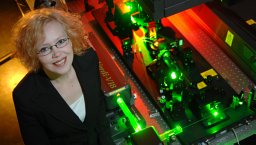 Kimberley C. Hall合作论文数15
 Orth Antony合作论文数School of Engineering and Applied Sciences, Harvard University15
 Chantal Paquet合作论文数Pharmaceutical Development Department, GlaxoSmithKline Inc.15
 Jonathan Boisvert合作论文数11
 Kathleen L. Sampson合作论文数National Research Council of Canada10
 Jacek Furdyna合作论文数Department of Physics & Astronomy, College of Science, University of Notre Dame9
 Yujie Zhang合作论文数National Research Council of Canada8
 Thomas Lacelle合作论文数Natl Res Council Canada, Secur & Disrupt Technol, 100 Sussex Dr, Ottawa, ON K1A 0R6, Canada7
 brian l wilmer合作论文数6
 Alan D Bristow合作论文数Dept Phys & Astron, W Virginia Univ6
 Samuel March合作论文数5Derek Aranguren van Egmond合作论文数5
 Ian G. Hill合作论文数Department of Physics & Atmospheric Science, Faculty of Science, Dalhousie University5
 M. Dobrowolska合作论文数5Charlotte Clegg合作论文数4X. Liu合作论文数4
 Drew Riley合作论文数Dalhousie Univ, Dept Phys & Atmospher Sci, Halifax, NS B3H 4R2, Canada4Angela Gamouras合作论文数4
 Murat Yildirim合作论文数Department of Farm;Structures and Irrigation;University of Canakkale;Onsekiz Mart;Department of Farm|Structures and Irrigation, University of Canakkale4Margaret Dobrowolska合作论文数4
 Michel Picard合作论文数4Dorothy Fatehi合作论文数3Kayley Ting合作论文数3
 Kurtis Laqua合作论文数National Research Council of Canada3Reuble Mathew合作论文数3
 Xinwang Liu (刘新旺)合作论文数School of Economics and Management, Southeast University3
 Hendrick W. De Haan合作论文数3sam march合作论文数2Rene Lam合作论文数2Tyler Hack合作论文数Internet of Things Research Lab, Santa Clara University, Santa Clara, CA, USA2Cole Hunter合作论文数Internet of Things Research Lab, Santa Clara University, Santa Clara, CA, USA2
 Michael E. Flatté合作论文数Department of Physics and Astronomy, College of Liberal Arts and Sciences, University of Iowa2Nathan T. Hui合作论文数1Shyamaleeswari Dayanandan合作论文数1Taylor Waddell合作论文数1Allister Mason合作论文数1
 Nicolas Couture合作论文数Dept Phys, Univ Ottawa1
 Daphene Solis合作论文数1Samuel A. March合作论文数Dept Phys & Atmospher Sci, Dalhousie Univ1Curt Schurgers合作论文数1stephen march合作论文数1
 Chia-Chi Li合作论文数Santa Clara University1
 Bosco Hiu Ming Yu合作论文数1
 Vikram K. Ramanna合作论文数Internet of Things Research Lab, Santa Clara University, Santa Clara, CA, USA1de Boer Tristan合作论文数1Xinyu Liu合作论文数1
 Hayden Taylor合作论文数UC Berkeley Berkeley Engineering1
 Behnam Dezfouli合作论文数Faculty of Computer Science and Information Systems;Universiti Teknologi Malaysia;Faculty of Computer Science and Information Systems, Universiti Teknologi Malaysia1




