A hallmark of human intelligence is the ability to think about how things could have gone differently. Such counterfactual thinking underlies causal, social, and moral judgments. However, our understanding of how counterfactual thinking develops has been limited in at least two ways. First, many tasks rely on counterfactual language which may be difficult for young children to understand. Second, in most tasks, children can succeed without using genuine counterfactual thinking. We present a novel task that probes genuine counterfactual thinking without using counterfactual language. Data from both children (N = 480) and adults (N = 90) in the U.S. across three versions of the task suggest that genuine counterfactual thinking emerges around five years of age.
Although collision-like causes are fundamental in philosophical and psychological theories of causation, humans conceptualize many events as causes that lack direct contact. Here we argue that how people think and talk about different causes is deeply connected, and investigate how children learn this mapping. If Andy hits Suzy with his bike, Suzy falls into a fence and it breaks, Andy 'caused' the fence to break but Suzy 'broke' it. If Suzy forgets sunscreen and gets sunburned, the absence of sunscreen 'caused' Suzy's sunburn, but the sun 'burned' her skin. We tested 691 children and 270 adults. Four-year-old children mapped 'caused' to distal causes and 'broke' to proximal causes (Experiment 1). Although 4-year-old children did not map 'caused' to absences until later (Experiment 2), they already referred to absences when asked 'why' an outcome occurred (Experiment 3). Our findings highlight the role of semantics and pragmatics in developing these mappings.
Lockean essentialism holds that people explain the characteristic features of natural kinds by appeal to hidden common causes—like DNA—that generate those features. Teleological essentialism, by contrast, proposes that people treat an entity’s purpose as part of its essence and explain its features in terms of what it is for. Across three preregistered experiments, we tested these competing accounts by examining how adults explain why members of different categories have their characteristic features. In Experiment 1, participants explained features of artifacts and biological kinds; in both cases, they overwhelmingly appealed to purposes rather than underlying causes. Experiment 2 showed that people can and do appeal to causal mechanisms such as DNA when explaining within-species differences, yet they revert to purpose-based explanations when explaining between-species differences, which prompts species-level categorization. Experiment 3, using randomly selected biological and non-living natural kinds, found that participants again favored purposes for biological kinds but invoked causes for certain non-living kinds (e.g., lead, oxygen, platinum). Together, these findings suggest that for biological kinds, which are central to theories of psychological essentialism, the explanatory connection between essence and features is primarily understood in teleological, not causal, terms.
Generics, general statements about categories, are believed to transmit essentialist beliefs---the idea that things have a hidden true nature. Research suggests that people essentialize natural (biological and non-living) and social kinds, but not artifacts. Previous studies using small datasets found that generics are often used to describe animate beings in speech to children. Using a larger corpus of children's books and parent speech, we examined a wider range of kinds and generalizing statements (including habituals and universals). Our results show that generics are more likely used for biological kinds than artifacts and that their use increases in parent speech as children age. However, generics weren't more likely used for non-living or social kinds than artifacts. Habituals, at least in speech, were more likely used for social kinds than artifacts. Generalizing statements were more likely used for about non-living natural kinds than artifacts. These findings inform the debate over whether generics transmit essentialist beliefs.
People attribute purposes in both mundane and profound ways—such as when thinking about the purpose of a knife and the purpose of a life. In three studies (total N = 13,720 observations from N = 3,430 participants), we tested whether these seemingly very different forms of purpose attributions might actually involve the same cognitive processes. We examined the impacts of four factors on purpose attributions in six domains (artifacts, social institutions, animals, body parts, sacred objects, and human lives). Study 1 manipulated what items in each domain were originally created for (original design) and how people currently use them (present practice). Study 2 manipulated whether items are good at achieving a goal (effectiveness) and whether the goal itself is good (morality). We found effects of each factor in every domain. However, whereas morality and effectiveness had remarkably similar effects across domains, the effects of original design and present practice differed substantially. Finally, Study 3 revealed that, within domains, the effects of original design and present practice depend on which entities design and use items. These results reveal striking similarities in purpose attributions across domains and suggest that certain entities are treated as authorities over the purposes of particular items.
A fundamental way to reason about causation is in terms of direct contact, like billiard balls colliding. Although collision-like causes have played an important role in philosophical and psychological theories of causation, humans conceptualize many events that lack direct contact as causes. If Andy hits Suzy with his bike, Suzy falls into a fence and it breaks, Andy is a cause of the fence breaking. We also treat absences as causes. If Suzy forgets sunscreen and gets sunburned, the absence of sunscreen is a cause. Moreover, there are linguistic distinctions between verbs that refer to these: Andy “caused” the fence to break but Suzy “broke” it. The absence of sunscreen “caused” Suzy’s sunburn, but the sun “burned” it. We explored how children develop these mappings, focusing on “cause” and verbs like “burn”. Because “make” is more frequent than “cause”, we included it too. We tested 690 children and 150 adults. Experiment 1 examined causal chains. Children as young as 4 thought Andy “caused” the fence to break, but Suzy “broke” it and “made” it break. Experiment 2 examined causation by absence. Only older children thought the absence of sunscreen “caused” the sunburn. Yet in Experiment 3, even 4-year-olds cited absences in explaining Suzy’s sunburn. Despite rarely hearing “cause”, young children understand it and verbs like “break” to mark subtle distinctions between causes: “break” refers to direct causes; “cause” to indirect causes in chains. Absences are more challenging, but children refer to them in causal explanations before mapping “cause” to them.
Lexical causative verbs are traditionally assumed to pattern uniformly: they specify only a result state, leaving the manner of causing unarticulated, like the overt cause. We argue that this view obscures a fundamental division within English causative verbs. Building on Rose et al. (2021), we show that a substantial subset of causatives – thick causatives such as burn, melt, break, bury – encode information about the way a change is brought about, and that this specification yields systematic semantic and pragmatic restrictions. Thick causatives in their physical sense resist subjects that denote absences, facts, degrees, or events that fail to instantiate the appropriate productive (force- transmitting) mechanism, in contrast to thin causatives like kill, destroy, and change, which readily combine with such subjects. Using corpus evidence from a representative sample of 37 frequent English causatives, we demonstrate (i) that most thick causatives pattern like Embick’s 2009 break-causatives – compatible with strong adjectival resultatives and requiring production-based causation – while (ii) some thick causatives (e.g., bury) encode the relevant manner information via the state they lexicalize rather than via an event predicate. We develop a pragmatic competition account linking the production constraint to the directness constraint, yielding a unified explanation for the distribution of thick vs. thin causatives in English.
Responsibility requires causation. But there are different kinds of causes. Some are connected to their effects; others are disconnected. We ask how children’s developing ability to distinguish causes relates to their understanding of moral responsibility. We found in Experiment 1 that when Andy hits Suzy with his bike, she falls into a fence and it breaks, 3-year-old children treated “caused”, “break” and “fault” as referring to the direct cause, Suzy. By 4, they differentiated causes: Andy “caused” the fence to break, it’s his “fault”, but Suzy “broke” it. We found in Experiment 2 that when the chain involved disconnection, 3-year-olds focused only on the direct cause. Around 5 they distinguished causes, saying that the disconnecting cause “caused” an object to break, it’s their “fault”, but the direct cause “broke” it. Our findings relate to the outcome- to-intention shift in moral responsibility and suggest a more fundamental shift in children’s understanding of causation.
AbstractThe concepts of state entrepreneurship and mission economy are the latest attempts to justify greater central planning despite the explosion of human flourishing in free market societies over the last few centuries. This is a puzzle. Why do we keep falling for this old wine in new bottles? I argue that our genes predispose us to be too skeptical about having faith in complex and evolving systems involving large numbers of people. This is because we fail to recognize that there are two different ways to control evolution. I then briefly discuss how moral beliefs might overcome this predisposition.
How do essentialist beliefs about categories arise? We hypothesize that such beliefs are transmitted via language. We subject large language models (LLMs) to vignettes from the literature on essentialist categorization and find that they align well with people when the studies manipulated teleological information – information about what something is for. We examine whether in a classic test of essentialist categorization – the transformation task – LLMs prioritize teleological properties over information about what something looks like, or is made of. Experiments 1 and 2 find that telos and what something is made of matter more than appearance. Experiment 3 manipulates all three factors and finds that what something is for matters more than what it’s made of. Overall, these studies suggest that language alone may be sufficient to give rise to essentialist beliefs, and that information about what something is for matters more.
Generic statements, such as ``Bees are striped'' are thought to be a central vehicle by which essentialist beliefs are transmitted. But work on generics and essentialism almost never focuses on the type of properties mentioned in generic statements. We test the hypothesis that teleological properties, what something is for, affect categorization judgments more strongly than behavioral, biological, or social properties. In Experiment 1, participants categorized properties as being either behavioral, biological, social, or teleological. In Experiment 2, we used the top four properties from each group to describe a generic noun or a specific individual. Participants then categorized creatures that had one of their properties transformed. We found that changes to teleological properties had the strongest impact on categorization judgments. In Experiment 3, we also found that teleological properties mattered more in an induction task. We suggest that teleological properties play this privileged role in categorization because they are treated as essential properties.
Do young children have a teleological conception of the essence of natural kinds? We tested this by examining how the preservation or alteration of an an- imal’s purpose affected children’s persistence judgments (N = 40, ages 4 - 12, M Age = 7.04, 61% fe- male). We found that even when surface-level features of an animal (e.g., a bee) were preserved, if the entity’s purpose changed (e.g., the bee now spins webs), children were more likely to categorize the entity as a member of a different natural kind (e.g., a spider) and these effects were similar in magnitude to altering the surface-features of a natural kind. Our results suggest that we might view teleological properties as partially constitutive of the essence of natural kinds.
Do young children have a teleological conception of the essence of natural kinds? We tested this by examining how the preservation or alteration of an animal’s purpose affected children’s persistence judgments (N = 40, ages 4 - 12, Mean Age = 7.04, 61% female). We found that even when surface-level features of an animal (e.g., a bee) were preserved, if the entity’s purpose changed (e.g., the bee now spins webs), children were more likely to categorize the entity as a member of a different natural kind (e.g., a spider) and these effects were similar in magnitude to altering the surface-features of a natural kind. Our results suggest that we might view teleological properties as partially constitutive of the essence of natural kinds.
Chapter 7 argues that people have a mentalistic view of objects. This is due to the interdependence of folk psychology and folk physics. Folk psychology and folk physics are interconnected by what the author calls Teleological Commingling. When considering events that don’t involve agents, it is natural to default to tracking intentions, goal-directed processes, despite the fact that agents aren’t involved. People have a deep-seated intentionality bias which is the result of the pervasive detection of agency cues, such as order or non-randomness. And this gives rise to the Agentive Worldview: people view nature as a whole as being infused with agency and purpose. Teleological Commingling and the Agentive Worldview it gives rise to are at the core of people’s conception of objects. Chapter 7 maintains that the ordinary view of material objects is rooted in an implicit, false theory. It should be given no weight in metaphysical debates about the nature of material objects. And this problematizes the central methodological assumption that metaphysical theories of material objects should be beholden to common sense.
A standard view in philosophy is that knowledge entails justification. Yet recent research suggests otherwise. We argue that this admirable and striking research suffers from an important limitation: participants were asked about knowledge but not justification. Thus it is possible that people attributed knowledge partly because they thought the belief was justified. Perhaps though, if given the opportunity, people would deny justification while still attributing knowledge. It is also possible that earlier findings were due to perspective taking. This paper reports further research that directly addresses these questions. Our findings support the hypothesis that knowledge entails justification on the ordinary view.
Philosophers are divided on whether it is possible to intend believed-impossible outcomes. Several thought experiments in the action theory literature suggest that this is conceptually possible, though they have not been tested in ordinary social cognition. We conducted three experiments to determine whether, on the ordinary view, it is conceptually possible to intend believed-impossible outcomes. Our findings indicate that participants firmly countenance the possibility of intending believed-impossible outcomes, suggesting that it is conceptually possible to intend to do something that one believes is impossible.
In order to be doing something intentionally, must one know that one is doing it? Some philosophers have answered yes. Our aim is to test a version of this knowledge thesis, what we call the Knowledge/Awareness Thesis, or KAT. KAT states that an agent is doing something intentionally only if he knows that he is doing it or is aware that he is doing it. Here, using vignettes featuring skilled action and vignettes featuring habitual action, we provide evidence that, in various scenarios, a majority of non-specialists regard agents as intentionally doing things that the agents do not know they are doing and are not aware of doing. This puts pressure on proponents of KAT and leaves it to them to find a way these results can coexist with KAT.
Abundant research concerning the role of the self in social judgment suggests that people have a strong tendency to evaluate others' actions, preferences, and values with regard to their own. Reliance on self-standards contrasts with the legal standard of the reasonably prudent person (RPP) standard, which presumably represents the behavior of the average person in the community. In three studies that investigated judgments of harmful actions, we compared the influence of self-standards ("How likely would I behave in this manner?") and RPP estimates ("How likely would the average, reasonable person in the community behave in this manner?"). In each study, self-standards influenced participants' judgments of guilt and the acceptability of the defendant's actions more than did judgments about what a RPP would do. Studies 2a and 2b also investigated attitudinal differences in susceptibility to RPP consensus manipulations. Participants judged a target who committed murder in self-defense, and also projected their own hypothetical behavior in the scenario. When the manipulated RPP disapproved of the murder, the target was deemed more culpable, but only among participants who themselves were unwilling to commit the hypothetical act. Participants who expressed willingness to murder in self-defense were unaffected by RPP information, regardless of whether or not it was consistent with their own stance. Hence, RPP information at best exerted minimal influence on juridical judgments, and only among certain participants. Implications of these findings for legal applications of the RPP, and for the role of the self in social judgment, are discussed.
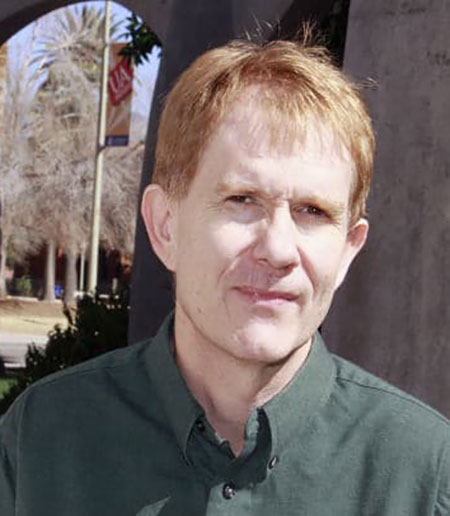 Shaun Nichols合作论文数Department of Philosophy, Sage School of Philosophy, Cornell University15
 Edouard Machery合作论文数Department of History and Philosophy of Science, University of Pittsburgh13
 Stephen Stich合作论文数Department of Philosophy, Rutgers University;University of Sheffield10
 Naoki Usui合作论文数9
 Noel Struchiner合作论文数Pontifical Catholic Univ Rio de Janeiro, Rio De Janeiro, Brazil9Kaori Karasawa合作论文数9Amita Chatterjee合作论文数Center for Cognitive Science, Jadavpur University, Calcutta, India9Takaaki Hashimoto合作论文数8Wesley Buckwalter合作论文数8
 Turri John合作论文数Department of Philosophy, University of Waterloo7
 Adriano Angelucci合作论文数6Alejandro Vázquez del Mercado合作论文数6Massimo Sangoi合作论文数6
 Carlos Mauro合作论文数Catolica Porto Business Sch6
 Yeonjeong Kim合作论文数Sloan Sch Management, MIT6Hyundeuk Cheon合作论文数Seoul National University6
 Jorge Ornelas合作论文数Univ Autonoma San Luis Potosi6Sebastiano Moruzzi合作论文数University of Bologna6Sarah Songhorian合作论文数Moral Philosophy, Univ Vita Salute San Raffaele6
 Renatas Berniunas合作论文数Inst Psychol, Vilnius Univ6Vera Tripodi合作论文数6Andrea Sereni合作论文数NEtS Ctr, Scuola Univ Super IUSS Pavia6
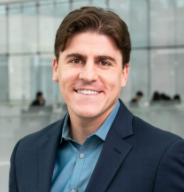 Christopher Y. Olivola合作论文数Marketing Faculty, Tepper School of Business, Carnegie Mellon University;Social and Decision Sciences, Dietrich College of Humanities and Social Sciences, Carnegie Mellon University6
 Alejandro Rosas合作论文数6
 Barbara Osimani合作论文数6
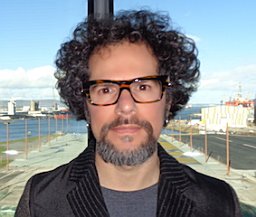 Sousa Paulo合作论文数6
 Hackjin Kim合作论文数School of Psychology, College of Liberal Arts, Korea University;Laboratory of Social and Decision Neuroscience, Korea University6Amir Horowitz合作论文数6
 Jing Zhu (朱菁)合作论文数Department of Philosophy, Xiamen University6
 Florian Cova合作论文数6
 Yasmina Jraissati合作论文数6Mario Alai合作论文数Istituto di Filosofia;Università di Urbino;Istituto di Filosofia, Università di Urbino6
 Vilius Dranseika合作论文数Department of Medical History and Ethics, Vilnius University6
 Emma E. Buchtel合作论文数Department of Psychology;University of British;Department of Psychology, University of British6
 Tobias Gerstenberg合作论文数Department of Psychology, Stanford University6
 Daniel Cohnitz合作论文数Philosophy Department, University of Düsseldorf6Hrag Abraham Vosgerichian合作论文数5Veselina Kadreva合作论文数5In‐Rae Cho合作论文数5Xueyi Zhang合作论文数5
 Minwoo Lee合作论文数5Laleh Ghadakpour合作论文数5
 Giorgio Volpe合作论文数5
 David Danks合作论文数Department of Philosophy, Dietrich College of Humanities and Social Sciences, Carnegie Mellon University;Neuroscience Institute, Carnegie Mellon University5
 Hannikainen Ivar A合作论文数Department of Philosophy, University of Sheffield.5
 Maurice Grinberg合作论文数Изследователски център по когнитивна наука, Нов Български Университет5
 Ángeles Eraña合作论文数Instituto de Investigaciones Filosóficas, Ciudad de la Investigación en Humanidades5
 Evgenia Hristova合作论文数Department of Cognitive Science and Psychology, New Bulgarian University5
 Jonathan Schaffer合作论文数Department of Philosophy, School of Arts and Sciences, Rutgers University4




