This work evaluates the potential of large language models (LLMs) to power digital assistants capable of complex action execution. Such assistants rely on pre-trained programming knowledge to execute multi-step goals by composing objects and functions defined in assistant libraries into action execution programs. To achieve this, we develop ASPERA, a framework comprising an assistant library simulation and a human-assisted LLM data generation engine. Our engine allows developers to guide LLM generation of high-quality tasks consisting of complex user queries, simulation state and corresponding validation programs, tackling data availability and evaluation robustness challenges. Alongside the framework we release Asper-Bench, an evaluation dataset of 250 challenging tasks generated using ASPERA, which we use to show that program generation grounded in custom assistant libraries is a significant challenge to LLMs compared to dependency-free code generation.
Programmable task-oriented dialogue (TOD) agents enable language models to follow structured dialogue policies, but their effectiveness hinges on accurate state tracking. We present PyTOD, an agent that generates executable code to track dialogue state and uses policy and execution feedback for efficient error correction. To this end, PyTOD employs a simple constrained decoding approach, using a language model instead of grammar rules to follow API schemata. This leads to state-of-the-art state tracking performance on the challenging SGD benchmark. Our experiments show that PyTOD surpasses strong baselines in both accuracy and robust user goal estimation as the dialogue progresses, demonstrating the effectiveness of execution-aware state tracking.
It has recently become feasible to run personal digital assistants on phones and other personal devices. In this paper we describe a design for a natural language understanding system that runs on device. In comparison to a server-based assistant, this system is more private, more reliable, faster, more expressive, and more accurate. We describe what led to key choices about architecture and technologies. For example, some approaches in the dialog systems literature are difficult to maintain over time in a deployment setting. We hope that sharing learnings from our practical experiences may help inform future work in the research community.
Relation Extraction (RE) is the task of predicting a relation between a subject and object in a sentence, while knowledge graph link prediction (KGLP) infers a set of objects — O , given a subject and a relation from a knowledge graph. These two problems are closely intertwined: given a sentence consisting of a subject and object — o , a RE model estimates a relation that a KGLP model (together with the subject) may use to infer a set of objects — O — that contains o . In this paper, we leverage this insight by proposing a multi-task learning framework that enhances RE models by jointly training on both RE and KGLP tasks. We illustrate the generality of our approach by applying it on three existing RE methods and achieve consistent improvements across our benchmark datasets.
Abstract Opportunity and Curiosity find similar rocks on Mars. One can generally understand this statement if one knows that Opportunity and Curiosity are instances of the class of Mars rovers, and...
We consider a new perspective on dialog state tracking (DST), the task of estimating a user's goal through the course of a dialog. By formulating DST as a semantic parsing task over hierarchical representations, we can incorporate semantic compositionality, cross-domain knowledge sharing and co-reference. We present TreeDST, a dataset of 27k conversations annotated with tree-structured dialog states and system acts. We describe an encoder-decoder framework for DST with hierarchical representations, which leads to 20% improvement over state-of-the-art DST approaches that operate on a flat meaning space of slot-value pairs.
We present a brief overview of the main challenges in the extraction of semantic relations from English text, and discuss the shortcomings of previous data sets and shared tasks.This leads us to introduce a new task, which will be part of SemEval-2010: multi-way classification of mutually exclusive semantic relations between pairs of common nominals.The task is designed to compare different approaches to the problem and to provide a standard testbed for future research, which can benefit many applications in Natural Language Processing.
One of the core components of modern spoken dialogue systems is the belief tracker, which estimates the user’s goal at every step of the dialogue. However, most current approaches have difficulty scaling to larger, more complex dialogue domains. This is due to their dependency on either: a) Spoken Language Understanding models that require large amounts of annotated training data; or b) hand-crafted lexicons for capturing some of the linguistic variation in users’ language. We propose a novel Neural Belief Tracking (NBT) framework which overcomes these problems by building on recent advances in representation learning. NBT models reason over pre-trained word vectors, learning to compose them into distributed representations of user utterances and dialogue context. Our evaluation on two datasets shows that this approach surpasses past limitations, matching the performance of state-of-the-art models which rely on hand-crafted semantic lexicons and outperforming them when such lexicons are not provided.
Morphologically rich languages accentuate two properties of distributional vector space models: 1) the difficulty of inducing accurate representations for low-frequency word forms; and 2) insensitivity to distinct lexical relations that have similar distributional signatures. These effects are detrimental for language understanding systems, which may infer that 'inexpensive' is a rephrasing for 'expensive' or may not associate 'acquire' with 'acquires'. In this work, we propose a novel morph-fitting procedure which moves past the use of curated semantic lexicons for improving distributional vector spaces. Instead, our method injects morphological constraints generated using simple language-specific rules, pulling inflectional forms of the same word close together and pushing derivational antonyms far apart. In intrinsic evaluation over four languages, we show that our approach: 1) improves low-frequency word estimates; and 2) boosts the semantic quality of the entire word vector collection. Finally, we show that morph-fitted vectors yield large gains in the downstream task of dialogue state tracking, highlighting the importance of morphology for tackling long-tail phenomena in language understanding tasks.
We present Attract-Repel, an algorithm for improving the semantic quality of word vectors by injecting constraints extracted from lexical resources. Attract-Repel facilitates the use of constraints from mono- and cross-lingual resources, yielding semantically specialised cross-lingual vector spaces. Our evaluation shows that the method can make use of existing cross-lingual lexicons to construct high-quality vector spaces for a plethora of different languages, facilitating semantic transfer from high- to lower-resource ones. The effectiveness of our approach is demonstrated with state-of-the-art results on semantic similarity datasets in six languages. We next show that Attract-Repel-specialised vectors boost performance in the downstream task of dialogue state tracking (DST) across multiple languages. Finally, we show that cross-lingual vector spaces produced by our algorithm facilitate the training of multilingual DST models, which brings further performance improvements.
In this work, we present a novel counter-fitting method which injects antonymy and synonymy constraints into vector space representations in order to improve the vectors' capability for judging semantic similarity. Applying this method to publicly available pre-trained word vectors leads to a new state of the art performance on the SimLex-999 dataset. We also show how the method can be used to tailor the word vector space for the downstream task of dialogue state tracking, resulting in robust improvements across different dialogue domains.
This journal has a knowledgeable and hard-working editorial board, listed on the journal’s Web site, but for most submissions we also enlist the aid of specialist reviewers outside the editorial board. The Editor of Computational Linguistics would like to express her gratitude to the external reviewers listed here, who anonymously reviewed papers for the journal during the preparation of this volume (Volume 42). Their generosity, judicious judgment, and prompt response substantially helped us to publish a journal that both is timely and maintains exacting scientific standards; it is a genuine pleasure to thank them collectively for their dedicated service.
New scientific concepts, interpreted broadly, are continuously introduced in the literature, but relatively few concepts have a long‐term impact on society. The identification of such concepts is a challenging prediction task that would help multiple parties—including researchers and the general public—focus their attention within the vast scientific literature. In this paper we present a system that predicts the future impact of a scientific concept, represented as a technical term, based on the information available from recently published research articles. We analyze the usefulness of rich features derived from the full text of the articles through a variety of approaches, including rhetorical sentence analysis, information extraction, and time‐series analysis. The results from two large‐scale experiments with 3.8 million full‐text articles and 48 million metadata records support the conclusion that full‐text features are significantly more useful for prediction than metadata‐only features and that the most accurate predictions result from combining the metadata and full‐text features. Surprisingly, these results hold even when the metadata features are available for a much larger number of documents than are available for the full‐text features.
Dialog state tracking is a key component of many modern dialog systems, most of which are designed with a single, well-defined domain in mind. This paper shows that dialog data drawn from different dialog domains can be used to train a general belief tracking model which can operate across all of these domains, exhibiting superior performance to each of the domain-specific models. We propose a training procedure which uses out-of-domain data to initialise belief tracking models for entirely new domains. This procedure leads to improvements in belief tracking performance regardless of the amount of in-domain data available for training the model.
Every non-trivial text describes interactions and relations between people, institutions, activities, events and so on. What we know about the world consists in large part of such relations, and that knowledge contributes to the understanding of what texts refer to. Newly found relations can in turn become part of this knowledge that is stored for future use.To grasp a text’s semantic content, an automatic system must be able to recognize relations in texts and reason about them. This may be done by applying and updating previously acquired knowledge. We focus here in particular on semantic relations which describe the interactions among nouns and compact noun phrases, and we present such relations from both a theoretical and a practical perspective. The theoretical exploration sketches the historical path which has brought us to the contemporary view and interpretation of semantic relations. We discuss a wide range of relation inventories proposed by linguists and by language processing people. Such inventories vary by domain, granularity and suitability for downstream applications.On the practical side, we investigate the recognition and acquisition of relations from texts. In a look at supervised learning methods, we present available datasets, the variety of features which can describe relation instances, and learning algorithms found appropriate for the task. Next, we present weakly supervised and unsupervised learning methods of acquiring relations from large corpora with little or no previously annotated data. We show how enduring the bootstrapping algorithm based on seed examples or patterns has proved to be, and how it has been adapted to tackle Web-scale text collections. We also show a few machine learning techniques which can perform fast and reliable relation extraction by taking advantage of data redundancy and variability.
We describe a probabilistic framework for acquiring selectional preferences of linguistic predicates and for using the acquired representations to model the effects of context on word meaning. Our framework uses Bayesian latent-variable models inspired by, and extending, the well-known Latent Dirichlet Allocation (LDA) model of topical structure in documents; when applied to predicate–argument data, topic models automatically induce semantic classes of arguments and assign each predicate a distribution over those classes. We consider LDA and a number of extensions to the model and evaluate them on a variety of semantic prediction tasks, demonstrating that our approach attains state-of-the-art performance. More generally, we argue that probabilistic methods provide an effective and flexible methodology for distributional semantics.
There is a sociolinguistic interest in studying the socialpower dynamics that arise on online social networksand how these are reflected in their users’ use of lan-guage. Online social power prediction can also be usedto build tools for marketing and political campaigns thathelp them build an audience. Existing work has focusedon finding correlations between status and linguistic fea-tures in email, Wikipedia discussions, and court hearings.While a few studies have tried predicting status on thebasis of language on Twitter, they have proved less fruit-ful. We derive a rich set of features from literature ina variety of disciplines and build classifiers that assignTwitter users to different levels of status based on theirlanguage use. Using various metrics such as number offollowers and Klout score, we achieve a classification ac-curacy of individual users as high as 82.4%. In a secondstep, we reached up to 71.6% accuracy on the task of pre-dicting the more powerful user in a dyadic conversation.We find that the manner in which powerful users writediffers from low status users in a number of differentways: not only in the extent to which they deviate fromtheir usual writing habits when conversing with othersbut also in pronoun use, language complexity, sentimentexpression, and emoticon use. By extending our analysisto Facebook, we also assess the generalisability of ourresults and discuss differences and similarities betweenthese two sites.
In this paper we investigate whether unsupervised models can be used to induce conventional aspects of rhetorical language in scientific writing. We rely on the intuition that the rhetorical language used in a document is general in nature and independent of the document’s topic. We describe a Bayesian latent-variable model that implements this intuition. In two empirical evaluations based on the task of argumentative zoning (AZ), we demonstrate that our generality hypothesis is crucial for distinguishing between rhetorical and topical language and that features provided by our unsupervised model trained on a large corpus can improve the performance of a supervised AZ classifier.
 Anna Korhonen合作论文数Language Technology Lab, Faculty of Modern and Medieval Languages and Linguistics, University of Cambridge9
 Preslav Nakov合作论文数Natural Language Processing Department, Mohamed Bin Zayed University of Artificial Intelligence9
 Nikola Mrksic合作论文数PolyAI6
 Vivi Nastase合作论文数HITS gGmbH Heidelberg6
 Steve Young合作论文数Department of Engineering, Emmanuel College, University of Cambridge;Amadeus Capital Partners;Inephany6
 Ann Copestake合作论文数Centre for Research in Arts, Social Sciences and Humanities, University of Cambridge;Department of Computer Science and Technology, University of Cambridge5
 Daniele Quercia合作论文数Nokia Bell Labs;Department of Urban Informatics, King's College London5
 Blaise Thomson合作论文数Bitfount4
 Jianpeng Cheng合作论文数Meta4
 Michael Collins合作论文数Google Research;Department of Computer Science, Columbia University4Anders Johannsen合作论文数4
 Massimo Poesio合作论文数School of Electronic Engineering and Computer Science, Queen Mary University of London3
 Mark Dras合作论文数Macquarie University, Sydney, Australia3
 Iris Hendrickx合作论文数Tilburg University3
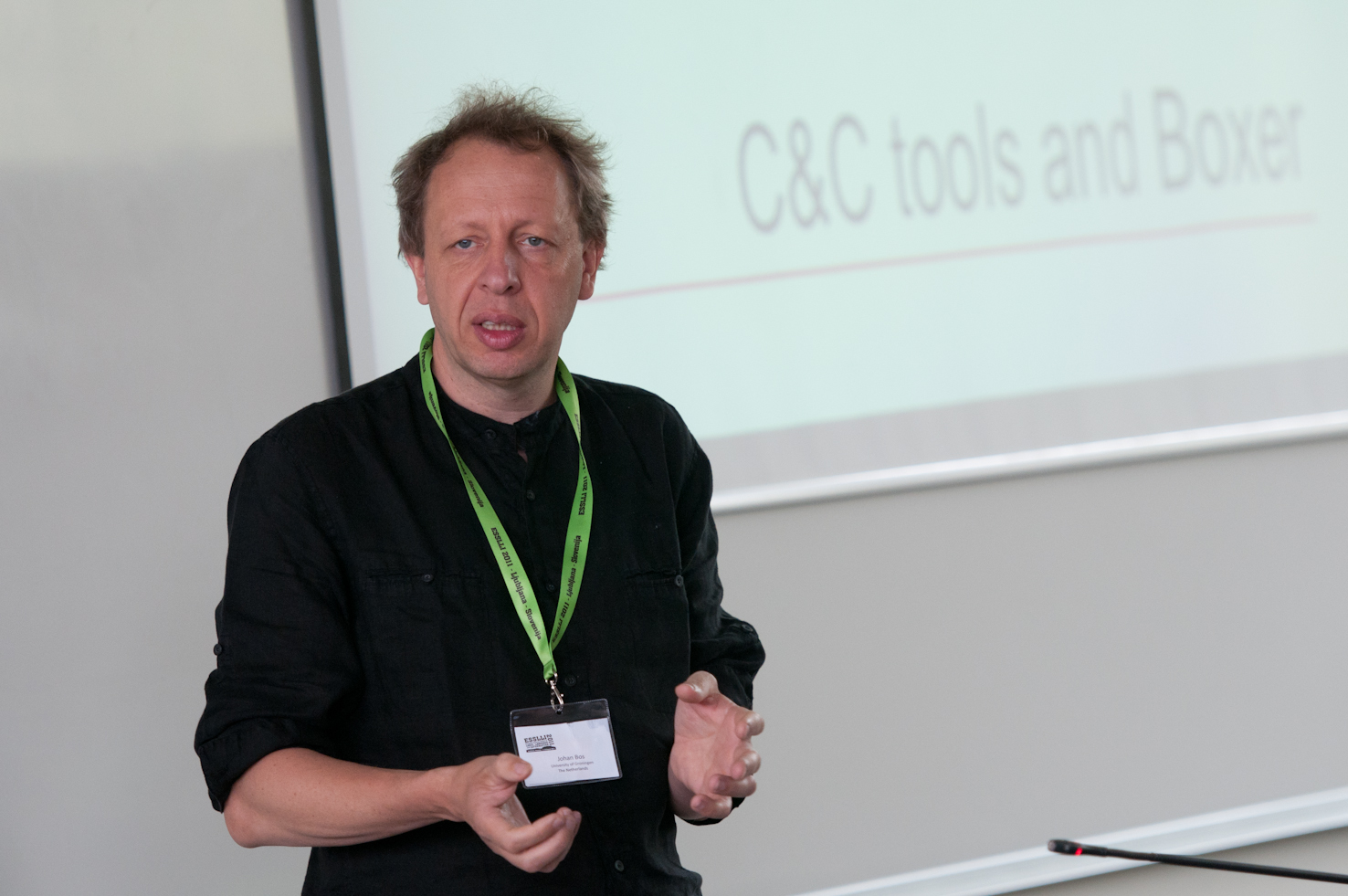 Johan Bos合作论文数University of Groningen3
 Ted Briscoe合作论文数Department of Natural Language Processing, Mohamed Bin Zayed University of Artificial Intelligence;Girton College, University of Cambridge3
 Ryan Mcdonald合作论文数ASAPP3
 Simone Teufel合作论文数Department of Computer Science and Technology, University of Cambridge3
 Milica Gasic合作论文数The Computer Science Department, Faculty of Mathematics and Natural Sciences, Heinrich-Heine-Universität Düsseldorf3
 Tsung-Hsien Wen (Shawn)合作论文数PolyAI3Diana Inkpen合作论文数2Ben King合作论文数2Joris Driesen合作论文数2Kathy McKeown合作论文数2Eric Gaussier合作论文数2
 Shruti Bhargava合作论文数Siri And Language Technologies Team, Apple2Kenneth R. Fleischmann合作论文数2David Weir合作论文数2Anja Belz合作论文数2Mark-Jan Nederhof合作论文数2Chu-Ren Huang合作论文数2Chris Brew合作论文数2Mark Johnson合作论文数2
 Luis Gravano合作论文数Computer Science Department, Columbia University2
 Pablo Bario合作论文数Google2
 John Paparrizos合作论文数Department of Computer Science and Engineering, College of Engineering, The Ohio State University2
 Bo-Hsiang (Andy) Tseng合作论文数Apple2
 Arvind Neelakantan合作论文数Google DeepMind2Dhivya Piraviperumal合作论文数2
 Emiel Krahmer合作论文数Department of Communication and Cognition, School of Humanities and Digital Sciences, Tilburg University2
 Jason D. Williams合作论文数Apple2
 Owen Rambow合作论文数Department of Linguistics, College of Arts and Sciences, Stony Brook University2
 Dragomir R. Radev合作论文数Language, Information, and Learning Lab, Department of Computer Science, Yale University;Yale Institute for Network Science, Yale University;Wu Tsai Institute for Neuroscience, Yale University2
 Pascale Fung (冯雁)合作论文数Centre for Artificial Intelligence Research, Hong Kong University of Science and Technology;Department of Electronic & Computer Engineering, Hong Kong University of Science and Technology;AMI - Advanced Machine Intelligence2
 James Pustejovsky合作论文数Volen Center for Complex Systems, Michtom School of Computer Science, Brandeis University;Department of Computer Science, Brandeis University2
 Mari Ostendorf合作论文数Department of Electrical & Computer Engineering, University of Washington2
 Ehud Reiter合作论文数Department of Computing Science, The School of Natural and Computing Sciences, University of Aberdeen2
 Amanda Stent合作论文数Bloomberg2
 Harold Somers合作论文数School of Computer Science at The University of Manchester2




