We study the phenomenon of the locking of the order parameter (or synchronization) in spin glasses at low temperatures. When two systems with independent disorders are coupled, their overlaps become similar. A crucial question is how this effect depends on the strength of the coupling between the two systems. Nonperturbative phenomena are present when [Formula: see text], being [Formula: see text] the coupling Hamiltonian and [Formula: see text] the system size. In this intermediate-coupling region, the effect is related to finite-size free-energy corrections in mean-field spin-glass models and to correlations in the Dyson hierarchical spin glass, a model that mimics the physics of finite-dimensional systems. We study this phenomenon in the mean-field approach, both analytically and numerically, and we finally compute the critical exponents for finite-volume corrections in mean-field theory and for the decay of correlations in the Dyson hierarchical model.
In many real-world problems, recovering sparse signals from underdetermined linear systems remains a fundamental challenge. Although ℓ_1 norm minimization is widely used, it suffers from estimation bias that prevents it from reaching the Bayes-optimal reconstruction limit. Nonconvex alternatives, such as the log-sum penalty, have been proposed to promote stronger sparsity. However, maintaining their algorithmic stability is challenging. To address this challenge, we introduce an adaptive smoothing strategy within an approximate message passing framework to mitigate algorithmic instability. Furthermore, we evaluate the typical exact-recovery threshold for Gaussian measurement matrices using the replica method and state evolution. The results indicate that the adaptive method achieves exact recovery over a broader region than ℓ_1 norm minimization, although metastable states hinder reaching the information-theoretic limit.
The Daydreaming algorithm was proposed as a learning rule that simultaneously reinforces stored patterns and suppresses spurious attractors to improve the storage capacity of the Hopfield model. Its effectiveness has been reported for both uncorrelated and correlated data. However, the existing formulation has mainly assumed unbiased patterns, and the formulation for biased patterns has not yet been sufficiently established. Biased patterns are known to be much more problematic for models of associative memories. In this study, we reformulate Daydreaming for biased patterns by starting from the underlying rationale of the pseudo-inverse rule. Specifically, we introduce the retrieval dynamics and an energy function based on the centered representation, and we derive a corresponding update rule for centered Daydreaming. We compare the centered pseudo-inverse rule with centered Daydreaming for biased patterns and examine the retrieval maps and eigenvalue distributions of the coupling matrices. Our results confirm that centered Daydreaming yields a larger basin of attraction than the centered pseudo-inverse rule. Moreover, as in previous studies, although both approaches aim to stabilize the stored patterns as fixed points, our results suggest that they shape the energy landscape through different mechanisms.
Graph neural networks (GNNs) are increasingly applied to hard optimization problems, often claiming superiority over classical heuristics. However, such claims risk being unsolid due to a lack of standard benchmarks on truly hard instances. From a statistical physics perspective, we propose new hard benchmarks based on random problems. We provide these benchmarks, along with performance results from both classical heuristics and GNNs. Our fair comparison shows that classical algorithms still outperform GNNs. We discuss the challenges for neural networks in this domain. Future claims of superiority can be made more robust using our benchmarks, available at https://github.com/ArtLabBocconi/RandCSPBench.
We propose a general method for studying systems that display excitations with arbitrarily low energy in their low-temperature phase. We argue that in a rectangular right prism geometry, with longitudinal size much larger than the transverse size, correlations decay exponentially (at all temperatures) along the longitudinal dimension, but the scaling of the correlation length with the transverse size carries crucial information from which the lower critical dimension can be inferred. The method is applied in the particularly demanding context of Ising spin glasses at zero magnetic field. The lower critical dimension and the multifractal spectrum for the correlation function are computed from large-scale numerical simulations. Several technical novelties (such as the unexpectedly crucial performance of Houdayer's cluster method or the convenience of using open - rather than periodic - boundary conditions) allow us to study three-dimensional prisms with transverse dimensions up to L=24 and effectively infinite longitudinal dimensions down to low temperatures. The value that we find for the lower critical dimension turns out to be in agreement with expectations from both the Replica Symmetry Breaking theory and the Droplet model for spin glasses. We argue that our novel setting holds promise in clarifying which of the two competing theories more accurately describes three-dimensional spin glasses.
Combinatorial optimization problems are central to both practical applications and the development of optimization methods. While classical and quantum algorithms have been refined over decades, machine learning-assisted approaches are comparatively recent and have not yet consistently outperformed simple, state-of-the-art classical methods. Here, we focus on a class of Quadratic Unconstrained Binary Optimization problems, specifically the challenge of finding minimum energy configurations in three-dimensional Ising spin glasses. We use a Global Annealing Monte Carlo algorithm that integrates standard local moves with global moves proposed via machine learning. We show that local moves play a crucial role in achieving optimal performance. Benchmarking against Simulated Annealing and Population Annealing, we demonstrate that Global Annealing not only surpasses the performance of Simulated Annealing but also exhibits greater robustness than Population Annealing, maintaining effectiveness across problem hardness and system size without hyperparameter tuning. These results provide clear and robust evidence that a machine learning-assisted optimization method can exceed the capabilities of classical state-of-the-art techniques in a combinatorial optimization setting.
Quadratic Unconstrained Boolean Optimization (QUBO) problems are widespread in both industrial applications and scientific studies. A QUBO problem corresponds to the optimization of a system of Ising spins defined on a generally sparse and heterogeneous graph. When the QUBO problem contains conflicting requests, the corresponding Ising system is frustrated, generating a complex energy landscape, which is hard to explore and optimize. Despite extensive algorithmic and hardware developments, finding low-energy configurations in these systems remains challenging (e.g., local-update heuristics typically become trapped in metastable states), especially when the (possibly frustrated) interactions generate extended correlated domains. We introduce CluMP (Cluster-based Message-Passing), an algorithm that performs collective updates on connected clusters of spins using information from Belief Propagation (BP). By controlling the amount of frustration within clusters, CluMP enables BP convergence on large subgraphs and proposes nonlocal rearrangements involving up to hundreds of spins in a single move. We benchmark CluMP against state-of-the-art local-update heuristics on spin-glass models defined on several graph topologies, including random regular graphs and lattice regular graphs in two and three dimensions. Cluster moves consistently bypass local trapping and reach lower energies with fewer effective operations than single-spin dynamics. These results demonstrate that frustration-tolerant cluster updates can be implemented efficiently on sparse graphs. The CluMP framework provides a scalable strategy for large-scale combinatorial optimization and inference problems, where exploiting medium- and long-range correlations is key to navigating complex energy landscapes.
We study numerically the Hessian of low-lying minima of vector spin glass models defined on random regular graphs. We consider the two-component (XY) and three-component (Heisenberg) spin glasses at zero temperature, subjected to the action of a randomly oriented external field. Varying the intensity of the external field, these models undergo a zero temperature phase transition from a paramagnet at high field to a spin glass at low field. We study how the spectral properties of the Hessian depend on the magnetic field. In particular, we study the shape of the spectrum at low frequency and the localization properties of low energy eigenvectors across the transition. We find that in both phases the edge of the spectral density behaves as $\lambda^{3/2}$: such a behavior rules out the presence of a diverging spin-glass susceptibility $\chi_{SG}=\langle 1/\lambda^2 \rangle$. As to low energy eigenvectors, we find that the softest eigenmodes are always localized in both phases of the two models. However, by studying in detail the geometry of low energy eigenmodes across different energy scales close to the lower edge of the spectrum, we find a different behavior for the two models at the transition: in the XY case, low energy modes are typically localized; at variance, in the Heisenberg case low-energy eigenmodes with a multi-modal structure (sort of ``delocalization'') appear at an energy scale that vanishes in the infinite size limit. These geometrically non-trivial excitations, which we call Concentrated and Delocalised Low Energy Modes (CDLEM), coexist with trivially localised excitations: we interpret their existence as a sign of critical behavior related to the onset of the spin glass phase.
We study a system of y=2 coupled copies of a well-known constraint satisfaction problem (random hypergraph bicoloring) to examine how the ferromagnetic coupling between the copies affects the properties of the solution space. We solve the replicated model by applying the cavity method to the supervariables that take 2^{y} values. Our results show that a coupling of strength γ between the copies decreases the clustering threshold α_{d}(γ), at which typical solutions shatter into disconnected components, therefore preventing numerical methods such as Monte Carlo Markov chains from reaching equilibrium in polynomial time. This result needs to be reconciled with the observation that, in models with coupled copies, denser regions of the solution space should be more accessible. Additionally, we observe a change in the nature of the clustering phase transition, from discontinuous to continuous, in a wide γ range. We investigate how the coupling affects the behavior of the belief propagation (BP) algorithm on finite-size instances and find that BP convergence is significantly impacted by the continuous transition. These results highlight the importance of better understanding algorithmic performance at the clustering transition and call for further exploration into the optimal use of reweighting strategies designed to enhance algorithmic performance.
This paper introduces a learning framework for Three-Directional Associative Memory (TAM) models, extending the classical Hebbian paradigm to both supervised and unsupervised protocols within an hetero-associative setting. These neural networks consist of three interconnected layers of binary neurons interacting via generalized Hebbian synaptic couplings that allow learning, storage and retrieval of structured triplets of patterns. By relying upon glassy statistical mechanical techniques (mainly replica theory and Guerra interpolation), we analyze the emergent computational properties of these networks, at work with random (Rademacher) datasets and at the replica-symmetric level of description: we obtain a set of self-consistency equations for the order parameters that quantify the critical dataset sizes (i.e. their thresholds for learning) and describe the retrieval performance of these networks, highlighting the differences between supervised and unsupervised protocols. Numerical simulations validate our theoretical findings and demonstrate the robustness of the captured picture about TAMs also at work with structured datasets. In particular, this study provides insights into the cooperative interplay of layers, beyond that of the neurons within the layers, with potential implications for optimal design of artificial neural network architectures.
Recent demonstrations on specialized benchmarks have reignited excitement for quantum computers, yet their advantage for real-world problems remains an open question. Here, we show that probabilistic computers, co-designed with hardware to implement Monte Carlo algorithms, provide a scalable classical pathway for solving hard optimization problems. We focus on two algorithms applied to three-dimensional spin glasses: discrete-time simulated quantum annealing and adaptive parallel tempering. We benchmark these methods against a leading quantum annealer. For simulated quantum annealing, increasing replicas improves residual energy scaling, consistent with extreme value theory. Adaptive parallel tempering, supported by non-local isoenergetic cluster moves, scales more favorably and outperforms simulated quantum annealing. Field Programmable Gate Arrays or specialized chips can implement these algorithms in modern hardware, leveraging massive parallelism to accelerate them while improving energy efficiency. Our results establish a rigorous classical baseline for assessing practical quantum advantage and present probabilistic computers as a scalable platform for real-world optimization challenges.
The study of spin-glass dynamics, long considered the paradigmatic complex system, has reached important milestones. The availability of single crystals has allowed the experimental measurement of spin-glass coherence lengths of almost macroscopic dimensions, while the advent of special-purpose computers enables dynamical simulations that approach experimental scales. This review provides an account of the quantitative convergence of these two avenues of research, with precise experimental measurements of the expected scaling laws and numerical reproduction of classic experimental results, such as memory and rejuvenation. The article opens with a brief review of the defining spin-glass properties, randomness and frustration, and their experimental consequences. These apparently simple characteristics are shown to generate rich and complex physics. Models are introduced that enable quantitative dynamical descriptions. After a summary of the main numerical results in equilibrium, paying particular attention to temperature chaos, this review examines off-equilibrium dynamics in the absence of a magnetic field and shows how it can be related to equilibrium structures through the fluctuation-dissipation relations. The nonlinear response at a given temperature is then developed, including experiments and scaling in the vicinity of the transition temperature T_g. The consequences of temperature change x2013including temperature chaos, rejuvenation, and memoryx2013 are reviewed. The interpretation of these phenomena requires identifying several length scales relevant to dynamics, which, in turn, generate new insights. Finally, issues for future investigations are introduced, including what is to be nailed down theoretically, why the Ising Edwards-Anderson model is so successful at modeling spin-glass dynamics, and experiments yet to be undertaken.
The common thread behind the recent Nobel Prize in Physics to John Hopfield and those conferred to Giorgio Parisi in 2021 and Philip Anderson in 1977 is disorder. Quoting Philip Anderson: more is different. This principle has been extensively demonstrated in magnetic systems and spin glasses, and, in this work, we test its validity on Hopfield neural networks to show how an assembly of these models displays emergent capabilities that are not present at a single network level. Such an assembly is designed as a layered associative Hebbian network that, beyond accomplishing standard pattern recognition, spontaneously performs also pattern disentanglement. Namely, when inputted with a composite signal - e.g., a musical chord - it can return the single constituting elements - e.g., the notes making up the chord. Here, restricting to notes coded as Rademacher vectors and chords that are their mixtures (i.e., spurious states), we use tools borrowed from statistical mechanics of disordered systems to investigate this task, obtaining the conditions over the model control-parameters such that pattern disentanglement is successfully executed.
Recent years have seen a rise in the application of machine learning techniques to aid the simulation of hard-to-sample systems that cannot be studied using traditional methods. Despite the introduction of many different architectures and procedures, a wide theoretical understanding is still lacking, with the risk of suboptimal implementations. As a first step to close this gap, we provide a complete analytic study of the widely used global annealing (also called sequential tempering) procedure applied to a shallow MADE architecture for the Curie-Weiss model. The contribution of this work is twofold: first, we give a description of the optimal weights and of the training under gradient descent optimization. Second, we compare what happens in global annealing with and without the addition of local Metropolis Monte Carlo steps. We are thus able to give theoretical insight into the best procedure to apply in this case. This work establishes a clear theoretical basis for the integration of machine learning techniques into Monte Carlo sampling and optimization.
In Bayesian inference, computing the posterior distribution from the data is typically a nontrivial problem, which usually requires approximations such as mean-field approaches or numerical methods, like the Monte Carlo Markov chain. Being a high-dimensional distribution over a set of correlated variables, the posterior distribution can undergo the notorious replica symmetry-breaking transition. When that happens, several mean-field methods and virtually every Monte Carlo scheme cannot provide a reasonable approximation to the posterior and its marginals. Replica symmetry is believed to be guaranteed whenever the data are generated with known prior and likelihood distributions, namely under the so-called Nishimori conditions. In this paper, we break this belief by providing a counterexample showing that under the Nishimori conditions, replica symmetry breaking arises. Introducing a simple, geometrical model that can be thought of as a patient-zero retrieval problem in a highly infectious regime of the epidemic Susceptible-Infectious model, we show that under the Nishimori conditions there is evidence of replica symmetry breaking. We achieve this result by computing the instability of the replica symmetric cavity method toward the one-step replica symmetry-broken phase. The origin of this phenomenon-replica symmetry breaking under the Nishimori conditions-is likely due to the correlated disorder appearing in the epidemic models.
The core collapse of a massive star at the end of its life can give rise to one of the most powerful phenomena in the Universe. Because of violent mass motions that take place during the explosion, corecollapse supernovae have been considered a potential source of detectable gravitational waveforms for decades. However, their intrinsic stochasticity makes ineffective the use of modeled techniques such as matched filtering, forcing us to develop model independent technique to unveil their nature. In this work we present the MUSE pipeline, which is based on a classification procedure of the time-frequency images using a convolutional neural network. The network is trained on phenomenological waveforms that are built to mimic the main common features observed in numerical simulation. The method is finally tested on a representative 3D simulation catalog in the context of the Einstein Telescope, a third generation gravitational wave telescope. Among the three detector geometries considered here, the 2L with a relative inclination of 45 degrees is the one achieving the best results, thus being able to detect a Kuroda2016-like waveform with an efficiency above 90% at 50 kpc.
Random constraint satisfaction problems can display a very rich structure in the space of solutions, with often an ergodicity breaking—also known as clustering or dynamical—transition preceding the satisfiability threshold when the constraint-to-variables ratio α is increased. However, smart algorithms start to fail finding solutions in polynomial time at some threshold α alg which is algorithmic dependent and generally bigger than the dynamical one α d. The reason for this discrepancy is due to the fact that α d is traditionally computed according to the uniform measure over all the solutions. Thus, while bounding the region where a uniform sampling of the solutions is easy, it cannot predict the performance of off-equilibrium processes, that are still able of finding atypical solutions even beyond α d. Here we show that a reconciliation between algorithmic behaviour and thermodynamic prediction is nonetheless possible at least up to some threshold α d opt ⩾ α d , which is defined as the maximum value of the dynamical threshold computed on all possible probability measures over the solutions. We consider a simple Monte Carlo-based optimization algorithm, which is restricted to the solution space, and we demonstrate that sampling from the equilibrium distribution of a biased measure improving on α d is still possible even beyond the ergodicity breaking point for the uniform measure, where other algorithms hopelessly enter the out-of-equilibrium regime. The conjecture we put forward is that many smart algorithms sample the solution space according to a biased measure: once this measure is identified, the algorithmic threshold is given by the corresponding ergodicity-breaking transition.
We present an evaluation of how site dependent noise can affect the signal to noise ratio (SNR) of compact binary coalescence (CBC) signals in the future 3rd generation gravitational wave (GW) detector Einstein Telescope (ET). The design of ET is currently pushing the scientific community to study its scientific potential with respect to known, and possibly unexpected, GW signals using its design sensitivity curves. However, local ambient noise may have an impact on the ET sensitivity at low frequency and therefore affect the SNR of CBC signals at low frequency. Therefore, we study the impact of ambient noise on the ET sensitivity curve at the two sites candidate to host ET - Sardinia, in Italy, and the Euregio Meuse-Rhine (EMR) at the Netherlands-Belgium border - and infer the impact on the ET sensitivity curve and how the SNR of CBC signals at low frequencies is affected. We find that Sardinia shows results which are on par, if not better, than the design case. On the other hand, ambient noise for the current EMR sensitivity curve in Terziet causes a higher degradation of the SNR performances.
To improve the storage capacity of the Hopfield model, we develop a version of the dreaming algorithm that perpetually reinforces the patterns to be stored (as in the Hebb rule), and erases the spurious memories (as in dreaming algorithms). For this reason, we called it Daydreaming. Daydreaming is not destructive and it converges asymptotically to stationary retrieval maps. When trained on random uncorrelated examples, the model shows optimal performance in terms of the size of the basins of attraction of stored examples and the quality of reconstruction. We also train the Daydreaming algorithm on correlated data obtained via the random-features model and argue that it spontaneously exploits the correlations thus increasing even further the storage capacity and the size of the basins of attraction. Moreover, the Daydreaming algorithm is also able to stabilize the features hidden in the data. Finally, we test Daydreaming on the MNIST dataset and show that it still works surprisingly well, producing attractors that are close to unseen examples and class prototypes.
Core collapse supernovae are the most energetic explosions in the modern Universe and, because of their properties, they are considered a potential source of detectable gravitational waveforms for long time. The main obstacles to their detection are the weakness of the signal and its complexity, which cannot be modeled, making it almost impossible to apply matching filter techniques as the ones used for detecting compact binary coalescences. Although the first obstacle will probably be overcome by next-generation gravitational wave detectors, the second one can be overcome by adopting machine learning techniques. In this contribution, a novel method based on a classification procedure of the time-frequency images using a convolutional neural network will be described, showing the CCSN detection capability of the next-generation gravitational wave detectors, with a focus on the Einstein Telescope.
 Piero Rapagnani合作论文数Dipartimento di Fisica, Sapienza Università di Roma;Istituto Nazionale di Fisica Nucleare131
 Ettore Majorana合作论文数Dipartimento di Fisica, Sapienza Università di Roma112
 Paola Puppo合作论文数Istituto Nazionale di Fisica Nucleare Sezione di Roma;Virgo Experiment92
 Sergio Frasca合作论文数Dipartimento di Fisica Roma, Università di Roma “La Sapienza”83
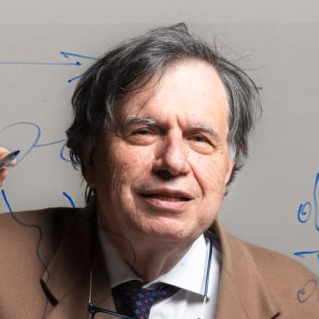 Giorgio Parisi (乔治·帕里西)合作论文数Dipartimento di Fisica, Sapienza Universita di Roma80
 Giovanni Losurdo合作论文数Scuola Normale Superiore;Istituto Nazionale di Fisica Nucleare79
 Rosa Poggiani合作论文数Department of Physics, University of Pisa77
 Roberto Passaquieti合作论文数Dipartimento di Fisica, Universita’ di Pisa77
 Federico Paoletti合作论文数Istituto Nazionale di Fisica Nucleare;European Gravitational Observatory74
 Andrea Viceré合作论文数Dipartimento di Scienze Pure e Applicate, Università degli Studi di Urbino "Carlo Bo"73
 Luciano Di Fiore合作论文数Università degli studi di Napoli " Federico II "73L. Milano合作论文数Istituto Nazionale di Ottica - CNR - 50125 Firenze, Italy73
 Enrico Calloni合作论文数Diparitmento di Scienze Fisiche, Università di Napoli Federico II73
 Vincent Loriette合作论文数72
 Alberto Gennai合作论文数Università di Pisa;Istituto Nazionale di Fisica Nucleare71
 Laurent Pinard合作论文数Laboratoire des Matériaux Avancés71F. Vetrano合作论文数71
 De Rosa Rosario合作论文数Dipartimento Di Fisica "Ettore Pancini", Università degli Studi di Napoli Federico II70
 Conor Mow-Lowry合作论文数Faculty of Science, The Australian National University70
 Francesco Fidecaro合作论文数Physics Department, Pisa University68F. Frasconi合作论文数68P. Hello合作论文数68
 Isidoro Ferrante合作论文数Dipartimento di Fisica, Università Di Pisa67
 Fabrizio Barone合作论文数Dipartimento di Medicina, Chirurgia e Odontoiatria “Scuola Medica Salernitana”, University of Salerno66
 Carlo Bradaschia合作论文数Istituto Nazionale di Fisica Nucleare, Sezione di Pisa66
 Elena Cuoco合作论文数Department of Physics and Astronomy "Augusto Righi", University of Bologna66A. Pasqualetti合作论文数66
 G. Cella合作论文数Istituto Nazionale di Fisica Nucleare66
 Jean-Yves Vinet合作论文数Galaxie Université Côte d'Azur;C.N.R.S.65
 Michele Punturo合作论文数Istituto Nazionale di Fisica Nucleare64f cavalier合作论文数64
 Szabolcs Márka合作论文数Department of Physics, Columbia University64
 Matteo Barsuglia合作论文数Astroparticle and Cosmology Laboratory, CNRS;Paris Centre for Cosmological Physics, Laboratoire Astroparticule & Cosmologie, Université de Paris64
 Raffaele Flaminio合作论文数Laboratoire d'Annecy de Physique des Particules, CNRS64
 Helios Vocca合作论文数Physics Department, University of Perugia64
 Flavio Travasso合作论文数Dipartimento di Fisica e Geologia, Università degli Studi di Perugia;Università di Camerino64Henrich Heitmann合作论文数System Engineering Department, European Gravitational Observatory63P. Ruggi合作论文数63
 François Bondu合作论文数Institut Foton, Université Rennes63
 Alain Brillet合作论文数Centre National De La Recherche Scientifique62
 Michel Davier合作论文数Université Paris-Saclay62Vincenzo Dattilo合作论文数Interferometer Technology Department, European Gravitational Observatory62
 Fausto Acernese合作论文数Dipartimento di Farmacia, Università degli Studi di Salerno62
 Damir Buskulic合作论文数Laboratoire d'Annecy de Physique des Particules;Université Savoie Mont Blanc61
 Adalberto Giazotto合作论文数INFN - Istituto Nazionale di Fisica Nucleare61
 Francesco Piergiovanni合作论文数Dipartimento di Scienze Pure e Applicate, Università degli Studi di Urbino Carlo Bo61
 Didier Verkindt合作论文数French National Centre for Scientific Research61
 Angela Di Virgilio合作论文数Section of Pisa, Istituto Nazionale di Fisica Nucleare61
 Fabio Marchesoni合作论文数Physics Division, School of Science and Technology, University of Camerino;Tongji University60




