The depth of focus (DOF) of a lens is a crucial parameter in glasses-free 3D displays that affects the viewing distance range. Here we proposed a vector light field display based on intertwined flat lens for extended viewing distance. The gray-scale diffractive lens (GDL) is designed and fabricated with extended DOF for red (658 nm), green (532 nm), and blue (450 nm) colors. By integrating the intertwined GDLs with a liquid crystal display, four views form a smooth horizontal parallax with a cross talk below 26% over a viewing distance from 24 to 90 cm. The enhancement of the DOF is 1.8 × 1 0 4 -fold. The light efficiency of the pixelated GDL reaches 82%. The proposed vector light field 3D display has the advantages of a thin form factor, high efficiency, high color fidelity, and large viewing distance. The potential applications include portable electronics, 3D TVs, and tabletop displays.
With the interfacial jamming of nanoparticles (NPs), a load-bearing network of NPs forms as the areal density of NPs increases, converting the assembly from a liquid-like into a solid-like assembly. Unlike vitrification, the lineal packing of the NPs in the network is denser, while the remaining NPs can remain in a liquid-like state. It is a challenge to determine the point at which the assemblies jam, since both jamming and vitrification lead to a solid-like behavior of the assemblies. Herein, we show a real-time fluorescence imaging method to probe the evolution of the interfacial dynamics of NP surfactants at the water/oil interface using aggregation-induced emission (AIE) as a reporter for the transition of the assemblies into the jammed state. The AIEgens show typical fluorescence behavior at densities at which they can move and rotate. However, when aggregation of these fluorophores occurs, the smaller intermolecular separation distance arrests rotation, and a significant enhancement in the fluorescence intensity occurs.
The first SuFEx click chemistry synthesis of SOF4-derived copolymers based upon the polymerization of bis(iminosulfur oxydifluorides) and bis(aryl silyl ethers) is described. This novel class of SuFEx polymer presents two key characteristics: First, the newly created [-N=S(=O)F-O-] polymer backbone linkages are themselves SuFExable and primed to undergo further high-yielding and precise SuFEx-based post-modification with phenols or amines to yield branched functional polymers. Second, studies of individual polymer chains of several of these new materials indicate the presence of helical polymer structures, which itself suggests a preferential approach of new monomers onto the growing polymer chain upon the formation of the stereogenic linking moiety.
Developing organic photoluminescent materials with high emission efficiencies in the solid state under a water atmosphere is important for practical applications. Herein, we report the formation of both intra- and intermolecular hydrogen bonds in three tautomerizable Schiff-base molecules which comprise active hydrogen atoms that act as proton donors and acceptors, simultaneously hindering emission properties. The intercalation of water molecules into their crystal lattices leads to structural rearrangement and organic hydrate luminogen formation in the crystalline phase, triggering significantly enhanced fluorescence emission. By suppressing hydrogen atom shuttling between two nitrogen atoms in the benzimidazole ring, water molecules act as hydrogen bond donors to alter the electronic transition of the molecular keto form from nπ* to lower-energy ππ* in the excited state, leading to enhancing emission from the keto form. Furthermore, the keto-state emission can be enhanced using deuterium oxide (D2O) owing to isotope effects, providing a new opportunity for detecting and quantifying D2O.
Three polysulfates P1, P2 and P3 containing two representative AIE-active groups, tetraphenyl ethylene and naphthylamide, were successfully synthesized based on a sulfur(vi) fluoride exchange (SuFEx) click reaction.
Diffractive lens can realize high-resolution imaging with large aperture and light weight. Conventional amplitude-tpye diffractive lens has extremely low diffraction efficiency, and therefore, it can only work in the situation under extremely strong illumination, such as observation of the sun. Binary diffractive lens has low diffraction efficiency and high sensitivity to fabrication error, which significantly limits its applications in practice. Here, a phase-type diffractive lens with continuous parabolic ring-shaped microstructures (PDLCPRM) is designed. The surface of PDLCPRM is continuous parabolic ring-shaped microstructures, which makes its diffraction efficiency extremely high. Experimental fabrication of the proposed PDLCPRM was performed using the laser direct writing of grey-scale patterns for a PDLCPRM of diameter of 10 mm, a focal length of 100 mm. Experimental results show that the imaging quality of the PDLCPRM close to the diffraction limit and the diffraction efficiency of the PDLCPRM reaches 82%, which are in significant contrast to the conventional amplitude-tpye diffractive lens and binary diffractive lens. Furthermore, the PDLCPRM has high tolerance of height error, which reduces significantly the difficulty of fabrication. PDLCPRM has great potentials in applications of large space telescope and other imaging systems.
Multiview 3D display can reveal wondrous information of a 3D image without any visual aids. Therefore, it has great potential in many applications, such as education, game, training, and design. Among all the multiview 3D display techniques, the one that is based on diffractive optics and metasurface can present 3D images with ultrawide field of view and low crosstalk. However, the brightness of diffractive multiview 3D display is limited by the diffraction efficiency. Moreover, the low fabrication efficiency and high cost limit the commercial development of 3D display based on metasurface. Here we propose a multiview 3D display based on multi-level pixelated blazed gratings. The period and orientation of each blazed grating in the view modulator is different to form a converged light field. A 4-view prototype was assembled by integrating the view modulator with a shadow mask for the modulation of light intensity. A 3D thoracic cage model was virtually projected within the viewing angle with minimum crosstalk. The light efficiency of the prototype is significantly improved to 60% for 4-level blazed gratings.
Porous carbon (PC) materials with high surface area can separate electron-hole pairs and adsorb organic pollutants more effectively. A series of nanocomposites were prepared by anchoring black TiO2 nanoparticles (BTN) onto PC through a calcination process. Chemical and structural features of samples were examined by X-ray photoelectron spectroscopy (XPS), Raman spectroscopy, powder X-ray diffraction (P-XRD), scanning electron microscopy (SEM) and transmission electron microscopy (TEM) analyses. The resulting adsorption-photocatalysis synergistic effect led to a dramatically improved photocurrent for BTN@PCs, thus indicating the high photocatalytic performance toward water-soluble organic species. For instance, the degradation of tetracycline under visible light reached 90 %, which is higher than that for activated carbon doped onto BTN (57 %) without any additional agents. Moreover, the degradation of other antibiotics (such as oxytetracycline and ciprofloxacin) and methylene blue were also studied, thus showing that this system has the potential to be used for water treatment.
In this paper, a dual-view holographic three-dimensional (3D) display using a single spatial light modulator (SLM) and a directional light-guide plate (DLGP) is proposed and implemented. The SLM is used to load the phase-only hologram calculated from two different 3D scenes for optical holographic reconstruction, and the DLGP composed of pixelated gratings with different periods and orientation angles is employed to guide the reconstructed images into two completely separated viewing zones, where different reconstructed perspectives in each viewing zone will form a stereoscopic 3D image. Furthermore, an experimental verification system for the proposed dual-view holographic 3D display is constructed, and the experimental results demonstrate that the proposed system can successfully present different 3D images in the left and right viewing zones simultaneously, verifying the feasibility of the proposed dual-view holographic 3D display.
Recently, polymers with aggregation-induced emission (AIE) effects have attracted significant attention due to their broad applications in luminescence sensors, stimuli responsive materials, electroluminescence devices, etc . In this review, we summarize recent advances concerning AIE polymers. Four types of AIE polymers including end-functionalized polymers, side-chain polymers, main-chain polymers, and other polymers according to the location of AIEgens, are described. Their synthetic preparation, optical property, AIE effects, and applications are also illustrated in this review.
Holographic exposure mosaic technology is a feasible solution to fabricate large-area pulse compression gratings, where the mosaic grating method of developing region by region is one of the mosaic approaches. In this method, an exposed area of the substrate is firstly developed, and then the developed photoresist grating mask is put back into the previous exposure system. The next area grating mask is fabricated by aligning the interference fringes formed by the exposure beam and the developed real grating. However, since the unequal exposure and inconsistent development, the groove shapes of grating masks in two areas, including groove depth and duty cycle, will be different. When detecting the mosaic grating error, the differences of the groove shapes will cause the dislocation in the -1-order reflected diffraction wavefront at gap of the mosaic grating. It will be superimposed on the phase change caused by the lateral displacement error, so that the judgement of lateral displacement error will be seriously interfered. To solve this problem, the measurement method of the 0-order diffraction wavefront under multiple incident angles is proposed to precisely judge the lateral displacement error in the mosaic grating. In this paper, the grating diffraction analysis program based on the rigorous coupled-wave analysis is firstly written, and then the initial phase of 0-order reflected diffraction wavefront of mosaic grating mask is calculated. Subsequently, the sample is tested by atomic force microscopy and interferometer. By importing the measurement data into the searching program, the groove parameters of grating masks are obtained by the library matching method. Then, the lateral displacement error of the mosaic grating is further deduced. Finally, the feasibility of the proposed judgment method is confirmed by the experiment.
Carbohydrates play an important role in biological processes for their specific interactions with proteins. Cyclic glycopolymers are promising to mimic the topology of natural macrocycle-biomacromolecules due to their unique architecture of lacking chain ends. To systematically study the effect of glycopolymer architecture on the interactions with protein, the cyclic glycopolymers bearing galactose side-chain (cyclic PMAGn ) with three degrees of polymerization (n = 14, 24, 47) are prepared for the first time. The cyclic PMAGn exhibits unique properties in agglutinating and inhibiting proteins in subsequent studies by comparison with the linear precursor with the same molecular weights. More impressively, the cyclic PMAGn highlight the improved performance of cyclic architecture. For example, the cyclic PMAGn shows superior inhibition abilities to suppress amyloid formation from amyloid β protein fragment 1-42 aggregation and block the specific interaction between bacteria and galactose-modified surface compared to that of respective linear counterpart. This interesting finding suggests that the architecture of cyclic glycopolymers may be capable of optimizing the ability to bind or inhibit proteins in biological processes.
A triphenylamine derivative decorated with an azobenzene group (TDA) was synthesized via a SuFEx click reaction and its polymer, poly(triphenylamine) (PTDA), was polymerized through a redox polymerization. More interestingly, its polymeric metal complex, PTDA-Fe, can be simply obtained via one-pot reaction between TDA and FeCl3 owing to TDA showing a strong affinity to the Fe-III ion. The sandwich memory device based on PTDA nanofilms as active layers exhibited a binary memory performance. However, the memory device based on its polymeric metal complex exhibited a unique ternary memory behavior. The different memory performances should come from the different conductive mechanism. The mechanism of such ternary memory devices is illustrated based on both the theoretical calculation and experiments. Our work provides new insights into the preparation of novel materials for multilevel memory devices.
In this paper, a magnified holographic projection based on spatial light modulators is proposed and implemented by combining four magnification methods, including similarity principle of Fourier transform, spatial division, digital lens, and image splicing methods. The Fourier holographic display system is constructed for the experimental verification of the proposed methods. With such four methods of holographic magnification, the reconstruction image can be magnified to 10 x 5 times in two-dimensional directions, which is verified by the experiments. Furthermore, the undesirable light of holographic projection is eliminated by encoding the linear phase onto the computer-generated holograms. The experimental results prove that the proposed system can realize magnified holographic projection with good reconstructed quality, which provides a promising potential for the dynamic holographic projector.
In this paper, we propose a projection-type multiview holographic three-dimensional (3-D) display using a single spatial light modulator (SLM) and a directional diffractive device, where a phase-only Fresnel hologram is calculated and displayed on the SLM to reconstruct the multiview hybrid image of a 3-D object for providing the amplitude information of a multiview light field, and a directional diffractive device covered with many pixelated gratings is designed to guide different reconstructed perspectives into different viewing zones for expressing the phase information of the light field. Furthermore, a four-view directional diffractive device is fabricated by using the pixelated holographic exposure method, and its optical properties are also measured under a collimated illumination of the green reconstruction laser with the designed wavelength. In addition, an experimental verification system is constructed to demonstrate a four-view 3-D display. The recorded experimental results confirm that a crosstalk-free four-view light field is created, which is beneficial from the precise alignment between the directional diffractive device and the reconstructed image. Moreover, the capability of dynamic display with the proposed system is also tested by refreshing the SLM with the sequential holograms, and the captured videos show a promising potential for the real-time multiview holographic 3-D projectors.
In this paper, a multi-plane optical see-through holographic three-dimensional (3D) display system for augmented reality (AR) applications is proposed and implemented. This system is composed of a holographic projection module and an optical see-through display module. The holographic projection module manages to reconstruct the multi-plane 3D scene by using a spatial light modulator (SLM), and the correct depth information can be expressed by programmable zoom lenses encoded on the SLM. The reconstructed 3D scene and the real physical world will fuse together through the optical see-through display module. An experimental verification system for the proposed multi-plane optical see-through holographic 3D display is demonstrated. The experimental results prove that the proposed system can achieve the multi-plane AR holographic 3D display effect without any image bearing structure, and can solve the accommodation-vergence conflict problem effectively. This system has the advantages of large depth range, continuous expression capacity of depth information and no visual fatigue.
The high diffraction efficiency of the convex blazed gratings cannot be realized in the broadband. Therefore, we have designed the convex dual-blazed grating to realize higher and uniform diffraction efficiency in the wavelength from 0.4 mu m to 2.5 mu m. The diffraction efficiency of the convex dual-blazed grating is investigated by using rigorous coupled-wave analysis. The results show: when the two blaze angles of the convex dual-blazed grating, one within the range from 2.7 degree to 3.4 degree and the other one within the range from 8 degree to 9 degree respectively, the first-order diffraction efficiency is more than 25 percent at the visible-near infrared band. The convex dual-blazed grating with the period of 5 mu m in the center will be fabricated by holographic lithography - segmented ion beam etching in late 2017.
Two functional polysulfates (PolyTPP-NI and CPTPP-NI) bearing large conjugated chains were obtained via a sulfur(VI) fluoride click reaction in high yields under mild reaction conditions. The corresponding solution-processed sandwiched memory devices exhibited stable 'flash' electron storage behavior.
In this paper, a binocular holographic three-dimensional (3D) display system combining a single spatial light modulator (SLM) and a grating is proposed and implemented. A synthetic phase-only hologram of the left and right 3D perspective images of an object is calculated by the layer-based Fresnel diffraction method according to the depth information, and uploaded onto the SLM for holographic 3D reconstruction with correct depth cues. The grating is designed and fabricated to guide the reconstructed left and right 3D perspective images to the corresponding eyes. Optical experiments demonstrate that the proposed system can successfully present binocular holographic 3D images with both the accommodation effect and binocular parallax, which enables observation free of the accommodation-vergence conflict and visual fatigue problem.
Four end-functionalized polymers bearing chains with different hydrophilicities were successfully synthesized using a red-light emitting initiator via atom transfer radical polymerization (ATRP). All polymers possessing aggregation-induced emission (AIE) properties emitted red light in DMF/water solutions and in solid states. The AIE effect of the polymers is derived from the effective wrapping of the chromophore and hindrance of the intramolecular charge transfer (ICT) effect. The polarity of the monomers affects the intensity of emission and the maximum wavelength of emission. Moreover, the surface of the hydrophobic PtBA-E could be functionalized by the hydrolysis of the butyl acetate groups on the side chains to form hydrophilic PtBAA-E. The presence of an abundant number of carboxyl groups aids uniform dispersion and allows for the detection of cyanide ions in water at low concentrations, which the initiator and other polymers could not detect.
 Qingfeng Xu (徐庆锋)合作论文数College of Chemistry, Chemical Engineering and Materials Science, Soochow University21
 Jianmei Lu (路建美)合作论文数College of Chemistry, Chemical Engineering and Materials Science, Soochow University20
 Peiyang Gu合作论文数14
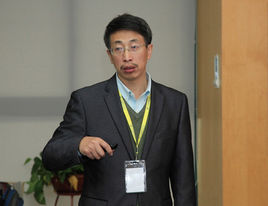 Yinglin Song (宋瑛林)合作论文数Department of Physics,Harbin Institute of Technology10Lingyan Shi合作论文数9Yanfeng Su合作论文数9
 Nianchen Zhou (周年琛)合作论文数College of Chemistry, Chemical Engineering and Materials Science of Soochow University7
 Zhijian Cai (蔡志坚)合作论文数School of Optoelectronic Science and Engineering, Soochow University7
 Fang Yu (余芳)合作论文数School of Physics and Electronics, Hunan Normal University7
 Xiulin Zhu (朱秀林)合作论文数College of Chemistry, Chemical Engineering and Materfals Sclence, Scoohow Univarsity7Junyi Yang (杨俊艺)合作论文数Laboratory of Plant Molecular Biology;Rock, efeller University;Laboratory of Plant Molecular Biology, Rockefeller University7
 Zhengbiao Zhang (张正彪)合作论文数State Key Laboratory of Radiation Medicine and Protection, Soochow University7
 Quan Liu (刘全)合作论文数School of Optoelectronic Science and Engineering, Soochow University6
 Hua Li (李华)合作论文数College of Chemistry, Chemical Engineering and Materials Science, Soochow University6Peiliang Guo合作论文数5
 Dongyun Chen (陈冬赟)合作论文数College of Chemistry, Chemical Engineering and Materials Science, Soochow University5Xingzhi Wu合作论文数5Lihua Wang合作论文数5
 Youyong Li (李有勇)合作论文数College of Nano Science & Technology, Soochow University;Institute of Functional Nano & Soft Materials, Soochow University5
 Zhengguo Xiao合作论文数Department of Physics, Harbin Institute of Technology4
 Yong Yang (杨勇)合作论文数School of Optoelectronic Science and Engineering, Soochow University4Ganquan Jiang合作论文数3Jiang Jun合作论文数3Haibo Wan合作论文数3Hongxia Chen合作论文数3Yong Ma合作论文数3
 Jinjie Lu合作论文数3
 Yiwen Li (李乙文)合作论文数College of Polymer Science and Engineering, Sichuan University3Caijian Lu合作论文数3
 Xiaofang Chen (陈小芳)合作论文数College of Chemistry, Chemical Engineering and Materials Science, Soochow University3
 Wen Qiao (乔文)合作论文数School of Optoelectronic Science and Engineering, Soochow University3
 Linsen Chen (陈林森)合作论文数School of Optoelectronic Science and Engineering, Soochow University3
 Jianhong Wu合作论文数Laboratory for Industrial and Applied Mathematics, York University3
 Hua Jianyu合作论文数2
 Zhongguo Li (李中国)合作论文数2Jiacheng Shi合作论文数2Hongliang Wang合作论文数2Yifan Lu合作论文数2Lishan Li合作论文数2Xiong Xiao合作论文数2Shiyuan Zhou合作论文数2XueMei He (何雪梅)合作论文数2
 Wenlong Zou (邹文龙)合作论文数School of Optoelectronic Science and Engineering, Soochow University2
 Haidong Chen合作论文数2
 Wenhua Zhang (张文华)合作论文数College of Chemistry, Chemical Engineering and Materials Science of Soochow University2
 Jian-Feng Ge (葛健锋)合作论文数College of Chemistry, Chemical Engineering and Materials Science, Soochow University2
 Jinghui He (贺竞辉)合作论文数College of Chemistry, Chemical Engineering and Materials Science, Soochow University2
 Yujin Ji (纪玉金)合作论文数College of Nano Science & Technology, Soochow University2




