This book examines the dangers of continuing government bailouts and offers alternative strategies designed to produce growth based on the vigor of the private sector with inflation under control. The expert authors show that it is indeed possible to explain the causes of the crisis in understandable terms and clarify why resolving the bailout problem is essential to preventing future crises.
THE TIMES WE live in are dangerous for many reasons. Prominent among them is the existence of a global nuclear enterprise made up of weapons that can cause damage of unimaginable proportions and power plants at which accidents can have severe, essentially unpredictable consequences for human life. For all of its utility and promise, the nuclear enterprise is unique in the enormity of the vast quantities of destructive energy that can be released through blast, heat, and radioactivity. To get a better grip on the state of the nuclear enterprise, we convened a group of prominent experts at Stanford University's Hoover Institution. The group included experts on nuclear weapons, power plants, regulatory experience, public perceptions, and policy. This essay summarizes their views and conclusions. We begin with the most reassuring outcome of our deliberations: It's the sense generally held that the U.S. nuclear enterprise currently meets very high standards in its commitment to safety and security. That has not always been the case in all aspects of the U.S. nuclear enterprise. But safety begins at home, and while the U.S. will need to remain focused to guard against nuclear risks, the picture here looks relatively good. Our greatest concern is that the same cannot be said of the nuclear enterprise globally. Governments, international organizations, industry, and media must recognize and address the nuclear challenges and mounting risks posed by a rapidly changing world. The biggest concerns with nuclear safety and security are in countries relatively new to the nuclear enterprise, and the potential loss of control to terrorist or criminal gangs of the fissile material that exists in such abundance around the world. In a number of countries, confidence in civil nuclear energy production was severely shaken in the spring of 2011 by the Fukushima nuclear reactor plant disaster. And in the military sphere, the doctrine of deterrence that remains primarily dependent on nuclear weapons is seen in decline due to the importance of nonstate actors such as al-Qaeda and terrorist affiliates that seek destruction for destruction's sake. We have two nuclear tigers by the tail. When risks and consequences are unknown, undervalued, or ignored, our nation and the world are dangerously vulnerable. Nowhere is this risk/consequence calculation more relevant than with respect to the nucleus of the atom. From Hiroshima to Fukushima THE NUCLEAR ENTERPRISE was introduced to the world by the shock of the devastation produced by two atomic bombs hitting Hiroshima and Nagasaki. Modern nuclear weapons are far more powerful than those early bombs, which presented their own hazards. Early research depended on a program of atmospheric testing of nuclear weapons. In the early years following World War II, the impact and the amount of radioactive fallout in the atmosphere generated by above-ground nuclear explosions was not fully appreciated. During those years, the United States and the Soviet Union conducted several hundred tests in the atmosphere that created fallout. A serious regulatory weak point from that time still exists in many places today, as the Fukushima disaster clearly indicates. The U.S. Atomic Energy Commission (AEC) was initially assigned conflicting responsibilities: to create an arsenal of nuclear weapons for the United States to confront a growing nuclear-armed Soviet threat; and, at the same time, to ensure public safety from the effects of radioactive fallout. The AEC was faced with the same conundrum with regard to civilian nuclear power generation. It was charged with promoting civilian nuclear power and simultaneously protecting the public. Progress came in 1963 with the negotiation and signing of the Limited Test Ban Treaty (LTBT) banning all nuclear explosive testing in the atmosphere (initially by the United States, the Soviet Union, and the United Kingdom). …
Strong regulation and peer review are needed, particularly in nations new to nuclear power and weapons.
Drawn from the third in a series of conferences the Hoover Institution at Stanford University on the nuclear legacy of the cold war, this report examines the importance of deterrence, from its critical function in the cold war to its current role. Recognizing that today's international environment is radically different from that which it was during the cold war, the need is pressing to reassess the role of nuclear weapons in deterrence in the world of today and to look ahead to the future.
WE LIVE AT A time of unprecedented promise. Freer and more open economic and political systems of governance are gaining ground, and the evidence is clear that these developments lead to more prosperous and more hopeful lives. But terrorist attacks on civilian targets in other countries remind us of our own 9/11, that a war is going on and that we in the United States are very much involved. Attention is focused on Iraq for understandable reasons, but the threat reaches far beyond that. Insecurity is the enemy of the promise and the hope. Recent events in different parts of the world, most prominently in the Middle East, underscore this point. So we must focus on the threat and deal with it effectively. In my own thinking about this war, I find it useful to keep three ideas in mind. The first is symbolized in the Great Seal of our republic: The eagle holds in one talon an olive branch and in the other arrows, showing that the United States understands that if you are to be successful in seeking peace, you must have strength. Strength and diplomacy are complements rather than alternatives. The second is to emphasize the reinforcing nature of political openness and increases in income per capita--prosperity--that come from use of the market, recognition of private property, and the rule of law. Democracy more likely takes hold when earned incomes are rising, and markets flourish best in open political environments. The third is to recognize that this war has already gone through two quite different phases. Today a third phase is under way that also has different characteristics. This phase will continue to be with us and is the long war identified by the president and others even shortly after 9/11. During the first phase of this war, going back certainly to the 1970s, we were essentially passive. We were hit by increasing numbers of terrorist acts, but, though there was a gradual buildup of concern, we did nothing significant in response to these attacks. Then September 11 woke America up. We reacted powerfully, putting in place a different philosophy and taking a great variety of actions to implement that philosophy. We are now nearly five years away from that calamitous event. The war continues, but the juices of reaction to 9/11 have subsided. We must now realize that the job in a third phase of the war--necessary if we are to be successful--is to put our efforts on a sustainable basis, gaining broad support at home and abroad. As in the Cold War, public understanding and support will be as crucial as persistent pressure and the will to win. The passive phase THE WAR WE are in started a long time ago, although we did not recognize its nature until recently. We witnessed the assassination of Israeli athletes at the Olympic games in Munich in 1972, the assault on our embassy in Tehran with Americans taken hostage in 1979, the assassination of President Sadat of Egypt in 1981, the car bomb that killed 243 U.S. Marines in Lebanon in 1983, the attack on the World Trade Center in 1993, the bombing of our embassies in Africa, and the attack on the USS Cole in the late 1990s. We made no serious response to any of these bloody assaults. In the Reagan, Bush 41, and Clinton years, we hit back once or twice with airstrikes or cruise missiles. The enemy was not impressed. By the mid-1990s, we knew about Osama bin Laden and al Qaeda. Just as Hitler laid out his plans in Mein Kampf, Osama bin Laden made no secret of his program. As in the case of Hitler, his announced objectives were not taken seriously enough. There was, however, a building concern about escalating terrorism. As a hawk on the subject in the Reagan era, my comments in a 1984 speech were nervously received. I said then that: * We must reach a consensus in this country that our responses should go beyond passive defense to consider means of active prevention, preemption, and retaliation. …
=1446762, at 5 (“[w]ith the benefit of twenty-twenty hindsight, we can see that the brokerage exclusion was designed with the brokerages of the 1960s particularly in view”); David Skeel Jr., “The Law and Finance of Bank and In surance Insolvency Regulation,” Texas Law Review 76 (1998): 723 (banks, probably no; insurance companies, probably yes); and Kimberly Summe, chapter 5 of this volume (“True progress will be made when our bankruptcy regime reflects the diverse nature of contemporary financial groups. In order to ensure that future failures of systemically important entities are Copyright © 2010 by the Board of Trustees of the Leland Stanford Junior University. All rights reserved. 246 Bankruptcy versus Resolution Authority tolerable for the financial system, a unified bankruptcy approach
 Sidney Drell合作论文数Stanford Linear Accelerator Center, Stanford University;Hoover Institution, Stanford University5
 John B. Taylor合作论文数Hoover Institution, Stanford University;Department of Economics, School of Humanities and Sciences, Stanford University;Introductory Economics Center, Stanford University4
 kenneth e scott合作论文数3Steven P. Andreasen合作论文数2
 Edward Lazear合作论文数Graduate School of Business, Stanford University;Hoover Institution, Stanford University2Kenneth Spong合作论文数1Thomas M. Hoenig合作论文数1henry s rowen合作论文数1James E. Goodby合作论文数1Robert B. Chess合作论文数1guy scott bristol合作论文数1Yevgeniy Teryoshin合作论文数1charles a holloway合作论文数1mark leslie合作论文数1
 John Ciorciari合作论文数Donia Human Rights Center, College of Literature, Science, and the Arts, University of Michigan-Ann Arbor1
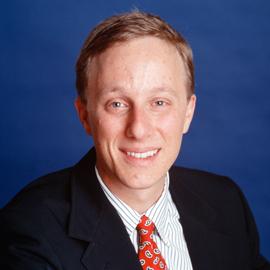 Daniel P. Kessler合作论文数School of Business, Stanford University1
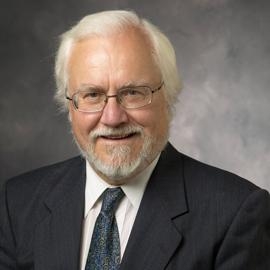 David Bruce Montgomery合作论文数Graduate School of Business, Stanford University1
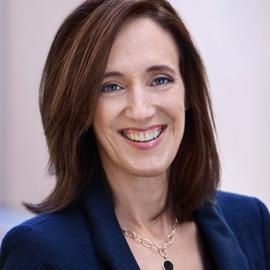 Deborah H. Gruenfeld合作论文数Graduate School of Business, Stanford University1
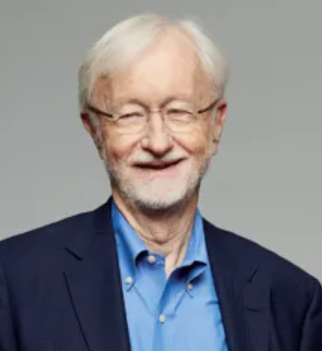 Charles A. O’Reilly合作论文数Graduate School of Business, Stanford University1
 George Foster合作论文数Graduate School of Business, Stanford University1
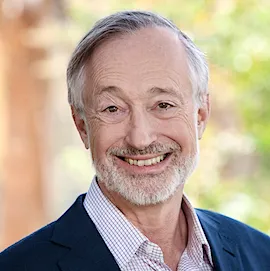 Paul R. Milgrom合作论文数Department of Economics, Stanford University;Stanford Graduate School of Business, Stanford University1
 Alan M. Garber合作论文数Blavatnik Institute, Harvard Medical School;Department of Health Care Policy, Harvard Medical School1
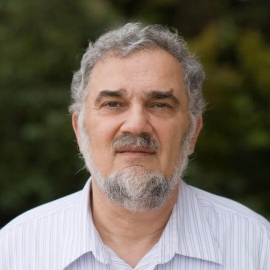 Haim Mendelson合作论文数Graduate School of Business, Stanford University1
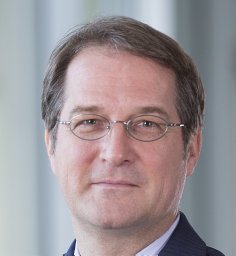 Volker Wieland合作论文数Goethe University of Frankfurt1
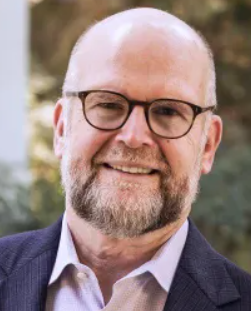 Dale T. Miller合作论文数School of Humanities and Sciences, Stanford University;Graduate School of Business, Stanford University1
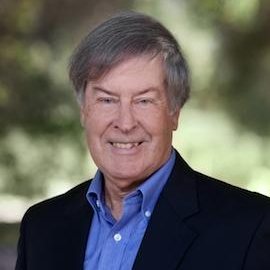 David P. Baron合作论文数Stanford Graduate School of Business/Kellogg School of Management, Northwestern University1
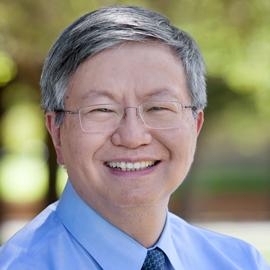 Hau L. Lee合作论文数Department of Management Science and Engineering, Graduate School of Business, Stanford University;Stanford Institute for Innovations in Developing Economies, Stanford University1
 Paul Yock合作论文数Byers Center for Biodesign, Stanford University;Second Harvest of Silicon Valley;VentureWell1
 John Roberts合作论文数Graduate School of Business, Stanford University1
 Tim Bresnahan合作论文数Department of Economics, School of Humanities and Sciences, Stanford University1
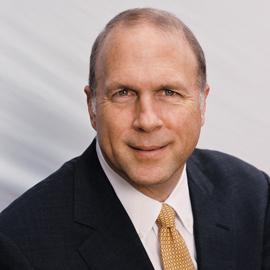 Peter C. Wendell合作论文数Graduate School of Business, Stanford University1
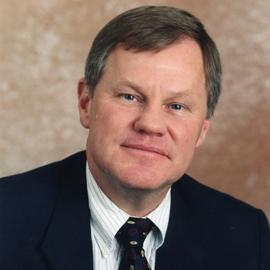 Roderick M. Kramer合作论文数Department of Organizational Behavior, Stanford Graduate School of Business1
 Stephen Krasner合作论文数Department of Political Science, School of Humanities and Sciences, Stanford University1
 James R. Miller合作论文数Department of Marine and Coastal Sciences, School of Environmental and Biological Sciences, Rutgers, The State University of New Jersey1
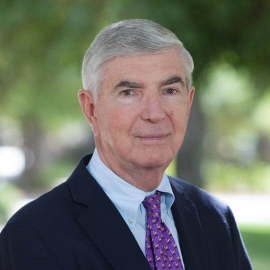 H. Irving Grousbeck合作论文数Graduate School of Business, Stanford University1Anthony S. Bryk合作论文数1Carl S. Spetzler合作论文数1
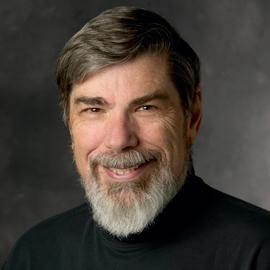 Michael T. Hannan合作论文数Graduate School of Business, Stanford University1
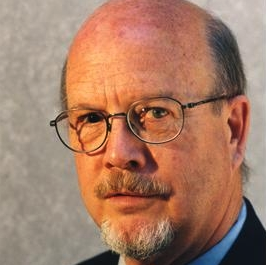 David L. Bradford合作论文数Graduate School of Business, Stanford University1
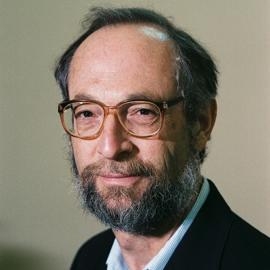 Jonathan Bendor合作论文数Graduate School of Business, Stanford University1
 Steven R. Grenadier合作论文数Department of Financial Economics, Graduate School of Business, Stanford University1
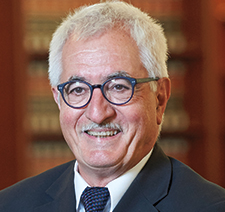 John A. Ferejohn合作论文数School of Law, New York University1
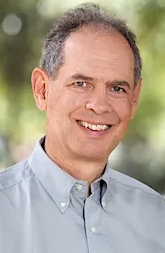 Kenneth J. Singleton合作论文数Graduate School of Business, Stanford University1
 Christophe Crombez合作论文数Department of Applied Economics;University of Leuven;Department of Applied Economics, University of Leuven1Dennis M. Rohan合作论文数1Robert B. Wilson合作论文数Department of Pathology and Laboratory Medicine, University of Pennsylvania Medical Center1Karen A. Wilson合作论文数1
 Anat R. Admati合作论文数Graduate School of Business, Stanford University1
 Laurence Franklin合作论文数Business School,Department of Finance, Hong Kong University of Science and Technology1




