We characterize the magnitude of seasonally and spatially varying biases in the National Aeronautics and Space Administration (NASA) Orbiting Carbon Observatory-2 (OCO-2) Version 8 (v8) and the Atmospheric CO2 Observations from Space (ACOS) Greenhouse Gas Observing SATellite (GOSAT) version 7.3 (v7.3) satellite CO2 retrievals by comparisons to measurements collected by the Total Carbon Column Observing Network (TCCON), Atmospheric Tomography (ATom) experiment, and National Oceanic and Atmospheric Administration (NOAA) Earth System Research Laboratory (ESRL) and U. S. Department of Energy (DOE) aircraft, and surface stations. Although the ACOS-GOSAT estimates of the column averaged carbon dioxide (CO2) dry air mole fraction (XCO2) have larger random errors than the OCO-2 XCO2 estimates, and the space-based estimates over land have larger random errors than those over ocean, the systematic errors are similar across both satellites and surface types, 0.6 ± 0.1 ppm. We find similar estimates of systematic error whether dynamic versus geometric coincidences or ESRL/DOE aircraft versus TCCON are used for validation (over land), once validation and co-location errors are accounted for. We also find that areas with sparse throughput of good quality data (due to quality flags and preprocessor selection) over land have ~double the error of regions of high-throughput of good quality data. We characterize both raw and bias-corrected results, finding that bias correction improves systematic errors by a factor of 2 for land observations and improves errors by ~ 0.2 ppm for ocean. We validate the lowermost tropospheric (LMT) product for OCO-2 and ACOS-GOSAT by comparison to aircraft and surface sites, finding systematic errors of ~ 1.1 ppm, while having 2–3 times the variability of XCO2. We characterize the time and distance scales of correlations for OCO-2 XCO2 errors, and find error correlations on scales of 0.3 degrees, 5–10 degrees, and 60 days. We find comparable scale lengths for the bias correction term. Assimilation of the OCO-2 bias correction term is used to estimate flux errors resulting from OCO-2 seasonal biases, finding annual flux errors on the order of 0.3 and 0.4 PgC/yr for Transcom-3 ocean and land regions, respectively.
NASA's Orbiting Carbon Observatory-2 (OCO-2) mission was motivated by the need to diagnose how the increasing concentration of atmospheric carbon dioxide (CO2) is altering the productivity of the biosphere and the uptake of CO2 by the oceans. Launched on 2 July 2014, OCO-2 provides retrievals of the column-averaged CO2 dry-air mole fraction ([Formula: see text]) as well as the fluorescence from chlorophyll in terrestrial plants. The seasonal pattern of uptake by the terrestrial biosphere is recorded in fluorescence and the drawdown of [Formula: see text] during summer. Launched just before one of the most intense El Niños of the past century, OCO-2 measurements of [Formula: see text] and fluorescence record the impact of the large change in ocean temperature and rainfall on uptake and release of CO2 by the oceans and biosphere.
Consistent validation of satellite CO2 estimates is a prerequisite for using multiple satellite CO2measurements for joint flux inversion and establishing a long-term atmospheric CO2 data record. Wevalidate recent satellite observation of OCO-2 v7 and ACOS-GOSAT v7.3 using similar analysis as previouswork (Kulawik et al. (2016) and Frankenberg et al. (2106)) through comparisons to the HIAPER Pole-to-Pole Observations (HIPPO) and the Total Carbon Column Observing Network (TCCON) to estimate biasesand errors affecting the understanding of carbon cycle science. CarbonTracker RT is also compared tothe validation data, and additionally used to evaluate the mismatch between the HIPPO observationtimeframe and the OCO-2 record, which are offset by 3-7 years. Some key metrics that are validatedinclude the seasonal cycle phase and amplitude, latitudinal gradient by season, regional biases, anderrors with respect to averaging.
The Orbiting Carbon Observatory-2 (OCO-2), launched on 2 July 2014, is a NASA mission designed to measure the column-averaged CO2 dry air mole fraction, XCO2. Towards that goal, it will collect spectra of reflected sunlight in narrow spectral ranges centered at 0.76, 1.6 and 2.0 μm with a resolving power (λ/Δ λ) of 20 000. These spectra will be used in an optimal estimation framework to retrieve XCO2. About 100 000 cloud free soundings of XCO2 each day will allow estimates of net CO2 fluxes on regional to continental scales to be determined. Here, we evaluate the OCO-2 spectrometer performance using pre-launch data acquired during instrument thermal vacuum tests in April 2012. A heliostat and a diffuser plate were used to feed direct sunlight into the OCO-2 instrument and spectra were recorded. These spectra were compared to those collected concurrently from a nearby high-resolution Fourier Transform Spectrometer that was part of the Total Carbon Column Observing Network (TCCON). Using the launch-ready OCO-2 calibration and spectroscopic parameters, we performed total column scaling fits to all spectral bands and compared these to TCCON results. On 20 April, we detected a CO2 plume from the Los Angeles basin at the JPL site with strongly enhanced short-term variability on the order of 1% (3–4 ppm). We also found good (< 0.5 ppm) inter-footprint consistency in retrieved XCO2. The variations in spectral fitting residuals are consistent with signal-to-noise estimates from instrument calibration, while average residuals are systematic and mostly attributable to remaining errors in our knowledge of the CO2 and O2 spectroscopic parameters. A few remaining inconsistencies observed during the tests may be attributable to the specific instrument setup on the ground and will be re-evaluated with in-orbit data.
The Orbiting Carbon Observatory-2 (OCO-2) Team has continued working closely with the Greenhouse Gases Observing Satellite (GOSAT) team to (i) conduct vicarious calibration experiments in Railroad Valley, NV, U.S.A., (ii) retrieve estimates of X CO2 from OCO-2 and GOSAT TANSO-FTS data, and (iii) validate these products using internationally recognized standards. The OCO-/GOSAT relationship was reinforced in March 2015 with the signing a new Memorandum of Understanding between NASA and the GOSAT and GOSAT-2 partners. Over the past year, while the GOSAT team has been finalizing the V201 product, the OCO-2 team has focused primarily on the delivery of the OCO-2 product, providing new opportunities for cross calibration of the OCO-2 and GOSAT instruments and cross validation of their products. These efforts are just now producing results. Members of the OCO-2 team have also continued the analysis of the GOSAT V161.161 data and the ACOS B3.5 products. Those efforts have produced 2 new refereed publications and several others in review. The OCO-2 now preparing to reprocess the entire GOSAT TANSO-FTS data record using the GOSAT V201 product and OCO-2 B7 algorithm to produce a 7-year, multi-satellite climate data record for X(sub CO2).
 Annmarie Eldering合作论文数National Institute of Standards and Technology;Eldering Consulting, LLC35
 Paul Wennberg合作论文数Ronald and Maxine Linde Center for Global Environmental Science, California Institute of Technology;Laboratory for the Study of Atmospheric Composition, California Institute of Technology28
 Kevin Bowman合作论文数Jet Propulsion Laboratory, California Institute of Technology26
 Ross J. Salawitch合作论文数Jet Propulsion Laboratory, California Institute of Technology22
 John Worden合作论文数Jet Propulsion Laboratory, California Institute of Technology20
 Debra Wunch合作论文数Division of Geological and Planetary Sciences, California Institute of Technology20
 Chris O'Dell合作论文数Cooperative Institute for Research in the Atmosphere, Colorado State University19
 B. Fisher合作论文数18M. R. Gunson合作论文数18B. Sen合作论文数18Geoffrey C. Toon合作论文数17Jj Margitan合作论文数15
 Helen M. Worden合作论文数Golorado State University;Atmospheric Chemistry Observations & Modeling Laboratory, National Center for Atmospheric Research, NASA15
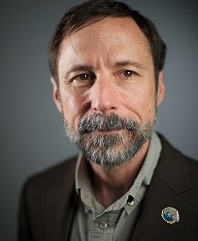 David Crisp合作论文数Jet Propulsion Laboratory, California Institute of Technology;NASA14
 Susan S. Kulawik合作论文数Earth and Space Sciences Division, Jet Propulsion Laboratory, Pasadena, California, USA14r beer合作论文数10
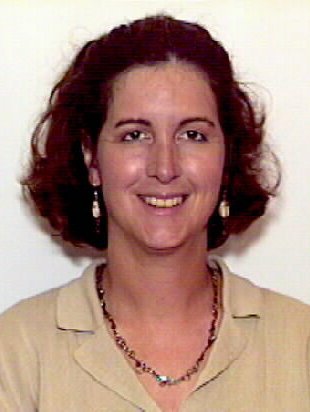 Coleen Roehl合作论文数Division of Geological and Planetary Sciences, California Institute of Technology9
 Jean-Francois Blavier合作论文数8
 Christian Frankenberg合作论文数Division of Geological and Planetary Sciences, California Institute of Technology;Jet Propulsion Laboratory8Ming Luo合作论文数7Fredrick W. Irion合作论文数7J.-F. Blavier合作论文数7
 Isamu Morino合作论文数Earth System Division, Satellite Observation Center, National Institute for Environmental Studies7
 Robert L. Herman合作论文数Jet Propulsion Laboratory;California Institute of Technology;Jet Propulsion Laboratory, California Institute of Technology6
 Brendan Fisher合作论文数Earth Science Section, Jet Propulsion Laboratory, California Institute of Technology6
 Nathaniel J. Livesey合作论文数6
 Lukas Mandrake合作论文数Jet Propulsion Laboratory, California Institute of Technology6
 Mark W. Shephard合作论文数Environment and Climate Change Canada6B. J. Naylor合作论文数5s e sund kulawik合作论文数5mingxiang luo合作论文数5Coleen M. Roehl合作论文数5
 Qinbin Li合作论文数Institute of the Environment & Sustainability, University of California, Los Angeles;Department of Atmospheric and Oceanic Sciences, University of California, Los Angeles5
 Jennifer Logan合作论文数Harvard School of Engineering and Applied Science5
 Kiel Matthäus合作论文数Department of Epileptology, University of Bonn5Curtis P. Rinsland合作论文数5
 Steven Wofsy合作论文数Department of Earth and Planetary Sciences, Harvard John A. Paulson School Of Engineering And Applied Sciences, Harvard University5N. A. D. Richards合作论文数5
 Justus Notholt合作论文数Department of Physics, University of Bremen5
 Edward V. Browell合作论文数NASA Langley Research Center5
 William Wallace Mcmillan合作论文数5
 Ru-Shan Gao合作论文数NOAA Aeronomy Laboratory5L. Jourdain合作论文数5s sund合作论文数4M. Loewenstein合作论文数4
 Benjamin C. Pierce合作论文数Department of Computer and Information Science, School of Engineering and Applied Science, University of Pennsylvania4C. R. Webster合作论文数4
 Anne Mee Thompson合作论文数Goddard Space Flight Center, National Aeronautics and Space Administration;Department of Atmospheric and Oceanic Science, College of Computer, Mathematical, and Natural Sciences, University of Maryland, College Park4
 Ralf Sussmann合作论文数4




