It is widely acknowledged that perceptions of the future play an important role in shaping social outcomes. Imaginaries of how the future might unfold influence expectations, help coordinate social interactions and, consequently, impact the allocation of resources. While alternative and formative visions of society, creating collective expectations of the future, played an important role in social development over the past two centuries, many observers today note a widespread decline in future-oriented thinking, especially in countries of the global north-what some describe as a "loss of the future." This article explores why inclusive social visions are so much less salient today compared to earlier times. In contrast to those who argue that stories of the future must simply be told more convincingly, this article highlights the fading of important social capacities for sustaining integrative collective visions.
ABSTRACT Despite decades of awareness, societies have failed to adequately respond to climate change, as evidenced by rising CO 2 emissions and the continued dominance of fossil fuels in global energy consumption. This failure underscores the structural constraints of capitalist modernity, where economic and political incentives, as well as consumer behaviors, obstruct effective climate action. Beyond the challenge of mitigation, climate change raises pressing questions about its social and political consequences. Societies will face increasing losses due to extreme weather events, resource depletion, and declining living conditions, exacerbating social inequalities and undermining the legitimacy of existing political and economic structures. The inability of capitalist modernity to address this crisis fosters a state of social anomie, where normative commitments to sustainability clash with entrenched systemic realities. Social scientists have a crucial role in examining these structural failures and identifying pathways for adaptation, resilience, and transformation. By analyzing the conflicts and contradictions within current societal arrangements, they can contribute to a more comprehensive understanding of climate change as a profound challenge to social order and political stability.
Journal Article Reflections on the field of socio-economics Get access Marion Fourcade, Marion Fourcade UC Berkeley, USA E-mail: marion.fourcade@gmail.com Search for other works by this author on: Oxford Academic Google Scholar Jens Beckert, Jens Beckert Max Planck Institute for the Study of Societies, Cologne, Germany Search for other works by this author on: Oxford Academic Google Scholar Neil Fligstein, Neil Fligstein Department of Sociology, UC Berkeley, USA Search for other works by this author on: Oxford Academic Google Scholar Bruce G Carruthers Bruce G Carruthers Northwestern University, USA Search for other works by this author on: Oxford Academic Google Scholar Socio-Economic Review, Volume 21, Issue 2, April 2023, Pages 703–720, https://doi.org/10.1093/ser/mwad014 Published: 07 June 2023
Research on wealth inequality and wealth concentration has made much progress in establishing statistics on the distribution of private wealth, its historical development, and its components in a large set of countries. Yet, this research is less concerned with country-specific contexts that have an impact on the practical relevance of private wealth and its distribution. This article develops a framework for comparative research that is interested in this question. Starting from a typology that distinguishes six "capacities of wealth," it asserts that private assets can be more important, more powerful, or more tolerable, depending on the institutional regulation of the political economy, for example, limitations on private property rights, welfare state redistribution, the electoral system, and cultural patterns of wealth legitimation. Using the USA and Germany as exemplary cases, I show that such differences exist and are politically relevant and that investigating the practical significance of private wealth in different political economies would open up new research trajectories in wealth research.
This chapter examines the role of imagination in enabling economic actors to make sense of the world and decide how to act and the part played by metaphorical thinking and analytical imagination within the discipline of economics. It starts from the assumption that modern capitalism is a quintessentially creative and imaginative system, characterized by constant novelty and radical uncertainty. The authors argue that economic behavior is therefore necessarily guided by working fictions and, in particular, by fictional expectations that combine individual imaginaries and social narratives with calculation. Building on insights from literary theory, the chapter examines the structuring and performative role of narratives and models and concludes that market power rests with those able to make their narratives and imaginaries count. Championing a new form of narrative economics, the authors propose that economists should employ discourse analysis to read the contingent interpretations that economic actors use to navigate uncertain futures.
Research indicates that positions of very high private wealth can often be maintained by families over many generations. This article puts front and center the institutions, mechanisms and practices through which families at the very top of the wealth distribution protect and enlarge their wealth. Opportunity hoarding is based on legal institutions, most importantly inheritance law, trust law, advantageous financial regulations and estate tax policies. Wealthy owners also pay for a growing number of legal and financial experts whose task it is to protect their fortunes. The stipulations of legal institutions are shaped through lobbying, campaign donations and the influencing of public opinion, facilitating the intergenerational preservation of large fortunes. Philanthropy appears to be not primarily a means of supporting general welfare, but rather a further instrument of wealth protection of the super-rich through its role in legitimizing large fortunes and the reaping of tax benefits. The entrenched character of large fortunes opens up questions regarding the normative identity of contemporary societies.
Le capitalisme se caractérise par son orientation vers l’avenir. Les actions des agents économiques reposent sur des « anticipations fictionnelles », qui permettent de faire face à l’incertitude. Lorsqu’elles perdent leur force de conviction, elles peuvent être à l’origine de crises. Contrôler ces fictions est donc un enjeu politique majeur.
What do we do if we cannot know what is best to do? The question of expectation formation and decision-making under conditions of fundamental uncertainty has recently attracted considerable scholarly attention and is currently one of the most fruitful questions for the development of theories of decision-making (Beckert, 2016; Holmes, 2014; Svetlova, 2021; Taleb, 2010). Most approaches to decision-making—most strongly in economics—follow the idea of identification of an optimal decision that can be singled out by rational calculation. Sophisticated theories of probability are applied to show that optimal solutions are calculable even in highly complex situations. Uncertainty is a prominent topic in these theories, but it is treated as a form of probabilistically calculable risk. Such normative theories of optimizing reach their limits when radical uncertainty is taken seriously. Radical uncertainty comes with different terminologies. Some scholars call it “fundamental uncertainty,” others “ontological uncertainty,” others “genuine uncertainty,” but the basic idea is typically traced to the essential distinction between risk and uncertainty introduced by Frank Knight ([1921] 1985) in the early 20th century. There are situations of risk to which probability theory can be applied, and there are situations of uncertainty, where it cannot. These are situations that are unique, because they entail genuine novelty, where the possible choice set cannot be known, where the assumption of “ergodicity” (Davidson, 1996) is not given. Under these conditions, the identification of the optimal decision is simply not possible. Actors cannot identify all causal effects that enter into an outcome. They cannot know the choice set and all possible states of the world. They cannot know what is best to do. Much of the economic world—though not all of it—is characterized by this kind of uncertainty. That crucial parts of the future cannot be foreknown is almost a truism and future studies have many years ago given up on the assumption that the future can actually be predicted (Andersson, 2018). How do actors decide in such situations? Conviction Narrative Theory (CNT), as developed by David Tuckett and his co-authors, makes an intriguing suggestion: actors make decisions by making sense of the world in narrative form, coming to the conviction that an envisioned future, articulated as a narrative, has an at least good enough chance of becoming the “future present” (Luhmann, 1976). Decisions are made based on such convictions. This is not a theory of craziness. Actors consider as many factors as possible, try to find facts and clues as to where they could go wrong in their assessments. But ultimately, there is no objective proof for the conclusion: uncertainty cannot be undone. Uncertainty can only be shifted sufficiently to the back, to calm down anxiety and allow for sufficient confidence to reach a decision. One of the crucial challenges of such a theory is to disentangle how actors actually become sufficiently confident in their narrative assessments of the situation. Tuckett's main contribution to this question is to highlight the role of emotions—an element that is often paid only scant attention. Convictions are not only cognitively anchored but also in positive feelings that are associated with the imaginary of the outcome that is associated with the decision to be taken. Actors look at decisions in the mode of the future past and indulge in the anticipated future that they imagine as a present—or they shy away from it in case the imagined future is unattractive to them. To create the emotions supporting decisions under conditions of uncertainty needs what Tuckett calls “attractors” and “doubt-repellors.” Though the role of emotions stands at the center of Tuckett's theory, he is enough of a sociologist and scholar of literary theory to also emphasize other elements that are undoubtedly relevant for creating confidence in a narrative: the way the story is being told, the institutional setup, the historical and cultural context are all relevant aspects. However, only scant attention is given to the power aspects of conviction narratives (Andersson, 2018). The power of the speaker or the use of manipulation techniques do not get much attention. The same holds for the role of the technological devices used in decision-making processes—from dynamic stochastic general equilibrium-models in macroeconomics to technology roadmaps to architectural visual representations of imagined futures (Beckert, 2021). All these “instruments of imagination” play an important role in creating conviction. Moreover, the aspects mentioned by Fenton-O'Creevy and Tuckett as being relevant for creating conviction in a narrative are merely presented as a shopping list. Little is said about how they relate to each other, under which scope conditions they are more or less important, and from which theoretical considerations they are assembled. But no scholar—to my knowledge—has succeeded (or even begun) to develop a comprehensive and predictive theory of the conditions under which stories become credible. This is a research frontier that needs to be tackled and Fenton-O'Creevy and Tuckett start doing this by writing a list. Next to putting emotions front and center of a theory of decision-making under conditions of radical uncertainty, the emphasis on ambivalence is a second far-reaching contribution of CNT. To be convinced of something can entail being blind to important aspects the future will bring. Such blindness can either lead to foregoing opportunities or overlooking threats. A main line of critique against theories of optimal decision-making is that, under conditions of uncertainty, such theories necessarily overlook important parameters of the situation and thus will be confronted with unexpected outcomes for which they leave decision makers utterly unprepared. One only needs to think of the financial crisis of 2008 and the perplexity of economists that such a crisis could indeed happen. The answer to the Queen as to why this crisis could occur was a major embarrassment for the discipline. But acting based on narrative convictions can entail the same danger. And a psychologically anchored theory needs to be especially mindful of this danger: it is common sense in psychology that humans have a strong tendency to suppress information that is dissonant to their beliefs and convictions. On the one hand, the “doubt-repellors” allow us to act despite not knowing what's best to do, on the other hand, they may keep us away from important insights. But how to avoid the development of “cognitive monocultures” (Bronk & Jacoby, 2016) where actors are “stuck in single stories about the future” (Fenton-O'Creevy & Tuckett 2021, p. 12) and tolerate instead ambivalence (or: a “sense of dissonance” (Stark, 2009)), despite the anxieties this may produce? Again, any answer to this question needs to include, next to psychological factors, the organizational and institutional conditions which support the articulation of counter-evidence and keep a multiple set of alternative futures in play. Some techniques developed in the context of foresight studies are designed to do exactly this: widening the cognitive horizon by pointing to a range of alternative scenarios. This, however, points back to the tension mentioned above: the more alternatives are kept in play, the more difficult it might become to finally settle on a decision. When it comes to investments in start-up companies, for instance, the strategy rather seems to be to push aside any ambivalence, bet on an outcome, and either win big or fail. For processes of radical innovation, ambivalence may be less productive, while for routine processes and incremental innovation it might be more so. This would also entail a testable hypothesis. A fruitful way to think about the tension between conviction and flexibility might be a processual perspective along the lines of pragmatist thinking. John Dewey ([1922] 1957) saw action as an inquiry where actors hold revisable convictions about ends and means. In the course of action, they encounter resistances, evidence that contradicts their narrative. These contradictions bring them into a mode of reflection and to eventually revise the narratives they hold, a creative adaptation that allows the action to continue. This is thought to be a recurring process where the action is not unfolding teleologically as following a preset goal, but where the setting of goals and the decision on means are endogenous to the action process itself. Any conviction regarding the future is provisional. Undoubtedly, a crucial element of this on the personal level is what Fenton-O'Creevy and Tuckett (2021, p. 9) call an “integrated state.” David Tuckett and his colleagues are contributing to an innovative understanding of decision-making under conditions of uncertainty which has many important implications for organizations and policy making. Leaving the trodden path of single exit optimization opens up a plethora of questions and research frontiers. For most of them, we are standing at the very beginning, many have perhaps not even been identified as questions. But despite these difficulties this new research finally confronts the implications of something that probably only few would seriously doubt: that our important decisions take place under conditions of fundamental uncertainty and that the idea that we could identify optimal decisions under such conditions is insufficient.
A small but growing share of sociological research recognizes the importance of perceptions of the future for explaining social outcomes. This article, taking a sociology of knowledge perspective, provides a systematic study of sociological scholarship dealing empirically with perceptions of the future. It is based on a qualitatively driven mixed methods analysis of 571 sociological research articles published between 1950 and 2019 and distinguishes between three clusters of scholarship: in the first cluster authors consider future orientations as either dependent or independent variable; in the second cluster they analyze the multifaceted ways in which actors imagine the future; and in the third cluster they are interested in the politically contested construction and diffusion of future orientations. By investigating these clusters, the article demonstrates how sociologists pay attention to future orientations in a broad spectrum of sociological fields, using a variety of methods and asking a wide set of questions about assessments of the future. The future is increasingly a realm of sociological analysis. We show how this field of research is structured and has developed over time. Elaborating on different facets of research that so far operate largely in isolation from each other, we aim to contribute to the development of the field. Sociology could benefit from more systematically integrating perceptions of the future ? as they are reflected in actor expectations, aspirations, and future beliefs ? into the discipline?s empirical investigations and explanatory models and from integrating the existing knowledge on these issues better.
What do organizations do, and why? An important but only selectively scrutinized aspect of the doings of organizations consists in their creation of imaginaries of economic futures. Under conditions of uncertainty, it is through ‘imagined futures’ that organizations motivate and find the rationale for their decisions, coordinate activities, manage stakeholders and compete with one another. This article suggests making the construction of imagined futures a vantage point for the study of organizations and processes of organizing. It focuses on ‘instruments of imagination’ used by firms to create ‘fictional expectations’ which are used to come to terms with an uncertain future – and to proactively shape this future. Instruments discussed here include strategic planning, technological projections, economic forecasting, and business plans among others. The article argues that a fruitful general analytical perspective can be developed by bringing the constitution, contestation and effects of imagined futures to the forefront of organizational analysis.
 Mark Lutter合作论文数Max-Planck Institute for the Study of Societies15
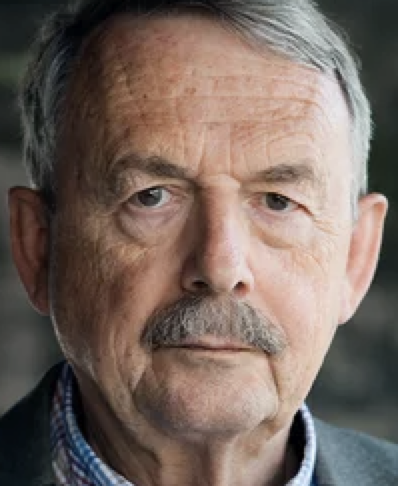 Wolfgang Streeck合作论文数Max-Planck-Institut Für Gesellschaftsforschung11
 Carsten Burhop合作论文数Max Planck;Institute for Research on Collective Goods;Max Planck|Institute for Research on Collective Goods5Rainer Diaz-Bone合作论文数Freien Universität5Richard Bronk合作论文数4dominic akyel合作论文数4
 Matias Dewey合作论文数University of St. Gallen4Heiner Ganssmann合作论文数4Jörg Rössel合作论文数Leipzig3christoph deutschmann合作论文数2Joerg Roessel合作论文数2
 Natalia Besedovsky合作论文数Universität Hamburg2
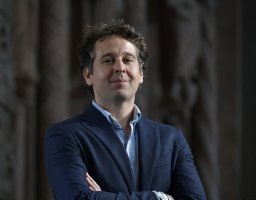 Timur Ergen合作论文数Max Planck Inst Study Soc, Paulstr 3, D-50676 Cologne, Germany2Marcin Serafin合作论文数Polish Acad Sci, Inst Philosophy & Sociol2
 Felipe González合作论文数Universidad Central de Chile2
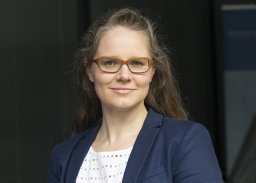 Lisa Suckert合作论文数Max-Planck-Institut für Gesellschaftsforschung2
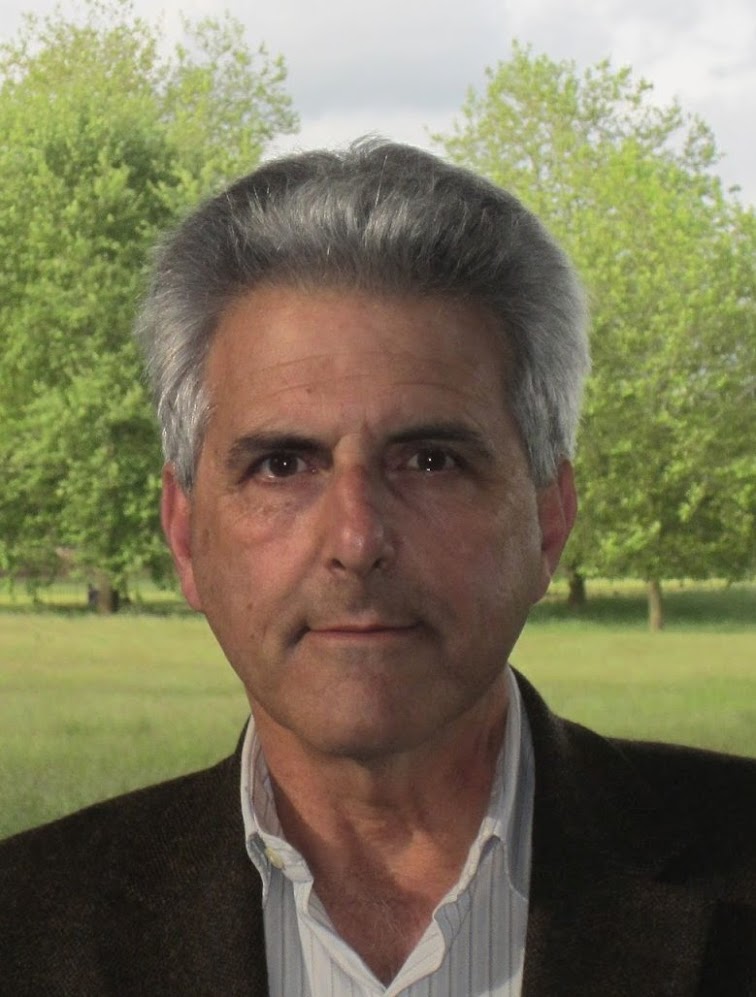 Neil Fligstein合作论文数Department of Sociology, University of California, Berkeley2
 Richard Swedberg合作论文数Department of Sociology, College of Arts & Sciences, Cornell University2Hartmut Berghoff合作论文数2
 Christine Musselin合作论文数Centre de Sociologie des Organisations, CNRS2
 Philip Manow合作论文数Universität Konstanz Fachbereich für Politik- und Verwaltungswissenschaft Universitätsstr. 10 78457 Konstanz Germany2
 Brooke Harrington合作论文数Brown University;Northwestern University;Brown University, Northwestern University2
 Betina Hollstein合作论文数2
 Patrik Aspers合作论文数Department of Sociology;Stockholm University;Department of Sociology, Stockholm University2jakob vogel合作论文数1daniel suber合作论文数1Francis L. Gerdes合作论文数1Charles A. Bennett合作论文数1peter borscheid合作论文数1georg kneer合作论文数1helmuth berking合作论文数1stefan hradil合作论文数1elmar j koenen合作论文数1
 Skadi Krause合作论文数1Hans-Peter Müller合作论文数1bernhard schafers合作论文数1ilona ostner合作论文数1Gita Dharampal-Frick合作论文数1michael terwey合作论文数1Harald Bluhm合作论文数1Jt Cothren合作论文数1Thomas Schwinn合作论文数1Jost Halfmann合作论文数1Enzo Faletto合作论文数1peter atteslander合作论文数1Hermann Strasser合作论文数1Anne Röthel合作论文数1
 Kaoru Sugihara合作论文数1Frank Ettrich合作论文数1




