The DNVF Memorandum: Objectives and Methods of Physical Activity-Related Health Services Research summarizes, for the first time, the highly interdisciplinary and interprofessional field of physical activity-based health care in the German healthcare system. In addition to providing a conceptual framework and definition of key measures and concepts in physical activity-related health care research, existing research gaps and needs are identified, and methods for advancing this relatively young field of research are described. A particular focus of this study is the relevant outcome parameters and their standardized assessment using established and valid measurement tools. The memorandum aims to establish a general understanding of the complex subject of promoting physical activity and sports therapy in the context of healthcare, to give an impulse to new research initiatives, and to integrate the currently available strong evidence on the effectiveness of physical activity and exercise into healthcare.
Background Knee arthroplasty is one of the most frequently performed operations in Germany, with approximately 170000 procedures per year. It is therefore essential that physicians should adhere to an appropriate, and patient-centered indication process. The updated guideline indication criteria for knee arthroplasty (EKIT-Knee) contain recommendations, which are based on current evidence and agreed upon by a broad consensus panel. For practical use, the checklist has also been updated. Methods For this guideline update, a systematic literature research was conducted in order to analyse (inter-)national guidelines and systematic reviews focusing on osteoarthritis of the knee and knee arthroplasty, to answer clinically relevant questions on diagnostic, predictors of outcome, risk factors and contraindications. Results Knee arthroplasty should solely be performed in patients with radiologically proven moderate or severe osteoarthritis of the knee (Kellgren-Lawrence grade 3 or 4), after previous non-surgical treatment for at least three months, in patients with high subjective burden with regard to knee-related complaints and after exclusion of possible contraindications (infection, comorbidities, BMI >= 40 kg/m(2)). Modifiable risk factors (such as smoking, diabetes mellitus, anaemia) should be addressed and optimised in advance. After meeting current guideline indications, a shared decision-making process between patients and surgeons is recommended, in order to maintain high quality surgical management of patients with osteoarthritis of the knee. Conclusions The update of the S2k-guideline was expanded to include unicondylar knee arthroplasty, the preoperative optimisation of modifiable risk factors was added and the main indication criteria were specified.
Exacerbated by an aging population, musculoskeletal diseases are a chronic and growing problem in the United States that impose significant health and economic burdens. The objective of this study was to analyze the correlation between the burden of diseases and the federal funds assigned to health-related research through the National Institutes of Health (NIH).An ecological study design was used to examine the relationship between NIH research funding and disease burden for 60 disease categories. We used the Global Burden of Disease (GBD) Study 2019 to measure disease burden and the NIH Research, Condition, and Disease Categories (RCDC) data to identify 60 disease categories aligned with available GBD data. NIH funding data was obtained from the RCDC system and the NIH Office of Budget. Using linear regression models, we observed that musculoskeletal diseases were among the most underfunded (i.e., negative residuals from the model) with respect to disease burden.Musculoskeletal diseases were underfunded, with neck pain being the most underfunded at only 0.83% of expected funding. Low back pain, osteoarthritis, and rheumatoid arthritis were also underfunded at 13.88%, 35.08%, and 66.26%, respectively. Musculoskeletal diseases were the leading cause of years lived with disability and the third leading cause in terms of prevalence and disability-adjusted life years. Despite the increasing burden of these diseases, the allocation of NIH funding to the National Institute of Arthritis and Musculoskeletal and Skin Diseases (NIAMS) has remained low compared to other institutes.Despite the increasing health burden and economic cost of $980 billion annually, the allocation of NIH funding to the NIAMS has remained low compared to other institutes. These findings suggest that the NIH may need to reassess its allocation of research funding to align with the current health challenges of our country. Furthermore, these clinically relevant observations highlight the need to increase research funding for musculoskeletal diseases and improve their prevention, diagnosis, and treatment.No funding.
Goals for health and health care are an indispensable basic requirement for a functioning health care system. The dilemma of the German health care system is that it has not been designed in a planned way, but that it has grown historically. In recent years, it has developed through the free play of forces into what it is today. The OECD characterizes the current state as follows: The costs of the German health system do not correspond to the often only average health outcomes for the population. To meet the legal requirements (especially SGB V 12, 27 and 70), health care/the health system in Germany needs concrete goals. An orientation towards health care goals entails measures on all levels of health care: on the macro level (overall system/total population), on the meso level (subdivided according to regions, specific population groups, etc.) as well as on the micro level (patients and health care providers). Based on national and international experiences, this position paper of the DNVF e.V. (German Network for health services research) shows the potential of how operationalised health care targets can ensure effective, affordable and high-quality health care. The coalition agreement of the current government propagates a reorientation with patient-related health care goals. Now it is important to derive concrete and realisable goals from this declaration of intent and to involve all important groups in the process. In addition, values and ethical standards for implementation shall be agreed upon in this process. The Health Ministry (BMG) should facilitate and promote the process of societal will-building for the definition of national health care goals. This requires a clear political will. As a result, the National Health Care Goals are available at the end of the process, which are published and maintained together with evidence-based facts as well as valid and resilient data in a Manual "National Health Care Goals". The operational responsibility for implementation could lie with the newly to be founded Federal Institute of Public Health, as already announced in the agreement of the governing coalition. The DNVF is willing to actively participate in the development of health care targets.
Analyses of health and health care (hereafter referred to as "health care analyses") usually aim to make transparent the structures, processes, results and interrelationships of health care and to record the degree to which health care systems and their actors have achieved their goals. Health care-related data are an indispensable source of data for many health care analyses. A prerequisite for the examination of a degree of goal achievement is first of all an agreement on those goals that are to be achieved by the system and its substructures, as well as the identification of the determinants of the achievement of the objectives. Primarily it must be examined how safely, effectively and patient-centred systems, facilities and service providers are operating. It also addresses issues of need, accessibility, utilisation, timeliness, appropriateness, patient safety, coordination, continuity, and health economic efficiency and equity of health care. The results of health care include system services (outputs), on the one hand, and results (outcomes), on the other, whereby the results (patient-reported outcomes) and experiences ( patient-reported experiences) reported are of particular importance. Health care analyses answer basic questions of health care research: who does what, when, how, why and with which resources and effects in routine health care. Health care analyses thus provide the necessary findings and key figures to further develop health care in order to improve the quality of health care. The applications range from capacity analyses to following innovations up to the concept of regional and supra-regional monitoring of the quality of care given to the population. Given the progress of digitalisation in Health Care, direct data from the care processes will be increasingly available for health care research. This can support care givers significantly if the findings of the studies are applied precisely and correctly within an adequate methodological frame. This can lead to measurable improved health care quality for patients. Data from the process of health care provision have a high potential. Their use needs the same scientific scrutiny as in all other scientific studies.
### Summary box COVID-19 is overwhelming healthcare services and healthcare workers globally. The response, appropriately, is on the ability to care for people who become critically ill, protect their carers and keep people physically distanced. However, this response has shifted what is considered and how to provide essential healthcare services. Rehabilitation services, which optimise physical and cognitive functioning to reduce disability, are a core component of high-value care.1 The decisions to shift, transform, delay or discontinue rehabilitation care are complex. These decisions have societal implications for today and the future. This commentary describes adjustments to the continuum of rehabilitation services across 12 low-income, middle-income and high-income countries in …
Briggs, Andrew M.; Slater, Helen; Hsieh, Evelyn; Kopansky-Giles, Deborah; Åkesson, Kristina E.; Dreinhöfer, Karsten E.; March, Lyn M.; Woolf, Anthony D. Author Information
The profile of human health is changing across the globe such that the burden of noncommunicable diseases (NCDs), particularly musculoskeletal conditions, is becoming more profound. Such change demands that health systems adapt to better support people in maintaining a functional health state and quality of life, as life expectancy continues to increase. In parallel to the rising burden of NCDs, in particular a disability burden, the need for rehabilitation services is increasing. The World Health Organization (WHO) responded recently with "Rehabilitation 2030: A Call for Action" (February 6-7, 2017, Geneva, Switzerland) and the publication of key recommendations for action. In this editorial, the authors reflect on Rehabilitation 2030 and consider its implications for health system reform in the context of rehabilitation for musculoskeletal health. J Orthop Sports Phys Ther 2017;47(5)297-300. doi:10.2519/jospt.2017.0105.
OBJECTIVE:Patient expectations have been identified as a factor that may account for individual differences in recovery after total hip replacement (THR) surgery. However, patient expectations have not been studied within a valid theoretical framework. This study employed the World Health Organization's model of health, the International Classification of Functioning, Disability and Health (ICF), to classify the content of preoperative patient expectations of THR. METHODS:A European cohort of 1,108 patients preoperatively reported 2 types of expectations. Patients reported what they anticipated surgery would enable them to do that they needed to be able to do ("need" expectation), and what they would like to be able to do ("desire" expectation) in a year's time. Free-text responses were independently classified by 2 researchers to 1 or more of the ICF constructs of impairment, activity limitation, and participation restriction. RESULTS:Interrater reliability was high (κ = ≥0.87). All patient expectations were classified to the ICF constructs. Less than 5% of patient expectations were identified as impairment, 58% of "need" expectations were identified as activity limitations, and 45% of "desire" expectations were identified as activity limitations and participation restrictions combined. CONCLUSION:The ICF is a suitable theoretical framework to study patient expectations of THR. THR targets impairment; however, few patient expectations were classified to the ICF definition of impairment. The majority of patient expectations were classified as activity limitation or a combination of activity limitation and participation restriction. Therefore, patient expectations of surgery focus on recovering valued activities rather than reversal of bodily impairments.
 Helen Slater合作论文数3
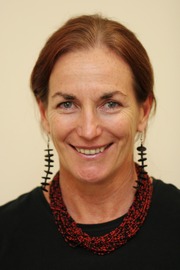 Lynette March合作论文数Faculty of Medicine and Health, The University of Sydney;Northern Clinical School, The University of Sydney3
 Klauspeter Günther合作论文数3Karl-Dieter Heller合作论文数2Andrea Schaller合作论文数2Thomas Bierbaum合作论文数2
 Lars Gabrys合作论文数Institut für Sportwissenschaft, Goethe-Universität Frankfurt2
 Stefanie Deckert合作论文数2Evelyn Hsieh合作论文数2
 Deborah Kopansky-Giles合作论文数2
 Anthony Woolf合作论文数Medical School, University of Exeter;Peninsula Medical School, University of Plymouth;National Institute of Health Research Clinical Research Network Southwest Peninsula, National Health Service2Jochen Schmitt合作论文数2
 Andrew Briggs合作论文数Department of Health Services Research and Policy, Faculty of Public Health and Policy, London School of Hygiene & Tropical Medicine;Global Health Economics Centre, London School of Hygiene & Tropical Medicine2Nitin Joseph合作论文数1James J. Young合作论文数1Ulrich Stöckle合作论文数1Marissa Carvalho合作论文数1Klaus Piwernetz合作论文数1Ionela-Roxana Petcu合作论文数1
 Wouter de Groote合作论文数1
 Yonatan Solomon合作论文数1Christof Veit合作论文数1Bereket Beyene合作论文数1Allen Seylani合作论文数1Chenwen Zhong合作论文数1Jayakumar Jeganathan合作论文数1Sonja Krupp合作论文数1Joerg Luetzner合作论文数1Andrea Reusch合作论文数1Victoria Marquevich合作论文数1Neil Betteridge合作论文数1
 Florian Udo Fischer合作论文数1
 Sheikh Mohammed Shariful Islam合作论文数1Kidist Adamu合作论文数1
 J.Joao Mendes合作论文数1Cornelia Lützner合作论文数1
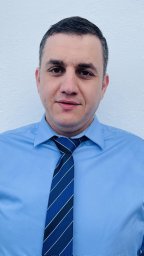 Ibrahim Qattea合作论文数1
 Vahid Rahmanian合作论文数Torbat Jam Faculty of Medical Sciences, Department of Public Health1Stefan Benz合作论文数1Maryam Sahebazzamani合作论文数Dept Med Biochem, Rafsanjan Univ Med Sci1
 Iman Zare合作论文数Faculty of Basic Sciences, Semnan University1
 Vidya Kadashetti合作论文数Forens Odontol, Krishna Inst Med Sci Deemed Univ1
 Sisay Shewasinad Yehualashet合作论文数Dept Nursing, Debre Berhan Univ1
 Kristina Åkesson合作论文数Department of Clinical Sciences, Faculty of Medicine, Lund University;Department of Orthopedics, Skåne University Hospital1Jana Semrau合作论文数1
 Saba Alvand合作论文数Digest Dis Res Inst, Univ Tehran Med Sci1Alfons Hollederer合作论文数1
 Isaac Yeboah Addo合作论文数Centre for Social Research in Health, The University of New South Wales1
 Katharina Eckert合作论文数1




