We introduce SIMA 2, a generalist embodied agent that understands and acts in a wide variety of 3D virtual worlds. Built upon a Gemini foundation model, SIMA 2 represents a significant step toward active, goal-directed interaction within an embodied environment. Unlike prior work (e.g., SIMA 1) limited to simple language commands, SIMA 2 acts as an interactive partner, capable of reasoning about high-level goals, conversing with the user, and handling complex instructions given through language and images. Across a diverse portfolio of games, SIMA 2 substantially closes the gap with human performance and demonstrates robust generalization to previously unseen environments, all while retaining the base model's core reasoning capabilities. Furthermore, we demonstrate a capacity for open-ended self-improvement: by leveraging Gemini to generate tasks and provide rewards, SIMA 2 can autonomously learn new skills from scratch in a new environment. This work validates a path toward creating versatile and continuously learning agents for both virtual and, eventually, physical worlds.
Building embodied AI systems that can follow arbitrary language instructions in any 3D environment is a key challenge for creating general AI. Accomplishing this goal requires learning to ground language in perception and embodied actions, in order to accomplish complex tasks. The Scalable, Instructable, Multiworld Agent (SIMA) project tackles this by training agents to follow free-form instructions across a diverse range of virtual 3D environments, including curated research environments as well as open-ended, commercial video games. Our goal is to develop an instructable agent that can accomplish anything a human can do in any simulated 3D environment. Our approach focuses on language-driven generality while imposing minimal assumptions. Our agents interact with environments in real-time using a generic, human-like interface: the inputs are image observations and language instructions and the outputs are keyboard-and-mouse actions. This general approach is challenging, but it allows agents to ground language across many visually complex and semantically rich environments while also allowing us to readily run agents in new environments. In this paper we describe our motivation and goal, the initial progress we have made, and promising preliminary results on several diverse research environments and a variety of commercial video games.
We present a soft, spatial, sequential, top-down attention model (S3TA). This model uses a soft attention mechanism to bottleneck its view of the input. A recurrent core is used to generate query vectors, which actively select information from the input by correlating the query with input- and space-dependent key maps at different spatial locations. We demonstrate the power and interpretabilty of this model under two settings. First, we build an agent which uses this attention model in RL environments and show that we can achieve performance competitive with state-of-the-art models while producing attention maps that elucidate some of the strategies used to solve the task. Second, we use this model in supervised learning tasks and show that it also achieves competitive performance and provides interpretable attention maps that show some of the underlying logic in the model's decision making.
Inspired by recent work in attention models for image captioning and question answering, we present a soft attention model for the reinforcement learning domain. This model uses a soft, top-down attention mechanism to create a bottleneck in the agent, forcing it to focus on task-relevant information by sequentially querying its view of the environment. The output of the attention mechanism allows direct observation of the information used by the agent to select its actions, enabling easier interpretation of this model than of traditional models. We analyze different strategies that the agents learn and show that a handful of strategies arise repeatedly across different games. We also show that the model learns to query separately about space and content (`where' vs. `what'). We demonstrate that an agent using this mechanism can achieve performance competitive with state-of-the-art models on ATARI tasks while still being interpretable.
Planning problems are among the most important and well-studied problems in artificial intelligence. They are most typically solved by tree search algorithms that simulate ahead into the future, evaluate future states, and back-up those evaluations to the root of a search tree. Among these algorithms, Monte-Carlo tree search (MCTS) is one of the most general, powerful and widely used. A typical implementation of MCTS uses cleverly designed rules, optimized to the particular characteristics of the domain. These rules control where the simulation traverses, what to evaluate in the states that are reached, and how to back-up those evaluations. In this paper we instead learn where, what and how to search. Our architecture, which we call an MCTSnet, incorporates simulation-based search inside a neural network, by expanding, evaluating and backing-up a vector embedding. The parameters of the network are trained end-to-end using gradient-based optimisation. When applied to small searches in the well known planning problem Sokoban, the learned search algorithm significantly outperformed MCTS baselines.
A key challenge in model-based reinforcement learning (RL) is to synthesize computationally efficient and accurate environment models. We show that carefully designed generative models that learn and operate on compact state representations, so-called state-space models, substantially reduce the computational costs for predicting outcomes of sequences of actions. Extensive experiments establish that state-space models accurately capture the dynamics of Atari games from the Arcade Learning Environment from raw pixels. The computational speed-up of state-space models while maintaining high accuracy makes their application in RL feasible: We demonstrate that agents which query these models for decision making outperform strong model-free baselines on the game MSPACMAN, demonstrating the potential of using learned environment models for planning.
Artificial intelligence (AI) has undergone a renaissance recently, making major progress in key domains such as vision, language, control, and decision-making. This has been due, in part, to cheap data and cheap compute resources, which have fit the natural strengths of deep learning. However, many defining characteristics of human intelligence, which developed under much different pressures, remain out of reach for current approaches. In particular, generalizing beyond one's experiences--a hallmark of human intelligence from infancy--remains a formidable challenge for modern AI. The following is part position paper, part review, and part unification. We argue that combinatorial generalization must be a top priority for AI to achieve human-like abilities, and that structured representations and computations are key to realizing this objective. Just as biology uses nature and nurture cooperatively, we reject the false choice between "hand-engineering" and "end-to-end" learning, and instead advocate for an approach which benefits from their complementary strengths. We explore how using relational inductive biases within deep learning architectures can facilitate learning about entities, relations, and rules for composing them. We present a new building block for the AI toolkit with a strong relational inductive bias--the graph network--which generalizes and extends various approaches for neural networks that operate on graphs, and provides a straightforward interface for manipulating structured knowledge and producing structured behaviors. We discuss how graph networks can support relational reasoning and combinatorial generalization, laying the foundation for more sophisticated, interpretable, and flexible patterns of reasoning. As a companion to this paper, we have released an open-source software library for building graph networks, with demonstrations of how to use them in practice.
Scene representation-the process of converting visual sensory data into concise descriptions-is a requirement for intelligent behavior. Recent work has shown that neural networks excel at this task when provided with large, labeled datasets. However, removing the reliance on human labeling remains an important open problem. To this end, we introduce the Generative Query Network (GQN), a framework within which machines learn to represent scenes using only their own sensors. The GQN takes as input images of a scene taken from different viewpoints, constructs an internal representation, and uses this representation to predict the appearance of that scene from previously unobserved viewpoints. The GQN demonstrates representation learning without human labels or domain knowledge, paving the way toward machines that autonomously learn to understand the world around them.
A key challenge in model-based reinforcement learning (RL) is to synthesize computationally efficient and accurate environment models. We show that carefully designed models that learn predictive and compact state representations, also called state-space models, substantially reduce the computational costs for predicting outcomes of sequences of actions. Extensive experiments establish that state-space models accurately capture the dynamics of Atari games from the Arcade Learning Environment (ALE) from raw pixels. Furthermore, RL agents that use Monte-Carlo rollouts of these models as features for decision making outperform strong model-free baselines on the game MS_PACMAN, demonstrating the benefits of planning using learned dynamic state abstractions.
We train a generator by maximum likelihood and we also train the same generator architecture by Wasserstein GAN. We then compare the generated samples, exact log-probability densities and approximate Wasserstein distances. We show that an independent critic trained to approximate Wasserstein distance between the validation set and the generator distribution helps detect overfitting. Finally, we use ideas from the one-shot learning literature to develop a novel fast learning critic.
We agree with Lake and colleagues on their list of "key ingredients" for building human-like intelligence, including the idea that model-based reasoning is essential. However, we favor an approach that centers on one additional ingredient: autonomy. In particular, we aim toward agents that can both build and exploit their own internal models, with minimal human hand engineering. We believe an approach centered on autonomous learning has the greatest chance of success as we scale toward real-world complexity, tackling domains for which ready-made formal models are not available. Here, we survey several important examples of the progress that has been made toward building autonomous agents with human-like abilities, and highlight some outstanding challenges.
In this paper we introduce a new unsupervised reinforcement learning method for discovering the set of intrinsic options available to an agent. This set is learned by maximizing the number of different states an agent can reliably reach, as measured by the mutual information between the set of options and option termination states. To this end, we instantiate two policy gradient based algorithms, one that creates an explicit embedding space of options and one that represents options implicitly. The algorithms also provide an explicit measure of empowerment in a given state that can be used by an empowerment maximizing agent. The algorithm scales well with function approximation and we demonstrate the applicability of the algorithm on a range of tasks.
Deep reinforcement learning methods attain super-human performance in a wide range of environments. Such methods are grossly inefficient, often taking orders of magnitudes more data than humans to achieve reasonable performance. We propose Neural Episodic Control: a deep reinforcement learning agent that is able to rapidly assimilate new experiences and act upon them. Our agent uses a semi-tabular representation of the value function: a buffer of past experience containing slowly changing state representations and rapidly updated estimates of the value function. We show across a wide range of environments that our agent learns significantly faster than other state-of-the-art, general purpose deep reinforcement learning agents.
Conventional wisdom holds that model-based planning is a powerful approach to sequential decision-making. It is often very challenging in practice, however, because while a model can be used to evaluate a plan, it does not prescribe how to construct a plan. Here we introduce the "Imagination-based Planner", the first model-based, sequential decision-making agent that can learn to construct, evaluate, and execute plans. Before any action, it can perform a variable number of imagination steps, which involve proposing an imagined action and evaluating it with its model-based imagination. All imagined actions and outcomes are aggregated, iteratively, into a "plan context" which conditions future real and imagined actions. The agent can even decide how to imagine: testing out alternative imagined actions, chaining sequences of actions together, or building a more complex "imagination tree" by navigating flexibly among the previously imagined states using a learned policy. And our agent can learn to plan economically, jointly optimizing for external rewards and computational costs associated with using its imagination. We show that our architecture can learn to solve a challenging continuous control problem, and also learn elaborate planning strategies in a discrete maze-solving task. Our work opens a new direction toward learning the components of a model-based planning system and how to use them.
Models that can simulate how environments change in response to actions can be used by agents to plan and act efficiently. We improve on previous environment simulators from high-dimensional pixel observations by introducing recurrent neural networks that are able to make temporally and spatially coherent predictions for hundreds of time-steps into the future. We present an in-depth analysis of the factors affecting performance, providing the most extensive attempt to advance the understanding of the properties of these models. We address the issue of computationally inefficiency with a model that does not need to generate a high-dimensional image at each time-step. We show that our approach can be used to improve exploration and is adaptable to many diverse environments, namely 10 Atari games, a 3D car racing environment, and complex 3D mazes.
We introduce Imagination-Augmented Agents (I2As), a novel architecture for deep reinforcement learning combining model-free and model-based aspects. In contrast to most existing model-based reinforcement learning and planning methods, which prescribe how a model should be used to arrive at a policy, I2As learn to interpret predictions from a learned environment model to construct implicit plans in arbitrary ways, by using the predictions as additional context in deep policy networks. I2As show improved data efficiency, performance, and robustness to model misspecification compared to several baselines.
We agree with Lake and colleagues on their list of key ingredients for building humanlike intelligence, including the idea that model-based reasoning is essential. However, we favor an approach that centers on one additional ingredient: autonomy. In particular, we aim toward agents that can both build and exploit their own internal models, with minimal human hand-engineering. We believe an approach centered on autonomous learning has the greatest chance of success as we scale toward real-world complexity, tackling domains for which ready-made formal models are not available. Here we survey several important examples of the progress that has been made toward building autonomous agents with humanlike abilities, and highlight some outstanding challenges.
For artificial general intelligence (AGI) it would be efficient if multiple users trained the same giant neural network, permitting parameter reuse, without catastrophic forgetting. PathNet is a first step in this direction. It is a neural network algorithm that uses agents embedded in the neural network whose task is to discover which parts of the network to re-use for new tasks. Agents are pathways (views) through the network which determine the subset of parameters that are used and updated by the forwards and backwards passes of the backpropogation algorithm. During learning, a tournament selection genetic algorithm is used to select pathways through the neural network for replication and mutation. Pathway fitness is the performance of that pathway measured according to a cost function. We demonstrate successful transfer learning; fixing the parameters along a path learned on task A and re-evolving a new population of paths for task B, allows task B to be learned faster than it could be learned from scratch or after fine-tuning. Paths evolved on task B re-use parts of the optimal path evolved on task A. Positive transfer was demonstrated for binary MNIST, CIFAR, and SVHN supervised learning classification tasks, and a set of Atari and Labyrinth reinforcement learning tasks, suggesting PathNets have general applicability for neural network training. Finally, PathNet also significantly improves the robustness to hyperparameter choices of a parallel asynchronous reinforcement learning algorithm (A3C).
State of the art deep reinforcement learning algorithms take many millions of interactions to attain human-level performance. Humans, on the other hand, can very quickly exploit highly rewarding nuances of an environment upon first discovery. In the brain, such rapid learning is thought to depend on the hippocampus and its capacity for episodic memory. Here we investigate whether a simple model of hippocampal episodic control can learn to solve difficult sequential decision-making tasks. We demonstrate that it not only attains a highly rewarding strategy significantly faster than state-of-the-art deep reinforcement learning algorithms, but also achieves a higher overall reward on some of the more challenging domains.
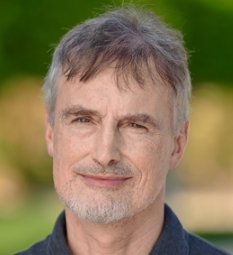 Jürgen Schmidhuber合作论文数NNAISENSE;Istituto Dalle Molle di Studi sull'Intelligenza Artificiale;Computer, Electrical and Mathematical Science and Engineering Division, King Abdullah University of Science and Technology;Faculty of Computer Science, University of Lugano22
 Danilo J. Rezende合作论文数Ellison Institute of Technology Oxford15
 Tom Schaul合作论文数DeepMind13
 Karol Gregor合作论文数Google DeepMind10
 Faustino John Gomez合作论文数Nnaisense10
 Demis Hassabis (戴密斯·哈萨比斯)合作论文数DeepMind;Isomorphic Labs9Yi Sun合作论文数Google8
 Oriol Vinyals合作论文数Google DeepMind8Charles Blundell合作论文数DeepMind7
 Frederic Besse合作论文数DeepMind7
 David Silver合作论文数Department of Computer Science, University College London;Ineffable Intelligence7
 David P. Reichert合作论文数Google7
 Theophane Weber合作论文数Google DeepMind7
 Koray Kavukcuoglu合作论文数Google DeepMind;Google6Ivo Danihelka合作论文数DeepMind6
 Timothy Lillicrap合作论文数Google DeepMind6
 Peter Battaglia合作论文数Google DeepMind5
 Sébastien Racanière合作论文数Google DeepMind5Lars Buesing合作论文数Google DeepMind5
 Jan Peters合作论文数Department of Computer Science, Technische Universität Darmstadt5
 Nicolas Heess合作论文数Google DeepMind5
 Shakir Mohamed合作论文数DeepMind5
 Shane Legg (肖恩·莱格)合作论文数Google DeepMind4
 Alexander Pritzel合作论文数DeepMind4
 Adam Santoro合作论文数Google DeepMind4
 Alex Graves合作论文数DeepMind4
 Julian Togelius合作论文数Department of Computer Science and Engineering, Tandon School of Engineering, New York University;Polytechnic Institute, Tandon School of Engineering, New York University;Game Innovation Lab, New York University;modl.ai;OriGen.AI4Justin Bayer合作论文数Chair for Robotics and Embedded Systems, Insitut fur Informatik, Technische Universitat Munchen, Germany4
 Matthew Botvinick合作论文数Gatsby Computational Neuroscience Unit, University College London;Anthropic;Yale Law School4
 Volodymyr Mnih合作论文数Google DeepMind4
 Ali Eslami合作论文数Google DeepMind;Gemini3
 Yujia Li (李宇佳)合作论文数3
 Martin Riedmiller合作论文数Google DeepMind3
 Andrei A. Rusu合作论文数DeepMind3
 Fabio Viola合作论文数Google DeepMind;Mila3
 Frank Sehnke合作论文数Faculty of Computer Science, Technische Universität München3
 Matteo Gagliolo合作论文数Institute of Sociology, Faculty of Social and Political Science, Université Libre de Bruxelles3
 Ryan Faulkner合作论文数Google DeepMind;University of Toronto3
 Benigno Uria合作论文数Google DeepMind3
 Thomas Rückstieß合作论文数Technische Universität München3
 Ioannis Antonoglou合作论文数Reflection AI3
 Razvan Pascanu合作论文数Google DeepMind3Chrisantha Fernando合作论文数Google DeepMind2
 Mike Chrzanowski合作论文数NVIDIA2Adrian Bolton合作论文数2
 Dylan Banarse合作论文数DeepMind, London, United Kingdom2
 T. Keck合作论文数DeepMind, London, England2
 Loic Matthey合作论文数DeepMind2
 Adrià Puigdomènech Badia合作论文数DeepMind2