We introduce SIMA 2, a generalist embodied agent that understands and acts in a wide variety of 3D virtual worlds. Built upon a Gemini foundation model, SIMA 2 represents a significant step toward active, goal-directed interaction within an embodied environment. Unlike prior work (e.g., SIMA 1) limited to simple language commands, SIMA 2 acts as an interactive partner, capable of reasoning about high-level goals, conversing with the user, and handling complex instructions given through language and images. Across a diverse portfolio of games, SIMA 2 substantially closes the gap with human performance and demonstrates robust generalization to previously unseen environments, all while retaining the base model's core reasoning capabilities. Furthermore, we demonstrate a capacity for open-ended self-improvement: by leveraging Gemini to generate tasks and provide rewards, SIMA 2 can autonomously learn new skills from scratch in a new environment. This work validates a path toward creating versatile and continuously learning agents for both virtual and, eventually, physical worlds.
Efficient video tokenization remains a key bottleneck in learning general purpose vision models that are capable of processing long video sequences. Prevailing approaches are restricted to encoding videos to a fixed number of tokens, where too few tokens will result in overly lossy encodings, and too many tokens will result in prohibitively long sequence lengths. In this work, we introduce ElasticTok, a method that conditions on prior frames to adaptively encode a frame into a variable number of tokens. To enable this in a computationally scalable way, we propose a masking technique that drops a random number of tokens at the end of each frames's token encoding. During inference, ElasticTok can dynamically allocate tokens when needed -- more complex data can leverage more tokens, while simpler data only needs a few tokens. Our empirical evaluations on images and video demonstrate the effectiveness of our approach in efficient token usage, paving the way for future development of more powerful multimodal models, world models, and agents. Video examples of using ElasticTok can be found on our website: http://largeworldmodel.github.io/elastictok
Building generalist agents that can accomplish many goals in rich open-ended environments is one of the research frontiers for reinforcement learning. A key limiting factor for building generalist agents with RL has been the need for a large number of reward functions for achieving different goals. We investigate the feasibility of using off-the-shelf vision-language models, or VLMs, as sources of rewards for reinforcement learning agents. We show how rewards for visual achievement of a variety of language goals can be derived from the CLIP family of models, and used to train RL agents that can achieve a variety of language goals. We showcase this approach in two distinct visual domains and present a scaling trend showing how larger VLMs lead to more accurate rewards for visual goal achievement, which in turn produces more capable RL agents.
We propose Algorithm Distillation (AD), a method for distilling reinforcement learning (RL) algorithms into neural networks by modeling their training histories with a causal sequence model. Algorithm Distillation treats learning to reinforcement learn as an across-episode sequential prediction problem. A dataset of learning histories is generated by a source RL algorithm, and then a causal transformer is trained by autoregressively predicting actions given their preceding learning histories as context. Unlike sequential policy prediction architectures that distill post-learning or expert sequences, AD is able to improve its policy entirely in-context without updating its network parameters. We demonstrate that AD can reinforcement learn in-context in a variety of environments with sparse rewards, combinatorial task structure, and pixel-based observations, and find that AD learns a more data-efficient RL algorithm than the one that generated the source data.
Unsupervised skill learning objectives (Gregor et al., 2016, Eysenbach et al., 2018) allow agents to learn rich repertoires of behavior in the absence of extrinsic rewards. They work by simultaneously training a policy to produce distinguishable latent-conditioned trajectories, and a discriminator to evaluate distinguishability by trying to infer latents from trajectories. The hope is for the agent to explore and master the environment by encouraging each skill (latent) to reliably reach different states. However, an inherent exploration problem lingers: when a novel state is actually encountered, the discriminator will necessarily not have seen enough training data to produce accurate and confident skill classifications, leading to low intrinsic reward for the agent and effective penalization of the sort of exploration needed to actually maximize the objective. To combat this inherent pessimism towards exploration, we derive an information gain auxiliary objective that involves training an ensemble of discriminators and rewarding the policy for their disagreement. Our objective directly estimates the epistemic uncertainty that comes from the discriminator not having seen enough training examples, thus providing an intrinsic reward more tailored to the true objective compared to pseudocount-based methods (Burda et al., 2019). We call this exploration bonus discriminator disagreement intrinsic reward, or DISDAIN. We demonstrate empirically that DISDAIN improves skill learning both in a tabular grid world (Four Rooms) and the 57 games of the Atari Suite (from pixels). Thus, we encourage researchers to treat pessimism with DISDAIN.
Large and diverse datasets have been the cornerstones of many impressive advancements in artificial intelligence. Intelligent creatures, however, learn by interacting with the environment, which changes the input sensory signals and the state of the environment. In this work, we aim to bring the best of both worlds and propose an algorithm that exhibits an exploratory behavior whilst it utilizes large diverse datasets. Our key idea is to leverage deep generative models that are pretrained on static datasets and introduce a dynamic model in the latent space. The transition dynamics simply mixes an action and a random sampled latent. It then applies an exponential moving average for temporal persistency, the resulting latent is decoded to image using pretrained generator. We then employ an unsupervised reinforcement learning algorithm to explore in this environment and perform unsupervised representation learning on the collected data. We further leverage the temporal information of this data to pair data points as a natural supervision for representation learning. Our experiments suggest that the learned representations can be successfully transferred to downstream tasks in both vision and reinforcement learning domains.
This paper deals with the problem of learning a skill-conditioned policy that acts meaningfully in the absence of a reward signal. Mutual information based objectives have shown some success in learning skills that reach a diverse set of states in this setting. These objectives include a KL-divergence term, which is maximized by visiting distinct states even if those states are not far apart in the MDP. This paper presents an approach that rewards the agent for learning skills that maximize the Wasserstein distance of their state visitation from the start state of the skill. It shows that such an objective leads to a policy that covers more distance in the MDP than diversity based objectives, and validates the results on a variety of Atari environments.
Finding different solutions to the same problem is a key aspect of intelligence associated with creativity and adaptation to novel situations. In reinforcement learning, a set of diverse policies can be useful for exploration, transfer, hierarchy, and robustness. We propose Diverse Successive Policies, a method for discovering policies that are diverse in the space of Successor Features, while assuring that they are near optimal. We formalize the problem as a Constrained Markov Decision Process (CMDP) where the goal is to find policies that maximize diversity, characterized by an intrinsic diversity reward, while remaining near-optimal with respect to the extrinsic reward of the MDP. We also analyze how recently proposed robustness and discrimination rewards perform and find that they are sensitive to the initialization of the procedure and may converge to sub-optimal solutions. To alleviate this, we propose new explicit diversity rewards that aim to minimize the correlation between the Successor Features of the policies in the set. We compare the different diversity mechanisms in the DeepMind Control Suite and find that the type of explicit diversity we are proposing is important to discover distinct behavior, like for example different locomotion patterns.
In the absence of external rewards, agents can still learn useful behaviors by identifying and mastering a set of diverse skills within their environment. Existing skill learning methods use mutual information objectives to incentivize each skill to be diverse and distinguishable from the rest. However, if care is not taken to constrain the ways in which the skills are diverse, trivially diverse skill sets can arise. To ensure useful skill diversity, we propose a novel skill learning objective, Relative Variational Intrinsic Control (RVIC), which incentivizes learning skills that are distinguishable in how they change the agent's relationship to its environment. The resulting set of skills tiles the space of affordances available to the agent. We qualitatively analyze skill behaviors on multiple environments and show how RVIC skills are more useful than skills discovered by existing methods in hierarchical reinforcement learning.
An agent might be said, informally, to have mastery of its environment when it has maximised the effective number of states it can reliably reach. In practice, this often means maximizing the number of latent codes that can be discriminated from future states under some short time horizon (e.g. \cite{eysenbach2018diversity}). By situating these latent codes in a globally consistent coordinate system, we show that agents can reliably reach more states in the long term while still optimizing a local objective. A simple instantiation of this idea, \textbf{E}ntropic \textbf{D}esired \textbf{D}ynamics for \textbf{I}ntrinsic \textbf{C}on\textbf{T}rol (EDDICT), assumes fixed additive latent dynamics, which results in tractable learning and an interpretable latent space. Compared to prior methods, EDDICT's globally consistent codes allow it to be far more exploratory, as demonstrated by improved state coverage and increased unsupervised performance on hard exploration games such as Montezuma's Revenge.
A typical visual scene we encounter in everyday life is complex and filled with a huge amount of perceptual information. The term, “visual attention” describes a set of mechanisms that limit some processing to a subset of incoming stimuli. Attentional mechanisms shape what we see and what we can act upon. They allow for concurrent selection of some (preferably, relevant) information and inhibition of other information. This selection permits the reduction of complexity and informational overload. Selection can be determined both by the “bottom-up” saliency of information from the environment and by the “top-down” state and goals of the perceiver. Attentional effects can take the form of modulating or enhancing the selected information. A central role for selective attention is to enable the “binding” of selected information into unified and coherent representations of objects in the outside world. In the overview on visual attention presented here we will review the mechanisms and consequences of selection and inhibition over space and time. We will examine theoretical, behavioral and neurophysiologic work done on visual attention. We also discuss the relations between attention and other cognitive processes such as automaticity and awareness.
We present an attention-based model for recognizing multiple objects in images. The proposed model is a deep recurrent neural network trained with reinforcement learning to attend to the most relevant regions of the input image. We show that the model learns to both localize and recognize multiple objects despite being given only class labels during training. We evaluate the model on the challenging task of transcribing house number sequences from Google Street View images and show that it is both more accurate than the state-of-the-art convolutional networks and uses fewer parameters and less computation.
Applying Q-learning to high-dimensional or continuous action spaces can be difficult due to the required maximization over the set of possible actions. Motivated by techniques from amortized inference, we replace the expensive maximization over all actions with a maximization over a small subset of possible actions sampled from a learned proposal distribution. The resulting approach, which we dub Amortized Q-learning (AQL), is able to handle discrete, continuous, or hybrid action spaces while maintaining the benefits of Q-learning. Our experiments on continuous control tasks with up to 21 dimensional actions show that AQL outperforms D3PG (Barth-Maron et al, 2018) and QT-Opt (Kalashnikov et al, 2018). Experiments on structured discrete action spaces demonstrate that AQL can efficiently learn good policies in spaces with thousands of discrete actions.
It has been established that diverse behaviors spanning the controllable subspace of an Markov decision process can be trained by rewarding a policy for being distinguishable from other policies \citep{gregor2016variational, eysenbach2018diversity, warde2018unsupervised}. However, one limitation of this formulation is generalizing behaviors beyond the finite set being explicitly learned, as is needed for use on subsequent tasks. Successor features \citep{dayan93improving, barreto2017successor} provide an appealing solution to this generalization problem, but require defining the reward function as linear in some grounded feature space. In this paper, we show that these two techniques can be combined, and that each method solves the other's primary limitation. To do so we introduce Variational Intrinsic Successor FeatuRes (VISR), a novel algorithm which learns controllable features that can be leveraged to provide enhanced generalization and fast task inference through the successor feature framework. We empirically validate VISR on the full Atari suite, in a novel setup wherein the rewards are only exposed briefly after a long unsupervised phase. Achieving human-level performance on 14 games and beating all baselines, we believe VISR represents a step towards agents that rapidly learn from limited feedback.
The study of object representations in computer vision has primarily focused on developing representations that are useful for image classification, object detection, or semantic segmentation as downstream tasks. In this work we aim to learn object representations that are useful for control and reinforcement learning (RL). To this end, we introduce Transporter, a neural network architecture for discovering concise geometric object representations in terms of keypoints or image-space coordinates. Our method learns from raw video frames in a fully unsupervised manner, by transporting learnt image features between video frames using a keypoint bottleneck. The discovered keypoints track objects and object parts across long time-horizons more accurately than recent similar methods. Furthermore, consistent long-term tracking enables two notable results in control domains -- (1) using the keypoint co-ordinates and corresponding image features as inputs enables highly sample-efficient reinforcement learning; (2) learning to explore by controlling keypoint locations drastically reduces the search space, enabling deep exploration (leading to states unreachable through random action exploration) without any extrinsic rewards.
Exploration in environments with sparse rewards is a key challenge for reinforcement learning. How do we design agents with generic inductive biases so that they can explore in a consistent manner instead of just using local exploration schemes like epsilon-greedy? We propose an unsupervised reinforcement learning agent which learns a discrete pixel grouping model that preserves spatial geometry of the sensors and implicitly of the environment as well. We use this representation to derive geometric intrinsic reward functions, like centroid coordinates and area, and learn policies to control each one of them with off-policy learning. These policies form a basis set of behaviors (options) which allows us explore in a consistent way and use them in a hierarchical reinforcement learning setup to solve for extrinsically defined rewards. We show that our approach can scale to a variety of domains with competitive performance, including navigation in 3D environments and Atari games with sparse rewards.
Learning to control an environment without hand-crafted rewards or expert data remains challenging and is at the frontier of reinforcement learning research. We present an unsupervised learning algorithm to train agents to achieve perceptually-specified goals using only a stream of observations and actions. Our agent simultaneously learns a goal-conditioned policy and a goal achievement reward function that measures how similar a state is to the goal state. This dual optimization leads to a co-operative game, giving rise to a learned reward function that reflects similarity in controllable aspects of the environment instead of distance in the space of observations. We demonstrate the efficacy of our agent to learn, in an unsupervised manner, to reach a diverse set of goals on three domains -- Atari, the DeepMind Control Suite and DeepMind Lab.
 Koray Kavukcuoglu合作论文数Google DeepMind;Google22
 David Silver合作论文数Department of Computer Science, University College London;Ineffable Intelligence11
 Geoffrey E. Hinton合作论文数Department of Computer Science, University of Toronto;Vector Institute10
 Steven Hansen合作论文数Google DeepMind7
 Remi Munos合作论文数Meta7
 Alex Graves合作论文数DeepMind7
 David Warde-Farley合作论文数Google DeepMind6
 Nicolas Heess合作论文数Google DeepMind6
 Shane Legg (肖恩·莱格)合作论文数Google DeepMind5
 Tom Van de Wiele合作论文数4
 Kate Baumli合作论文数Google DeepMind4
 Brendan O'Donoghue合作论文数DeepMind4
 Martin Riedmiller合作论文数Google DeepMind4
 Marc'Aurelio Ranzato合作论文数DeepMind4
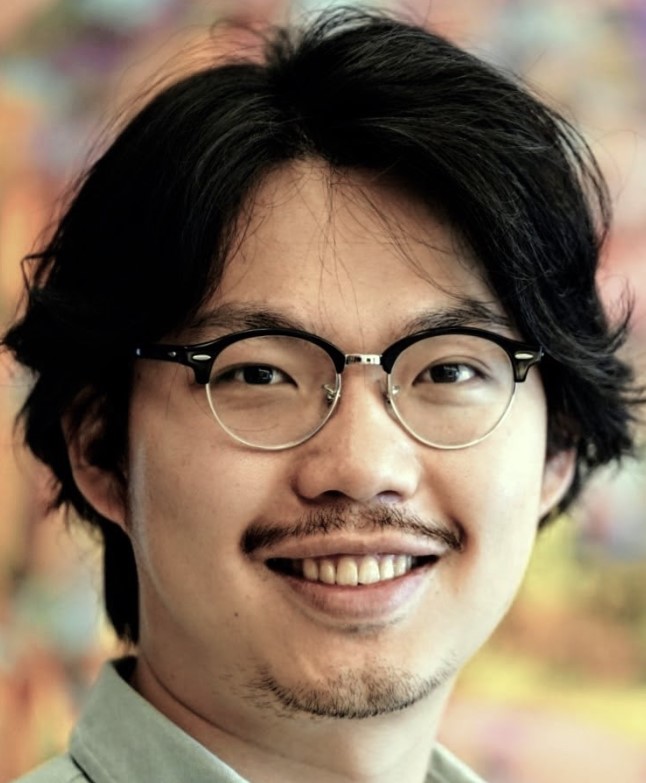 Jimmy Ba合作论文数Department of Computer Science, University of Toronto4
 Catalin Ionescu合作论文数DeepMind;Institute for Numerical Simulation, University of Bonn4
 Daan Wierstra合作论文数DeepMind4
 Luyu Wang合作论文数Google DeepMind3Stephen Spencer合作论文数3
 Satinder Singh合作论文数Computer Science and Engineering Division, Electrical Engineering and Computer Science Department, University of Michigan;Google DeepMind3
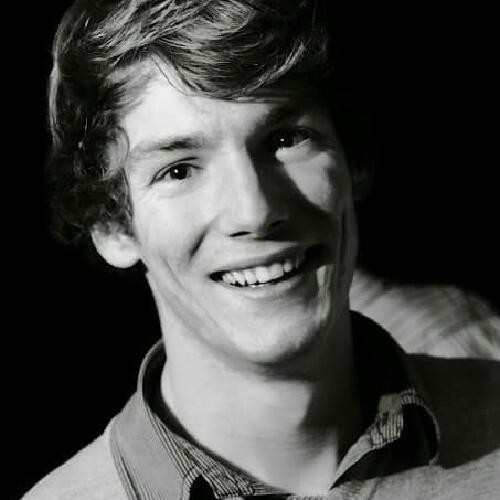 Tim Harley合作论文数DeepMind3
 Demis Hassabis (戴密斯·哈萨比斯)合作论文数DeepMind;Isomorphic Labs3
 Joel Z Leibo合作论文数Google DeepMind;King's College London3
 Tom Schaul合作论文数DeepMind3
 Tejas Kulkarni合作论文数Common Sense Machines3
 Andrei A. Rusu合作论文数DeepMind3
 Joel Veness合作论文数Google DeepMind3Thomas Lampe合作论文数Google DeepMind2
 Hao Liu合作论文数Google DeepMind2
 Misha Laskin合作论文数Google DeepMind2
 Fabio Pardo合作论文数Google DeepMind2Richie Steigerwald合作论文数2
 Ian Osband合作论文数OpenAI2
 Stig Petersen合作论文数DeepMind, London, England2
 Sebastian Flennerhag合作论文数DeepMind2
 Adrià Puigdomènech Badia合作论文数DeepMind2
 DJ Strouse合作论文数Google DeepMind2
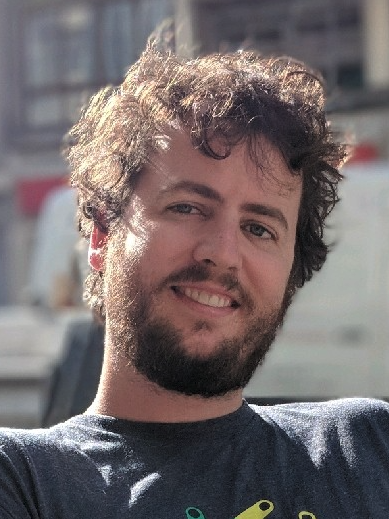 Matteo Hessel合作论文数Google DeepMind2
 Michael Neunert合作论文数ETH Zurich2
 Tom Zahavy合作论文数DeepMind2
 Himanshu Sahni合作论文数Georgia Institute of Technology2
 Wojciech Marian Czarnecki合作论文数Google DeepMind2Hubert Soyer合作论文数DeepMind2
 André Barreto合作论文数DeepMind2
 Charlie Beattie合作论文数Google DeepMind2
 Ziyu Wang合作论文数Haiper2Roland Hafner合作论文数Google DeepMind2
 Csaba Szepesvári合作论文数Department of Computing Science, Faculty of Science, University of Alberta;DeepMind;Alberta Machine Intelligence Institute2
 Jonas Degrave合作论文数2