The SLD Cherenkov Ring Imaging Detector uses a proportional wire detector for which a single channel hybrid has been developed. It consists of a preamplifer, gain selectable amplifier, load driver amplifier, power switching, and precision calibrator. For this hybrid, a bipolar, semicustom, integrated circuit has been designed which includes video operational amplifiers for two of the gain stages. This approach allows maximization of the detector volume, allows DC coupling, and enables gain selection. System tests show good noise performance, calibration precision, system linearity, and signal shape uniformity over the full dynamic range.
Summary form only. The performance of the Cherenkov Ring Imaging Detector (CRID) of the SLD experiment at the SLAC linear collider during the 1992 physics data run is discussed. The barrel CRID is complete and fully operational. Cherenkov rings have been observed from both the liquid and the gas radiators. The rings are associated with particle tracks measured in the central drift chamber and the radius of the ring together with the momentum measurement is used to identify particles. Work is in progress to improve the resolution by better determining the position of the drift boxes, the mirrors, and the central drift chamber relative to one other using data from cosmic rays and Z/sup 0/ chambers. >
We describe the likelihood ratio method used for particle identification in the SLD CRID, which allows the use of the entire momentum range covered by the liquid and gas radiators, including the threshold regions. Its application to two preliminary physics analyses is also described.
The operation and performance of the SLD CRID achieved during the recently completed 1994–1995 run of the SLC will be discussed. Stable operation of liquid (C6F14) and gas (85% C5F12 and 15% N2) radiators with good UV transparency has been achieved. Our expectations for the future SLD physics program will also be briefly discussed.
We present the Cherenkov ring imaging detector in the endcap regions of the SLD detector and report initial performance. The endcap CRID was completed and commissioned in 1993 and is fully operational for the 1994 run. First Cherenkov rings have been observed. The endcap CRID detectors and fluid systems are described and initial operational experience is discussed.< >
We report on operational experience with and experimental performance of the SLD barrel Cherenkov Ring Imaging Detector from the 1992 and 1993 physics runs. The liquid (C/sub 6/F/sub 14/) and gas (C/sub 5/F/sub 12/) radiator recirculation systems have performed well, and the drift gas supply system has operated successfully with TMAE for three years. Cherenkov rings have been observed from both the liquid and gas radiators. The number and angular resolution of Cherenkov photons have been measured, and found to be close to design specifications.< >
This paper describes the performance of a large 4pi Cherenkov Ring Imaging Detector (CRID) in the SLD experiment at the SLC at SLAC. We compare the most recent SLD results with those obtained during the R&D period, discuss various design features, and highlight some specific lessons derived from three years of operation.
Z0 bosons have been produced by collisions of longitudinally polarized electrons with unpolarized positrons at the SLAC Linear Collider and their decays have been recorded by the SLD experiment. We present preliminary QCD results based on the first 6000 such decays. We find good agreement between the inclusive properties of these data and the predictions of perturbative QCD plus fragmentation models. The strong coupling, αs, has been measured by three methods: jet rates yield αs(MZ)=0.119±0.002(stat.)±0.003(exp. syst.)±0.014(theor.); energy‐energy correlations yield αs(MZ)=0.121±0.002±0.004±0.0160.009; and the energy‐energy correlation asymmetry gives αs(MZ)=0.108±0.003±0.005±0.0080.003.
We present the first measurement of the left-right cross section asymmetry (${\mathit{A}}_{\mathit{L}\mathit{R}}$) for Z boson production by ${\mathit{e}}^{+}$${\mathit{e}}^{\mathrm{\ensuremath{-}}}$ collisions. The measurement was performed at a center-of-mass energy of 91.55 GeV with the SLD detector at the SLAC Linear Collider which utilized a longitudinally polarized electron beam. The average beam polarization was (22.4\ifmmode\pm\else\textpm\fi{}0.6)%. Using a sample of 10 224 Z decays, we measure ${\mathit{A}}_{\mathit{L}\mathit{R}}$ to be 0.100\ifmmode\pm\else\textpm\fi{}0.044(stat)\ifmmode\pm\else\textpm\fi{}0.004(syst), which determines the effective weak mixing angle to be ${\mathrm{sin}}^{2}$${\mathrm{\ensuremath{\theta}}}_{\mathit{W}}^{\mathit{e}\mathit{f}\mathit{f}}$=0.2378 \ifmmode\pm\else\textpm\fi{}0.0056(stat)\ifmmode\pm\else\textpm\fi{}0.0005(syst).
The design and operation of the fluid delivery, monitor, and control systems for the SLD barrel Cherenkov Ring Imaging Detector (CRID) are described. The systems deliver drift gas (C/sub 2/H/sub 6/+TMAE), radiator gas (C/sub 5/F/sub 12/+N/sub 2/), and radiator liquid (C/sub 6/F/sub 14/). Measured critical quantities such as electron lifetime in the drift gas and ultraviolet (UV) transparencies of the radiator fluids, together with the operational experience, are reported.< >
This paper describes the design, construction, and initial operation of the SLD Vertex Detector, the first device to employ charge coupled devices (CCDs) on a large scale in a high energy physics experiment. The Vertex Detector comprises 480 CCDs, with a total of 120 Mpixels. Each pixel functions as an independent particle detecting element, providing space point measurements of charged particle tracks with a typical precision of 5 μm in each co‐ordinate. The CCDs are arranged in four concentric cylinders just outside the beam pipe which surrounds the e+e− collision point of the SLAC Linear Collider (SLC). The Vertex Detector is a powerful tool for distinguishing secondary vertex tracks, produced by decay in flight of heavy flavor hadrons or tau leptons, from tracks produced at the primary event vertex. Because the colliding beam environment imposes severe constraints on the design of such a detector, a six year R&D programme was needed to develop solutions to a number of problems. The requirements include a low‐mass structure (to minimize multiple scattering) both for mechanical support and to provide signal paths for the CCDs; operation at low temperature with a high degree of mechanical stability; and relatively high speed CCD readout, signal processing, and data sparsification. The lessons learned through the long R&D period should be useful for the construction of large arrays of CCDs or smart pixel devices in the future, in a number of areas of science and technology.
Views Icon Views Article contents Figures & tables Video Audio Supplementary Data Peer Review Share Icon Share Twitter Facebook Reddit LinkedIn Tools Icon Tools Reprints and Permissions Cite Icon Cite Search Site Citation J. Va’vra, K. Abe, P. Antilogus, D. Aston, K. Baird, A. Bean, R. Ben‐David, T. Bienz, F. Bird, D. O. Caldwell, M. Cavalli‐Sforza, J. Coller, P. Coyle, D. Coyne, S. Dasu, S. Dolinsky, A. d’Oliveira, J. Duboscq, W. Dunwoodie, G. Hallewell, K. Hasegawa, Y. Hasegawa, J. Huber, Y. Iwasaki, P. Jacques, R. A. Johnson, M. Kalelkar, H. Kawahara, Y. Kwon, D. W. G. S. Leith, X. Liu, A. Lu, S. Manly, J. Martinez, L. Mathys, S. McHugh, B. Meadows, G. Müller, D. Muller, T. Nagamine, M. Nussbaum, T. J. Pavel, R. Plano, B. Ratcliff, P. Rensing, A. K. S. Santha, D. Schultz, J. T. Shank, S. Shapiro, C. Simopoulos, J. Snyder, M. D. Sokoloff, E. Solodov, P. Stamer, I. Stockdale, F. Suekane, N. Toge, J. Turk, J. S. Whitaker, D. A. Williams, S. H. Williams, R. J. Wilson, G. Word, S. Yellin, H. Yuta; The first results from the CRID detector at SLD. AIP Conf. Proc. 5 February 1992; 272 (2): 1664–1670. https://doi.org/10.1063/1.43337 Download citation file: Ris (Zotero) Reference Manager EasyBib Bookends Mendeley Papers EndNote RefWorks BibTex toolbar search Search Dropdown Menu toolbar search search input Search input auto suggest filter your search All ContentAIP Publishing PortfolioAIP Conference Proceedings Search Advanced Search |Citation Search
K. Abe,a P.”Antilogus,b’i D. Aston ,b K. Baird,c A. Bean,~ R. Ben-David,e T. Bienz,b’ii F. Bird, b’iii D. O. Caldwell,d M. Cavalli-Sforza, f’iVJ. Coller,9 P. Coyle,f’” D. Coyne,f S. DmU,bJVi S. Dolinsky,b’vii d ‘z W. Dunwoodie,b G. Hallewell,b’V K. Hwegawa,a Y. Hmegawa,a A. d’Oliveira,~’”iii J. Duboscq, ‘ J. Huber,~’” Y. Iwmaki,a P. Jacquesc R. A. Johnson ,~ M. Kalelkar,c H. Kawahara,b Y. Kwon,b’Zi D. W. G. S. Leith,b X. Liu,f A. Lu,~ S. Manly,e J. Martinez,~ L. Mathys,d’sii S. McHugh,d B. Meadows,~ G. Muller,b’’iii D. Muller,b T. Nagamine,b M. Nussbaum,~ T. J. Pavel,b’tR. Plano,c B. Ratcliff,b P. Rensing,b A. K. S. Santha,~ D. Schultz,b J. T. Shank,9 S. Shapiro,b C. Simopoulos,b J. Snyder,e M.D. Sokoloff,~ E. Solodov,b’Vii P. Stamer,c I. Stockdale,~”iV F. Suekane,a N. Toge,b’zV J. Turk,e J. Va’vra,b J. S. Whitaker,9 D. A. Williamsjf S. H. Williams,b S. Willocq,e R. J. Wilsonj G. Word,c’iii S. Yellin,~ H. Yutaa
All of the major subsystems for the barrel Cerenkov Ring Imaging Detector (CRID) in the SLAC Large Detector (SLD) at Stanford Linear Accelerator Center (SLAC) have now been commissioned. The CRID participated in the SLD engineering run of June-August 1991. In a cosmic ray test at the end of the run, Cerenkov rings were observed for the first time. Initial data for the CRID, including Cerenkov rings, studies of minimum ionizing particles, and data from the fiber optics calibration system are presented. The SLD engineering run and the ensuing dedicated CRID test runs have demonstrated that the system behaves as expected. It has been possible to track particles using ionization in the drift boxes and to reconstruct single electron coordinates very well. The runs have also enabled debugging of this complex system.< >
We report the recent progress of the SLD Cherenkov Ring Imaging Detector. All of the individual components of the device (TPC's, mirrors, liquid radiator trays) have been completed and installed. Almost half of the electronics packages are installed and operational, and the data acquisition system has been commissioned. The liquid C{sub 6}F{sub 14} recirculation system is functioning. The drift gas supply systems are operating well with TMAE, and the gaseous Freon C{sub 5}F{sub 12} recirculator is being brought on-line. Our monitor and control systems are fully functional. The commissioning of all 40 TPCs at full operating voltage has gone very smoothly. The system shows a remarkable immunity to the SLC backgrounds, and yields very clean events, while operating with a single electron sensitivity.
k .. The first Z” data were recorded by the SLD experiment at SLAC during an engineering run in 1991’. From the sample of a few hundred hadronic events collected, the strong coupling cr,(Mz) has been measured from jet rates and energy-energy correlations -(EEC). These (p re iminary) 1 results are presented here. From jet rates a second order perturbative QCD fit yields: a,(Mz) = 0.117 f 0.009 (stat.) f 0.006 (exp. syst.) ‘8*$; (theory). Large systematic differences between cyb values derived from fits to the EEC distribution are observed for various second order QCD calculations, in addition-to a significant dependence on the QCD renormalisation scale ~1~. For the Kunszt-Nason calculations at p2 = 0.1, ty#(Mz) = 0.123 f 0.004 (stat.) ~$~~ (exp. syst.) ‘i:$i (theory) is obtained. For both measurements the theoretical error is dominated by the uncertainty involved in choosing the scale p2. . Presented at the XXVII Rencontre de Moriond: &CD and High Energy Hadronic Interactions . Les Arcs, Prance, March 22-28, 1992 * Work supported by Department of Energy contracts DE-AC03-76SF00515 (SLAC), and DE-AC02-76ER03069 (MIT).
The Stanford Large Detector for experimental particle physics detection at the SLAC Linear Collider contains a Cherenkov ring imaging detector (CRID). The barrel CRID mirrors have been successfully produced and installed. The industrial mirror production process, the quality control of the mirrors produced, and the results of the vacuum ultraviolet (VUV) reflectivity and mirror-shape accuracy are described. An average reflectivity of at least 80% for light at 160 nm and 85% for light in the 180–230 nm wavelength range has been achieved in the production of over 400 mirrors of a typical size of 30 by 30 cm. The surface roughness and optical distortion measurements imply that the light loss due to scattering is a few percent of the incident light and the angular error due to shape distortion is less than 1 mrad.
The front end electronics and data acquisition system for the SLD (SLAC Large Detector) barrel Cerenkov Ring Imaging Detector (CRID) are described. This electronics must provide a 1% charge division measurement with a maximum acceptable noise level of 2000 electrons (RMS). Noise and system performance results are presented for the initial SLD engineering run data. Bench tests and beam data demonstrate that the design goal for noise performance has been reached.< >
The components of the SLD barrel Cerenkov Ring Imaging Detector (CRID) are now built and are being installed. We report on tests of these, including tests of the fiber optic calibration system, detailed studies of electron drift paths on production drift boxes and detectors, tests of the dynamic gating system and its effect on drift path distortions due to space-charge, and a measurement of the electron lifetime in a production drift box. In addition, we report on the UV transmission of recirculated liquid C{sub 6}F{sub 14} and on the effects of CRID construction materials on electron lifetime. 9 refs., 11 figs.
 Alice L. Bean合作论文数Department of Physics & Astronomy, College of Liberal Arts & Sciences, University of Kansas23
 M. Nussbaum合作论文数23C. Simopoulos合作论文数22D. Aston合作论文数22
 D. Schultz合作论文数22Haruo Yuta合作论文数22A. Lu合作论文数22T. Bienz合作论文数22
 Paschal Coyle合作论文数22P. Rensing合作论文数21F. Bird合作论文数21W. Dunwoodie合作论文数21P. Stamer合作论文数21
 Jerry Va'Vra合作论文数National Accelerator Laboratory, Stanford Linear Accelerator Center21
 Pierre Antilogus合作论文数IN2P3-CNRS, Université Claude Bernard de Lyon21H. Kawahara合作论文数21
 Nobukazu Toge合作论文数Stanford Linear Accelerator Center, Stanford University21S. Yellin合作论文数21
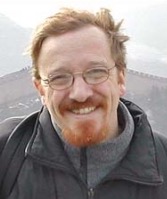 Jean Etienne Duboscq合作论文数Cornell University20
 Robert P. Johnson合作论文数Physical & Biological Sciences Division, Physics Department, University of California, Santa Cruz;Santa Cruz Institute for Particle Physics, University of California, Santa Cruz20S. Mchugh合作论文数20Jeffrey S Whitaker合作论文数20Aks Santha合作论文数19S Shapiro合作论文数19Evgeny Solodov合作论文数19
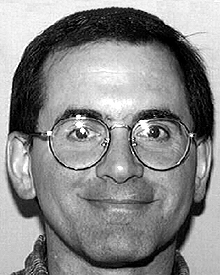 J. Huber合作论文数19
 Fumihiko Suekane合作论文数19G. Hallewell合作论文数18I. Stockdale合作论文数18Bn Ratcliff合作论文数18J. Martinez合作论文数18D. Müller合作论文数18
 Kwon Young Il合作论文数Department of Physics, Yonsei University18T. Nagamine合作论文数18R. Plano合作论文数17
 Sridhara Dasu合作论文数Department of Physics, College of Letters & Science, University of Wisconsin-Madison17D. Coyne合作论文数17K. Hasegawa合作论文数16M. Kalelkar合作论文数16M. Cavalli-Sforza合作论文数16Kôki Abe (阿部公輝)合作论文数Department of Computer Science, University of Electro-Communications16S.H. Williams合作论文数16
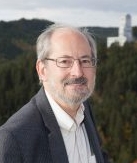 Robert Wilson合作论文数Department of Physics, College of Natural Sciences, Colorado State University15T. J. Pavel合作论文数15G. B. Word合作论文数Vanderbilt University14A. Shoup合作论文数13A. D'Oliveira合作论文数13
 Brian Meadows合作论文数Department of Physics, University of Cincinnati13K. Baird合作论文数13




