We report an observation of new bottom baryons produced in p (cid:1) p collisions at the Tevatron. Using 1 : 1 fb (cid:2) 1 of data collected by the CDF II detector, we observe four (cid:2) 0 b (cid:1) (cid:3) resonances in the fully reconstructed decay mode (cid:2) 0 b ! (cid:2) (cid:4) c (cid:1) (cid:2) , where (cid:2) (cid:4) c ! pK (cid:2) (cid:1) (cid:4) . We interpret these states as the (cid:3) (cid:5)(cid:1)(cid:6)(cid:3) b baryons and measure the following masses: m (cid:3) (cid:4) b (cid:7) 5807 : 8 (cid:4) 2 : 0 (cid:2) 2 : 2 (cid:5) stat : (cid:6) (cid:3) 1 : 7 (cid:5) syst : (cid:6) MeV =c 2 , m (cid:3)
We describe a measurement of the top quark mass from events produced in pp collisions at a center-of-mass energy of 1.96 TeV, using the Collider Detector at Fermilab. We identify tt ̄ candidates where both W bosons from the top quarks decay into leptons (eν, μν, or τν) from a data sample of 360 pb−1. The top quark mass is reconstructed in each event separately by three different methods, which draw upon simulated distributions of the neutrino pseudorapidity, tt longitudinal momentum, or neutrino azimuthal angle in order to extract probability distributions for the top quark mass. For each method, representative mass distributions, or templates, are constructed from simulated samples of signal and background events, and parametrized to form continuous probability density functions. A likelihood fit incorporating these parametrized templates is then performed on the data sample masses in order to derive a final top quark mass. Combining the three template methods, taking into account correlations in their statistical and systematic uncertainties, results in a top quark mass measurement of [...] CDF Collaboration, CAMPANELLI, Mario (Collab.), et al. Measurement of the top quark mass using template methods on dilepton events in pp collisions at s√=1.96 TeV. Physical Review. D, 2006, vol. 73, no. 11, p. 112006 DOI : 10.1103/PhysRevD.73.112006
Recommended Citation Aaltonen, T., Adelman, J., Akimoto, T., González, B., Amerio, S., Amidei, D., Anastassov, A., Annovi, A., Antos, J., Apollinari, G., Apresyan, A., Arisawa, T., Artikov, A., Ashmanskas, W., Attal, A., Aurisano, A., Azfar, F., Badgett, W., Barbaro-Galtieri, A., Barnes, V., Barnett, B., Barria, P., Bartsch, V., Bauer, G., Beauchemin, P., Bedeschi, F., Beecher, D., & Behari, S. (2009). Measurement of particle production and inclusive differential cross sections in pp ̄ collisions at s=1.96TeV. Physical Review D Particles, Fields, Gravitation and Cosmology, 79 (11) https://doi.org/10.1103/PhysRevD.79.112005
The centrality dependence of the mean charged-particle multiplicity as a function of pseudorapidity is measured in approximately 1 mu b(-1) of proton-lead collisions at a nucleon-nucleon centre-of-mass energy of root s(NN) = 5.02 TeV using the ATLAS detector at the Large Hadron Collider. Charged particles with absolute pseudorapidity less than 2.7 are reconstructed using the ATLAS pixel detector. The p + Pb collision centrality is characterised by the total transverse energy measured in the Pb-going direction of the forward calorimeter. The charged-particle pseudorapidity distributions are found to vary strongly with centrality, with an increasing asymmetry between the proton-going and Pb-going directions as the collisions become more central. Three different estimations of the number of nucleons participating in the p + Pb collision have been carried out using the Glauber model as well as two Glauber-Gribov inspired extensions to the Glauber model. Charged-particle multiplicities per participant pair are found to vary differently for these three models, highlighting the importance of including colour fluctuations in nucleon-nucleon collisions in the modelling of the initial state of p + Pb collisions.
This paper describes the data acquisition and high level trigger system of the ATLAS experiment at the Large Hadron Collider at CERN, as deployed during Run 1. Data flow as well as control, configuration and monitoring aspects are addressed. An overview of the functionality of the system and of its performance is presented and design choices are discussed.
A novel Beam Halo Monitor (BHM) has been designed and built for the CMS experiment at the LHC. It will provide an online, bunch-by-bunch measurement of background particles created by interactions of the proton beam with residual gas molecules in the vacuum chamber or with collimator material upstream of CMS. The BHM consists of two arrays of twenty detectors that are mounted around the outer forward shielding of the CMS experiment. Each detector is comprised of a cylindrical quartz radiator, optically coupled to a fast ultraviolet-sensitive photomultiplier tube from one end and painted black at the opposite end. Particles moving towards the photomultiplier tube will be detected with time resolution of a few nanoseconds, allowing to measure the flux of background particles produced upstream of CMS and suppress signals from collision-induced products. Monte Carlo simulations were performed to optimise the detector design. Prior to installation, the performance of the prototype detectors was measured in test beams quantifying the detector's direction-sensitive response and time resolution. The BHM was installed during the first LHC long shutdown (LS1) and is currently being commissioned. Design considerations, results from the test-beams supporting the design and the installation of the BHM in the CMS are presented.
A search for $WV\ensuremath{\gamma}$ triple vector boson production is presented based on events containing a $W$ boson decaying to a muon or an electron and a neutrino, a second $V$ ($W$ or $Z$) boson, and a photon. The data correspond to an integrated luminosity of $19.3\text{ }\text{ }{\mathrm{fb}}^{\ensuremath{-}1}$ collected in 2012 with the CMS detector at the LHC in $pp$ collisions at $\sqrt{s}=8\text{ }\text{ }\mathrm{TeV}$. An upper limit of 311 fb on the cross section for the $WV\ensuremath{\gamma}$ production process is obtained at 95% confidence level for photons with a transverse energy above 30 GeV and with an absolute value of pseudorapidity of less than 1.44. This limit is approximately a factor of 3.4 larger than the standard model predictions that are based on next-to-leading order QCD calculations. Since no evidence of anomalous $WW\ensuremath{\gamma}\ensuremath{\gamma}$ or $WWZ\ensuremath{\gamma}$ quartic gauge boson couplings is found, this paper presents the first experimental limits on the dimension-eight parameter ${f}_{T,0}$ and the $CP$-conserving $WWZ\ensuremath{\gamma}$ parameters ${\ensuremath{\kappa}}_{0}^{W}$ and ${\ensuremath{\kappa}}_{C}^{W}$. Limits are also obtained for the $WW\ensuremath{\gamma}\ensuremath{\gamma}$ parameters ${a}_{0}^{W}$ and ${a}_{C}^{W}$.
Measurements of fiducial cross sections for the electroweak production of two jets in association with a Z -boson are presented. The measurements are performed using 20 . 3 fb −1 of proton-proton collision data collected at a centre-of-mass energy of √(s) = 8 TeV by the ATLAS experiment at the Large Hadron Collider. The electroweak component is extracted by a fit to the dijet invariant mass distribution in a fiducial region chosen to enhance the electroweak contribution over the dominant background in which the jets are produced via the strong interaction. The electroweak cross sections measured in two fiducial regions are in good agreement with the Standard Model expectations and the background-only hypothesis is rejected with significance above the 5 σ level. The electroweak process includes the vector boson fusion production of a Z -boson and the data are used to place limits on anomalous triple gauge boson couplings. In addition, measurements of cross sections and differential distributions for inclusive Z -boson-plus-dijet production are performed in five fiducial regions, each with different sensitivity to the electroweak contribution. The results are corrected for detector effects and compared to predictions from the Sherpa and Powheg event generators.
 Bruce Barnett合作论文数William H. Miller III Department of Physics and Astronomy, Krieger School of Arts and Sciences, Johns Hopkins University447
 Sandro De Cecco合作论文数425S. M. Farrington合作论文数423
 Steven Errede合作论文数Department of Physics, The Grainger College of Engineering, University of Illinois Urbana-Champaign422M. A. Ciocci合作论文数419
 Joseph Boudreau合作论文数Department of Physics and Astronomy, University of Pittsburgh418
 C. Bromberg合作论文数Michigan State University, USA417
 Dante Amidei合作论文数Department of Physics, College of Literature, Science, and the Arts, University of Michigan415
 S. Giagu合作论文数INFN Sezione di Roma, Sapienza University414
 Joey W Huston合作论文数Department of Physics & Astronomy, College of Natural Science, Michigan State University413
 Ashutosh V. Kotwal合作论文数Department of Physics, Trinity College of Arts & Sciences, Duke University413A. Cerri合作论文数A.G. Clark413
 Peter J. Bussey合作论文数School of Physics & Astronomy, University of Glasgow412
 Alberto Annovi合作论文数INFN412
 Thomas J Lecompte合作论文数SLAC National Accelerator Laboratory, Stanford University411
 Lucio Cerrito合作论文数Dipartimento di Fisica, Università degli studi di Tor Vergata411
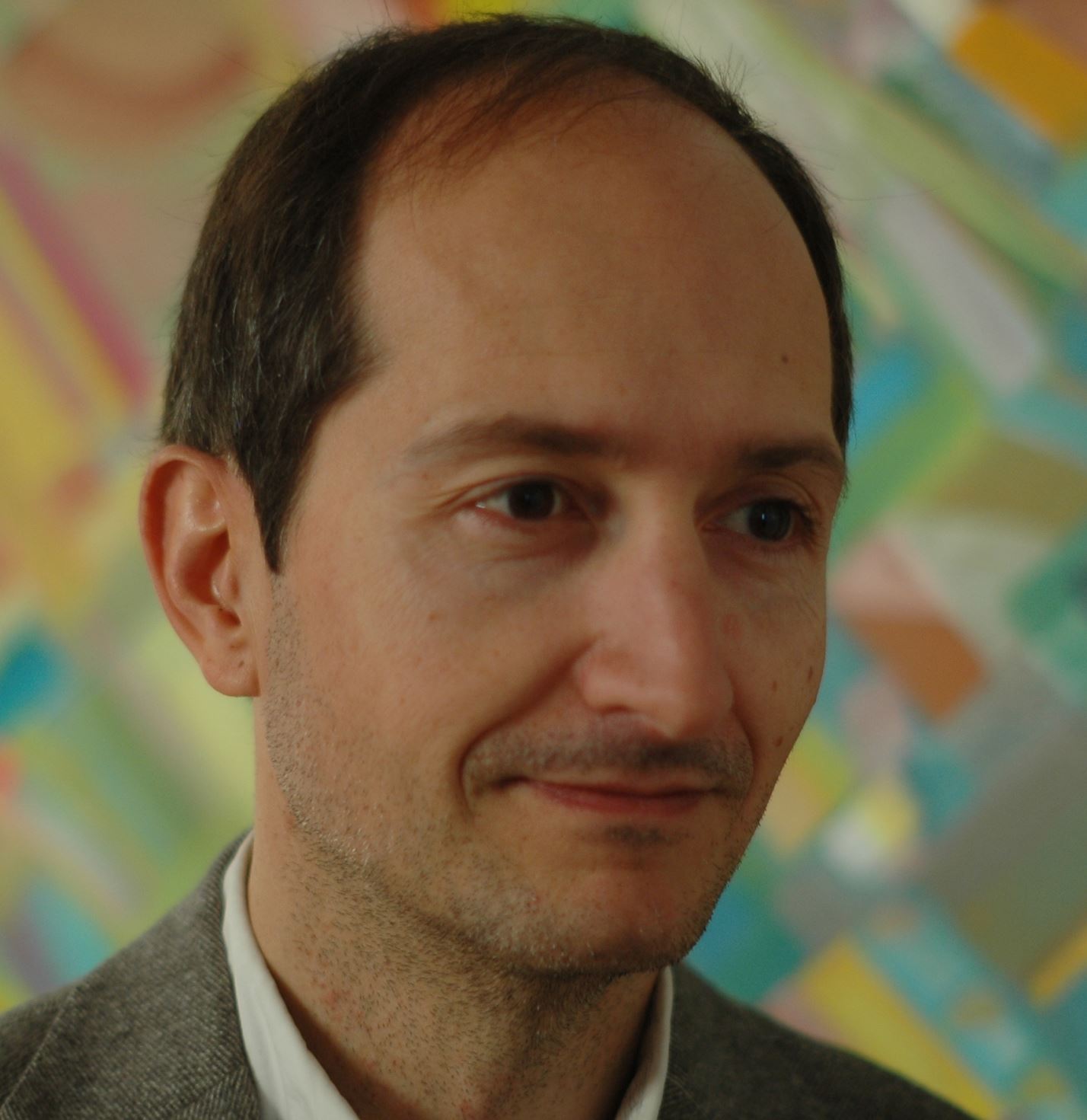 Tommaso Dorigo合作论文数Italian Institute for Nuclear Physics;University of Padova411I. Gorelov合作论文数410K. Goulianos合作论文数409
 Daniela Bortoletto合作论文数Department of Physics, University of Oxford406K. Lannon合作论文数405
 Pawel De Barbaro合作论文数Department of Physics and Astronomy, School of Arts and Sciences, University of Rochester;CERN405
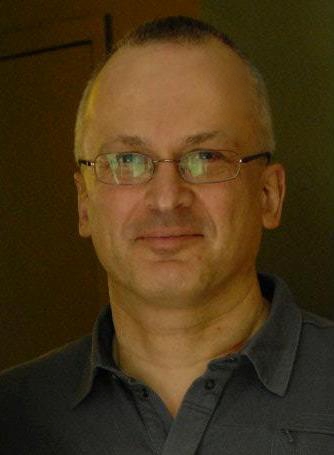 Luc Demortier合作论文数Laboratory of Experimental High Energy Physics, The Rockefeller University404
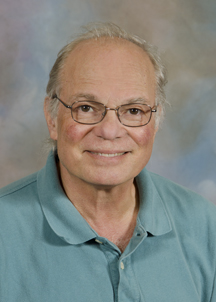 Arie Bodek合作论文数Department of Physics and Astronomy, School of Arts & Sciences, University of Rochester404J. Antos合作论文数403
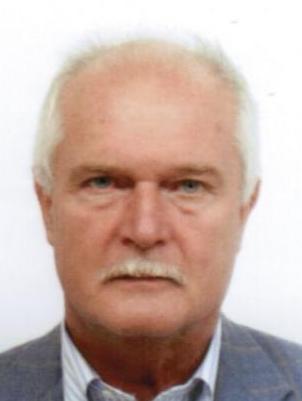 Dario Bisello合作论文数Department of Physics and Astronomy "Galileo Galilei", University of Padova402
 Matthew Herndon合作论文数Department of Physics, University of Wisconsin–Madison402P. E. Karchin合作论文数402
 Melissa Franklin合作论文数Department of Physics, Harvard University401
 Javier Cuevas Maestro合作论文数Universidad de Oviedo;European Organization for Nuclear Research401
 Alison Lister合作论文数Department of Physics & Astronomy, Faculty of Science, The University of British Columbia400Andrea Bocci合作论文数CERN400Carl Haber合作论文数Physics Division, Lawrence Berkeley National Laboratory399
 Ben Brau合作论文数Department of Physics, College of Natural Sciences, University of Massachusetts Amherst398M. Feindt合作论文数398
 Giorgio Apollinari合作论文数Fermi National Accelerator Laboratory397A. Lath合作论文数397
 Frank Chlebana合作论文数CMS Department, Fermi National Accelerator Laboratory396K. Burkett合作论文数395
 Jacobo Konigsberg合作论文数Institute for High Energy Physics and Astrophysics, University of Florida;Department of Physics, College of Liberal Arts and Sciences, University of Florida395E. Halkiadakis合作论文数394
 Suen Hou (侯書雲)合作论文数Institute of Physics, Academia Sinica393T. Kamon合作论文数393Max Goncharov合作论文数393B. Blumenfeld合作论文数393D. Benjamin合作论文数393
 Kaori Maeshima合作论文数Fermi National Accelerator Laboratory393
 Duncan Carlsmith合作论文数Department of Physics, College of Letters & Science, University of Wisconsin-Madison393A. Anastassov合作论文数392




