Introduction Highly sensitised (HS) patients represent up to 30% of patients on the kidney transplant waiting list. When they are transplanted, they have a high risk of acute/chronic rejection and long-term allograft loss. Regulatory T cells (Tregs) (CD4 + CD25 hi CD127 lo ) are T cells involved in the suppression of immune alloresponses. A particular subset, called T follicular regulatory T cells (Tfr, CXCR5 + Bcl-6 + ), is involved in regulating interactions between T effectors and B cells within the germinal centre and can be found in peripheral blood. Therefore, we wanted to identify specific subsets of Tregs in the peripheral blood of HS individuals. Methods We recruited prospectively healthy volunteers (HV) ( n = 9), non-sensitised patients on haemodialysis (HD) ( n = 9) and HS individuals, all of whom were on haemodialysis ( n = 15). Results We compared the Treg phenotypes of HV, HD and HS. HS patients had more CD161 + Tregs ( p = 0.02) and more CD45RA − CCR7 − T effectors (Teffs) ( p = 0.04, memory Teffs able to home to the germinal centre) compared to HVs. HS patients had more Bcl-6 + Tregs ( p < 0.05), fewer Th1-like Tregs, more Th2-like Tregs ( p < 0.001) and more CD161 + ( p < 0.05) Tregs compared to HD patients. This population has been described to be highly suppressive. HD had a deficiency in a Th17-like CD161 + effector Treg cluster (cluster iii., CCR6 + CCR4 + CXCR3 − CD39 + CD15s + ICOS − CCR7 − CD161 + ) ( p < 0.05). Discussion This is the first study presenting a deep Treg phenotype in HS patients. We confirmed that HS patients had more of a Th17-like CD161 + effector Treg from population III (CD4 + CD25 hi CD127 lo CD45RA − ) compared to non-sensitised patients on HD. The clinical relevance of this highly suppressive Tregs population remains to be determined in the context of transplantation.
Background Kidney transplantation is the gold-standard treatment for patients with kidney failure. However, one-third of patients awaiting a kidney transplant are highly sensitized to human leukocyte antigens (HLA), resulting in an increased waiting time for a suitable kidney, more acute and chronic rejection, and a shorter graft survival compared to non-highly sensitised patients. Current standard immunosuppression protocols do not adequately suppress memory responses, and so alternative strategies are needed. Autologous polyclonally expanded regulatory T cells (Tregs) have been demonstrated to be safe in transplant settings and could be a potential alternative to modulate memory immune alloresponses. Methods The aim of this trial is to determine whether adoptive transfer of autologous Tregs into HLA sensitised patients can suppress memory T and B cell responses against specific HLA antigens. This is a two-part, multi-centre, prospective clinical trial, comprising an observational phase (Part 1) aiming to identify patients with unregulated cellular memory responses to HLA (Pure HLA Proteins) followed by an interventional phase (Part 2). The first 9 patients identified as being eligible in Part 1 will undergo baseline immune monitoring for 2 months to inform statistical analysis of the primary endpoint. Part 2 is an adaptive, open labelled trial based on Simon’s two-stage design, with 21 patients receiving Good Manufacturing Practice (GMP)-grade polyclonally expanded Tregs to a dose of 5–10 × 106 cells/kg body weight. The primary EP is suppression of in vitro memory responses for 2 months post-infusion. 12 patients will receive treatment in stage 1 of Part 2, and 9 patients will receive treatment in stage 2 of Part 2 if ≥ 50% patients pass the primary EP in stage 1. Discussion This is a prospective study aiming to identify patients with unregulated cellular memory responses to Pure HLA Proteins and determine baseline variation in these patterns of response. Part 2 will be an adaptive phase IIa clinical trial with 21 patients receiving a single infusion of GMP-grade polyclonally expanded Tregs in two stages. It remains to be demonstrated that modulating memory alloresponses clinically using Treg therapy is achievable. Trial registration EudraCT Number: 2021–001,664-23. REC Number: 21/SC/0253. Trial registration number ISRCTN14582152.
Road traffic accidents are the most common cause of blunt native kidney injuries. Transplanted kidneys are more exposed to such injuries due to the common positioning in the iliac fossa compared with the relatively protected position of the native kidneys. The small number of cases identified in the literature describe grade II and III transplant kidney injuries that were treated surgically. In our case a grade IV injury was managed conservatively giving the necessary time to appropriately plan the future renal replacement therapy options for the patient.
Introduction: Outcomes of combined liver kidney transplantation in children remains a largely unquantified yet potentially life transforming procedure for those with heritable disease. No case series assessing the impact of the CLK on patient outcome for children solely with heritable disease is available. We therefore sought to retrospectively analyse the practice in a large London quaternary centre. Methods: Children undergoing liver kidney transplantation from 2003 onwards were analysed. Indication for transplant graft types, graft survival and patient survival were recorded. Disease specific metabolic parameters were also recorded. Results: 9 children underwent liver kidney transplanation of which 7/9 were combined. All grafts in CLK group were deceased donor (1 whole liver, 1right lobe, 5 left lateral segments). The mean age was 6.8 yrs. The indication was primary type 1 hyperoxaluria (n=1), Allagile (n=1) and autosomal recessive polycystic kidney disease (n=5). The median follow up was 5213 days. 1 year and 5 year liver and kidney graft survival was 100%. Mean GFR at one year was 66.6 mls/min and last follow up was 64.4mls/min. Mean AST level at last follow up was 44. One child required re transplant at five years due to chronic liver graft rejection. All current transplant grafts were functional at last follow up. Conclusions: CLK is a safe practice in children with heritable and metabolic conditions. Excellent graft outcomes are possible. In countries where deceased donor organ pools are readily available this practice should be adopted as the mainstream of treatment.
Maintaining a kidney transplantation program in resource-limited countries is a complex task, often requiring support and expertise from abroad. In Armenia (Former Soviet Republic), living related kidney transplantations (LRDT) have been performed at a single center since 2002. As part of the ISN-TTS Sister Transplant Center program, we have developed a partnership with Guy’s Hospital, UK, to support our program.
You have accessJournal of UrologyTransplantation & Vascular Surgery: Renal Transplantation & Vascular Surgery I (PD22)1 Apr 2020PD22-05 RENAL TRANSPLANTATION INTO URINARY DIVERSIONS AND RECONSTRUCTED BLADDERS James Chong*, Rhana Hassan Zakri, Muhammad Shamim Khan, C Geoff Koffman, Nizam Mamode, and Jonathon Olsburgh James Chong*James Chong* More articles by this author , Rhana Hassan ZakriRhana Hassan Zakri More articles by this author , Muhammad Shamim KhanMuhammad Shamim Khan More articles by this author , C Geoff KoffmanC Geoff Koffman More articles by this author , Nizam MamodeNizam Mamode More articles by this author , and Jonathon OlsburghJonathon Olsburgh More articles by this author View All Author Informationhttps://doi.org/10.1097/JU.0000000000000872.05AboutPDF ToolsAdd to favoritesDownload CitationsTrack CitationsPermissionsReprints ShareFacebookLinked InTwitterEmail Abstract INTRODUCTION AND OBJECTIVE: Renal failure secondary to urological disorders can necessitate urinary diversion or reconstruction either pre or post-kidney transplant. Decision-making regarding timing of diversion/reconstruction may be affected by living (LD) or deceased (DD) donor options. We assessed our kidney transplant outcomes into urinary diversions and reconstructed bladders. METHODS: Single-centre retrospective review of kidney transplants between 1986-2019. Graft and patient survival were calculated, and compared to our general transplant population. RESULTS: 87 patients (mean age 38.2) who had 97 transplants required urinary diversion or reconstruction. 80 of 97 were first transplants. Mean follow-up was 141 months. Cutaneous ureterostomy (CU): 18 transplants (8 LD; 10 DD); 16 CU formed at time of transplant. 1 patient required two sequential transplants; first was diverted to CU 3 years after transplant (for unrecognised neuropathic bladder), the second a planned CU. The other CU was formed 4 years post-transplant for a radiotherapy vesico-vaginal fistula from cervical cancer. Pre-formed ileal conduit (IC): 15 transplants into pre-formed IC (7 LD; 8 DD). 7 of 15 died during follow-up, 4 of 7 with functioning transplant in-situ. Post-transplant IC: 7 transplants into bladder (2 LD; 5 DD) but subsequent IC diversion (5 due to bladder cancer, 1 due to worsening bladder function from spina bifida and 1 from recurrent urosepsis). Reconstructed urinary tract: 57 transplants into augmented bladders using native ureter (4), gastric-segment (1), ileo-caecum (7) and ileum (45). 13 were augmented post-transplant; 2 were undiverted into neo-bladders post-transplant. CONCLUSIONS: Transplantation into urinary diversions and reconstructed bladders appears safe, with similar graft and patient survival to our general transplant population. There has been a significant increase in planned living donor transplant for patients with complex urinary tracts. DD kidney recipients with unsafe bladders may require initial CU before undiversion and reconstruction to prevent complications from a “dry” augment. Source of Funding: None © 2020 by American Urological Association Education and Research, Inc.FiguresReferencesRelatedDetails Volume 203Issue Supplement 4April 2020Page: e460-e461 Advertisement Copyright & Permissions© 2020 by American Urological Association Education and Research, Inc.MetricsAuthor Information James Chong* More articles by this author Rhana Hassan Zakri More articles by this author Muhammad Shamim Khan More articles by this author C Geoff Koffman More articles by this author Nizam Mamode More articles by this author Jonathon Olsburgh More articles by this author Expand All Advertisement PDF downloadLoading ...
 Nicos Kessaris合作论文数45
 Jonathon Olsburgh合作论文数24
 Stephen Marks合作论文数Department of Paediatric Nephrology, University College London;Great Ormond Street Institute of Child Health, University College London;Department of Paediatric Nephrology, Great Ormond Street Hospital for Children NHS Trust21
 Calder Francis合作论文数20O. Shaw合作论文数19P. Chandak合作论文数18
 Geoffrey Koffman合作论文数17Jelena Stojanovic合作论文数15
 Maple Hannah合作论文数Institute of Psychiatry, King's College London14Drage Martin合作论文数12A Dorling合作论文数11Z. Ahmed合作论文数11Manook Miriam合作论文数9I. Loukopoulos合作论文数8R. Vaughan合作论文数8C. Callaghan合作论文数8Taylor John合作论文数8
 Ben Challacombe合作论文数The Urology Centre, Guy’s Hospital;Guy's and St Thomas' Hospitals NHS Foundation Trust and Kings College7
 Prokar Dasgupta合作论文数King’s College London7
 Joseph Chilcot合作论文数Inst Psychiat Psychol & Neurosci, Kings Coll London7Rachel Hilton合作论文数7Adamusiak Anna M合作论文数Department of Allergology, Immunology and Dermatology, Medical University of Lodz5
 Neil Sebire合作论文数Population, Policy and Practice Research Department, Great Ormond Street Institute of Child Health, Faculty of Population Health Sciences, University College London;Great Ormond Street Hospital for Children NHS Foundation Trust5Katie Knapp合作论文数4
 Rajwinder Singh合作论文数4S. Boyle合作论文数4N. Barnett合作论文数4G. Papadakis合作论文数4S. Turner合作论文数4
 Petrut Gogalniceanu合作论文数Guys & St Thomas NHS Fdn Trust4
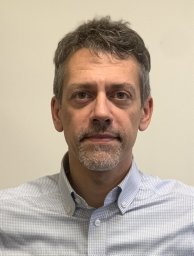 Nikolaos Karydis合作论文数Department of General Surgery and Transplantation, University of Patras4
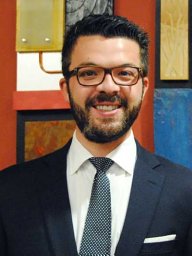 Tamburrini Riccardo合作论文数Guy's and St. Thomas Hospital, NHS Foundation Trust4
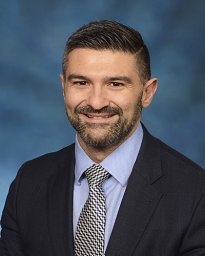 Vrakas Georgios合作论文数Oxford Transplant Centre, Churchill Hospital4
 Raphael Uwechue合作论文数4
 Mohammad Sabaoon Khan合作论文数Kardan University4
 John Weinman合作论文数Institute of Pharmaceutical Science, King’s College London;Faculty of Life Sciences & Medicine, School of Cancer & Pharmaceutical Sciences, King's College London4Robert M Higgins合作论文数Renal Department, University Hospitals Coventry and Warwickshire NHS Trust4M. Phanish合作论文数3T. Masher合作论文数3A. Vowler合作论文数3S. Heap合作论文数3J. Taylor合作论文数3E. Kingdon合作论文数3Aoife Waters合作论文数3H. Jones合作论文数3R. Perera合作论文数3
 J. Yoon合作论文数Duke Transplant Ctr, Surg3T. Maggs合作论文数3Faisal Jamshaid合作论文数3




