A solution to the MiniBooNE excess invoking rare three-body decays of the charged pions and kaons to new states in the MeV mass scale was recently proposed as a dark-sector explanation. This class of solution illuminates the fact that, while the charged pions were focused in the target-mode run, their decay products were isotropically suppressed in the beam-dump-mode run in which no excess was observed. This suggests a new physics solution correlated to the mesonic sector. We investigate an extended set of phenomenological models that can explain the MiniBooNE excess as a dark sector solution, utilizing long-lived particles that might be produced in the three-body decays of the charged mesons and the two-body anomalous decays of the neutral mesons. Over a broad set of interactions with the long-lived particles, we show that these scenarios can be compatible with constraints from LSND, KARMEN, and MicroBooNE, and evaluate the sensitivity of the ongoing and future data taken by the Coherent CAPTAIN Mills experiment (CCM) to a potential discovery in this parameter space.
Measuring the scintillation light in noble gases is an important detection technique in particle physics. Numerous rare event searches like neutrino beam experiments, neutrino-less double beta-decay, and dark matter searches use argon-based detectors. In liquid argon, the light yield can be enhanced by the addition of a small quantity of xenon, where ∼10−1000 ppm are added. The general enhancement mechanism and its pathway via an energy transfer between argon and xenon excimers is well known, however the importance of absorption of argon excimer emission by atomic xenon has not been fully appreciated. This absorption significantly reduces the light yield in commercially available argon (extracted from air) which contains trace amounts (∼ 0.1 ppm) of xenon. The addition of a small xenon dopant of ∼10 ppm recovers this lost light resulting in an increased light yield over un-doped argon of about a factor of two. In this paper we introduce a model for the light production in xenon doped argon, including absorption and re-emission, and compare it to the measured time dependence of light emission in xenon-doped argon.
Measurements of electrons from $\nu_e$ interactions are crucial for the Deep Underground Neutrino Experiment (DUNE) neutrino oscillation program, as well as searches for physics beyond the standard model, supernova neutrino detection, and solar neutrino measurements. This article describes the selection and reconstruction of low-energy (Michel) electrons in the ProtoDUNE-SP detector. ProtoDUNE-SP is one of the prototypes for the DUNE far detector, built and operated at CERN as a charged particle test beam experiment. A sample of low-energy electrons produced by the decay of cosmic muons is selected with a purity of 95%. This sample is used to calibrate the low-energy electron energy scale with two techniques. An electron energy calibration based on a cosmic ray muon sample uses calibration constants derived from measured and simulated cosmic ray muon events. Another calibration technique makes use of the theoretically well-understood Michel electron energy spectrum to convert reconstructed charge to electron energy. In addition, the effects of detector response to low-energy electron energy scale and its resolution including readout electronics threshold effects are quantified. Finally, the relation between the theoretical and reconstructed low-energy electron energy spectrum is derived and the energy resolution is characterized. The low-energy electron selection presented here accounts for about 75% of the total electron deposited energy. After the addition of lost energy using a Monte Carlo simulation, the energy resolution improves from about 40% to 25% at 50~MeV. These results are used to validate the expected capabilities of the DUNE far detector to reconstruct low-energy electrons.
We report an extended measurement of the neutron cross section on argon in the energy range of 95-720 MeV. The measurement was obtained with a 4.3-hour exposure of the Mini-CAPTAIN detector to the WNR/LANSCE beam at LANL. Compared to an earlier analysis of the same data, this extended analysis includes a reassessment of systematic uncertainties, in particular related to unused wires in the upstream part of the detector. Using this information we doubled the fiducial volume in the experiment and increased the statistics by a factor of 2.4. We also shifted the analysis from energy bins to time-of-flight bins. This change reduced the overall considered energy range, but improved the understanding of the energy spectrum of incoming neutrons in each bin. Overall, the new measurements are extracted from a fit to the attenuation of the neutron flux in five time-of-flight regions: 140 ns - 180 ns, 120 ns - 140 ns, 112 ns - 120 ns, 104 ns - 112 ns, 96 ns - 104 ns. The final cross sections are given for the flux-averaged energy in each time-of-flight bin: $\sigma(146~\rm{MeV})=0.60^{+0.14}_{-0.14}\pm0.08$(syst) b, $\sigma(236~\rm{MeV})=0.72^{+0.10}_{-0.10}\pm0.04$(syst) b, $\sigma(319~\rm{MeV})=0.80^{+0.13}_{-0.12}\pm0.040$(syst) b, $\sigma(404~\rm{MeV})=0.74^{+0.14}_{-0.09}\pm0.04$(syst) b, $\sigma(543~\rm{MeV})=0.74^{+0.09}_{-0.09}\pm0.04$(syst) b.
We show results from the Coherent CAPTAIN Mills (CCM) 2019 engineering run which begin to constrain regions of parameter space for axion-like particles (ALPs) produced in electromagnetic particle showers in an 800 MeV proton beam dump, and further investigate the sensitivity of ongoing data-taking campaigns for the CCM200 upgraded detector. Based on beam-on background estimates from the engineering run, we make realistic extrapolations for background reduction based on expected shielding improvements, reduced beam width, and analysis-based techniques for background rejection. We obtain reach projections for two classes of signatures; ALPs coupled primarily to photons can be produced in the tungsten target via the Primakoff process, and then produce a gamma-ray signal in the Liquid Argon (LAr) CCM detector either via inverse Primakoff scattering or decay to a photon pair. ALPs with significant electron couplings have several additional production mechanisms (Compton scattering, $e^+e^-$ annihilation, ALP-bremsstrahlung) and detection modes (inverse Compton scattering, external $e^+e^-$ pair conversion, and decay to $e^+e^-$). In some regions, the constraint is marginally better than both astrophysical and terrestrial constraints. With the beginning of a three year run, CCM will be more sensitive to this parameter space by up to an order of magnitude for both ALP-photon and ALP-electron couplings. The CCM experiment will also have sensitivity to well-motivated parameter space of QCD axion models. It is only a recent realization that accelerator-based large volume liquid argon detectors designed for low energy coherent neutrino and dark matter scattering searches are also ideal for probing ALPs in the unexplored $\sim$MeV mass scale.
We report the first results of a search for leptophobic dark matter (DM) from the Coherent-CAPTAIN-Mills (CCM) liquid argon (LAr) detector. An engineering run with 120 photomultiplier tubes (PMTs) and 17.9×10^{20} protons on target (POT) was performed in fall 2019 to study the characteristics of the CCM detector. The operation of this 10-ton detector was strictly light based with a threshold of 50 keV and used coherent elastic scattering off argon nuclei to detect DM. Despite only 1.5 months of accumulated luminosity, contaminated LAr, and nonoptimized shielding, CCM's first engineering run has already achieved sensitivity to previously unexplored parameter space of light dark matter models with a baryonic vector portal. With an expected background of 115 005 events, we observe 115 005+16.5 events which is compatible with background expectations. For a benchmark mediator-to-DM mass ratio of m_{V_{B}}/m_{χ}=2.1, DM masses within the range 9 MeV≲m_{χ}≲50 MeV are excluded at 90% C. L. in the leptophobic model after applying the Feldman-Cousins test statistic. CCM's upgraded run with 200 PMTs, filtered LAr, improved shielding, and 10 times more POT will be able to exclude the remaining thermal relic density parameter space of this model, as well as probe new parameter space of other leptophobic DM models.
This White Paper, prepared for the Fundamental Symmetries, Neutrons, and Neutrinos Town Meeting related to the 2023 Nuclear Physics Long Range Plan, makes the case for double beta decay as a critical component of the future nuclear physics program. The major experimental collaborations and many theorists have endorsed this white paper.
We present a measurement of the W boson mass in W-->e(nu) decays using 1 fb-1 of data collected with the D0 detector during Run II of the Fermilab Tevatron collider. With a sample of 499830 W-->e(nu) candidate events, we measure M(W)=80.401+/-0.043 GeV. This is the most precise measurement from a single experiment.
This paper describes the operation of the Coherent CAPTAIN-Mills (CCM) detector located at the Los Alamos Neutron Science Center at Los Alamos National Laboratory. CCM is a 10-ton liquid argon detector located 20 meters from a high flux neutron/neutrino source and is designed to search for sterile neutrinos (v(s) 's) and light dark matter (LDM). An engineering run was performed in fall 2019 to study the characteristics of the CCM120 detector by searching for coherent scattering signals consistent with v(s)'s and LDM resulting from the production and decays of pi(+) and pi(0) in the tungsten target. New parameter space in a leptophobic dark matter (DM) model was excluded for DM masses between similar to 2.0 and 30 MeV. The lessons learned from this run have guided the development and construction of the new CCM200 detector that will begin operations in 2021 and significantly improve on these searches.
This document presents the concept and physics case for a magnetized gaseous argon-based detector system (ND-GAr) for the Deep Underground Neutrino Experiment (DUNE) Near Detector. This detector system is required in order for DUNE to reach its full physics potential in the measurement of CP violation and in delivering precision measurements of oscillation parameters. In addition to its critical role in the long-baseline oscillation program, ND-GAr will extend the overall physics program of DUNE. The LBNF high-intensity proton beam will provide a large flux of neutrinos that is sampled by ND-GAr, enabling DUNE to discover new particles and search for new interactions and symmetries beyond those predicted in the Standard Model.
The Deep Underground Neutrino Experiment (DUNE) is a leading-edge experiment for long-baseline neutrino oscillation studies, neutrino astrophysics and nucleon decay searches. ProtoDUNE-Dual Phase (DP) is a 6x6x6 m$^3$ liquid argon time-projection-chamber (LArTPC) operated at the CERN Neutrino Platform in 2019-2020 as a prototype of the DUNE Far Detector. In ProtoDUNE-DP, the scintillation and electroluminescence light produced by cosmic muons in the LArTPC is collected by photomultiplier tubes placed up to 7 m away from the ionizing track. In this paper, we present the performance of the ProtoDUNE-DP photon detection system, comparing different wavelength-shifting techniques and the use of xenon-doped LAr as a promising option for future large LArTPCs. The scintillation light production and propagation processes are analyzed and compared to simulations, improving understanding of the liquid argon properties.
The mass of the W boson, a mediator of the weak force between elementary particles, is tightly constrained by the symmetries of the standard model of particle physics. The Higgs boson was the last missing component of the model. After observation of the Higgs boson, a measurement of the W boson mass provides a stringent test of the model. We measure the W boson mass, M W , using data corresponding to 8.8 inverse femtobarns of integrated luminosity collected in proton-antiproton collisions at a 1.96 tera–electron volt center-of-mass energy with the CDF II detector at the Fermilab Tevatron collider. A sample of approximately 4 million W boson candidates is used to obtain M W = 80 , 433.5 ± 6.4 stat ± 6.9 syst = 80 , 433.5 ± 9.4 MeV / c 2 , the precision of which exceeds that of all previous measurements combined (stat, statistical uncertainty; syst, systematic uncertainty; MeV, mega–electron volts; c , speed of light in a vacuum). This measurement is in significant tension with the standard model expectation.
The Deep Underground Neutrino Experiment (DUNE), a 40-kton underground liquid argon time projection chamber experiment, will be sensitive to the electron-neutrino flavor component of the burst of neutrinos expected from the next Galactic core-collapse supernova. Such an observation will bring unique insight into the astrophysics of core collapse as well as into the properties of neutrinos. The general capabilities of DUNE for neutrino detection in the relevant few- to few-tens-of-MeV neutrino energy range will be described. As an example, DUNE's ability to constrain the $\nu_e$ spectral parameters of the neutrino burst will be considered.
We propose the construction of LEGEND-1000, the ton-scale Large Enriched Germanium Experiment for Neutrinoless $\beta \beta$ Decay. This international experiment is designed to answer one of the highest priority questions in fundamental physics. It consists of 1000 kg of Ge detectors enriched to more than 90% in the $^{76}$Ge isotope operated in a liquid argon active shield at a deep underground laboratory. By combining the lowest background levels with the best energy resolution in the field, LEGEND-1000 will perform a quasi-background-free search and can make an unambiguous discovery of neutrinoless double-beta decay with just a handful of counts at the decay $Q$ value. The experiment is designed to probe this decay with a 99.7%-CL discovery sensitivity in the $^{76}$Ge half-life of $1.3\times10^{28}$ years, corresponding to an effective Majorana mass upper limit in the range of 9-21 meV, to cover the inverted-ordering neutrino mass scale with 10 yr of live time.
This report describes the conceptual design of the DUNE near detector
This manuscript describes the commissioning of the Mini-CAPTAIN liquid argon detector in a neutron beam at the Los Alamos Neutron Science Center (LANSCE), which led to a first measurement of high-energy neutron interactions in argon.The Mini-CAPTAIN detector consists of a Time Projection Chamber (TPC) with an accompanying photomultiplier tube (PMT) array sealed inside a liquid-argon-filled cryostat.The liquid argon is constantly purified and recirculated in a closed-loop cycle during operation.The specifications and assembly of the detector subsystems and an overview of their performance in a neutron beam are reported.
The detection of scintillation light from liquid argon is an experimental technique key to a number of current and future nuclear/particle physics experiments, such as neutrino physics, neutrinoless double beta decay and dark matter searches. Although the idea of adding small quantities of xenon (doping) to enhance the light yield has attracted considerable interest, this technique has never been demonstrated at the necessary scale or precision. Here we report on xenon doping in a 100 l cryogenic vessel. Xenon doping was performed in four concentrations of 1.00 +/- 0.06 ppm, 2.0 +/- 0.1 ppm, 5.0 +/- 0.3 ppm, and 10.0 +/- 0.5 ppm. These measurements represent the most precise xenon doping measurements as of publishing. We observed an increase in average light yield by a factor of 1.92 +/- 0.12(syst)+/- 0.02(stat) at a dopant concentration of 10 ppm.
At the Fermilab Tevatron proton-antiproton ($p\bar{p}$) collider, high-mass electron-neutrino ($e\nu$) pairs are produced predominantly in the process $p \bar{p} \rightarrow W(\rightarrow e\nu) + X$. The asymmetry of the electron and positron yield as a function of their pseudorapidity constrain the slope of the ratio of the $u$- to $d$-quark parton distributions versus the fraction of the proton momentum carried by the quarks. This paper reports on the measurement of the electron-charge asymmetry using the full data set recorded by the Collider Detector at Fermilab in 2001--2011 and corresponding to 9.1~fb$^{-1}$ of integrated luminosity. The measurement significantly improves the precision of the Tevatron constraints on the parton-distribution functions of the proton. Numerical tables of the measurement are provided.
The observation of 236 MeV muon neutrinos from kaon-decay-at-rest (KDAR) originating in the core of the Sun would provide a unique signature of dark matter annihilation. Since excellent angle and energy reconstruction are necessary to detect this monoenergetic, directional neutrino flux, DUNE with its vast volume and reconstruction capabilities, is a promising candidate for a KDAR neutrino search. In this work, we evaluate the proposed KDAR neutrino search strategies by realistically modeling both neutrino-nucleus interactions and the response of DUNE. We find that, although reconstruction of the neutrino energy and direction is difficult with current techniques in the relevant energy range, the superb energy resolution, angular resolution, and particle identification offered by DUNE can still permit great signal/background discrimination. Moreover, there are non-standard scenarios in which searches at DUNE for KDAR in the Sun can probe dark matter interactions.
The Deep Underground Neutrino Experiment (DUNE) will be a powerful tool for a variety of physics topics. The high-intensity proton beams provide a large neutrino flux, sampled by a near detector system consisting of a combination of capable precision detectors, and by the massive far detector system located deep underground. This configuration sets up DUNE as a machine for discovery, as it enables opportunities not only to perform precision neutrino measurements that may uncover deviations from the present three-flavor mixing paradigm, but also to discover new particles and unveil new interactions and symmetries beyond those predicted in the Standard Model (SM). Of the many potential beyond the Standard Model (BSM) topics DUNE will probe, this paper presents a selection of studies quantifying DUNE's sensitivities to sterile neutrino mixing, heavy neutral leptons, non-standard interactions, CPT symmetry violation, Lorentz invariance violation, neutrino trident production, dark matter from both beam induced and cosmogenic sources, baryon number violation, and other new physics topics that complement those at high-energy colliders and significantly extend the present reach.
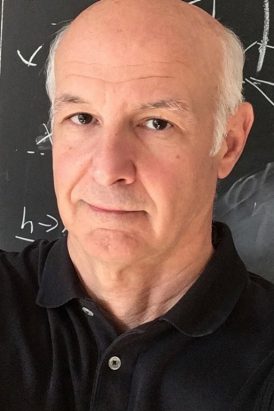 Dante Amidei合作论文数Department of Physics, College of Literature, Science, and the Arts, University of Michigan1056
 Steven Errede合作论文数Department of Physics, The Grainger College of Engineering, University of Illinois Urbana-Champaign1033
 K. Goulianos合作论文数1032
 Giorgio Chiarelli合作论文数Istituto Nazionale di Fisica Nucleare1023
 Melissa Franklin合作论文数Department of Physics, Harvard University1020C. Grosso-Pilcher合作论文数1018Alvin Laasanen合作论文数Purdue University1016
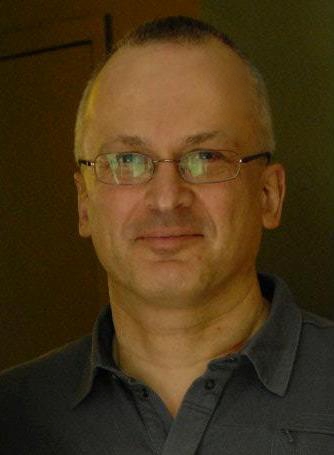 Luc Demortier合作论文数Laboratory of Experimental High Energy Physics, The Rockefeller University1010
 Giorgio Apollinari合作论文数Fermi National Accelerator Laboratory1003
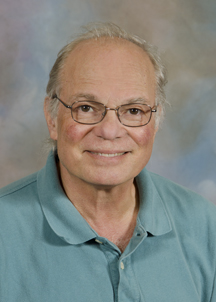 Arie Bodek合作论文数Department of Physics and Astronomy, School of Arts & Sciences, University of Rochester996Franco Bedeschi合作论文数Istituto Nazionale di Fisica Nucleare Sezione di Pisa990
 Jacobo Konigsberg合作论文数Institute for High Energy Physics and Astrophysics, University of Florida;Department of Physics, College of Liberal Arts and Sciences, University of Florida982
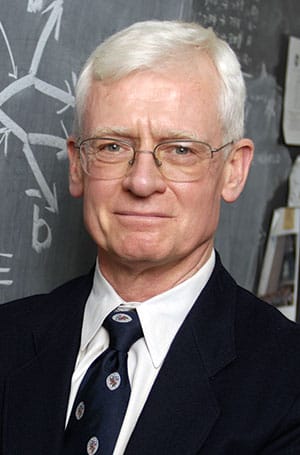 Bruce Barnett合作论文数William H. Miller III Department of Physics and Astronomy, Krieger School of Arts and Sciences, Johns Hopkins University981
 Patrick Lukens合作论文数Particle Physics Division, Fermi National Accelerator Laboratory972
 C. Bromberg合作论文数Michigan State University, USA966S. Leone合作论文数961
 Daniela Bortoletto合作论文数Department of Physics, University of Oxford961
 Pawel De Barbaro合作论文数Department of Physics and Astronomy, School of Arts and Sciences, University of Rochester;CERN956
 Joey W Huston合作论文数Department of Physics & Astronomy, College of Natural Science, Michigan State University954G. Bellettini合作论文数944
 Ray Culbertson合作论文数Fermi National Accelerator Laboratory932V. E. Barnes合作论文数931M. A. Ciocci合作论文数928Andrew Beretvas合作论文数923
 Gianluca Introzzi合作论文数Department of Physics, University of Pavia920
 Bill Ashmanskas合作论文数Department of Physics & Astronomy, College of Arts & Sciences, University of Pennsylvania919
 Anwar Bhatti合作论文数Department of Physics, College of Computer, Mathematical, & Natural Sciences, University of Maryland917
 Fabio Happacher合作论文数Istituto Nazionale di Fisica Nucleare911Af Garfinkel合作论文数910P. Giannetti合作论文数INFN Sezione di Pisa908G. Busetto合作论文数Universita degli Studi907D. Lucchesi合作论文数903
 Duncan Carlsmith合作论文数Department of Physics, College of Letters & Science, University of Wisconsin-Madison903
 John S. Conway合作论文数Department of Physics and Astronomy, University of California, Davis902Paolo Giromini合作论文数901
 Lee G. Pondrom合作论文数Department of Physics, University of Wisconsin–Madison898
 Jay R. Dittmann合作论文数Department of Physics, College of Arts and Sciences, Baylor University896
 Niccolò Moggi合作论文数Department of Industrial Engineering, University of Bologna894T. Kamon合作论文数893James Bellinger合作论文数Department of Physics, University of Wisconsin–Madison889K. Burkett合作论文数878
 Pavel Murat合作论文数Fermi National Accelerator Laboratory871
 Dario Bisello合作论文数Department of Physics and Astronomy "Galileo Galilei", University of Padova869G. Latino合作论文数INFN Sezione di Firenze, Università di Firenze869F. Rimondi合作论文数869
 Joseph Boudreau合作论文数Department of Physics and Astronomy, University of Pittsburgh865Marco Cordelli合作论文数Laboratori Nazionali di Frascati, Istituto Nazionale di Fisica Nucleare863Toru Okusawa合作论文数854
 Mark C. Kruse合作论文数Department of Physics, Trinity College of Arts & Sciences, Duke University850




