Two undesirable ways to achieve faster economic growth are to adopt an easy mon etary policy or just cut tax rates. A better way is to deal with structural defects that depress productive capacity and productivity through structural reform. Budget cuts should aim to shift emphasis from programs that encourage consumption to those that encourage invest ment, review subsidy programs, avoid fund ing programs to offset problems caused by regulation, and privatize activities that be long in the private sector. Tax reform also should encourage saving, and regulatory costs should be reviewed in light of the benefits derived. Slow growth is not susceptible to a quick cure, but an extensive array of expen diture. tax and regulatory reforms can shift the U.S. economy to a higher growth path.
The time is ripe for taking a new look at health-care reform. Between a free market and a governmental approach, the operation of market forces often proceeds more rapidly and more effectively in responding to serious problems than do the more ponderous decision-making mechanisms of the public sector. Indeed, often the reduction of governmental impediments to competition represents the most efficient and least costly solution. Medical care is no exception.
No abstract available DOI: http://dx.doi.org/10.5564/mjia.v0i8-9.128 The Mongolian Journal of International Affairs; Number 8-9, 2002, Pages 54-62
Discussions of that venerable institution, the corporate board of directors, are moving from the financial pages and the learned journals to the front pages and the nightly TV news. It is becoming apparent that in a period of dramatic takeover battles, the role of the board can be crucial.
The forces of trade protection in the United States are on the rise--yet again. The presidential campaign has provided a new opportunity for some to take a more isolationist position on issues of international commerce. However, these interest groups overlook the many ways in which a global marketplace generates, directly and indirectly, very positive long-term effects on American consumers, workers, entrepreneurs, and on the nation in general. The international business outlook facing citizens of the United States is a promising balance, with a combination of serious threats and substantial opportunities both in the short run, and especially in the longer run. This warrants further explanation. At the outset, consider where the United States stands. Almost every way you measure it, the US business system is still the largest and most successful in the world. Far more often than not, US businesses are the trend-setters. In industry after industry, US-headquartered companies lead their competitors on a worldwide basis. This is so whether you examine high-tech aerospace design and production, where Boeing has been in the lead for decades, low-tech soap and detergents made by household giant Procter & Gamble, or companies in between the extremes of the technological range, such as EoconMobil, the number one petroleum company worldwide. On a more micro level, individual brands and company names like Coca-Cola, McDonald's, and Microsoft generate instantaneous worldwide recognition. In fact, Cadillac has nearly become an adjective, denoting a top-of-the-line product. FedEx is often used as an active verb to indicate delivering an item as rapidly as you can. Nevertheless, all this good news does not mean that US-based companies--or any other firms competing in the global marketplace--can rest on their laurels. Some historical perspective helps on that score. Back in the early nineteenth century, European companies--especially those located in Britain and France--dominated international commerce. Then, a rapidly expanding newcomer in North America (the United States) elbowed its way into the club of leading world economic powers. In absolute terms, the economies on both sides of the Atlantic Ocean continued to expand substantially. But Europe has never regained its dominant share of the world market. In the second half of the twentieth century, Japan played a role similar to that played by the United States a century earlier. It became an important member of that club of economically advanced nations. Japanese companies such as Sony and Toyota became strong global competitors. Major Western industries continued growing, often rapidly, but many lost some market share. Today, we are in the midst of yet another such fundamental shift in the array of global economic and market strength. China has rapidly become a powerful force in the international marketplace. By some measures of gross domestic product (GDP), it is already number two, second only to the United States. However we calculate it, the US lead is rapidly diminishing. The fact that the United States initiated the most dangerous global credit crisis since the Great Depression of the 1930s does not exactly enhance perceptions of US leadership in either economic or financial matters. Nor can the United States take much consolation from the sad current experiences of the Eurozone countries. Forecasts are inherently fragile. That is a kind description from this veteran prognosticator. So I will state the point carefully: there is a reasonable likelihood that, in the next several decades, China will surpass the United States as the largest economy in the world. That shift is surely not inevitable. Historians remind us that in the middle of the previous millennium--around 1500--China was the most culturally advanced and economically powerful nation on the globe. That is, until one misguided emperor decided to reduce foreign influences by cutting off trade with most of the rest of the world. …
It is difficult to present great conclusions about the influence of thinks tanks. The major think tanks have earned an important presence in the Washington policy community. In the words of one political scientist, “Power in Washington cannot be measured precisely, yet think tanks surely have a good deal for it …” The major think tanks are important sources of information to the media, the government, and to a host of interest groups involved in the public policy process. The result is a lively competition of ideas in the policy arena.
As we understand it, the D.C. Circuit did not allow the EPA to consider the costs of complying with ozone and PM NAAQS. As we further understand it, this legal ruling can be overturned only by this Court. As economists, we believe that the D.C. Circuit's ruling not allowing the EPA to consider important information relating to the consequences of its regulatory actions is economically unsound. Without delving into the legal aspects of the case, we present below why we think the Court should allow the EPA to consider costs in setting standards. In particular, we believe that, as a general principle, regulators should be allowed to consider explicitly the full consequences of their regulatory decisions. These consequences include the regulation's benefits, costs, and any other relevant factors.
Overseas outsourcing of jobs is far more complicated than is generally understood. Pressures to outsource range from better-serving overseas markets to increasing the competitiveness of American business. Outsourcing—domestic and international—responds to management's desire to focus the firm's in-house activities on its core competence. A negative side to outsourcing results from companies doing so simply because “everybody is doing it.” They may be surprised by accompanying factors such as unexpected costs and complications, as well. Governmental policymakers need to realize that foreign companies outsource more business services to the United States than American firms send overseas.
This booklet is one in a series designed to enhance the understanding of the private enterprise system and the key forces affecting it.The series provides a forum for considering vital current issues in public policy and for communicating these views to a wide audience in the business, government, and academic communities.
One-Armed Economist represents a personal, if eclectic, approach to public policy. Weidenbaum avoids doctrinaire positions, be they Keynesian or monetarist or supply side or libertarian. This distillation of Weidenbaum's wide range of writings on public policy issues over the last four decades draws on his practical experience in government and business as well as his academic research over that extended period. The volume covers six major clusters of policy issues: economic policy, government programs, business decision-making, government regulation, the defense sector, and the international economy. There are chapters on how to achieve a cleaner environment, how to fundamentally overhaul the tax and health care systems, and a defense of Reaganomics. The work examines how public sector activities impact the performance of the national economy. Its coverage includes the role of government as a buyer, a seller, a provider of credit, and a source of subsidy and support. Drawing heavily on his experience as economist for a major military contractor, Weidenbaum shows that the defense industry is the most heavily regulated sector of the American economy and discusses ways to modernize the arcane and wasteful process of procuring weapon systems. He also draws on his work on the hidden costs of regulation on the consumer, showing how to improve the regulatory process so as to achieve national objectives while minimizing the burdens of compliance. The last section is devoted to the international economy, with chapters on the role of the overseas enterprises. One-Armed Economist is lucid analysis of major public policy issues of our time. As such it will be of special interest to organizations involved in public policy, think tanks, and government policymaking groups, as well as readers interested in fresh perspectives on a broad range of policy issues.
ECONOMIC, POLITICAL, AND SOCIAL TRANSFORMATIONS ill the Republic of Korea (South Korea) that have occurred in recent decades have been profound and remarkable, making it one of the most vibrant and thriving democracies in Asia. At the same time, it has become a regional as well as global economic powerhouse. But although Korea is in the midst of perhaps its most fundamental economic adjustment in modern times, it is also taking on the key characteristics of the most advanced industrial economies. This process is inevitably raising the same sort of criticism faced by the United States. Korea's extraordinary economic development, especially over the past half-century, has been based heavily on the growth of manufacturing centered on the chaebol. However, Korea is now witnessing much of its traditional manufacturing activity moving to lower-cost areas, notably China. That development should be viewed as neither
 kenneth w chilton合作论文数4christopher douglass合作论文数3ronald j penoyer合作论文数3jing ye ping shan (靖也 平山)合作论文数2Robert Nisbet合作论文数2Paul W. Macavoy合作论文数2Herbert Marcuse合作论文数2Ithiel De Sola Pool合作论文数2Richard Burr合作论文数2
 Mark J. Jensen合作论文数Department of Economics, University of Missouri2Stuard A. Umpleby合作论文数2bernard h ross合作论文数1Milton Russell合作论文数1Elizabeth E. Bailey合作论文数1Robert E. Litan合作论文数1stephen c vogt合作论文数1H. S. Sherman合作论文数1george c eads合作论文数1ying xiong jian ye (英雄 間野)合作论文数1tan lumei (璐美 譚)合作论文数1shi fujiu (富久 辻)合作论文数1Barbara Deckard合作论文数1David F. Bradford合作论文数1
 Michael Curtis Munger合作论文数Department of Political Science, Duke University1
 Laura D. Tyson合作论文数Haas School of Business, University of California, Berkeley1
 Joseph E. Stiglitz合作论文数Department of Economics, Columbia Business School, Columbia University;School of International and Public Affairs, Columbia University;Graduate School of Arts and Sciences, Columbia University1
 W. Kip Viscusi合作论文数Department of Economics, Vanderbilt University;Law School, Vanderbilt University;Owen Graduate School of Management, Vanderbilt University1
 William D. Nordhaus合作论文数Department of Economics, School of Forestry and Environmental Studies, Yale University1
 Robert N. Stavins合作论文数Harvard Kennedy School, Harvard University;Resources for the Future;National Bureau of Economic Research;Centre for Economic Policy Research1
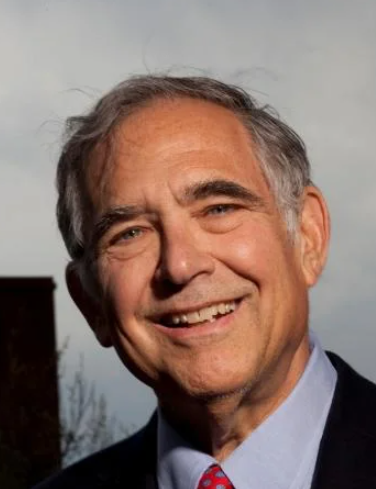 Richard Zeckhauser合作论文数National Bureau of Economic Research;John F. Kennedy School of Government, Harvard University1
 Richard Schmalensee合作论文数Sloan School of Management, Massachusetts Institute of Technology1
 John D. Graham合作论文数O’Neill School of Public and Environmental Affairs, Indiana University1Robert W. Hahn合作论文数Council of Economic1
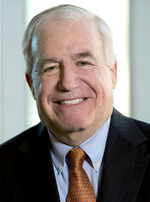 Paul L. Joskow合作论文数Department of Economics, Massachusetts Institute of Technology;National Bureau of Economic Research1
 Lester B. Lave合作论文数Engineering and Public Policy Department, Carnegie Mellon University1
 Robert W. Crandall合作论文数1
 Fred Thompson合作论文数Graduate School of Management1
 Kenneth J. Arrow (肯尼斯·约瑟夫·阿罗)合作论文数Stanford University1
 Maureen Cropper合作论文数Department of Economics, College of Behavioral & Social Sciences, University of Maryland;Maryland Population Research Center, University of Maryland;CESifo;Resources for the Future1
 James Wilson合作论文数1
 Michael Boskin合作论文数Department of Economics, School of Humanities and Sciences, Stanford University;Hoover Institution, Stanford University;National Bureau of Economic Research;Institute for Economic Policy Research, Stanford University1
 Alice M Rivlin合作论文数1
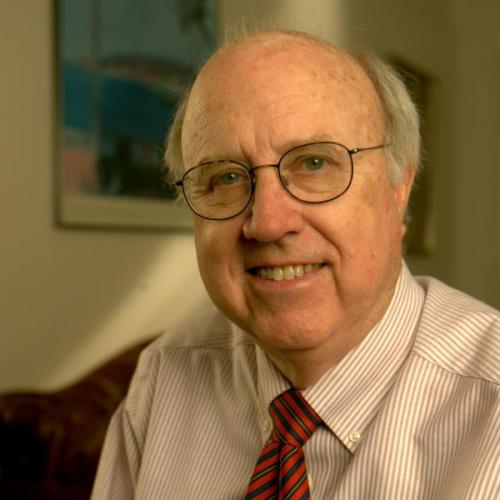 Wallace Oates合作论文数College of Behavioral and Social Sciences, University of Maryland1Daniel R. Fusfeld合作论文数1
 Robert Solow合作论文数Department of Economics, Massachusetts Institute of Technology1
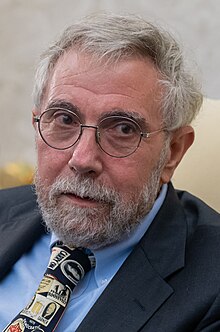 Paul R. Krugman合作论文数Princeton School of Public and International Affairs, Princeton University;London School of Economics and Political Science;Graduate Center, City University of New York1
 Sam Peltzman合作论文数Graduate School of Business;University of Chicago;Graduate School of Business, University of Chicago1Caspar W. Weinberger合作论文数1
 Melvin J. Dubnick合作论文数Science, Political;University of New Hampshire;University of New Hampshire1




