Survey research in the Global South has traditionally required large budgets and lengthy fieldwork. The expansion of digital connectivity presents an opportunity for researchers to engage global subject pools and study settings where in-person contact is challenging. This paper evaluates Facebook advertisements as a tool to recruit diverse survey samples in the Global South. Using Facebook’s advertising platform, we quota-sample respondents in Mexico, Kenya, and Indonesia and assess how well these samples perform on a range of survey indicators, identify sources of bias, replicate a canonical experiment, and highlight trade-offs for researchers to consider. This method can quickly and cheaply recruit respondents, but these samples tend to be more educated than corresponding national populations. Weighting ameliorates sample imbalances. This method generates comparable data to a commercial online sample for a fraction of the cost. Our analysis demonstrates the potential of Facebook advertisements to cost-effectively conduct research in diverse settings.
Climate change caused by carbon pollution from the world’s largest economies poses an existential threat to small-island states and territories this century. These places bear virtually no responsibility for climate change but will face sea-level rise, fresh water resource degradation, and intensified storms that will kill or dislocate exposed publics, and damage local economies. To alleviate this crisis, the global community has begun discussing who is responsible for climate mitigation and adaptation costs for those affected by climate change, in addition to continued debates around the distribution of responsibility for climate change. Missing from this analysis, however, are systematic efforts to elicit the preferences and perceptions of publics in these threatened small-island states and territories. Here, we report results from a large-sample (n = 14,710) cross-national survey of publics living in climate-vulnerable states and territories, conducted in June–July 2022. By quota sampling through Facebook’s ad platform, we generate survey samples at the national or territorial level for publics in 55 small-island states, territories, and subnational regions in the South Pacific, Indian Ocean, and Caribbean. We find widespread awareness and concern about the threat posed by climate change and sea-level rise, in contrast to what existing research finds in the Global North. We also find that climate-vulnerable publics believe their home governments, large polluters, and former colonial powers are all responsible for helping to manage the climate crisis, irrespective of these actors’ relative carbon emissions. These findings fill an important gap by depicting climate beliefs among the communities at the frontlines of climate change.
Large-scale solar (LSS) systems represent an increasing share of energy infrastructure in the United States. The number of LSS systems is expected to continue to grow, and such expansion will require support from local communities that are asked to host new projects. Here, we perform a systematic literature review of studies that evaluate: (1) the factors that shape the perception, acceptance, and opposition of LSS; and (2) the role of stakeholders and community engagement in current LSS siting conflicts. Our review of the literature finds that local communities have complex, location-specific opinions and attitudes towards solar projects. Shaped by project characteristics such as size, land use type, and project ownership type, people value local benefits such as jobs, reduced pollution, increased tax revenue, and local ownership, and are critical of highly localized burdens such as impacts to the local landscape. We further find that scholars promote early and direct communication of potential benefits and tradeoffs, as well as an inclusive decision-making process and engagement activities that reflect community values and build trust. Our review reveals that further research is needed to investigate the roles and impacts of: (1) emerging LSS configurations such as solar plus storage hybrids and LSS projects paired with transmission and substation additions; (2) evolving LSS stakeholder groups including landowners, agricultural industry, and the media; and (3) causal relationships between public perceptions, community engagement activities, and project outcomes.
Methane abatement policies will play an important role in mitigating climate change given the high global-warming potential of methane compared to carbon dioxide. Yet evidence on public attitudes and support for methane regulations is lacking. In partnership with the Clean Air Task Force, we develop an original nationally representative survey of four European countries ( N = 5629) to show variation in public opinions about methane emissions and policy to reduce them. Using a framing experiment, we test variation in these preferences as a function of policy impacts on cost, global climate change, local pollution, or energy security. We find largely null effects across the board: attitudes are remarkably durable to varying treatments, suggesting that support for methane regulations is not sensitive to cost information and policy framing. The results from this survey provide a much-needed baseline for public attitudes about methane abatement and will inform existing debates on what information is and is not effective in generating support for ambitious methane policy.
Few contemporary crises have reshaped public policy as dramatically as the COVID-19 pandemic. In its shadow, policymakers have debated whether other pressing crises-including climate change-should be integrated into COVID-19 policy responses. Public support for such an approach is unclear: the COVID-19 crisis might eclipse public concern for other policy problems, or complementarities between COVID-19 and other issues could boost support for broad government interventions. In this research note, we use a conjoint experiment, panel study, and framing experiment to assess the substitutability or complementarity of COVID-19 and climate change among US and Canadian publics. We find no evidence that the COVID-19 crisis crowds out public concern about the climate crisis. Instead, we find that the publics in both countries prefer that their governments integrate climate action into COVID-19 responses. We also find evidence that analogizing climate change with COVID-19 may increase concern about climate change.
In the United States, state governments have been the locus of action for addressing climate change. However, the lack of a holistic measure of state climate policy has prevented a comprehensive assessment of state policies' effectiveness. Here, we assemble information from 25 individual policies to develop an aggregate index of state climate policies from 2000-2020. The climate policy index highlights variation between states which is difficult to assess in single policy studies. Next, we examine the environmental and economic consequences of state climate policy. A standard-deviation increase in climate policy is associated with a 5% reduction in per-capita electricity-sector CO2 emissions and a 2% reduction in economy-wide CO2 emissions per capita. We do not find evidence that more stringent climate policy harms states' economies. Our results make clear the benefits of state climate policy, while showing that current state efforts are unlikelyto meet the US goal under the Paris Climate Accord.
Effective communication can help increase bipartisan support for renewable energy. Prior research suggests that support for renewable energy may be determined, in part, by which of its benefits are emphasized. Here we use a three-stage, longitudinal experiment (N = 2,891) to compare the immediate and over-time effects of three informational frames of renewable energy’s benefits (cost savings, economy boost and global warming mitigation). We tested each message’s effects on US Democrats’ and Republicans’ beliefs about and support for renewable energy, and we compared the longevity of these effects over a period of three weeks. We find that cost savings was the most effective frame—both in terms of immediate effect size on beliefs and in the longevity of those effects—with negligible differences between political groups. The durability of all effects exhibited a consistent pattern: an initial steep drop in effect size followed by a plateau. Communication is an important tool in combating climate change and building support for new energy policy. Here Gustafson et al. measure the longitudinal effect of three message frames around the benefits of renewable energy on Democrat and Republican beliefs and support for such technology in the United States.
Public attitudes toward climate change influence climate and energy policies and guide individual mitigation and adaptation behaviors. Over the last decade, as scientific certainty about the causes and impacts of, and solutions to the climate crisis has increased, cities, states, and regions in the United States have pursued diverse policy strategies. Yet, our understanding of how Americans’ climate views are changing remains largely limited to national trends. Here we use a large US survey dataset ( N=27075 ) to estimate dynamic, state-level changes in 16 climate change beliefs, risk perceptions, and policy preferences over 13 years (2008–2020). We find increases in global warming issue importance and perceived harm in every state. Policy support, however, increased in more liberal states like California and New York, but remained stable elsewhere. Year-by-year estimates of state-level climate opinions can be used to support sub-national mitigation and adaptation efforts that depend on public support and engagement.
In the United States, state governments have been the locus of action for addressing climate change. But the lack of a holistic measure of state climate policy has prevented a comprehensive assessment of their effectiveness. Here, we aggregate information from over 20 individual policies to develop a holistic index of state climate policies from 2000-2020. Our measure highlights variation between states which is unobservable in studies focused on single policies. Next, we examine the environmental and economic consequences of state climate policy. A standard-deviation increase in climate policy stringency is associated with a 4% reduction in electricity-sector CO2 emissions and a 2% reduction in economy-wide CO2 emissions. We do not find evidence that more stringent climate policy harms states' economies. Our results make clear the benefits of state climate policy, while showing that current state efforts are insufficient to meet the US goal under the Paris Climate Accord.
Scientists know that human activities, primarily fossil fuel combustion, are causing Earth's temperature to increase. Yet in 2021, only 60% of the US population understood that human activities are the primary cause of global warming. We experimentally test whether information about the human causes of global warming influences Americans' beliefs and concerns about global warming and support for climate policies. We find that communicating information about the human-causes of global warming increases public understanding that global warming is human-caused. This information, both alone and with additional information about climate impacts and policy solutions, also increases public concern about global warming and support for climate policies, although the effects on climate concern and policy support are smaller. Importantly, the treatment effects are consistent across political party, with no backlash effects among Republicans. This suggests that when informed about climate change causes, impacts and solutions, most Americans can update their own climate change beliefs, risk perceptions, and policy support.
A survey study shows that people want their governments to require increased transparency from companies about their supply chains. But it remains unclear how consumers would respond if such policies raised product prices.
Public perceptions of climate change in the United States are deeply rooted in cultural values and political identities. Yet, as the public experiences extreme weather and other climate change-related impacts, their perceptions of the issue may shift. Here, we explore whether, when, and where local climate trends have already influenced perceived experiences of global warming in the United States. Using a large national survey dataset (n = 13,607), we compare Americans’ experiences of climate with corresponding trends in seven different high-resolution climate indicators for the period 2008 to 2015. We find that increases in hot dry day exposure significantly increases individuals’ perceptions that they have personally experienced global warming. We do not find robust evidence that other precipitation and temperature anomalies have had a similar effect. We also use multilevel modeling to explore county-level patterns of perceived experiences with climate change. Whereas the individual-level analysis describes a likely causal relationship between a changing climate and individuals’ perceived experience, the multilevel model depicts county-level changes in perceived experience resulting from particular climate trends. Overall, we find that exposure to hot dry days, has a modest influence on perceived experience, independent of the political and socio-demographic factors that dominate U.S. climate opinions today.
In this working paper, we used a large national survey of American adults (N = 3,933) to estimate the effect of perceived social norms among friends and family (i.e., how often friends and family perform preventive behaviors, and whether they think it is important for the respondent to do so) on people’s own COVID-19 preventive behaviors. We found that perceived norms within these close relationships are often strongly associated with the adoption of preventive behavior--in some cases more than doubling the odds that an individual will engage in a given behavior.
This report is based on findings from a nationally representative survey – Climate Change in the American Mind – conducted by the Yale Program on Climate Change Communication (climatecommunication.yale.edu) and the George Mason University Center for Climate Change Communication (climatechangecommunication.org). Interview dates: November 8 – 20, 2019. Interviews: 1,303 adults in the U.S. (18+). Average margin of error +/- 3 percentage points at the 95% confidence level. The research was funded by the 11th Hour Project, the Energy Foundation, and the MacArthur Foundation. A special thank you goes to Parrish Bergquist, PhD and Matto Mildenberger, PhD for creating an automated version of this report.
Survey research in the Global South traditionally requires large budgets and lengthy fieldwork, for which researchers hire local enumerators to conduct face-to-face surveys with respondents. However, much of the world’s population is now digitally accessible, offering an opportunity for researchers with limited budgets and those seeking to study settings where in-person contact is impossible, such as natural disasters, violent conflicts, and pandemics. In this paper, we evaluate whether Facebook advertising can be used to cost-effectively generate representative survey samples in the Global South. We introduce a framework for evaluating quality in Facebook survey samples, highlighting key trade-offs for researchers considering the platform. We then quota-sample respondents in two countries: Mexico (n=5,168) and Kenya (n=1,452) to evaluate how well these samples perform on a diverse set of survey indicators related to both internal and external validity. We find that while the Facebook platform can quickly and cheaply recruit respondents, these samples tend to be more male, more educated, and more urban than the overall national populations. Applying post-stratification weighting after oversampling key demographic variables ameliorates, but does not fully overcome, these initial sample imbalances. Our analysis demonstrates the considerable potential of Facebook advertisements to cost-effectively conduct research in diverse global settings.
On April 3 2020, the U.S. Centers for Disease Control and Prevention (CDC) recommended that all Americans wear face masks to prevent the spread of COVID-19. The announcement came during the fielding of a large, nationally-representative survey (N = 3,933) of Americans' COVID-19-related knowledge, attitudes, and behaviors, providing an opportunity to measure the impact of the CDC's recommendation on public reported mask wearing and buying behavior. The study found significant increases in reported mask wearing (+12 percentage points) and mask buying (+7 points). These findings indicate the speed with which government recommendations can affect the adoption of protective behaviors by the public. The results demonstrate the importance of national leadership and communication during a public health crisis.
This article analyzes patterns and trends in U.S public opinion about energy policy to understand which types of policy approaches Americans support and the individual-level determinants that are associated with those preferences. Specifically, we study data from three long-running surveys series-the National Surveys on Energy and Environment, the Climate Change in the American Mind survey and the Gallup Poll Social Series-which collectively provide a vast array of questions on energy policy, ranging from limits on extraction to promotion of clean energy to restrictions on fossil fuel use to reduce greenhouse gas emissions. Our analysis finds strong and temporally stable support for policies that promote renewable energy technologies, as well as policies that prioritize environmental protection over energy extraction. We additionally find that partisanship is the most important determinant of Americans' energy policy preferences and that there is an increasing divide between Democrats and Republicans on energy policy. Our analysis does not show that Americans prefer particular policy instruments, but we do find that support declines for policies when their costs are made explicit and that these declines in support are similar in magnitude for Democrats and Republicans. We conclude the paper with directions for future research.
Drawing on a nationally representative survey (N = 1,029; including 911 registered voters), this report describes how Democratic, Independent, and Republican registered voters view global warming, climate and energy policies, and personal and collective action. This report is based on findings from a nationally representative survey – Climate Change in the American Mind – conducted by the Yale Program on Climate Change Communication (climatecommunication.yale.edu) and the George Mason University Center for Climate Change Communication (climatechangecommunication.org), Interview dates: April 7 – 17, 2020. Average margin of error +/- 3 percentage points at the 95% confidence level.
Drawing on a scientific national survey (N = 3,933; including 3,188 registered voters), this report describes Americans’ coronavirus knowledge, attitudes, vulnerabilities, protective behaviors, and communication needs in an effort to inform the public health community, policymakers, and the public.
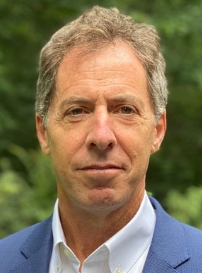 Edward Wile Maibach合作论文数Center for Climate Change Communication, George Mason University;Department of Communication, College of Humanities and Social Sciences, George Mason University14
 Matthew T. Ballew合作论文数Yale University12
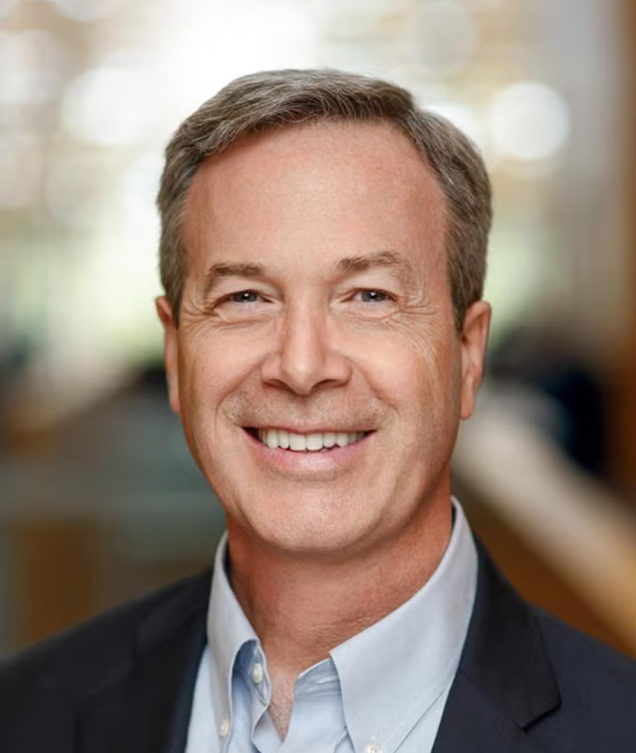 Anthony Leiserowitz合作论文数Yale School of the Environment, Yale University10
 Seth Rosenthal合作论文数School of the Environment, Yale University9
 Abel Gustafson合作论文数Department of Communication, University of Cincinnati8
 Matto Mildenberger合作论文数Department of Political Science, University of California, Santa Barbara8
 Matthew H. Goldberg合作论文数Yale Univ, Yale Program Climate Change Commun, 205 Prospect St, New Haven, CT 06511 USA7
 Kotcher John E合作论文数7
 Jennifer Marlon合作论文数School of the Environment, Yale University6
 Christopher Warshaw合作论文数Dept Polit Sci, George Washington Univ4
 Francesco Rampazzo合作论文数Univ Oxford3
 David M. Konisky合作论文数Department of Political Science;Massachusetts Institute of Technology;Department of Political Science, Massachusetts Institute of Technology3
 Leah R. Rosenzweig合作论文数Development Innovation Lab, University of Chicago2
 Paasha Mahdavi合作论文数2
 Xinran Wang合作论文数Yale School of the Environment, 195 Prospect Street, New Haven, CT 06511, United States2
 Amira A Roess合作论文数2
 Sanya Carley合作论文数Paul O’Neill School of Public and Environmental Affairs, Indiana University2
 Peter D. Howe合作论文数Pennsylvania State University2
 Katherine Hoffmann Pham合作论文数NYU, Stern Sch Business, New York, NY 10003 USA1
 Karine Lacroix合作论文数Yale Program Climate Change Commun, Yale Univ1
 Gilbert Michaud合作论文数Sch Environm Sustainabil, Loyola Univ1
 Kathryn Harrison合作论文数Department of Political Science, Faculty of Arts, The University of British Columbia1
 Stokes Leah C合作论文数‡Department of Urban Studies and Planning, Massachusetts Institute of Technology1Constantino Sara M合作论文数Department of Psychology, New York University1
 Sharmistha Swain合作论文数National Drought Mitigation Center, University of Nebraska1
 Stephen Ansolabehere合作论文数Department of Government, Harvard University1
 Erick Lachapelle合作论文数Department of Political Science;University of Toronto;Department of Political Science, University of Toronto1Katharine Hayhoe合作论文数1




