Double- and single-differential cross sections for inclusive charged-current νμ-nucleus scattering are reported for the kinematic domain 0 to 2 GeV/c in three-momentum transfer and 0 to 2 GeV in available energy, at a mean νμ energy of 1.86 GeV. The measurements are based on an estimated 995,760 νμ charged-current (CC) interactions in the scintillator medium of the NOvA Near Detector. The subdomain populated by 2-particle-2-hole (2p2h) reactions is identified by the cross section excess relative to predictions for νμ-nucleus scattering that are constrained by a data control sample. Models for 2-particle-2-hole processes are rated by χ2 comparisons of the predicted-versus-measured νμ CC inclusive cross section over the full phase space and in the restricted subdomain. Shortfalls are observed in neutrino generator predictions obtained using the theory-based València and SuSAv2 2p2h models. Published by the American Physical Society 2025
We summarize the Fermilab Accelerator Complex Evolution (ACE) Science Workshop, held on June 14-15, 2023. The workshop presented the strategy for the ACE program in two phases: ACE Main Injector Ramp and Target (MIRT) upgrade and ACE Booster Replacement (BR) upgrade. Four plenary sessions covered the primary experimental physics thrusts: Muon Collider, Neutrinos, Charged Lepton Flavor Violation, and Dark Sectors. Additional physics and technology ideas were presented from the community that could expand or augment the ACE science program. Given the physics framing, a parallel session at the workshop was dedicated to discussing priorities for accelerator R\&D. Finally, physics discussion sessions concluded the workshop where experts from the different experimental physics thrusts were brought together to begin understanding the synergies between the different physics drivers and technologies. In December of 2023, the P5 report was released setting the physics priorities for the field in the next decade and beyond, and identified ACE as an important component of the future US accelerator-based program. Given the presentations and discussions at the ACE Science Workshop and the findings of the P5 report, we lay out the topics for study to determine the physics priorities and design goals of the Fermilab ACE project in the near-term.
The inclusive electron neutrino charged-current cross section is measured in the NOvA near detector using 8.02×10^{20} protons-on-target in the NuMI beam. The sample of GeV electron neutrino interactions is the largest analyzed to date and is limited by ≃17% systematic rather than the ≃7.4% statistical uncertainties. The double-differential cross section in final-state electron energy and angle is presented for the first time, together with the single-differential dependence on Q^{2} (squared four-momentum transfer) and energy, in the range 1 GeV≤E_{ν}<6 GeV. Detailed comparisons are made to the predictions of the GENIE, GiBUU, NEUT, and NuWro neutrino event generators. The data do not strongly favor a model over the others consistently across all three cross sections measured, though some models have especially good or poor agreement in the single differential cross section vs Q^{2}.
The 2021-22 High-Energy Physics Community Planning Exercise (a.k.a. ``Snowmass 2021'') was organized by the Division of Particles and Fields of the American Physical Society. Snowmass 2021 was a scientific study that provided an opportunity for the entire U.S. particle physics community, along with its international partners, to identify the most important scientific questions in High Energy Physics for the following decade, with an eye to the decade after that, and the experiments, facilities, infrastructure, and R&D needed to pursue them. This Snowmass summary report synthesizes the lessons learned and the main conclusions of the Community Planning Exercise as a whole and presents a community-informed synopsis of U.S. particle physics at the beginning of 2023. This document, along with the Snowmass reports from the various subfields, will provide input to the 2023 Particle Physics Project Prioritization Panel (P5) subpanel of the U.S. High-Energy Physics Advisory Panel (HEPAP), and will help to guide and inform the activity of the U.S. particle physics community during the next decade and beyond.
This is the Snowmass 2021 Rare and Precision Frontier Report. The Rare Processes and Precision Measurements Frontier, referred to as the ``Rare and Precision Frontier", or RPF, encompasses searches for extremely rare processes or tiny deviations from the Standard Model (SM) that can be studied with intense sources and high-precision detectors. Our community studies have identified several unique research opportunities that may pin down the scales associated with New Physics (NP) interactions and constrain the couplings of possible new degrees of freedom. Searches for rare flavor transition processes and precision measurements are indispensable probes of flavor and fundamental symmetries, and provide insights into physics that manifests itself at higher energy or through weaker interactions than those directly accessible at high-energy colliders.
This report summarizes the current status of neutrino physics and the broad and exciting future prospects identified for the Neutrino Frontier as part of the 2021 Snowmass Process.
The muon has played a central role in establishing the Standard Model of particle physics, and continues to provide valuable information about the nature of new physics. A new complex at Fermilab, the Advanced Muon Facility, would provide the world's most intense positive and negative muon beams by exploiting the full potential of PIP-II and the Booster upgrade. This facility would enable a broad muon physics program, including studies of charged lepton flavor violation, muonium-antimuonium transitions, a storage ring muon EDM experiment, and muon spin rotation experiments. This document describes a staged realization of this complex, together with a series of next-generation experiments to search for charged lepton flavor violation.
This white paper presents opportunities afforded by the Fermilab Booster Replacement and its various options. Its goal is to inform the design process of the Booster Replacement about the accelerator needs of the various options, allowing the design to be versatile and enable, or leave the door open to, as many options as possible. The physics themes covered by the paper include searches for dark sectors and new opportunities with muons.
Heavy charged particles after nuclear muon capture are an important nuclear physics background to the muon-to-electron conversion experiments Mu2e and COMET, which will search for charged lepton flavor violation at an unprecedented level of sensitivity. The AlCap experiment measured the yield and energy spectra of protons, deuterons, tritons, and alpha particles emitted after the nuclear capture of muons stopped in Al, Si, and Ti in the low energy range relevant for the muon-to-electron conversion experiments. Individual charged particle types were identified in layered silicon detector packages and their initial energy distributions were unfolded from the observed energy spectra. Detailed information on yields and energy spectra for all observed nuclei are presented in the paper.
This reports summarizes the activities of the Charged Lepton Flavor Violation group of the 2022 Community Summer Study. Charged lepton flavor violating reactions provide unique information on the scale and dynamics of flavor generation, and more generally a wide range of New Physics scenarios, complementing direct searches performed at collider and neutrino physics experiments. These processes already probe mass scales up to thousands of TeV, and an observation would be an unambiguous signature of physics beyond the Standard Model. We review the current status and future experimental opportunities in muon, tau and heavy state transitions, with a focus on US-led initiatives.
The DUNE IDR describes the proposed physics program and technical designs of the DUNE Far Detector modules in preparation for the full TDR to be published in 2019. It is intended as an intermediate milestone on the path to a full TDR, justifying the technical choices that flow down from the high-level physics goals through requirements at all levels of the Project. These design choices will enable the DUNE experiment to make the ground-breaking discoveries that will help to answer fundamental physics questions. Volume 1 contains an executive summary that describes the general aims of this document. The remainder of this first volume provides a more detailed description of the DUNE physics program that drives the choice of detector technologies. It also includes concise outlines of two overarching systems that have not yet evolved to consortium structures: computing and calibration. Volumes 2 and 3 of this IDR describe, for the single-phase and dual-phase technologies, respectively, each detector module's subsystems, the technical coordination required for its design, construction, installation, and integration, and its organizational structure.
This work demonstrates that two systematic errors, coherent betatron oscillations (CBO) and muon losses can be reduced through application of radio frequency (RF) electric fields, which ultimately increases the sensitivity of the muon $g-2$ experiments. As the ensemble of polarized muons goes around a weak focusing storage ring, their spin precesses, and when they decay through the weak interaction, $\mu^+ \rightarrow e^+ \nu_e \bar{\nu_\mu}$, the decay positrons are detected by electromagnetic calorimeters. In addition to the expected exponential decay in the positron time spectrum, the weak decay asymmetry causes a modulation in the number of positrons in a selected energy range at the difference frequency between the spin and cyclotron frequencies, $\omega_\text{a}$. This frequency is directly proportional to the magnetic anomaly $a_\mu =(g-2)/2$, where $g$ is the g-factor of the muon, which is slightly greater than 2. The detector acceptance depends on the radial position of the muon decay, so the CBO of the muon bunch following injection into the storage ring modulate the measured muon signal with the frequency $\omega_\text{CBO}$. In addition, the muon populations at the edge of the beam hit the walls of the vacuum chamber before decaying, which also affects the signal. Thus, reduction of CBO and unwanted muon loss increases the $a_\mu$ measurement sensitivity. Numerical and experimental studies with RF electric fields yield more than a magnitude reduction of the CBO, with muon losses comparable to the conventional method.
We present updated results from the NOvA experiment for $\nu_\mu\rightarrow\nu_\mu$ and $\nu_\mu\rightarrow\nu_e$ oscillations from an exposure of $8.85\times10^{20}$ protons on target, which represents an increase of 46% compared to our previous publication. The results utilize significant improvements in both the simulations and analysis of the data. A joint fit to the data for $\nu_\mu$ disappearance and $\nu_e$ appearance gives the best fit point as normal mass hierarchy, $\Delta m^2_{32} = 2.44\times 10^{-3}{{\rm eV}^2}/c^4$, $\sin^2\theta_{23} = 0.56$, and $\delta_{CP} = 1.21\pi$. The 68.3% confidence intervals in the normal mass hierarchy are $\Delta m^2_{32} \in [2.37,2.52]\times 10^{-3}{{\rm eV}^2}/c^4$, $\sin^2\theta_{23} \in [0.43,0.51] \cup [0.52,0.60]$, and $\delta_{CP} \in [0,0.12\pi] \cup [0.91\pi,2\pi]$. The inverted mass hierarchy is disfavored at the 95% confidence level for all choices of the other oscillation parameters.
The DUNE IDR describes the proposed physics program and technical designs of the DUNE far detector modules in preparation for the full TDR to be published in 2019. It is intended as an intermediate milestone on the path to a full TDR, justifying the technical choices that flow down from the high-level physics goals through requirements at all levels of the Project. These design choices will enable the DUNE experiment to make the ground-breaking discoveries that will help to answer fundamental physics questions. Volume 3 describes the dual-phase module's subsystems, the technical coordination required for its design, construction, installation, and integration, and its organizational structure.
The DUNE IDR describes the proposed physics program and technical designs of the DUNE far detector modules in preparation for the full TDR to be published in 2019. It is intended as an intermediate milestone on the path to a full TDR, justifying the technical choices that flow down from the high-level physics goals through requirements at all levels of the Project. These design choices will enable the DUNE experiment to make the ground-breaking discoveries that will help to answer fundamental physics questions. Volume 2 describes the single-phase module's subsystems, the technical coordination required for its design, construction, installation, and integration, and its organizational structure.
This paper describes the hardware and operations of the Neutrinos at the Main Injector (NuMI) beam at Fermilab. It elaborates on the design considerations for the beam as a whole and for individual elements. The most important design details of individual components are described. Beam monitoring systems and procedures, including the tuning and alignment of the beam and NuMI long-term performance, are also discussed.
This document presents the Conceptual Design Report (CDR) put forward by an international neutrino community to pursue the Deep Underground Neutrino Experiment at the Long-Baseline Neutrino Facility (LBNF/DUNE), a groundbreaking science experiment for long-baseline neutrino oscillation studies and for neutrino astrophysics and nucleon decay searches. The DUNE far detector will be a very large modular liquid argon time-projection chamber (LArTPC) located deep underground, coupled to the LBNF multi-megawatt wide-band neutrino beam. DUNE will also have a high-resolution and high-precision near detector.
These reports present the results of the 2013 Community Summer Study of the APS Division of Particles and Fields ("Snowmass 2013") on the future program of particle physics in the U.S. Chapter 1 contains the Executive Summary and the summaries of the reports of the nine working groups.
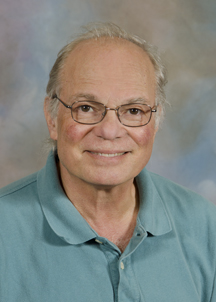 Arie Bodek合作论文数Department of Physics and Astronomy, School of Arts & Sciences, University of Rochester127
 M. H. Shaevitz合作论文数122W. Marsh合作论文数121Mj Lamm合作论文数117
 Heidi M. Schellman合作论文数Department of Physics, College of Science, Oregon State University115
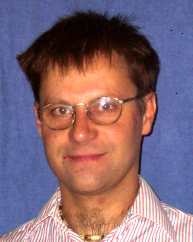 Pawel De Barbaro合作论文数Department of Physics and Astronomy, School of Arts and Sciences, University of Rochester;CERN113T. Bolton合作论文数109
 Willis K. Sakumoto合作论文数Department of Physics & Astronomy, University of Rochester105D. Naples合作论文数102Eg Stern合作论文数84
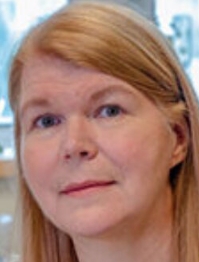 Janet M. Conrad合作论文数Department of Physics, Massachusetts Institute of Technology;Laboratory for Nuclear Science, Massachusetts Institute of Technology;Plasma Science and Fusion Center, Massachusetts Institute of Technology84d a harris合作论文数82
 Panagiotis Spentzouris合作论文数Scientific Computing Division, Fermi National Accelerator Laboratory80S. R. Mishra合作论文数79M. Vakili合作论文数78A. Romosan合作论文数77S. Avvakumov合作论文数76
 Un-Ki Yang合作论文数Department of Physics & Astronomy, Seoul National University76Rb Drucker合作论文数71W. H. Smith合作论文数71
 Kevin S. Mcfarland合作论文数Department of Physics and Astronomy, School of Arts & Sciences, University of Rochester70P. Nienaber合作论文数70C. McNulty合作论文数69
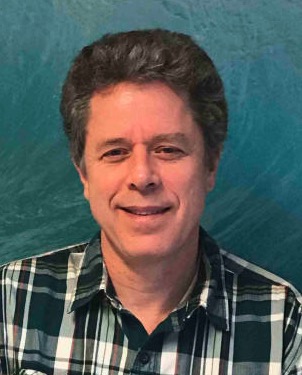 Robert P. Johnson合作论文数Physical & Biological Sciences Division, Physics Department, University of California, Santa Cruz;Santa Cruz Institute for Particle Physics, University of California, Santa Cruz68Wc Lefmann合作论文数64
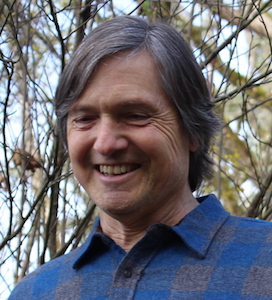 Raymond E. Frey合作论文数Physics Department, University of Oregon64A. Alton合作论文数64G. P. Zeller合作论文数63S. Koutsoliotas合作论文数63a vaitaitis合作论文数61Pz Quintas合作论文数60J. Brau合作论文数60L. Bugel合作论文数60
 Todd Adams合作论文数Department of Physics, College of Arts and Sciences, Florida State University59Bj King合作论文数58
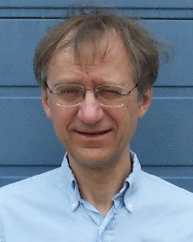 Howard S. Budd合作论文数Department of Physics and Astronomy, School of Arts & Sciences, University of Rochester57Wg Seligman合作论文数57J. Goldman合作论文数55
 Joseph A Formaggio合作论文数Department of Physics, Massachusetts Institute of Technology54Max Goncharov合作论文数53T. Kinnel合作论文数50
 Carla Arroyo合作论文数49
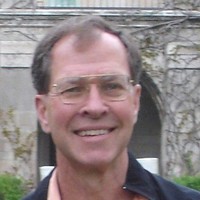 D. Bruce Buchholz合作论文数Department of Materials Science and Engineering, Northwestern University48J. H. Kim合作论文数47
 Bonnie Fleming合作论文数Fermi National Accelerator Laboratory46
 Bruce Schumm合作论文数Physical & Biological Sciences Division, Physics Department, University of California, Santa Cruz;Santa Cruz Institute for Particle Physics, University of California, Santa Cruz43
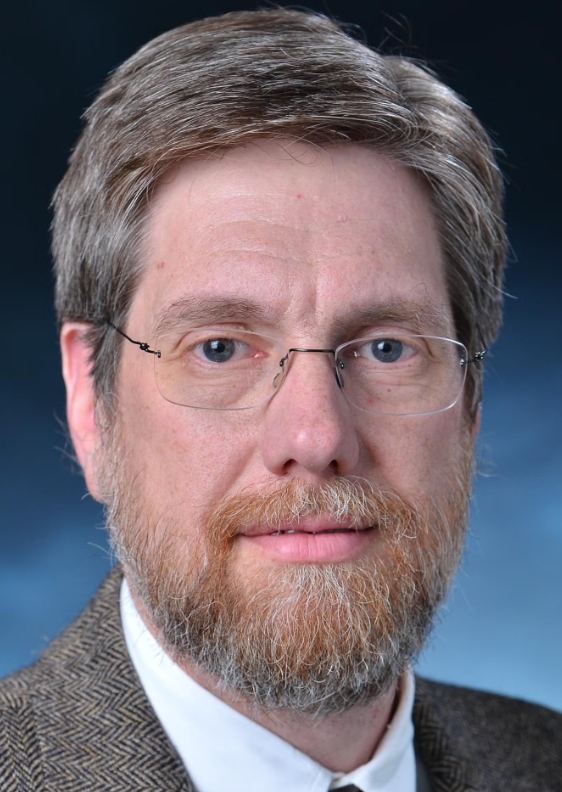 Eric D. Zimmerman合作论文数Department of Physics, College of Arts and Sciences, University of Colorado Boulder43
 Costas Foudas合作论文数Physics Department, University of Ioannina41




