This article analyzes the transformations of the normative framework governing the situation of Moroccan women employed in the care sector in Ceuta and Melilla, the two Spanish autonomous cities constituting the only European land borders on the African continent. It focuses on the COVID-19 pandemic and its aftermath, examining how the border closure on March 14, 2020, disrupted the circular mobility that had sustained cross-border care work, exacerbating existing precarity and altering the legal and institutional environment. Drawing on a legal analysis and qualitative interviews, the article highlights the complexity of the challenges faced by cross-border care workers. It explores theirworking and living conditions that are shaped by intersecting inequalities and shifting regulations. Ultimately, the study situates these experiences within broader debates on the intersection of care work, border controls, and migration, revealing how normative changes affect mobility and livelihoods at Europe's southern frontier.
Accommodating new religious communities has become a central issue in Western Europe. However, the role of religious identification in shaping intergroup relations still needs to be better understood. This study addresses this gap by analyzing the factors influencing public support for the accommodation of religious diversity, drawing on two statistically representative surveys conducted in Catalonia, Spain. The results revealed that religious identification moderates the relationship between the perception that religions other than Catholicism threaten society's way of life and the level of support for accommodating religious diversity. Contrary to initial assumptions, practicing Catholics were more supportive of religious accommodation than nonpracticing Catholics and nonbelievers, regardless of the level of threat they perceived. Moreover, cross-group friendships mitigated the negative impact of perceived threat on support for religious accommodation, particularly among nonbelievers. Overall, the findings underscore the importance of cross-group friendships in fostering more inclusive societies and provide valuable insights for religious governance.
The recent enhancement of working conditions and social security for domestic service workers in Spain has enabled the integration of this group of female workers into the same legal framework as other employees. Despite the progress already made and the optimistic forecast that the ratification of Convention 189 in 2022 has opened, domestic workers continue to be one of the groups that suffer the most precariousness in Spain. Added to the laxity of the implementation of legislation is the strong presence of the underground economy and a care management model that facilitates the expansion of the deregulated market and the recruitment of irregular migrant women to occupy these precarious labor niches (live-in domestic workers). This article aims to identify the impact of psychosocial working conditions on the physical and mental health of female migrants who are live-in domestic workers in Madrid and Barcelona, Spain. The research employs semi-structured, in-depth interviews to understand the representations and experiences in migrant women’s health, by unveiling the meanings of their experiences through a thematic content analysis. The study concludes with a reflection on which psychosocial, legislative, and policy-level interventions are needed to improve the health and well-being of this population of migrant women.
The city of Barcelona has become a nodal point of the transnational social space of the Pakistani diaspora. Despite being quite invisible, Pakistanis stand out for their entrepreneurial activities, especially in the food and telecommunication sectors. This paper aims to shed light on the transnational dimension of Pakistani ethnic businesses of Barcelona through the lens of 'transnational mixed embeddedness' (Bagwell [2015]. Transnational entrepreneurship amongst Vietnamese businesses in London. Journal of Ethnic and Migration Studies, 41(2), 329-349. https://doi.org/10.1080/1369183X.2014.907739) and a multi-level approach that combines analytical levels (macro, meso and micro) and territorial levels (local/national and transnational). This is within the theoretical debate around globalization from below, immigrant entrepreneurship and transnational entrepreneurship, and by using a mixed-methods design. The results show how migrant entrepreneurs can be placed in a 'continuum of transnational embeddedness', depending on the interrelation of agency and micro-sociological processes entailing in-group differences with meso-market and macro-structural factors from a dynamic point of view.
Review of the book: Jane Freedman, Nona Sahraoui y Evangelia Tastsoglou. Gender-Based Violence in Migration: Interdisciplinary, Feminist and Intersectional Approaches. Palgrave Macmillan, 2022, 251 págs.
In a context of rising global inequality, migrants are often subjected to violence, whether physical, symbolic, institutional or structural. It may take place at any point of the migration cycle – origin, transit or destination. Practices like female genital mutilation, forced marriage, honour killings, rape, coercive prostitution, domestic violence and femicide are specific forms of gender violence that disproportionately affect women and the LGTBI+ community. Given this reality, issue 133 of Revista CIDOB d’Afers Internacionals applies a gender and intersectional perspective to analyse these forms of violence in a range of countries and territories, with the triple aim of contributing to the production of scientific knowledge, stimulating the creation of informed public policies and encouraging critical thinking in order to work towards a society that is free from violence.
The article analyzes a subsidy focused on promoting the formalization of the home care work sector, a pioneering initiative in Spain promoted by the Secretariat for Equality, Migration and Citizenship of the Generalitat de Catalunya in 2020. The text reflects on the characteristics of the model of care organization in Spain, which feeds back on the institutional violence associated with the condition of foreigners and migrants to guarantee female labor in precarious condi-tions. Based on a methodological design that includes a quantitative and a qualitative phase, the implementation and impact of the subsidy on the trajectories of migrant women and em-ployers is analyzed, as well as the main resistance and obstacles. The results show that, although this initiative is an effective strategy to raise awareness and promote the regularization of this sector, it is not capable of reversing the forms of institutional violence.
Return migration studies are necessarily piecemeal and difficult to grasp in terms of identifying the when, where and why of transversal movement of people. Migrants’ mobility projects unfold over varied lengths of time, and return journeys are often unrecorded by government bureaucracies. Based on a mixed method approach, this chapter examines the causes and consequences of return migration through findings of a quantitative survey of 350 Bolivian male and female returnees from Spain who returned after the 2008 global economic crisis. This is followed by two in-depth qualitative interviews about the economic constraints and emotional complications faced by two women seeking to reunite their bifurcated transnational family members in Bolivia. Three analytical dimensions are interrogated: the psycho-social well-being of the return migrants, their structural vulnerabilities and the interactive influence of the family life cycle on return migration. The returnees reveal the highlights and shadows of their return and reintegration in Bolivia.
En un contexto de crecientes desigualdades, vulnerabilidades y precariedad a nivel global, los flujos migratorios han aumentado de modo considerable, especialmente aquellos que se producen de manera forzosa. Ya sea por motivos económicos, políticos, climáticos o sociales, cada vez más se asiste a una serie de movilidades involuntarias protagonizadas por personas que emigran en búsqueda de un territorio más seguro. Saskia Sassen (2016) denomina este tipo de movilidades como «migraciones de supervivencia», aludiendo a la pérdida masiva de hábitat que se da en los lugares de origen y que conduce a cada vez más personas a arriesgar sus vidas en peligrosos viajes hacia una vida mejor. Factores desencadenantes como una guerra, la falta de seguridad, la pérdida de recursos naturales, la escasez de agua o la pobreza, así como la falta de expectativas de futuro, conforman un escenario que diluye la frontera entre el prototipo de migrante económico y el solicitante de asilo, tal y como viene definido en los tratados y acuerdos internacionales (como la Convención de Ginebra de 1951 sobre el Estatuto de los Refugiados o el Global Compact for Migration de 2018). Bajo este paraguas, se produce una movilidad que es motivada por una expulsión económica, social y biosférica, en la que las personas simplemente anhelan ya no solo mejorar su vida, sino lograr sobrevivir.
In recent years, forced marriage as a manifestation of violence against women has entered the public agenda in European Union countries. This is partly due to higher numbers of migrants from regions where it is a regular practice. This paper aims to show the different ways violence manifests itself in forced marriage, both symbolically and practically - in terms of experiences - based on a qualitative sample of women with a range of migration backgrounds residing in Catalonia. The intersectional gender approach of the analysis enables the interaction to be considered of various factors when it comes to understanding contexts of risk and violence, as well as exit strategies from forced marriage.
ABSTRACT Immigration is one of the most contested issues in contemporary political life because of its possible implications for state welfare provisions of receiving countries. There is a fear that rising immigration will erode public support for social policies that benefit immigrants, particularly in contexts of economic crisis. However, some believe that social trust is a determining factor that may mitigate such anti-immigrant attitudes. We test both arguments for the case of Spain through multiple regression analyses of surveys on attitudes towards immigrants, carried out by the Centro de Investigaciones Sociológicas (CIS) from 2007 to 2017. While the results are consistent with expectations according to group threat theory, we also found that trusting individuals are more likely to support immigrants’ social rights. Moreover, social trust lessens the negative effects of the perception of threat posed by outgroups —perceived economic threat and perceived size of their population— on support for immigrants’ social rights.
The city of Barcelona, one of the major cultural and economic centres in southern Europe, has a long tradition of migration. This article focuses on two of the quantitatively most important migration phases in the history of the city which occurred in the twentieth and twenty-first centuries: the first comprised migrants from other regions of Spain and the second an intense influx of foreign migrants that began in the late 1980s and continues today. The article analyses the impact of these two different migration patterns on the economic, social and urban development of the city. Despite the dynamics of exclusion and discrimination endured by migrant populations, Barcelona has successfully established itself as the model of an “open city”, committed to embracing its cultural diversity and making it a cornerstone of its identity.
En los países de la Unión Europea el fenómeno de los matrimonios forzados se ha instalado en los últimos años en la agenda pública como una de las manifestaciones de la violencia contra las mujeres. Ello es debido, en parte, al aumento de población migrante procedente de regiones donde este fenómeno constituye una práctica recurrente. Este artículo pretende mostrar las distintas formas en que la violencia se manifiesta en un matrimonio forzado, tanto a nivel simbólico como en el plano práctico de las experiencias, a partir de una muestra cualitativa de mujeres con diversas trayectorias migratorias residentes en Cataluña. El análisis se lleva a cabo desde un enfoque de género interseccional, que permite considerar la interacción entre diversos factores que se interrelacionan a la hora de entender los contextos de riesgo y violencia, así como las estrategias de salida de un matrimonio forzado.
El artículo analiza una subvención enfocada en promover la formalización del sector de cuidados domiciliarios, iniciativa pionera en España impulsada por la Secretaría de Igualdad, Migraciones y Ciudadanía de la Generalitat de Catalunya en 2020. El texto reflexiona sobre las características del modelo de gestión de los cuidados en España, que se retroalimenta de la violencia institucional asociada a la condición de extranjeras de las mujeres migrantes, para garantizar mano de obra femenina en condiciones de precariedad. A partir de un diseño metodológico que incluye una fase cuantitativa y otra cualitativa, se analiza la implementación e incidencia de la subvención en las trayectorias de las mujeres migrantes y en las personas empleadoras, así como las principales resistencias y obstáculos. Los resultados muestran que, si bien es una estrategia es eficaz para sensibilizar e impulsar la regularización del sector, no es capaz de revertir las formas de violencia institucional.
The purpose of this article is to analyze how the daughters of Moroccan families living in Catalonia re-signify their identity as young Muslim and Catalan women, by presenting their own (re)construction of Muslimness. This is the result of the tendency to identify “Muslim” people and “the Muslim” as a paradigm of “the irreducible,” sustaining monolithic and static discourses and social representations that result in more deeply rooted forms of discrimination and exclusion in Europe. The methodological design of the research is based on a qualitative approach that, through life stories, makes it possible to identify the subjective meanings of social practices and lived experiences. The starting point was a sample of young —so called “second generation”— women (born in Catalonia or arrived before the age of twelve); daughters of Moroccan parents, with associative experiences and who are or have been in higher education, in order to show the specificity of the role played by educational levels in the configuration of religious identity. The results show the strategies developed by the young women to manage the tensions within their families and communities, resulting from living in a context where Islam is a minority, which presents challenges and dilemmas when it comes to redefining their religiosity and identity as Muslim women. Indeed, this suggests that the second generation do not follow a linear model of cultural assimilation. Instead, they reinforce their self-image as “bearers” of a transformed religiosity that they construct in their daily lives. This is precisely where the originality of this article lies.
The purpose of this article is to analyze how the daughters of Moroccan families living in Catalonia re-signify their identity as young Muslim and Catalan women, by presenting their own (re)construction of Muslimness. This is the result of the tendency to identify "Muslim" people and "the Muslim" as a paradigm of "the irreducible," sustaining monolithic and static discourses and social representations that result in more deeply rooted forms of discrimination and exclusion in Europe. The methodological design of the research is based on a qualitative approach that, through life stories, makes it possible to identify the subjective meanings of social practices and lived experiences.The starting point was a sample of young -so called "second generation"- women (born in Catalonia or arrived before the age of twelve); daughters of Moroccan parents, with associative experiences and who are or have been in higher education, in order to show the specificity of the role played by educational levels in the configuration of religious identity. The results show the strategies developed by the young women to manage the tensions within their families and communities, resulting from living in a context where Islam is a minority, which presents challenges and dilemmas when it comes to redefining their religiosity and identity as Muslim women. Indeed, this suggests that the second generation do not follow a linear model of cultural assimilation. Instead, they reinforce their self-image as "bearers" of a transformed religiosity that they construct in their daily lives. This is precisely where the originality of this article lies.
Paid domestic and care work has been, and continues to be, largely unregulated, with much lower levels of protection in terms of social and employment rights than other sectors, and is characterised by discriminatory pay and working conditions and high levels of informal employment. It is an extremely segmented sector, and is marked by gender, class and ethnic/racial inequalities. There is no doubt that the pandemic caused by the coronavirus (Covid-19) has sharply highlighted the importance of care for sustaining life, and at the same time the lack of visibility, appreciation and recognition suffered by the sector within our society. This article focuses on migrant domestic workers, many of them in an irregular situation, and who as a result are working in the informal economy. It analyses the impact of the type of regulation in force with regard to this kind of work on living conditions and access to employment rights for women workers of migrant origin. The text concludes with a section containing recommendations for dignifying this work, and ensuring that it is recognised, with a particular emphasis on the role of local government.
This document is aimed at providing theoretical and methodological guidelines on how to include the gender perspective in the analysis of migration narratives in the BRIDGES project. The theoretical part is inspired by some key questions related to the effects of migration on gender relations, the impact of gender on the representation of migration and to how the media and political spheres shape migration narratives from a gender perspective. This section entails both conceptual reflections and empirical studies undertaken in different parts of Europe. The methodological part is based on indications of how to include the gender perspective throughout the project, from data-gathering and analysis to co-production and dissemination activities. This includes sampling criteria and sources of data on the one hand, and a series of dimensions, indicators, and key questions linked to the different Work Packages, on the other. In sum, these guidelines are to make sure that the project remains gender-sensitive throughout its life-course and they may also inspire other projects dealing with narratives or migration issues with a gender and intersectional perspective. Berta Güell is a Researcher in the area of Migrations at CIDOB and Assistant Coordinator within the BRIDGES project. Doctor in Sociology with an extraordinary award from the Autonomous University of Barcelona (UAB) and specialised in ethnic entrepreneurship and the Pakistani community in Spain. She has researched the situation of temporary agricultural workers and LGTBI refugees through her contributions to several projects (i.e. ADMIGOV, NIEM) at CIDOB. She has also undertaken investigations on forced and arranged marriages (Recercaixa), and on descendants of Asian background (Josep Irla Postdoctoral Fellowship) at CER-Migracions (UAB). Berta Güell has previously worked on several European projects related to the phenomenon of migration and social exclusion at the European Social Research Unit of the University of Barcelona (UB). She is coordinator of the Labour Market and Immigration Module of the Interuniversity Master in Contemporary Migration of CER-Migracions and has previously been an associate lecturer at the Faculty of Education of the UB. Sònia Parella is Director of CER-Migracions, the interuniversity and interdisciplinary research institute on international migrations affiliated to the Autonomous University of Barcelona (UAB), where she obtained her PhD cum laude in Sociology in 2002. Her main research interests include the processes of labour market integration of international migrants, the analysis of discrimination against migrant women from an intersectional perspective, and the study of transnational practices in migration contexts. She has published on gender perspective in migration studies, feminist theory of intersectionality, translational families, and the relationship between migrations and the labour market. She has participated in more than 30 competitive projects. At BRIDGES, apart from member of the Scientific Advisory Board, she is part of the Gender Observatory, contributing to the inclusion of the gender perspective all along the project, as an expert in gender and migrations. GUIDELINES ON HOW TO INCLUDE THE GENDER PERSPECTIVE IN THE ANALYSIS OF MIGRATION NARRATIVES
ABSTRACT This article focuses on the case of Central American female domestic and care workers in Barcelona, many of whom live and work as undocumented migrants and are unaware of their rights and the mechanisms to exercise them. The Trade Union Confederation of Workers’ Commissions, from its CITE association, has vast experience in training foreigners through the delivery of face-to-face workshops on labor rights that have enabled their empowerment. With the COVID-19 emergency, the face-to-face workshop format switched to virtual for the first time, through the use of Google Meet (formerly Hangouts Meet) application, allowing mobile learning (m-learning). The results presented show how this new training modality, despite the challenges it poses to organizers in terms of technological and human resources, not only achieves the empowerment of the benefitted migrant women, but also improves the accessibility of this vulnerable group to training.
 Carlota Sole合作论文数38
 Alisa Petroff合作论文数GENTIC IN3 Univ Oberta Catalunya18
 Amado Alarcon合作论文数Profesores, Universidad Rovira i Virgili Universidad15Leonardo Aguiar Cavalcanti合作论文数Observatório das Migrações Internacionais – OBMigra11
 Berta Guell合作论文数Universitat Autònoma de Barcelona10Ursula Birsl合作论文数7Renate Bitzan合作论文数7Juliane Schmidt合作论文数7Stephen French合作论文数7Thales Speroni合作论文数6
 Clara Piqueras合作论文数Univ Autonoma Barcelona4
 Rosalina Alcalde Campos合作论文数Universitat Autònoma de Barcelona;Facultad de Ciencias Políticas;Departamento de Sociología;Departamento de Sociología, Universitat Autònoma de Barcelona4Francesc Gibert合作论文数3Liliana Reyes合作论文数3
 Katia Lurbe Puerto合作论文数3
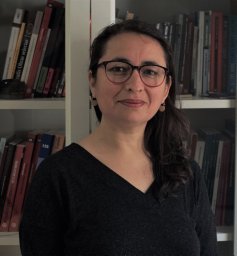 Paola Contreras Hernandez合作论文数Dept Sociol, Univ Autonoma Barcelona3
 Laura Oso合作论文数University of A Coruña3Jaime Fierro合作论文数3
 Olga Serradell合作论文数Univ Autonoma Barcelona3
 Teresa Sorde Marti合作论文数3
 Hugo Valenzuela-Garcia合作论文数3cristina brullet tenas合作论文数2Jordi Pàmies Rovira合作论文数2Sonja Nita合作论文数2Natalia Ribas合作论文数2Sarai Samper合作论文数2valeria bergalli合作论文数2enrique santamaria合作论文数1carmen ledo合作论文数1raquel moreno合作论文数1sarai samper sierra合作论文数1naik miret合作论文数1itxasne sagarzazu olaizola合作论文数1
 Erica Dobbs合作论文数1
 Maria Nohemi Gonzalez合作论文数1
 Dhayana Fernandez-Matos合作论文数Univ Simon Bolivar1
 Susana Maria Sassone合作论文数national scientific and technical research council1
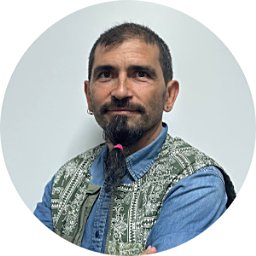 Alfonso Vazquez Atochero合作论文数Dept Ciencias Educ Area Didact & Org Escolar, Univ Extremadura1
 Virginie Baby-Collin合作论文数CNRS, Aix-Marseille Univ.;Aix-en-Provence France;Aix-Marseille Univ.1
 Herminia Gonzálvez Torralbo合作论文数Fac Derecho & Humanidades, Univ Cent Chile1
 Javier Silvestre合作论文数Fac Econ & Empresa, Univ Zaragoza1
 Peggy Levitt合作论文数Department of Sociology, Wellesley College1
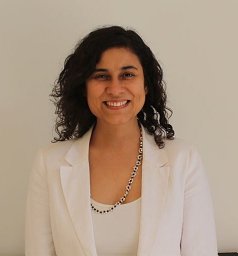 Iskra Pavez Soto合作论文数1Geneviève Cortes合作论文数1
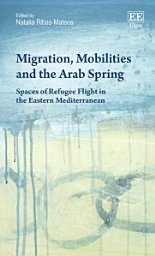 Natalia Ribas-Mateos合作论文数1
 Carmen Gregorio合作论文数Departamento de Antropología Social;Universidad de Granada;Departamento de Antropología Social, Universidad de Granada1
 Lluis Flaquer合作论文数Universitat Autònoma de Barcelona1
 Jose-Luis Molina合作论文数Divisió d'Antropologia Social;Universitat Autònoma de Barcelona;Divisió d'Antropologia Social, Universitat Autònoma de Barcelona1rosa maria soriano miras合作论文数1




