The Awards for Distinguished Scientific Contributions are presented to persons who, in the opinion of the Committee on Scientific Awards, have made distinguished theoretical or empirical contributions to basic research in psychology. The 2016 recipients of the APA Scientific Contribution Awards were recognized by the 2015 Board of Scientific Affairs and selected by the 2015 Committee on Scientific Awards. Members of the committee were Scott M. Monroe, PhD (Chair); Susan Goldin-Meadow, PhD; James Grau, PhD; Hazel R. Markus, PhD; Karen A. Matthews, PhD; and Linda Smith, PhD. (PsycINFO Database Record
This chapter contains sections titled: Shabbat (The Sabbath Day) The Pilgrimage Holidays: Pesach, Shavuot, Sukkot Rosh Hashanah (The New Year Festival) Yom Kippur (The Day of Atonement) Hanukah (Holiday of Rededication) Purim: Fact or Fiction? Tish'ah B'av (Remembrance of Destruction) Tu B'shevat (The New Year Day of Trees) The Making of New Days of Remembrance The Inner Workings of the Jewish Calendar Afterthoughts
The effects of price trend and of profit or loss on the tendency to sell stock are examined by the use of questionnaires that simulate a variety of stock market situations. The tendency to sell is weakest when recent price trend is up and strongest when trend is down. Holding trend constant—when compared with a no-gain situation—a loss has no impact on selling behavior, whereas a profit markedly increases selling.
It has been demonstrated that humanists are far more likely to use filled pauses (“uh,” “ah,” or “um”) during their lectures than are social or natural scientists This finding has been interpreted in terms of the hypothesis that filled pauses indicate time out while the speaker searches for the next word or phrase Based on the assumption that the more options at a choice point, the more likely a speaker will say “uh,” it is hypothesized that the humanities are characterized by richer vocabularies (i e, more synonyms) than are the sciences An analysis of the number of different words used in lectures and in professional publications indicates that this is indeed the case Scientists consistently use fewer different words than do humanists Further, the number of different words correlates positively with the frequency of saying “uh” during lectures These findings are not restricted to academics, for in newspaper accounts, journalists use fewer different words in stories about science than in stories about the arts
Cocaine abuse is often associated with behavior that takes into account short-term, but not long-term consequences. However, there has been no empirical research concerning the effects of cocaine on self-control (choice of a larger, more delayed reinforcer over a smaller, less delayed reinforcer). In the present research, when food-deprived rats repeatedly chose between a larger, more delayed food reinforcer and a smaller, less delayed food reinforcer, chronic intraperitoneal injections of 15 mg/kg cocaine (but not 10 mg/kg fluoxetine) decreased the rats' choices of the larger, more delayed reinforcer. Cocaine can decrease rats' self-control.
It is generally accepted that filled pauses and urn) indicate time out while the speaker searches for the next word or phrase. It is hypothesized that the more options, the more likely that a speaker will say uh. The academic disciplines differ in the extent to which their subject matter and mode of thought require a speaker to choose among options. The more formal, structured, and factual the discipline, the fewer the options. It follows that lecturers in the humanities should use more filled pauses during lectures than social scientists and that natural scientists should use fewest of all. Observations of lecturers in 10 academic disciplines indicate that this is the case. That this is due to subject matter rather than to self-selection into disciplines is suggested by observations of this same set of lecturers all speaking on a common subject. In this circumstance, the academic disciplines are identical in the number of filled pauses used. It is an unusually glib and articulate person who, on hearing a tape recording or reading a literal transcript of his or her remarks, has not been shocked by his or her apparent verbal clumsiness, characterized often by agrammatic, redundant speech that is interrupted by repeated words, false starts, long pauses, and guttural interruptions such as uh, ah, and um. That such disfluencies are an integral part of the speech production apparatus is suggested by studies of silent and filled (uh, ah, er, and um) pauses, which are based on the hypothesis that such interruptions in the flow of speech are indications of time for the speech production apparatus to search for the next word, phrase, or idea (Rochester, 1973). Such pauses, according to Lounsbury (1954), may be interpreted as indicative of the strength of association between sequential linguistic events. Alternatively, pauses have been interpreted in more cognitive
Though filled pauses and gestures frequently accompany speech, their function is not well understood. We suggest that it may be helpful in furthering our knowledge of these phenomena to examine their relationship to each other. To this end, we carried out two studies examining whether they tend to occur together, or to occur at separate times. Both faculty colloquium speakers and undergraduate subjects used filled pauses less frequently when they were gesturing than when they were not gesturing. This effect held for 30 out of 31 subjects. We suggest that detailed theories may be premature, but speculate that gestures may be an indication that the speech production apparatus has completed its search for the next word, phrase or idea and is ready to continue.
(1986). Explicaciones No Psicologicas Del Comportamiento. International Journal of Social Psychology: Vol. 1, No. 2, pp. 201-222.
Daily price changes of a variety of individual stocks and of stocks indices on the New York Stock Exchange are studied for indication of randomness between 1957 and 1979. From 1957 to the beginning of 1966, this market moved randomly; from 1966 to 1979 it did not.
The fact that there are times when market movement is random and times when it is not is interpreted in terms of the hypothesis that the price of a stock is an aggregate opinion — the resultant of the opinions and decisions of a community of investors. Price, like any other opinion, will be most vulnerable to social and other sources of influence during times of uncertainty, an aggregate psychological state which can generate the kind of statistical dependence characteristic of non-random walks. Ramifications of this hypothesis are explored in a variety of stock market behaviors, such as the effect of tips, the impact of runs on trading volume during rising and falling markets, and the like.
Though it is generally accepted that a random walk describes the pattern of successive price changes in the market, a review of research evidence suggests that this is by no means a universal fact. Rather than being a general description of market movement, a random walk appears adequate as a description of some markets and not of others, and during some periods of time but not others. In an attempt to understand some of the determinants of the degree of randomness, serial correlations and the runs test were calculated for daily price changes in the stock of the South Sea Company during 1715, a period of financial uneventfulness and during 1720, the period of speculative mania known as the South Sea Bubble. Market movement was distinctly non-random during 1720.
 Leon Festinger合作论文数12Harold H. Kelley合作论文数8Curt P. Richter合作论文数5roger w brown合作论文数5David Krech合作论文数5henry a murray合作论文数5KW Spence合作论文数5Carl R. Rogers合作论文数5Neal E. Miller合作论文数5Charles E. Osgood合作论文数5Gordon W Allport合作论文数5
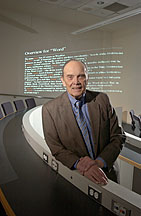 George A. Miller合作论文数Department of Psychology, Princeton University5Roger G. Barker合作论文数5Kurt Back合作论文数4Frank A. Beach合作论文数4David Shakow合作论文数4Henry W. Riecken合作论文数4Richard F. Thompson合作论文数4John Thibaut合作论文数4Robert R. Sears合作论文数3
 Donald C. Hood合作论文数Columbia University3
 Nicholas J S Christenfeld合作论文数University of California , San Diego3
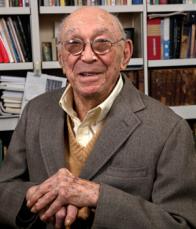 Jerome Bruner合作论文数School of Law, New York University3William Gerin合作论文数3Bernard Hymovitch合作论文数3
 Lynn T. Kozlowski合作论文数Department of Community Health and Health Behavior, School of Public Health and Health Professions, University at Buffalo3Wendell R. Garner合作论文数2Edward S. Jones合作论文数2james olds合作论文数2donald b lindsley合作论文数2richard l solomon合作论文数2paul thomas young合作论文数2fritz heider合作论文数2j p guilford合作论文数2s s stevens合作论文数2
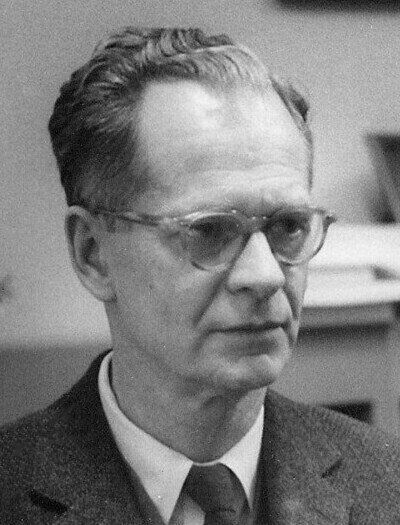 B. F. Skinner合作论文数Harvard University2Paul Andreassen合作论文数2carl pfaffmann合作论文数2harry helson合作论文数2clarence h graham合作论文数2nancy bayley合作论文数2wolfgang kohler合作论文数2
 Roger N. Shepard合作论文数Stanford University2Donald T. Campbell合作论文数2
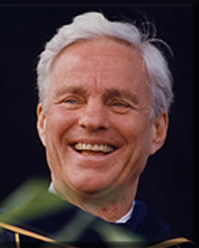 Richard Chatham Atkinson合作论文数University of California, San Diego2
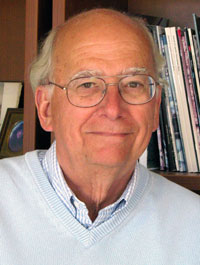 Michael Gazzaniga合作论文数Sage Center for the Study of Mind, University of California, Santa Barbara;Cognitive Neuroscience Institute, University of California, Santa Barbara;Department of Psychological & Brain Sciences, College of Letters & Science, University of California, Santa Barbara2
 James Jerome Gibson合作论文数Smith College, Cornell University2Theodore M. Newcomb合作论文数2Frances Bilous合作论文数2




