Near-term variational classifiers incur substantial error and latency from two-qubit gates, yet practitioners often assume that additional entangling depth is the default route to higher accuracy. This work studies Optimal Quantum Measurement Decoding (OQMD): optimizing how quantum outcomes are mapped to classical labels by training a readout layer before measurement, jointly with the variational circuit, without adding CNOTs. Experiments use trainable triple single-qubit rotations as one concrete, hardware-native realization of OQMD; other single-qubit parametrizations fit the same classical outer loop. On the Iris benchmark with a 30-point stratified test split, the best observed 0-CNOT configuration with OQMD reaches 83.33% accuracy, with a 96% at 9 CNOTs, exceeding the best 18-CNOT controls (56.67%) and the best 18-CNOT configuration with OQMD (66.67%) under a common protocol. A six-point CNOT-depth series from 0 to 18 (fixed optimizer, iteration budget, random-seed count, and ZXZ readout) shows that the highest raw scores need not occur at the largest template, so aggregate complexity is not summarized by CNOT count alone. Because run-level accuracies are discrete and non-Gaussian, we emphasize best-observed scores and, where a global comparison of pooled runs is required, Mann–Whitney U tests rather than parametric tests on means. Across architectures, OQMD shows statistically consistent but magnitude-dependent gains: large peak lifts on minimal circuits coexist with a small pooled mean shift on complex 18-CNOT runs (p≈ 0.03) that is not “universal” in the sense of uniformly large practical effects.
Bayesian quantum estimation offers a finite-data framework for quantum sensing and metrology, yet a unified geometric formulation for multiparameter Bayes risk has been lacking. We introduce Bayesian monotone metrics by evaluating Petz monotone metrics on the prior-averaged state, providing a Bayesian extension of the full class of statistically meaningful (CPTP) quantum metrics. This framework yields Bayesian quantities, including quantum posterior-mean operators and a quantum Bayesian dual Fisher-information matrix, and it leads to a systematic family of computable lower bounds on the Bayes risk. The resulting bounds naturally incorporate multiparameter measurement incompatibility and, for every monotone metric in the family, we prove a universal dominance over the corresponding quantum van Trees (Bayesian Cramér–Rao) bound. Moreover, we show that optimizing over all operator monotone functions collapses to a one-parameter subfamily, turning the tightest bound into a tractable optimization with a clear geometric interpretation. In representative examples, the optimized bounds are strictly tighter than the Bayesian SLD and RLD bounds. Our results establish Bayesian monotone metrics as a unifying information-geometric perspective on Bayesian quantum estimation, enabling systematic and computable performance limits in multiparameter settings.
We study lower bounds for Bayesian quantum parameter estimation, with a particular focus on qubit models. While several lower bounds on the Bayes risk have been proposed, including the Bayesian symmetric logarithmic derivative (B-SLD) type bound and the Bayesian Nagaoka-Hayashi (B-NH) bound, there is no definite proof available to show they are attainable except for special cases. Thus, identifying attainable bounds together with their corresponding optimal measurement strategies remains a central open problem in Bayesian quantum estimation. In this work, we introduce a new Bayesian lower bound, referred to as the Bayesian Gill-Massar (B-GM) bound, inspired by the logic of Gill-Massar bound in point estimation. We derive an analytical closed-form expression of the bound and show that it is attainable for any qubit model. In particular, we prove that the optimal Bayesian strategy can be realized by a projection-valued measure associated with a single effective direction determined by the weight matrix and the B-SLD-type Fisher information matrix. We provide numerical comparisons between the B-GM, B-NH, and B-SLD-type bounds in higher-dimensional models. Our results show that the B-GM bound has a limitation in high-dimensional models with few parameters, since it can be negative.
The symmetric logarithmic derivative Cramér-Rao bound (SLDCRB) provides a fundamental limit to the minimum variance with which a set of unknown parameters can be estimated in an unbiased manner. It is known that the SLDCRB can be saturated provided the optimal measurements for the individual parameters commute with one another. However, when this is not the case the SLDCRB cannot be attained in general. In the experimentally relevant setting, where quantum states are measured individually, necessary and sufficient conditions for when the SLDCRB can be saturated are not known. In this setting the SLDCRB is attainable provided the SLD operators can be chosen to commute on an extended Hilbert space. However, beyond this relatively little is known about when the SLD operators can be chosen in this manner. In this paper we present explicit examples which demonstrate novel aspects of this condition. Our examples demonstrate that the SLD operators commuting on any two of the following three spaces: support space, support-kernel space and kernel space, is neither a necessary nor sufficient condition for commutativity on the extended space. We present a simple analytic example showing that the Nagaoka-Hayashi Cramér-Rao bound is not always attainable. Finally, we provide necessary and sufficient conditions for the attainability of the SLDCRB in the case when the kernel space is one-dimensional. These results provide new information on the necessary and sufficient conditions for the attainability of the SLDCRB.
A spin 1/2 is the simplest system that has been believed to support a single two-level quantum system, represented by a single resonance. We experimentally demonstrate that a spin-1/2 nucleus of ^{19}F in C_{6}F_{6} exhibits an extra resonance corresponding to the emergence of the states, by mechanically rotating a sample and a coil in nuclear magnetic resonance (NMR) measurements. On the basis of the Floquet formalism, we identify the emergence of the extra two-level state due to the temporal periodicity generated by the mechanical rotation (mechanical spin multiplexing) and derive an operator algebra analogous to the planar rotor algebra in an effective description of the system. The observed multiplexing allows a single spin 1/2 to carry more than two states and potentially enabling the processing of multiple quantum bits on a single spin.
Measurement incompatibility is a cornerstone of quantum mechanics. In the context of estimating multiple parameters of a quantum system, this manifests as a fundamental trade-off between the precisions with which different parameters can be estimated. Often, a parameter can be optimally measured, but at the cost of gaining no information about incompatible parameters. Here, we report that there are systems where one parameter's information can be maximised while not completely losing information about the other parameters. In doing so, we find attainable trade-off relations for quantum parameter estimation with a structure that is different to typical Heisenberg-type trade-offs. We demonstrate our findings by implementing an optimal entangling measurement on a Quantinuum trapped-ion quantum computer.
We develop a hybrid framework for quantum parameter estimation in the presence of nuisance parameters. In this scheme, the parameters of interest are treated as fixed non-random parameters while nuisance parameters are integrated out with respect to a prior (random parameters). Within this setting, we introduce the hybrid partial quantum Fisher information matrix (hpQFIM), defined by prior-averaging the nuisance block of the QFIM and taking a Schur complement, and derive a corresponding Cramér–Rao-type lower bound on the hybrid risk. We establish the structural properties of the hpQFIM, including inequalities that bracket it between computationally tractable approximations, as well as limiting behaviors under extreme priors. Operationally, the hybrid approach improves over pure point estimation since the optimal measurement for the parameters of interest depends only on the prior distribution of the nuisance, rather than on its unknown value. We illustrate the framework with analytically solvable qubit models and numerical examples, clarifying how partial prior information on nuisance variables can be systematically exploited in quantum metrology.
In multi-parameter quantum metrology, the resource of entanglement can lead to an increase in efficiency of the estimation process. Entanglement can be used in the state preparation stage, or the measurement stage, or both, to harness this advantage; here we focus on the role of entangling measurements. Specifically, entangling or collective measurements over multiple identical copies of a probe state are known to be superior to measuring each probe individually, but the extent of this improvement is an open problem. It is also known that such entangling measurements, though resource-intensive, are required to attain the ultimate limits in multi-parameter quantum metrology and quantum information processing tasks. In this work we investigate the maximum precision improvement that collective quantum measurements can offer over individual measurements for estimating parameters of qudit states, calling this the 'collective quantum enhancement'. We show that, whereas the maximum enhancement can, in principle, be a factor of n for estimating n parameters, this bound is not tight for large n. Instead, our results prove an enhancement linear in dimension of the qudit is possible using collective measurements and lead us to conjecture that this is the maximum collective quantum enhancement in any local estimation scenario.
This is a correction for Suzukiet al (2020J. Phys. A: Math. Gen.53453001)
Quantum parameter estimation holds significant promise for achieving high precision through the utilization of the most informative measurements. While various lower bounds have been developed to assess the best accuracy for estimates, they are not tight, nor provide a construction of the optimal measurement in general. Thus, determining the explicit forms of optimal measurements has been challenging due to the non-trivial optimization. In this study, we introduce an algorithm, termed QestOptPOVM, designed to directly identify optimal positive operator-valued measure (POVM) using the steepest descent method. Through rigorous testing on several examples for multiple copies of qubit states (up to six copies), we demonstrate the efficiency and accuracy of our proposed algorithm. Moreover, a comparative analysis between numerical results and established lower bounds serves to validate the tightness of the Nagaoka-Hayashi bound in finite-sample quantum metrology for our examples. Concurrently, our algorithm functions as a tool for elucidating the explicit forms of optimal POVMs, thereby enhancing our understanding of quantum parameter estimation methodologies.
The purpose of this paper is to discuss the existence of a nontrivial tradeoff relation for estimating two unitary-shift parameters in a relativistic spin-1/2 system. It is shown that any moving observer cannot estimate two parameters simultaneously, even though a parametric model is classical in the rest frame. This transition from the classical model to a genuine quantum model is investigated analytically using a one-parameter family of quantum Fisher information matrices. This paper proposes to use an indicator that can not only detect the existence of a tradeoff relation but can also evaluate its strength. Based on the proposed indicator, this paper investigates the nature of the tradeoff relation in detail.
In this work we propose a Bayesian version of the Nagaoka-Hayashi bound when estimating a parametric family of quantum states. This lower bound is a generalization of a recently proposed bound for point estimation to Bayesian estimation. We then show that the proposed lower bound can be efficiently computed as a semidefinite programming problem. As a lower bound, we also derive a Bayesian version of the Holevo-type bound from the Bayesian Nagaoka-Hayashi bound. Lastly, we prove that the new lower bound is tighter than the Bayesian quantum Cramer-Rao bounds.
Abstract This is a correction for Suzuki et al (2020 J. Phys. A: Math. Gen. 53 453001).
Bayesian approach for quantum parameter estimation has gained a renewed interest from practical applications of quantum estimation theory. Recently, a lower bound, called the Bayesian Nagaoka-Hayashi bound for the Bayes risk in quantum domain was proposed, which is an extension of a new approach to point estimation of quantum states by Conlon et al. (2021). The objective of this paper is to explore this Bayesian Nagaoka-Hayashi bound further by obtaining its lower bounds. We first obtain one-parameter family of lower bounds, which is an analogue of the Holevo bound in point estimation. Thereby, we derive one-parameter family of Bayesian logarithmic derivative type lower bounds in a closed form for the parameter independent weight matrix setting. This new bound includes previously known Bayesian lower bounds as special cases.
We obtain the accuracy limit for estimating the expectation value of the position of a relativistic particle for an observer moving along one direction at a constant velocity. We use a specific model of a relativistic spin-1/2 particle described by a gaussian wave function with a spin down in the rest frame. To derive the state vector of the particle for the moving observer, we use the Wigner rotation that entangles the spin and the momentum of the particle. Based on this wave function for the moving frame, we obtain the symmetric logarithmic derivative (SLD) Cramer-Rao bound that sets the estimation accuracy limit for an arbitrary moving observer. It is shown that estimation accuracy decreases monotonically in the velocity of the observer when the moving observer does not measure the spin degree of freedom. This implies that the estimation accuracy limit worsens with increasing the observer's velocity, but it is finite even in the relativistic limit. We derive the amount of this information loss by the exact calculation of the SLD Fisher information matrix in an arbitrary moving frame.
One key aspect of quantum metrology, measurement incompatibility, is evident only through the simultaneous estimation of multiple parameters. The symmetric logarithmic derivative Cram\'er-Rao bound (SLDCRB), gives the attainable precision, if the optimal measurements for estimating each individual parameter commute. When the optimal measurements do not commute, the SLDCRB is not necessarily attainable. In this regard, the Holevo Cram\'er-Rao bound (HCRB) plays a fundamental role, providing the ultimate attainable precisions when one allows simultaneous measurements on infinitely many copies of a quantum state. For practical purposes, the Nagaoka Cram\'er-Rao bound (NCRB) is more relevant, applying when restricted to measuring quantum states individually. The interplay between these three bounds dictates how rapidly the ultimate metrological precisions can be approached through collective measurements on finite copies of the probe state. We first consider two parameter estimation and prove that if the HCRB cannot be saturated with a single copy of the probe state, then it cannot be saturated for any finite number of copies of the probe state. With this, we show that it is impossible to saturate the HCRB for several physically motivated problems. For estimating any number of parameters, we provide necessary and sufficient conditions for the attainability of the SLDCRB with separable measurements. We further prove that if the SLDCRB cannot be reached with a single copy of the probe state, it cannot be reached with collective measurements on any finite number of copies of the probe state. These results together provide necessary and sufficient conditions for the attainability of the SLDCRB for any finite number of copies of the probe state. This solves a significant generalisation of one of the five problems recently highlighted by [P.Horodecki et al, Phys. Rev. X Quantum 3, 010101 (2022)].
Finding the optimal attainable precisions in quantum multiparameter metrology is a non-trivial problem. One approach to tackling this problem involves the computation of bounds which impose limits on how accurately we can estimate certain physical quantities. One such bound is the Holevo Cramér–Rao bound on the trace of the mean squared error matrix. The Holevo bound is an asymptotically achievable bound when one allows for any measurement strategy, including collective measurements on many copies of the probe. In this work, we introduce a tighter bound for estimating multiple parameters simultaneously when performing separable measurements on a finite number of copies of the probe. This makes it more relevant in terms of experimental accessibility. We show that this bound can be efficiently computed by casting it as a semidefinite programme. We illustrate our bound with several examples of collective measurements on finite copies of the probe. These results have implications for the necessary requirements to saturate the Holevo bound.
In this paper, we study a family of quantum Fisher metrics based on a convex mixture of two well-known inner products, which covers the well-known symmetric logarithmic derivative, the right logarithmic derivative, and the left logarithmic derivative Fisher metrics. We then define a two-parameter family of quantum Fisher metrics, which is not necessarily monotone. We derive a necessary and sufficient condition for this metric to be monotone. As an application of our proposed metric, we show several characterizations of quantum statistical models for the D-invariant model, asymptotically classical model, and classical model. In our study, the commutation super-operator introduced by Holevo plays a key role. This operator enables us to characterize properties of the tangent spaces of the quantum statistical model and to associate it to the Holevo bound in a unified manner.
In this paper, we study the quantum-state estimation problem in the framework of optimal design of experiments. We first find the optimal designs about arbitrary qubit models for popular optimality criteria such as A-, D-, and E-optimal designs. We also give the one-parameter family of optimality criteria which includes these criteria. We then extend a classical result in the design problem, the Kiefer-Wolfowitz theorem, to a qubit system showing the D-optimal design is equivalent to a certain type of the A-optimal design. We next compare and analyze several optimal designs based on the efficiency. We explicitly demonstrate that an optimal design for a certain criterion can be highly inefficient for other optimality criteria.
In this paper, we analyze quantum-state estimation problems when some of the parameters are of no interest to be estimated. In classical statistics, these irrelevant parameters are called nuisance parameters, and this problem is of great importance in many practical applications of statistics. However, little is known regarding the effects of nuisance parameters in quantum-state estimation problems. The main contribution of this paper is first to formulate the nuisance parameter problem in the quantum-state estimation theory for the finite sample size case. We then derive the precision limit for the parameters of interest based on the concept of locally unbiasedness for the parameters of interest. We also propose a method of how to eliminate the nuisance parameters to obtain an upper bound for estimation error of the parameters of interest. Based on the proposed method, we clarify an intrinsic tradeoff relation to estimate the nuisance parameters and parameters of interest. The general qubit models are examined in detail to emphasize that we cannot ignore the effects of the nuisance parameters in general. Several examples are worked out to illustrate our findings.
 Syed M. Assad合作论文数7
 Berthold-Georg (Berge) Englert合作论文数Department of Physics, Faculty of Science, National University of Singapore;Centre for Quantum Technologies, National University of Singapore7
 Shin Funada合作论文数4
 Lorcan O. Conlon合作论文数Centre for Quantum Computation and Communication Technology, Australian National University4
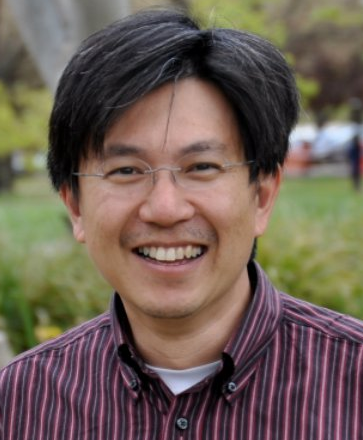 Ping Koy Lam合作论文数Centre for Quantum Computation & Communication Technology, College of Science, Australian National University;Agency for Science, Technology and Research4
 Aritra Das合作论文数Dept Quantum Sci, Australian Natl Univ2Yuxiang Yang (杨宇翔)合作论文数2
 Ng Hui Khoon合作论文数Yale-National University of Singapore College2
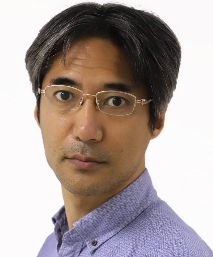 Masahito Hayashi (林正人)合作论文数School of Data Science, The Chinese University of Hong Kong, Shenzhen;Shenzhen Institute for Quantum Science and Engineering;Centre for Quantum Technologies, National University of Singapore;Graduate School of Mathematics, Nagoya University2Simon K. Yung合作论文数1Akira Okuyama合作论文数1Mamoru Matsuo合作论文数1Rui Han合作论文数1Jie Zhao合作论文数1Koichi Yamagata合作论文数1
 Eiji Saitoh (齊藤英治)合作论文数Department of Applied Physics, Tohoku University1Masaki Imai合作论文数Kyoto University, Kyoto University1Masahiro Sato合作论文数1
 Sadamichi Maekawa合作论文数Institute for Materials Research, Tohoku University1Tomohiro Ogawa合作论文数Fukushima Daiichi Hospital Cardiovascular Center1
 Gelo Tabia合作论文数1Naoto Yokoi合作论文数1Kazuya Harii合作论文数1Niels Lörch合作论文数1Hiroyuki Chudo合作论文数Advanced Science Research Center, Japan Atomic Energy Agency1
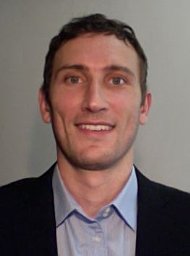 Philippe Raynal合作论文数Quantum Information Theory Group;Institut fur Theoretische Physik;Institut fur Optik;Institut fur Theoretische Physik, Institut fur Optik1
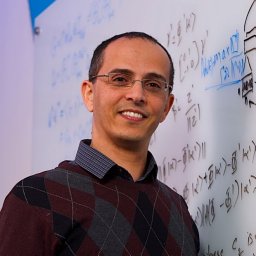 Amir Kalev合作论文数Department of Physics;Technion - Israel Institute of Technology;Department of Physics, Technion - Israel Institute of Technology1




